Marcus Berkmann

Marcus Berkmann’s Berkmann’s Pop Miscellany is out in June.

Has any band of the past 20 years been as consistently irritating as Coldplay?

From our UK edition

It’s a long time, a very, very long time, since I bought a Coldplay album. Has any band of the past 20 years been so consistently irritating? Oasis were aggressively annoying, which isn’t the same thing. I quite liked the first Coldplay album, particularly ‘Trouble’, and A Rush of Blood to the Head was a fine record, full of the sense of an ambitious young band finding out what they were capable of. After that, though, they made the fatal Faustian decision to become the biggest band in the world. Although I have made it my business to hear subsequent albums, partly out of curiosity and partly to confirm my prejudices, actual folding money has not been involved.


Why is ‘loo’ slang? Because Simon Heffer says so!

From our UK edition

Did Simon Heffer’s new book come out on St George’s Day? If not, it probably should have done. If we ever needed someone to defend what’s left of our national culture from the massed armies of lefties, foreigners, proles, riff-raff, illiterates, young people, thin people and David Cameron, he would be our man. For three decades he has fought the good fight, a squat colossus of unquenchable fury, his red hair forever threatening to burst into flames, just because it can. He is one of the marvels of the age and, I now discover to my shock, exactly four days younger then me. We Cancerians have to stick together — although my moon is in Aries and his is in Taurus, which I’m told makes all the difference.

One man’s guilty pleasure is another’s palpable greatness

From our UK edition

The film critic Anne Billson wrote a typically pugnacious piece recently about the phrase ‘guilty pleasures’, which has spread like Japanese knotweed beyond its origins in pop music and taken root throughout popular culture. In film a guilty pleasure would be something like Four Weddings and a Funeral, which we’re not ‘supposed’ to like because it’s not La Règle du Jeu, but which we do like very much because it’s fab. My nomination in this category, and a possible reason my career as a film critic never quite reached the heights, would be Star Trek II: The Wrath of Khan.

Roger Mortimer writes again

From our UK edition

After Dear Lupin and Dear Lumpy, here’s a slightly more prosaically titled collection of letters from Roger Mortimer, longtime racing correspondent of the Sunday Times and frequent purchaser of stamps. Who would have thought that one man could write so many letters that, 20 years after his death, so many people would still want to read? But that’s the beauty of publishing: the oddest books can find a readership. And this encourages enterprising publishers to look out for even odder books, which benefits us all: writers, readers, even reviewers.

Pop has become a conservative art form and an old man’s game

From our UK edition

It is coming to something when relatively young pop stars die not of drugs or misadventure but, essentially, of old age and decay. Frankie Knuckles, the house DJ and producer, breathed his last recently at the age of just 59, and several ageing ex-clubbers of my acquaintance told me that it was the end of an era. But it always seems to be the end of an era these days, and very rarely the beginning of one. We read that the New Musical Express, that inky irritant to generations of music lovers who bought it every week even if they disagreed with every word it printed, now sells about three copies a week and is in danger of going under.

When posters told us our place

From our UK edition

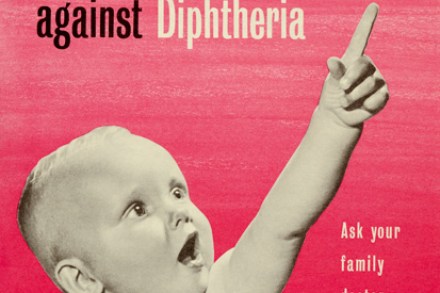
As a sign of the way things have changed, nothing could better this. Hester Vaizey, Cambridge history don and ‘publishing co-ordinator’ at the National Archives, has collated this splendid collection of posters issued by various government agencies in the 30 years or so after the second world war. This was, of course, the heyday and highwater mark of what furious red-faced men of my acquaintance now call ‘the nanny state’ — a phrase, incidentally, first used by an editor of The Spectator (Iain Macleod) in the pages of this magazine back in 1965. Although I never had a nanny myself, I know from repeated childhood viewings of Mary Poppins that Nanny Knows Best, and so these posters confirm.

Addicted to Vole

From our UK edition

Earworm: what a wonderful word. It describes, as nothing else quite can, the effect a really invasive melody can have on your consciousness. Hear the song once and you will hear it again and again, on a loop in your brain. At the pub quiz the other night, the answer to a question was Brotherhood of Man, and at least two of us subsequently suffered the torture of hearing ‘Save Your Kisses For Me’ in our heads for the rest of the evening. I don’t usually think of myself as Drinking To Forget, but this evening might have been an exception. So are people who love pop music more susceptible to earworms, or are people who are susceptible to earworms more likely to love pop music?

Prefab Sprout’s comeback gives hope to the over-50s

From our UK edition

Every musical career has its own narrative, and most of them include at least one comeback. To come back, you first have to go away; then you have to stay away; and finally, when everyone has forgotten your name, you wander nonchalantly back under the arc-lights and wave modestly to screaming fans and waiting reporters. Well, that’s the plan, anyway. As has been discussed here before, the gaps between record releases for all but the most irresponsibly prolific artists have become so wide that simply making another album becomes a comeback in itself. Thus has the currency of the comeback been devalued. Sometimes it feels as though there’s a different one every day. A few of them could usefully have stayed away a little longer.

All I want next Christmas is new Christmas songs 

From our UK edition

Three months until spring. Four months until the start of the cricket season. And only nine months until the radio starts playing ‘Merry Xmas Everybody’ again. Or have you heard enough of Christmas songs by now? Many of us had heard enough of them by Christmas 1988. Every October they return. The first strains of Shakin’ Stevens emerging tentatively from high street shops. Shane MacGowan and Kirsty MacColl, still bickering. Greg Lake, possibly alone now in believing in Father Christmas. Roy Wood’s enormous beard, wishing it could be Christmas every day. And for three months of every year his wish is granted. Millions of Britons suffer the consequences.

Albums of the year? Some years we can answer it, some years we can’t 

From our UK edition

Albums of the year? What a good question. Some years we can answer it, some years we can’t. The essence of pop music is its newness, its absolute determination to upgrade itself and keep on upgrading itself, often beyond anyone’s interest in its upgrading itself. Accordingly, there are some years when the paid-up music obsessive has to retrench and consolidate and — quite simply — stop buying new records until he can find somewhere to put them. I only bought about 25 new CDs this year, of which only five or so were new-new-new. As yet, none of them has really come through. But there’s time. There’s tomorrow, there’s next week, and there’s the rest of my life to get the most out of the David Bowie album.

‘Here’s looking at you, kid’ —  the best lines from the movies

From our UK edition

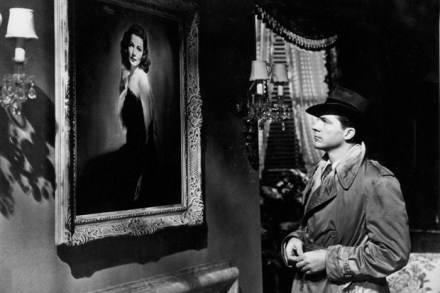
Many of us, I get the feeling, don’t go and see as many films as we used to, or want to. Instead we spend all our time complaining that we don’t have enough time to watch films any more. Speaking purely as a hard-working freelance, I also miss all those old black-and-white movies BBC2 used to show in the afternoon, to fill in the yawning hours between lunch and teatime. You would see things you hadn’t seen before, you would see things you had seen a million times before, and you would doze happily through all of them, while characters walked around wearing hats and talking and talking and talking more than anyone would be allowed to in the cinema of today. George Tiffin’s All the Best Lines is a grand hardback trawl through the Golden Age of Cinema Dialogue.

A book that’s inspired by a movie (for a change)

From our UK edition

Books become films every day of the week; more rarely does someone feel inspired to write a book after seeing a film. Peter Conradi’s Hot Dogs And Cocktails tells the story of King George VI and Queen Elizabeth’s visit to North America in the summer of 1939 and specifically the couple of days they spent at President Roosevelt’s country retreat at Hyde Park on Hudson. In the film of that name, Bill Murray played FDR with a characteristic twinkle in his eye, and the story was fleshed out with a did-they-or-didn’t-they illicit romance with his distant cousin, played by Laura Linney. For reasons of professional integrity Conradi can’t play quite so fast and loose with events, but his is an entertaining tale even so.

Morrissey can’t even moan properly — here’s a frontman who can

From our UK edition

There is much to be said for Schadenfreude. (If it was edible, it would be a meal in a very expensive restaurant, for which someone else was paying.) So it’s probably inadvertently that Morrissey has added to the gaiety of nations this past fortnight with the publication of his autobiography, winningly titled Autobiography. So catastrophically bad does the book turn out to be that Morrissey-loathing critics have queued up to give it (and him) a damn good thrashing. It has been a long time coming. While it has always been clear that The Smiths were every bit as good as we thought they were at the time, it is even clearer now that Morrissey’s symbiotic working partnership with Johnny Marr was the reason why.

The best funny books for Christmas

From our UK edition

Books do furnish a room, and quirky books for Christmas do furnish an enormous warehouse somewhere within easy reach of the M25. There are more of them than ever this year, some purportedly comic, some wilfully trivial, a few of them uncategorisable in their oddness, but all of them have one thing in common: they will be outsold by the Hairy Bikers’ diet book. Anyone who tells you that the world is a just and fair place has never written a quirky book for Christmas. In the still popular trivia category — which has survived the stark retraction of the Ben Schott empire — two books stand out. The Unbelievable Truth (Preface, £16.99, Spectator Bookshop, £13.99) is a spin-off from the Radio 4 panel show, where hard-to-believe facts vie with easy-to-believe lies.

#Onyourmarks! What is the formal name for the hashtag? 

From our UK edition

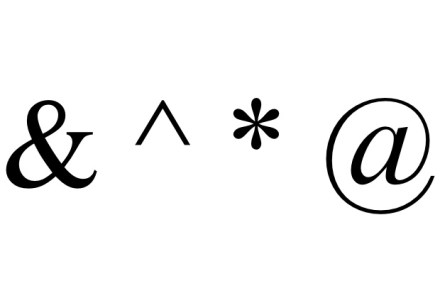
One day there simply won’t be any strange byways of the English language left to write quirky little books about. Happily that day hasn’t arrived yet. Keith Houston’s Shady Characters (Particular Books, £16.99, Spectator Bookshop, £13.99, Tel: 08430 600033)) ventures into the previously untrodden territory of punctuation marks, and not the obvious ones either. Full stops and commas are as nothing to him. Semi-colons are scarcely worth his attention. No, he’s in pursuit of asterisks and daggers, hyphens and ampersands. Why is a hash sign (#) formally called an octothorpe? (No one is quite sure.) Why didn’t the interrobang (‽) take off? (It did, in the 1960s, but it crash-landed soon after.

Gower vs Boycott

From our UK edition

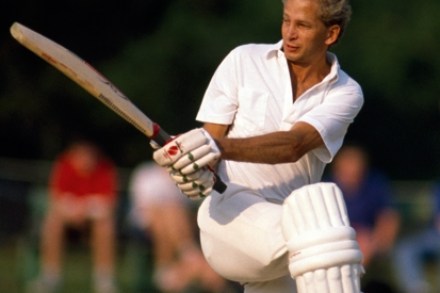
Ask any England cricket fan in his fifties to name his favourite batsman and chances are he will say David Gower. (Unless he says Geoffrey Boycott: the cavaliers and roundheads tend to divide along these lines.) In 114 Tests between 1978 and 1992, Gower’s elegance, timing and grace bewitched us all, not least because we knew that he would probably steer something innocuous to second slip two balls before tea. His latest autobiography, An Endangered Species (Simon & Schuster, £18.99), reveals the vast fluctuations of confidence suffered at the crease by this most apparently nonchalant of characters, who now spends his days fronting Sky Sports coverage and clearly looking forward to a splendid meal a bit later on.

Talk Talk bears repetition

From our UK edition

First impressions always count, and they are almost always wrong. This is particularly pertinent if you review albums for a living, as I used to years ago. You would listen once, maybe twice, possibly three times if you were really being good, and then form an opinion, which was as much based on your preconceptions — and indeed taste — as on anything you had heard in the grooves. And then you would write your review. You would then forget about the record in question because there were so many others to listen to. It was essentially an industrial process, and it quickly ground my enthusiasm for music into dust. Music, though, is one of the few art forms, if not the only one, in which appreciation is inexorably tied to repetition.

Licensed to feel: The new James Bond fusses over furnishings and sprinkles talc

From our UK edition

First, an appalling admission: I have never read any of Ian Fleming’s Bond books. Nor have I read any of anybody else’s, the number of which seems to grow with each passing year. For a civilised man of a certain age this is a shameful oversight, given that I have seen all but three of the 23 films in the cinema, many of them at the Odeon, Leicester Square within days of their opening; that I can’t put on a dinner jacket without wondering whether Sean Connery would look better in it; and that I still own a copy, on 7” vinyl, of ‘Nobody Does It Better’ by Carly Simon, the theme tune to The Spy Who Loved Me. (And the soundtrack it came from, just in case the single went missing.

My 50 weddings

From our UK edition

A couple of weekends ago, I went to my 50th wedding. Everyone I have mentioned this to has pulled a rather strange face, as though to say, ‘You count the weddings you go to? What unhinged variety of cross-eyed lunatic does that?’ But like so much of lasting value in life, this began with a conversation in a pub. Back in 1997, I was moaning to my old friend Terence about how many weddings I was having to go to. People I knew simply wouldn’t stop getting married. So how many in all? asked Terence. I don’t know, said I. It could, and probably should, have ended there.

Pop: You’d love Love and Money, too – if only you’d heard of them

From our UK edition

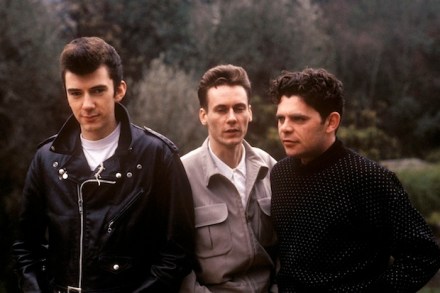
How and when do you become ‘a fan’, exactly? You can usually spot pop stars who are losing touch with reality when they start talking about ‘the fans’ as some kind of independent entity, rather than just a load of people who like their songs. For the music obsessive, though, there’s a simple definition. You’re a fan if you buy someone’s new record without even thinking of listening to it first. Fandom accepts no caution. It only ever hopes for the best. It can take the disappointment of underachievement; it might even half-expect it. Fans have a right to criticise the objects of their affection; in fact, no one has more of a right. It’s a matter of ownership, of pride and, at its extreme, of mild derangement.