Marcus Berkmann

Marcus Berkmann’s Berkmann’s Pop Miscellany is out in June.

Top of the Christmas lists

From our UK edition

The ‘gift books’ are out again, piled high in Waterstones, books that have only one reason to exist: to be given to people who don’t want them on Christmas Day. Having written one or two myself, I have seen the look on the faces of potential purchasers as they pick one up and leaf idly through its well-crafted pages. The look that says: whose Yuletide can we ruin with this? As ever, happily, there are a few genuinely decent books in among all the drivel and nonsense and tired jokes about Brexit and Donald Trump. The Spectator’s own Mark Mason is a long-serving truffler of trivial facts, which he often frames within some sort of weird travelogue: in one book he walked between every London underground station, just because he could.


Question time | 25 January 2018

From our UK edition

Last year was a bit of a year for Radio 4 anniversaries; maybe most notably, Desert Island Discs celebrated 70 years on air. But oddly enough, so did another show. Round Britain Quiz, which you may remember vaguely from your childhood, or possibly your parents’ childhood, also reached 70 in 2017. There have been one or two breaks, but this abstruse and, let’s face it, unashamedly smart show has survived the slings and arrows of outrageous Radio 4 controllers. Every year we fret and worry, hoping beyond hope that it will be recommissioned. Every year, I’m glad to say, it is. I say ‘we’ because, for the past few years, I have been part of the merry crew that makes the programme. It’s one of the very best jobs in the world.

Fiendishly puzzling

From our UK edition

There can be few challenges more daunting for the assiduous reviewer than a pile of Christmas ‘gift’ books sitting on his desk exuding yuletide jollity. But this year’s aren’t bad at all. Some are serious works of quasi-academic research, others are tooth-pullingly funny and one or two are utterly bizarre. For sheer magnificent pointlessness, you should look no further than Great British Pub Dogs by Abbie Lucas and Paul Fleckney (Robinson, £12.99). Lucas (a photographer) and Fleckney (a journalist) have, for no doubt pressing reasons of their own, roamed the nation to identify the ‘wonderful variety’ of Britain’s pub- dwelling dogs. Oh, and one pig, Frances Bacon.

More matter with less art

From our UK edition

When A.A. Gill died last December, there was wailing and gnashing of teeth across the nation. I must admit this came as a surprise to me, but then I hadn’t read him for many years, having developed a ferocious dislike for the Sunday Times too long ago now to remember quite why. My memories of him were of an outrageous show pony, a wordsmith of great talent but surprisingly little taste, who essentially wrote about himself and his wonderful life (in the guise of restaurant and television reviews) in a needy, look-at-me, sub-Clarkson kind of way. He seemed to me to encapsulate everything that was wrong with the paper he wrote for, whatever that turns out to have been. But people were genuinely upset when he died, and not just because he was by all accounts a good egg.

Corduroy

From our UK edition

Every Christmas, I ask my loved ones for at least two pairs of corduroy trousers. Off with a sigh tramps my girlfriend, who knows that fashion cycles dictate that corduroy will be ‘in’, and therefore purchasable, only every fourth or fifth year or so. For three or four years corduroy will be invisible. Shop assistants will look askance at anyone who dares even mention it. Then corduroy is rediscovered by whoever decides these things, and it’s everywhere. Cushions are in corduroy. Dogs wear corduroy. I saw a corduroy tie the other day. At such times we corduroy lovers stock up, conscious of the long corduroy-free winter that will inevitably follow. I bought my first two pairs of corduroy trousers in 1979, when I was at university.

Pub quizzes

From our UK edition

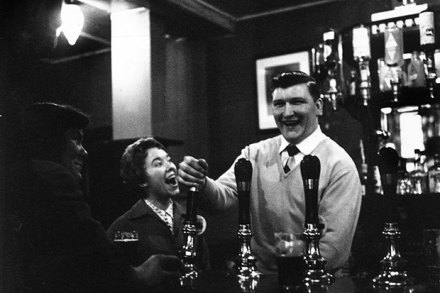
For more than 20 years now, I have been trudging up the hill to the Prince of Wales in Highgate on Tuesday evenings to take part in that tiny pub’s venerable weekly quiz. Each evening promises something different and yet somehow the same: ferocious competition, ridiculous arguments over the answer to question four, several glasses of red wine and usually, during round three, a few packets of Sweet Thai Chilli Sensations crisps. The quiz is unusual in that it is set by its regulars, and my next turn behind the microphone will be on St Valentine’s Day. (This is always a good night for us; most people will do anything to avoid it.) It will be the 178th quiz I have hosted there. That’s more than 8,000 questions, allowing for the odd repeat. Why do we do it?

Spectator Books of the Year: The story that’s too funny for the Man Booker Prize

From our UK edition

I loved Deborah Levy’s Hot Milk (Hamish Hamilton, £12.99). It’s a short, characteristically oblique story of a young woman in southern Spain with her crapulous mother, there to attend a dodgy-sounding, marble-adorned medical establishment where they hope to find — at last — a cure for the mother’s inability to walk. It’s no surprise it didn’t win the Man Booker prize, because as well as being elegant and deeply strange, it’s hummingly funny throughout. As we all know, prize juries regard jokes as a distinct disadvantage.

Christmas stocking fillers

From our UK edition

The gift books come in all shapes and sizes this year: big, little, tiny, huge, long, short, fat and thin, rather like their writers, I would guess. Biggest and fattest of them all is The Art of Aardman (Simon & Schuster, £16.99). This is a coffee-table book, pure and simple, that celebrates 40 years of animation at Aardman Studios, who make Wallace & Gromit, Shaun the Sheep and others, and I would suggest that you have known since the beginning of this sentence whether or not you want this book for Christmas. It’s everything you would wish for from such a volume, featuring stills from the films, drawings from the animators’ sketchbooks, portraits of sets, technical drawings for props, manifold character studies and very, very few words indeed.

Too much glam

From our UK edition

This mighty volume begs a question, although it doesn’t ask it, let alone answer it. Does anyone in the known universe really want to read 650 pages about glam rock? Simon Reynolds must do, because that’s how much he has written on the subject. All writers, if we are to be honest, write books because they themselves wish to read them. But what if you are the only person who wants to read it? It scarcely bears thinking about. Glam rock, as older readers may remember, was a phase of particularly visual and mascara-inflected pop that dominated Top of the Pops for a couple of years in the early 1970s. Before that, we had chug-a-chug blues rock and earnest singer-songwriters, and everyone had hair down to here.

Introducing The Spectator Book of Wit, Humour and Mischief

From our UK edition

Even now, I’m not sure I can believe it has actually happened. The Spectator Book of Wit, Humour and Mischief was conceived, possibly over lunch, as a belated follow-up to Christopher Howse’s 1990 volume The Wit Of The Spectator, and as the first of a putative series of themed books using the vast and rarely tapped resource of the Spectator archive. My friend and publisher Richard Beswick and I pitched the idea to the magazine’s seniors, and they embraced it with enthusiasm. They gave me the run of the website and the digitised archive, but being the sort of person who writes for The Spectator, I favoured a more old-fashioned approach. I asked if I might come into the office once a week and leaf through binders of old magazines, prospecting for gold.

El Sid

From our UK edition

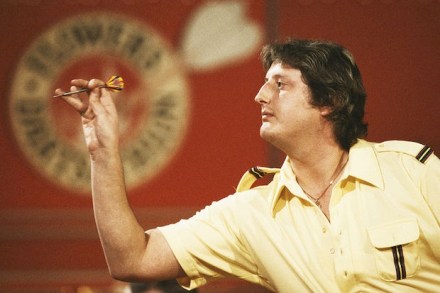
Was there life before darts? I am old enough, just about, to remember such a time. One minute, in or around 1978, there was no darts on TV. Next minute, there was nothing else, and Eric Bristow, if he had felt inclined to stand, would have been elected prime minister by a landslide. As with snooker, the glory years of mass popularity were but brief, but once established as the chosen sporting endeavour of people who don’t like moving too quickly, darts retained a substantial fan base, and continues to thrive even in these slimmer and more austere times.

Starman

From our UK edition

The DJ and sage Mark Radcliffe once said that he didn’t think he could ever like anyone who didn’t love David Bowie’s song ‘Heroes’, and while that might be going a bit far, I can see what he means. As it happens, ‘Heroes’ is still my favourite Bowie song, and Low and Heroes are still my favourite albums, slightly more than 38 years after they were first released. No one told us when we were teenagers that our barely formed music tastes would stay with us for the rest of our lives, but if we didn’t even suspect it then, we know it for certain now. If you do have to die, though, you might as well do it as Bowie has just done, without anyone outside your intimate circle having an inkling and thus with dignity and integrity intact.

Spectator books of the year: Marcus Berkmann on two perfectly-pitched comedies

From our UK edition

Nothing makes me happier than a perfectly pitched comic novel, and this year I chanced upon two. Kate Clanchy’s Meeting the English (Picador, £16.99) introduces a young Scottish Candide into upper-middle-class arty north London, where his goodness and common sense are buffeted by the blinding self-absorption of the other characters. This is social comedy so warming and nutritious, so fresh and elegantly executed, it comes as rather a surprise to learn that this is Clanchy’s first novel. It’s probably not compulsory to live in north London to enjoy it, although I have to admit I have given it as a present to several friends who are inclined to regard Hampstead Heath as the centre of the universe. Antoine Laurain’s The President’s Hat (Gallic, £8.

Curiosities for Christmas

From our UK edition

There is not, sadly, a dedicated Trivia Books section in your local Waterstones, although at this time of year there really should be. But what would we call it? Trivia sounds too trivial. Loo Books sounds too lavatorial. Books for the Man or Woman who Has Everything, Except this Book is probably closest, but might need editing. Whatever we decide to call them, there is an unusually fine crop this year, and several are historically inclined. Gimson’s Kings and Queens (Square Peg, £10.99) is subtitled Brief Lives of the Monarchs since 1066, and gives us exactly that, in Andrew Gimson’s characteristically elegant and entertaining prose. ‘There are many admirable biographies of individual monarchs.

Why I’m stepping down after 28 years as The Spectator pop critic

From our UK edition

This is my 345th and last monthly column about pop music for The Spectator. I believe I might be the third-longest continuously serving columnist here, after Taki and Peter Phillips. Others have been writing for the magazine for longer, but have occasionally been given time off for good behaviour. You may be astounded to learn that I have not been fired. I, certainly, am astounded. I have been waiting for the tap on the shoulder, or maybe the firm but regretful email, since my first column in May 1987. Eventually I came to realise that the less the editor of the time was interested in my subject, the safer I was.

Going for a song | 10 September 2015

From our UK edition

This column does like a bargain. Indeed, it not only esteems and relishes a bargain, it has also worked long and hard to prove Milton Friedman wrong. Sometimes there really is such a thing as a free lunch. And for those of us still wedded to the notion of owning music on some kind of solid, tangible medium (vinyl, CD, dusty box of cassettes at back of cupboard), these are great, cheapskate-friendly years in which to be alive. Almost every song ever recorded can be bought for a song. And still we mothwallets can claim the moral high ground, because we’re not actually stealing it, unlike everyone under 40. As Fagin once sang, ‘In this life, one thing counts. In the bank, large amounts.

Music for the masses

From our UK edition

As pop music drifts away from many people’s lives, so its literature grows ever more serious and weighty, as though aware that this is an art form approaching the end of its time. Having had the pleasure of opening the first volume of Mark Lewisohn’s planned three-volume history of the Beatles and then fallen into a deep sleep attempting to read it, I feel only a sense of impending doom when presented with yet another vast tome of unimpeachable scholarship into the ephemeral. Peter Doggett, a long-serving toiler at the pop coalface, has produced a whopper here, a near-700-page history of pop’s 125 years, with the accent on the popular. What music did people like? Why did they like it? What did it bring to their lives?

Music to write books by

From our UK edition

I have been writing a book this summer, in the usual mad tearing hurry. (Much as I admire those who take four or five years to write one, I have to ask, how do you eat? This isn’t by any means a sensible way of making a living.) Intense workload, though, means music, and lots of it. Many writers simply cannot work with tunes blaring out of nearby speakers; I cannot work without them. Music masks my tinnitus and distracts the part of my brain that would otherwise be trying to distract me from my work. You know, the Facebook part. The videos-of-cats part. The Marks & Spencers chocolate-covered shortbread part.

Anyone for ice tennis?

From our UK edition

Scholarship for its own sake has rather gone out of fashion, although I’m sure Spectator readers would be the last people to worry about that. But what of scholarship for barely any sake at all? A book like this, the result of enormously diligent library ferreting, doesn’t have any pressing reason to exist, but I am glad it does. Its pointlessness is its pleasure. Edward Brooke-Hitching has subtitled his work ‘The Most Dangerous & Bizarre Sports in History’, but what actually characterises these 90 pastimes is that no one plays them any more, usually for good reasons. Some of them were simply too cruel.

The beat goes on

From our UK edition

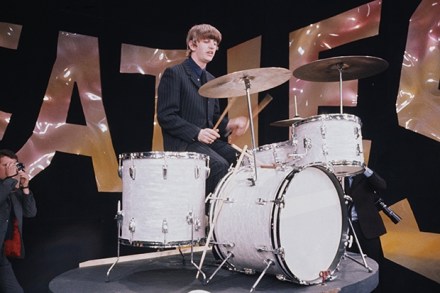
It’s rare that I see a piece about music that makes me want to cheer from the rafters and shake the perpetrator by the hand, but one such appeared in these pages last week on the subject of Ringo Starr, 75 this week. James Woodall, who may or may not be a Beatles tragic of the first water, argued that Ringo was a genius and that the Beatles were lucky to have him. True Beatles fans know this to be true and are enraged when anyone suggests otherwise. For years an urban myth had it that John Lennon, when asked if Ringo was the best drummer around, said that he wasn’t even the best drummer in the Beatles. But as Woodall reported, Lennon never said this. Jasper Carrott did, in 1983.