Marcus Berkmann

Marcus Berkmann’s Berkmann’s Pop Miscellany is out in June.

The pretenders

From our UK edition

Like a lot of essentially cautious people, I like my music to take some risks, play with fire and damn the consequences. In truth, of course, most musicians are every bit as conservative as the rest of us: they do whatever it is they do and if it sells, they keep on doing it until they drop. Three small cheers, then, for Mumford & Sons, who with their recently released third album took a completely unexpected swerve away from the phony banjo-intensive folk that had made their name and their fortune, into the stadium rock’n’roll they have obviously always wanted to play.

And then there were four

From our UK edition

Where were you when you heard that Zayn Malik had left One Direction? No, me neither, but as my teenage daughter reports, an entire generation of female youth appears to have been traumatised by the event. Not that she gives a monkey’s herself, of course, but she says that everyone she knows knows someone who knows someone who really cares, sometimes to the point of genuine distress. We can laugh, and indeed we have laughed, rather a lot, but for these sufferers, the flavour of life itself has been tainted and a Lake Baikal of tears has been shed. One Direction, once the perfect five, are now an eroded four. And the rest of the world looks on and wonders, which one will go next? And can it be soon, please? For there is equilibrium in all things, and especially in boybands.

End of the Rainbow

From our UK edition

The golden age of pop music may be long gone, but the golden age of pop musicians’ obituaries is definitely with us. Soon I shall have to start apologising for returning to this subject with such regularity, but barely a week now seems to pass without some rock legend turning his or her eminent toes up. Last week it was John Renbourn, gruff beardy guitarist for Pentangle, and the week before Daevid Allen, who founded Soft Machine and about 73 different manifestations of Gong. On social media Nick Hornby asked us to name which dead people we had seen live (when they were alive, obviously). His list included Bobby Womack, Luther Vandross, Bob Marley, Joe Strummer, the Ramones, Rory Gallagher and Lee Brilleaux of Dr Feelgood (a lot). Hundreds of people responded.

Why you should never trust songwriting credits

From our UK edition

Songwriting credits are, as we know, not always to be trusted. Since the dawn of music publishing, there has always been a manager or an agent or a well-connected representative of organised crime willing to take a small cut of a song’s royalties, in return for services rendered or threats not carried out. Who actually wrote any song? Well, we know that Bob Dylan wrote ‘Subterranean Homesick Blues’, but after that it gets a little murky. Lennon/McCartney songs, after the first couple of albums, were written by Lennon or McCartney but rarely by Lennon/McCartney.

Count Basie, Aretha Franklin, Elvis, Bob Dylan – all the greats ultimately owe their fame to the faceless ‘record men’

From our UK edition

The crucial thing to remember about the music business is that it’s a business. If you happen to be creating great art as well, that’s a bonus, but it has never been compulsory. Only in the music business could someone who hates music as much as Simon Cowell clearly does become so rich and powerful. And for a group like Westlife to have enjoyed a 15-year career of uninterrupted chart success without recording a single song anyone can remember, or even name, is something we have to admire. It was only ever about the money. To be fair to them, they have never pretended otherwise. At the same time, though, where would we be without the ‘record men’, the entrepreneurs and executives who live and breathe music, eat and drink it?

James Blunt’s sense of entitlement is so palpable you could wear it as a hat

From our UK edition

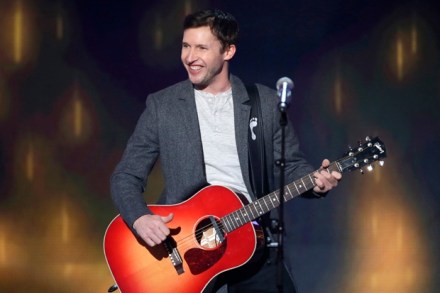
Only a fool would mess with James Blunt. As his Twitter followers know, he has a sharp wit, and, as befits a former officer in the Life Guards, he is always ready for a fight. Indeed, the grievous suffering around the world caused by his greatest hit, ‘You’re Beautiful’, has been offset to some extent by his snappy tweets, several widely disseminated photographs of him looking a prawn, and a general sense that he can take a joke. Not long ago someone else tweeted as follows: ‘If you receive an email with a link to the new James Blunt single, don’t click on it. It’s a link to the new James Blunt single!’ The singer promptly retweeted it. Even so, he may have overreached himself with his open letter to Chris Bryant the other day.

His lyrics are hopeless, his covers are catastrophic, yet I still love Bryan Ferry

From our UK edition

There were two new albums I wanted for Christmas — the Bryan Ferry and the Pink Floyd — and to my delight I got both. Others may prefer the unknown and the experimental as presents, but at this time of year I favour the pop music equivalent of a decent scarf or a new pair of slippers. The Pink Floyd we shall leave until later, on the reasonable grounds that I haven’t listened to it yet. But the new Ferry album, Avonmore (BMG), is splendid, as warm and elegant as a cashmere scarf, as perfectly snug as the fluffiest slippers. For those of us who have followed Ferry moderately slavishly for several decades, it ticks all the boxes. And what are those boxes, precisely? It’s the same but different.

Why we love hating the music we hate as much as we love loving the music we love

From our UK edition

With seconds to spare, I think I have chanced upon my music book of the year. Such choices are always frighteningly subjective, relying as they do on the narrow musical tastes of the chooser, his or her sex, age, education and ambient level of grumpiness. So I make no claims for this book beyond the fact that I liked it a lot. You might not like it, although the book’s author would probably think you were wrong. He has been a rock critic for many years, and old habits of the species (intellectual arrogance, superhuman obstinacy, absolute belief in the correctness of one’s tastes) die very hard. Andrew Mueller’s It’s Too Late To Die Young Now (Foruli Codex, £9.99) is subtitled ‘Misadventures In Rock and Roll’.

Spectator books of the year: Marcus Berkmann reveals the only book this year he didn’t want to finish

From our UK edition

As someone who spent several years writing TV reviews mainly for laughs, I kneel before the twin idols of Clive James and Nancy Banks-Smith, without whom I wouldn’t have had a career. As we all know, James is a touch under the weather these days, and it was probably for sentimental reasons that I found my way to A Point of View (Picador, £16.99, published in 2011), a collection of his contributions to the Radio 4 series between 2007 and 2009. Each of these talks, 60 in all, runs to around 1,600 words, and James appends an explanatory afterword to every one. They are magnificent, possibly even masterly and, added together, comprise a single-volume primer on how to write for broadcast.

The 10 best loo books of 2014: why we sing so much better in the shower and what became of Queen Victoria’s children’s milk teeth

From our UK edition

Nancy Mitford would not call them ‘toilet books’, that’s for certain. Loo books? Lavatory books? One or two people I know favour ‘bog books’. And having written one or two books myself that teeter on the edge of frivolity, I know that for your book to be kept in what Americans call the ‘bathroom’ is essentially a compliment. As long as it’s there to be read, of course. Oddly enough, the two best loo books of the year I have already and separately reviewed in these pages. The Most of Nora Ephron (Doubleday, £20, Spectator Bookshop, £16.

Is there anything a gospel choir can’t cheer up?

From our UK edition

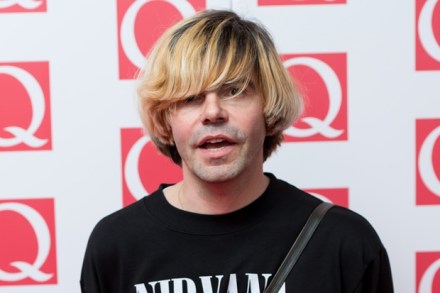
‘I’m starting to think that all of the world’s major problems can be solved with either oyster sauce or backing vocals.’ That was Brian Eno writing in his diary one evening, after a long day’s thinking and maybe a glass or two of something agreeable. I am not entirely convinced by the bivalve mollusc argument, but the second half of his apophthegm makes perfect sense. Last week I was listening to Tim Burgess’s 2012 album Oh No I Love You (OGenesis), a recent and possibly inspired purchase. Mr Burgess is perhaps better known as lead singer and increasingly large face of The Charlatans, the long-serving Midlands indie band who enjoyed a brief spell in the sun during the Britpop horror.

Michael Frayn’s new book is the most highbrow TV sketch show ever

From our UK edition

Enough of big ideas and grand designs. Instead, here are 30 unusually small ideas from the giant pulsating brain of Michael Frayn. Matchbox Theatre is a collection of tiny playlets, all one-handers or two-handers, designed to be performed in the most intimate theatrical space of them all: your mind. In ‘Sleepers’, Sir Geoffrye de Frodsham and Lady Hilarye lie motionless in their tomb, and bicker throughout eternity. ‘Since when has he been doing choral Evensong in the crypt?’ ‘Since 1997.’ ‘I’ve never heard any choral Evensong in the crypt.’ ‘You were asleep.’ ‘You’re telling me I slept through that?’ ‘You slept through the second world war...

Why everyone wants what Nora Ephron was having

From our UK edition

I have come late to Nora Ephron — a little too late for her, anyway, as she died in 2012. Indeed, it was just after she breathed her last that I read her only novel, Heartburn, a copy of which had been pressed on me by a writer friend with a mad glint in her eye. It is that sort of book, and I now press copies on other friends with the same mad glint. A brutal dissection of Ephron’s disastrous marriage to the Watergate journalist Carl Bernstein, it’s also a brilliantly sustained piece of comic writing, as good as anything you’ll find outside Wodehouse. Nigella Lawson loves it, as well she might. Why no other novels? Maybe Nora never again felt the need in quite the same way, or maybe she was too busy writing everything else.

Why Yes are still the funniest rock band in the world (although Radiohead are catching up)

From our UK edition

My favourite comment about the Scottish referendum came from the eminent comedian and novelist David Baddiel. ‘What if Yes wins, but due to a typographical error, the prog-rock band gets in and Jon Anderson becomes First Minister?’ You probably had to be there to find this funny, and in this case ‘there’ is the early 1970s. Having been there myself, I too remember Yes as the most intrinsically amusing of progressive bands, along with Emerson, Lake and Palmer. Genesis were quite funny in their early days, when Peter Gabriel dressed up as a flower. Pink Floyd weren’t funny, although Roger Waters is. The Beatles aren’t funny any more, but the Rolling Stones are as hilarious as ever. Many prominent 1980s acts — U2, Duran Duran, Spandau Ballet — were sidesplitting.

The secret to a long and happy pop career? Don’t die

From our UK edition

As everybody in the world except me seems to have seen Kate Bush’s live shows — against all apparent arithmetical sense — these have been gloomy weeks in the primary Berkmann residence. Even the mother of my children managed to acquire a last-minute freebie, even though she only really likes the first two or three albums and Bush didn’t play those. Admittedly, I would have had more chance of getting tickets if I had applied for some, but no sensible English male turns down the chance to sulk like the teenager he most certainly was when he stuck the poster that came free with Lionheart on his bedroom wall. No doubt everyone under 40 thinks we have all gone mad. If so, it’s a madness that was seeded a long time ago.

A toast to beer, from Plato to Frank Zappa

From our UK edition

‘He was a wise man who invented beer,’ said Plato, although I imagine he had changed his mind by the following morning. Beer: A Global History (Reaktion, £9.99, Spectator Bookshop, £9.49) is the latest addition to ‘The Edible Series’, following Cake, Caviar, Offal, Wine, Soup and, rather shockingly, Hot Dog into the catalogue. As reading about food and drink is second only in pleasure to consuming it, this might be one of the most ingenious publishing ideas of all time. Gavin D. Smith, author of several books ‘on drink-related topics’, traces brewing history from the neolithic peoples of Asia Minor to beer’s current pre-eminence: global consumption has increased every year for 25 years in a row.

My daughter wants to know why you haven’t heard of the Jayhawks

From our UK edition

One of the many delightful aspects of having children is that you can get them to do things you are too old, lazy or important to do yourself. My disinclination to attend any sort of music festival, owing to a distaste for tents, chemical lavatories, mud and other people, has happily not passed down to my daughter, aged 15. Last month she went with a group of like-minded 15-year-olds, and large quantities of cider, to Latitude, which everyone says is much nicer than Glastonbury, if only because it doesn’t sprawl across several counties like a giant upper-middle-class shantytown. (The Guardian published an aerial photo of Glastonbury this year. It looked like Mexico City, only with a higher incidence of red trousers.

Interviews with the great, the good, the less great and the really quite bad

From our UK edition

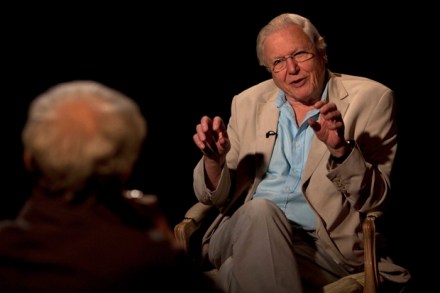
The TV chat show, if not actually dead, has been in intensive care for a while now, hooked up to machines that go bleep. But the long-form interview, as pioneered by John Freeman’s Face to Face in the 1960s, is a tougher customer. Laurie Taylor’s In Confidence series on Sky Arts has featured the great and the good, the less great and the really quite bad, all of them attracted by the professor’s gentle sociological probing and the show’s reliably modest viewing figures, which suggest that no one will notice if it all goes terribly wrong. This book is Taylor’s artful distillation of more than 60 interviews, shaped according to his own tastes and preferences. Cleo Laine was his teenage crush, Alan Ayckbourn is a friend from way back, E.L.

How do you like your pop: clean, dirty or downright soap-shy?

From our UK edition

I am still listening to the new Coldplay album, and liking it more and more, and not just because everyone keeps telling me how terrible it is. There is perversity in all enthusiasm, for sure, but the unanimity of critical disapproval in this case seems to have mixed with popular ennui to create a bracing cocktail of contempt and contumely. It just makes me want to play the damn thing even louder. Ghost Stories (Parlophone) is the Millwall of break-up albums. If you don’t like it, it doesn’t care. Maybe it’s because break-up albums are supposed to be dogged, downbeat affairs, recorded in one take in some grotty old studio with a 1950s mixing desk and the door hanging off its hinges. But this one is luscious, expensively recorded and clear as a bell.

The completely ludicrous – and sometimes believable – world of the First World War spook

From our UK edition

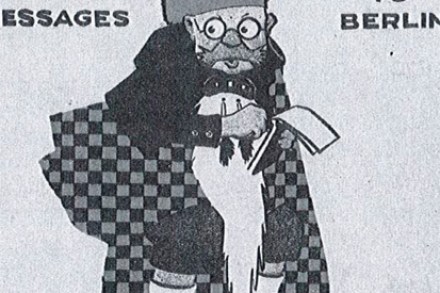
There can’t have been this many books about the first world war since — just after the first world war. One publishing craze of the 1920s was books about spying, in which retired war spooks gave away their trade secrets and told tall stories about dead-letter drops and invisible ink. Melanie King has read them all, filleted them and collated her researches in Secrets in a Dead Fish (Bodleian Library, £8.99, Spectator Bookshop, £8.54). ‘Ingenious methods of communication were developed,’ she writes. ‘The entire Western Front, from its windmills to its laundry lines, must have seemed charged with secret meanings.’ This is Le Carré, but a Janet and John version.