Marcus Berkmann

Marcus Berkmann’s Berkmann’s Pop Miscellany is out in June.

Hart-felt praise

From our UK edition

‘I don’t profess this tome to be one of deep reflection or profound, serious thinking,’ writes Miranda Hart, which may or may not come as a surprise to her readers. ‘I am nowhere close to one of them French philosophers; I basically lollop through life like an amiable hound.’ If self-knowledge tends to be hard won, Is It Just Me? (Hodder & Stoughton, £20) suggests that Hart has won it mainly by saying the wrong thing and falling over a lot. Whether you like this book, or even open it, probably depends on how much you enjoy her work on TV, although it’s unlikely you will have read even this far if you didn’t.
Sweet serendipity

From our UK edition

‘If you liked that, why not try this?’ Such tempting words, so hard to resist. I love the idea that some immeasurably complex computer algorithm, lovingly created by nerds, can sift through the teeming piles of new music out there and find something for me that I didn’t know I was going to like. One day this glorious state of affairs may even come to pass. For the moment, though, these links always lead you to (i) music you already own and enjoy, (ii) music that sounds a bit like the music you already own and enjoy but isn’t as good, and (iii) music you wouldn’t touch with a bargepole attached to another bargepole. For me it’s always little Jamie Cullum or Michael Bublé.

Games over

From our UK edition

It seems like only hours since they ended, but people have already written and published books about the Olympics, and I have already read one. Nicholas Lezard’s The Nolympics (Penguin, £7.99) was originally planned as a counterblast, a fusillade of righteous rage against what we all expected to be an administrative and sporting catastrophe that would blight what remained of Britain’s international reputation forever. Instead, he was as swept up by it all as the rest of us. Even so, his book is less about watching the Olympics than about being forced to watch the Olympics, and then write 1,500 words a day about it. We can marvel at the wit and fluency he has achieved, faced with this impossible deadline, but to a great extent the book is the deadline.

Fame game

From our UK edition

The summer is over, the Olympians have gone, and Lord Coe has been put back in his box for another year. But some memories will linger on, like a stubborn cold. Music fans, in particular, will struggle to forget George Michael’s performance in the closing ceremony. Other acts came out and played their most famous song for a TV audience of somewhere between nine and ten billion, according to industry insiders. George, wilful to the last, gave us his execrable new single. No one wanted to hear it, everyone was just waiting for it to end, but George wanted to play it, and afterwards he wanted us to buy it. Maybe you need to be that famous to misjudge your audience so acutely. Anyone whose ego does not travel separately would realise that people only want to hear the hits.

Band of brothers | 11 August 2012

From our UK edition

Do rock stars buy life insurance? If so, there must have been payouts aplenty this summer, as several more breathed their last. Levon Helm of The Band croaked in April, followed in May by Adam ‘MCA’ Yauch of the Beastie Boys, the famed session bassist Donald ‘Duck’ Dunn, and Donna Summer, no longer feeling love, or indeed anything very much. Then, a couple of weeks ago, it was the turn of Jon Lord of Deep Purple, whose terrifying white ponytail I once spotted at a River Café quiz. Although his team didn’t do very well, you could see that he was the sort of person you would want to have on your side.

Bookends: Heading for the rough

From our UK edition

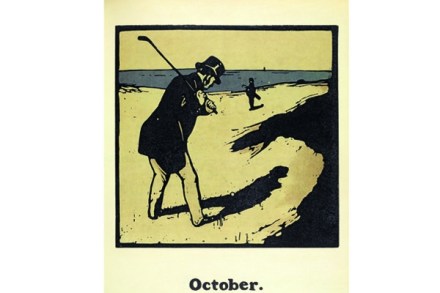
Middle age lays many hazards and traps for us, not the least of which is golf. Breaking 80 (Yellow Jersey Press, £10.99), the first book by the eminent literary agent David Godwin, shows what can happen when you let this essentially ludicrous sport into your life. In Chapter 1 he is a normal person, thinking he should do a bit more exercise, and taking up golf mainly because he can’t face the idea of cycling. Within scarcely a dozen pages he is golfer more than he is human, thrashing his way round seaside courses in a clearly doomed quest to ‘break 80’, when the upper 90s and low 100s are more his natural habitat. He is not helped by his natural diffidence and dislike of most other golfers, especially  the ones who shout ‘Tuck your shirt in!

Humorous intent

From our UK edition

Elderly pop tunes, as we all know, have a tendency to remind you of things you may not wish to remember. Wings’ ‘Band on the Run’, for example, gives me the taste of cold beef, chips and beans in the Nag’s Head in Oxford circa 1978. It was on the jukebox there, I was an undergraduate and just about managing not to starve to death. On Radio 2 the other day, Ken Bruce played ‘Life’s Been Good’ by Joe Walsh, and I could suddenly feel the bitter cold of my tiny student room with its two-bar electric heater and the mould slowly creeping along the walls towards my bed, where it would surely engulf me. But hang on, didn’t I buy the single? I had a look and there it was.

Bookends: Arkansas tales

From our UK edition

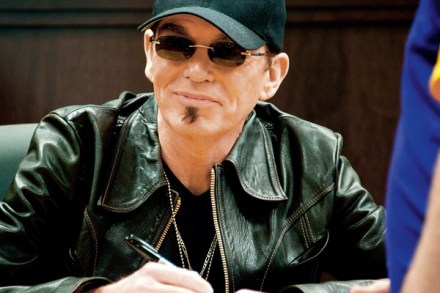
Stranger men have become stars than Billy Bob Thornton, but not many. His obsessive-compulsive disorder encompasses a bizarre list of phobias: of clowns, of old furniture, of Benjamin Disraeli’s hair. Brutally dyslexic, he won an Oscar for his screenplay for Sling Blade, but writing a memoir, he says, would be beyond him. So, in an intriguing act of creative symbiosis, his friend Kinky Friedman, the Jewish country- singer and novelist, has taped him talking to friends late at night and turned these rambles into a book. The Billy Bob Tapes (Virgin, £18.99) has many of the flaws of ordinary ghosted showbiz memoirs.

Producer power

From our UK edition

What does a producer do on a record? I have often wondered this, as the evidence suggests that they either do (i) too much, or (ii) not enough. The heavy rock producer Steve Albini legendarily limits his contribution to switching on the equipment and pressing ‘record’. The band bashes out the song, Albini switches off the equipment and everyone goes for a hearty lunch. By this studied policy of non-intervention, Albini seeks to reproduce a band at its most raw and primal. You don’t go to him if you want fancy keyboard fills or a symphony orchestra wheeling away in the background. Indeed, Albini is so fast that he ‘produces’ more records than anyone else would be able to. Not that he uses the word ‘producer’ any more.

Bookends: Un poco goes a lang Weg

From our UK edition

Here esse un curiosité, and kein mistake. Diego Marani (above) esse eine Italianse writer and EU officialisto livingante in Brussels, qui invented der irreverente lingua des Europanto, ‘eine mix van differente linguas sonder grammatica und regulationes,’ as el puts it sichself. Oui, c’est Franglais, aber more so and avec knobs on, und der late Kilomètres Kington ist doubtless revolvingante dans sa grave as I write. Marani, however, hast gehen even further que Kington and written un completa livre des short stories in diese bonkers lingua. Las Adventures des Inspector Cabillot (Dedalus, £6.99) features cette ‘autentiquo europeane polizei’ solvingante des crimes and fightingante contra der evil, tout dans la cause de harmonia Europische.

Bookends: The Queen’s message

From our UK edition

It is a sad fact that most ‘self-help’ books end up helping no one, other than the people who wrote them, who pay off all their debts and move to California. Mary Killen’s How The Queen Can You Make You Happy (Elliott & Thompson, £8.99) could be the exception. For Mary has noticed that, at the age of 86, the Queen appears to be healthy, happy and fulfilled, and wonders whether her long life of service might not be the secret. In this brief volume, she suggests, with almost regal modesty, that restraint, dignity and good grace can bring us all a vestige of inner peace. Forgiveness can help too. ‘A central tenet of Christianity is forgiveness and, if the Queen can forgive even Fergie, then we must all take our lead from her.

Straying from the Way

From our UK edition

No sensible writer wastes good material. A couple of years ago Tim Parks published a memoir, Teach Us to Sit Still, a tale of chronic, debilitating back pain that appeared to have no physical cause. He tried everything, short of major surgery, and even toyed with that for a while. Finally, in desperation, this lifelong sceptic took up meditation, and found to his amazement that it worked. By the book’s end we realised that we had been reading not so much about a man’s ill health as about a very particular and challenging midlife crisis. Parks is a novelist and academic who has lived and worked in Italy for the best part of 30 years: a pleasant enough existence, you would have thought, but middle age gets us all in the end.

Paternal pride

From our UK edition

It is a glorious moment in the life of any music-loving parent when your progeny develop their own fierce musical tastes, and start looking rather askance at yours. My case may be extreme, as my two children have had to put up with my music for years. As previously mentioned in these columns, my tinnitus makes it all but impossible for me to work in complete silence, and I have become accustomed to playing up to a dozen CDs a day to get anything done. As a result, daughter (12) and son (10) find other people’s houses eerily quiet, even if someone is digging up the road outside and a Boeing 747 is strafing the rooftops. Maybe surprisingly, exposure to unceasing pop music has not put them off it for life. Instead, they seem to have noticed that I like A Certain Sort Of Thing.

Bookends: Pure gold

From our UK edition

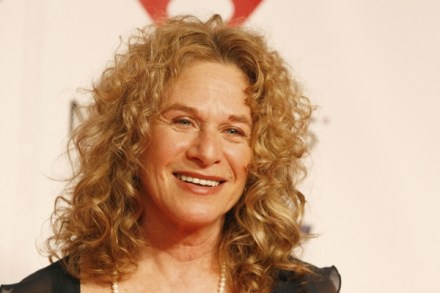
Even nowadays, a 50-year career in pop music is a rare and wondrous thing, and for a woman triply so. And yet Carole King’s golden jubilee passed a couple of years ago without a murmur, let alone a box set. You get the impression from A Natural Woman (Virago, £20) that that’s the way she likes it. After writing hit after hit with her first husband Gerry Goffin in the early 1960s, and selling 25 million copies of her second solo album, Tapestry, in the early 1970s, she has enjoyed a steady rather than stellar career, which has given her time to bring up four children and go back to the land and milk goats in Idaho for a few years, because that’s what she wanted to do. Her memoir, unghosted, is as female as Keith Richards’s was unequivocally male.

Adult entertainment

From our UK edition

On 19 March, Adele’s 21 overtook Dark Side of the Moon to become the seventh bestselling album in British music history. A day or two later it caught Dire Straits’ Brothers In Arms napping, and eased into sixth place. So far 4.15 million copies have been sold. One in six British households has one. Ahead lie Thriller, (What’s The Story) Morning Glory?, Abba’s Gold, Sgt. Pepper and Queen’s Greatest Hits, still the daddy with 5.86 million registered sales. These five have been the top five for so long that industry experts with sad goatees thought they would never be caught. But records are made to be broken, or at the very least scratched.

Living the music

From our UK edition

I used to read NME when I was young. Of course I did. I was obsessed by pop music in its every colour and my youth happened to coincide with the old inky’s heyday, or certainly one of them. In the late 1970s and early 1980s, the New Musical Express was one of four weekly music magazines. Record Mirror was for kids (people a year or two younger than us). Melody Maker was worthy and a bit dull. Sounds was brash and lively, but too keen on heavy rock for my taste. NME was broader in range and more ambitious in tone, and it had the writers: strung-out drug zombie Nick Kent, blues ideologue Charles Shaar Murray, the teenage lunatic Julie Burchill and frog-faced Tony Parsons, whose sneer spoke for a generation.

Touching the void | 17 March 2012

From our UK edition

In April, for the first time in ages, I am going to a wedding. At least it will make a change from all the funerals. The middle-aged pop fan feels this all the more deeply, because few of our favourite musicians seem to make old bones. Or, more accurately, they make old bones, but at three or four times the speed that everyone else does. Some of these rock deaths are relatively mundane: falling down stairs (Sandy Denny), car crashing into a tree (Marc Bolan), ski-ing into a tree (Sonny Bono). Others are bizarre. It was Chicago’s guitarist Terry Kath, of course, whose career came to a premature end during a boozy game of Russian roulette. ‘Don’t worry,’ he said, ‘it’s not loaded.

Bookends: A life of gay abandon

From our UK edition

Sometimes, only the purest smut will do. Scotty Bowers’s memoir, Full Service: My Adventures in Hollywood and the Secret Sex Lives of the Stars (Grove Press, £16.99) is 24 carat, 100 per cent proof. Now rising 89, Scotty (pictured above in his youth) was for years the go-to guy in Tinseltown for sexual favours. Black, white, short, tall, same sex, opposite sex: he could supply it all. But this was no prostitution ring he was running, good lord no. He didn’t charge for his services. He just liked ‘to help folks out’. And he was winningly discreet — until now, that is. His book is Hollywood Babylon and then some, sharing with that legendary and error-packed volume the advantage that everyone written about is long dead.

Bookends: Wasp without a sting

From our UK edition

‘It may be hard to accept that a chaste teenage girl can end up in bed with the President of the United States on her fourth day in the White House.’ In 1962, 19-year-old Mimi Beardsley (pictured above) landed ‘the plummiest of summer jobs’, an internship in the White House press office. On day four, she was invited for a lunchtime swim in the presidential swimming pool. John F. Kennedy was, not surprisingly, ‘taller, thinner, more handsome in person than he looked in photographs’. The affair lasted 18 months and involved a lot of waiting around in hotel rooms, like most affairs. Amazingly, no one found out until 2003, when a newspaper finally named her.

A deafening silence

From our UK edition

One morning in 2007, the music critic Nick Coleman woke up to find that he was profoundly deaf in one ear. ‘The silence did not descend silently, however. It made a small sound. You might compare it to the sound of a kitten dropping on to a pillow.’ Within an hour this pffff had developed a pulse, and over the next few days it evolved into an unceasing clamour of clanks, zizzes and whistles. By now Coleman was in hospital and doctors were scratching their heads, as they usually do with tinnitus. I can remember the eyes of my doctor glazing over with boredom when I told him about my own tinnitus. When he heard that I wrote about music, and had been to far too many deafening gigs over the years, his disapproval hardened. A scribble on the pad, and I was on my way. Next!