Madeline Grant

Madeline Grant

Madeline Grant is The Spectator’s assistant editor and parliamentary sketch writer.

Burnham’s brand of patronising tweeslop reigns supreme

Labour are in Liverpool and, as their conference reached its apogee, I was put in mind of John Lennon. What could an entitled pseud, who preached tolerance and kindness while being intensely venal and malicious in his personal life, possibly remind you of in today’s Labour party, I hear you ask? Well, specifically what came to mind was Lennon’s hatred for particular, mawkish and sentimental parts of the Beatles’ oeuvre which he called ‘Paul’s Granny S***’. Think Ob-La-Di, Ob-La-Da, Maxwell’s Silver Hammer or When I’m Sixty-Four. Andy Burnham specialises in mawkishness, mass-produced sentimentality and ‘be kindism’.

Should we ban the burqa? – and Michael Gove pretends to be the Prime Minister

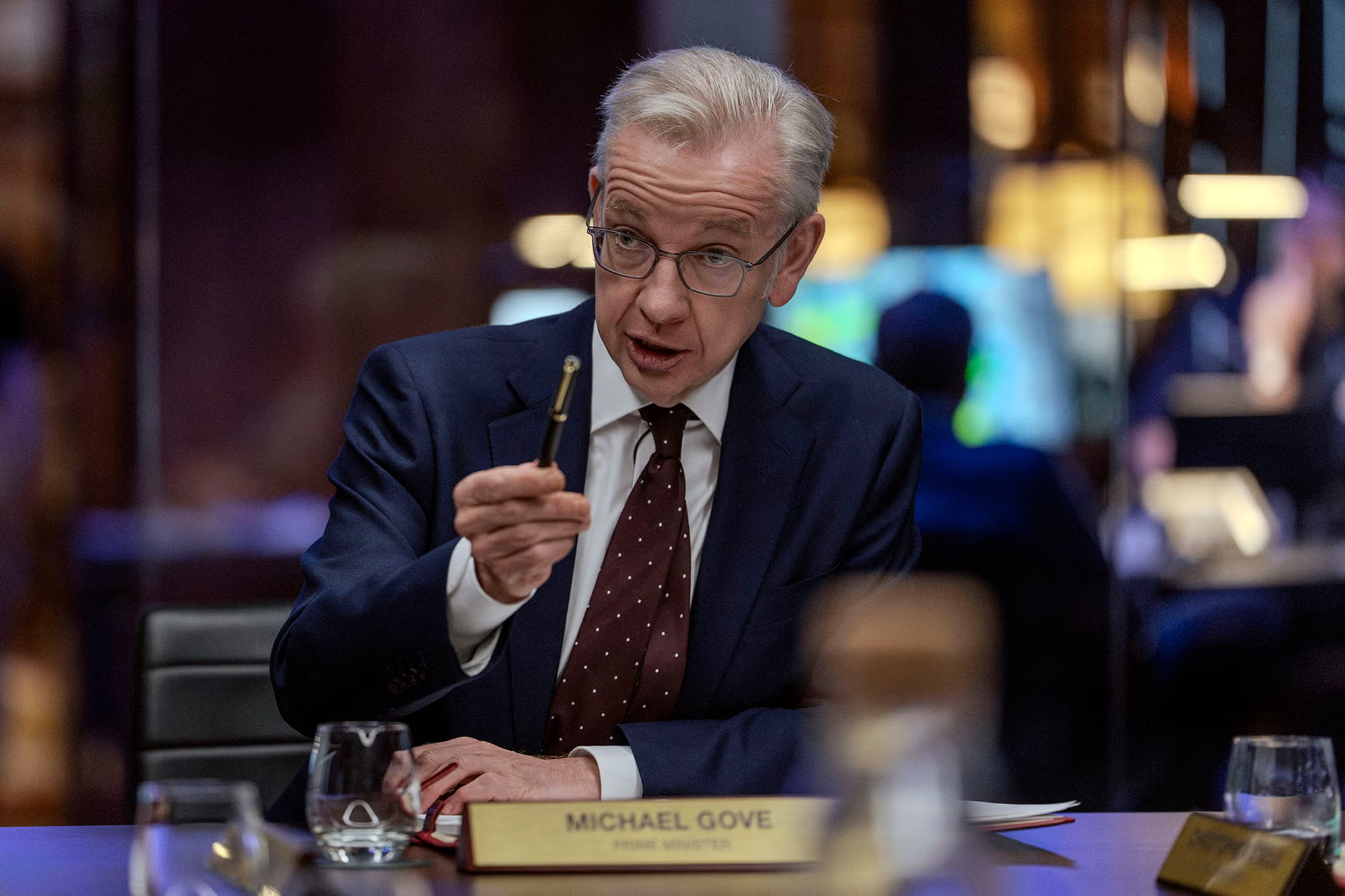
In this week's Q&A: should Britain follow Giorgia Meloni and ban the burqa in schools? Michael says that head teachers should set uniform policy free of pressure from outside the school gates – but would he go as far as Reform's proposed ban on face coverings in public? Maddie asks why progressive feminists have so little to say on the subject. Also this week: the BBC has pulled 11 Mitchell and Webb sketches from iPlayer, but were they right to? Michael and Maddie discuss chronological snobbery, disclaimers on films – and Michael asks whether the corporation will come for Kenneth Clark's Civilisation as well. Plus: Michael plays Prime Minister in Sky's The War Game. Could Britain withstand a Russian attack, and how many young people would sign up to fight?

The fantastical world of Ed Davey

I’m sort of in awe of Ed Davey. How does he still manage to wake up every day and, despite all the other challengers for the title, somehow knock it out of the park as the nation’s most embarrassing political leader? His address to the Liberal Democrat conference this week was a masterpiece. There he was, the Postmaster’s Friend, wedged into a pair of dad-chinos and reminiscing about his radical days at the college JCR. Davey is in some ways the perfect Lib Dem leader – an id for embarrassing middle-class England. If you cut him, he bleeds organic muesli and opposition to planning applications. He ticked every box in his speech. He evoked Liberal Britain’s prelapsarian Eden: the opening of the 2012 Olympics, complete with a prolonged panegyric to Mo Farah.

Spencer vs Windsor: the real Game of Thrones

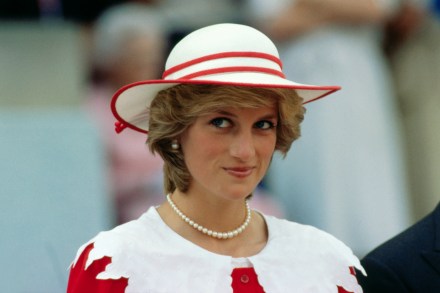
Earl Spencer's new memoir, Swan Song, has drawn a rare direct response from Buckingham Palace. Michael and Maddie weigh up the book's most salacious charges against the King, and ask whether the Earl is driven by money, pride, or something closer to revenge. Is this a serious blow to the monarchy – or do the public just not care what Earl Spencer has to say? Also: It is the turn of the Lib Dem conference, where a row over women's spaces has overshadowed Ed Davey's attacks on Reform's donors. Can they ever again be the party of John Stuart Mill? Finally: Lambeth Palace withdraws an award from a Pakistani cleric who had backed an honorary title for Osama bin Laden. What does it say about the Church of England?Produced by Henry Lloyd.

The continuity idiocy of Labour’s foreign policy

There was for a time the vaguest sense that things had got better since Andy Burnham took charge. That the insanity and inanity of Starmerism had finally bitten the dust. In some narrow respects this is true, yet in the sphere of foreign policy there remains a continuity idiocy which threatens to make Britain even more of an embarrassment than it already is. Key in this are two dismal figures: Luke Pollard and Jonathan Powell. The catastrophically unimpressive Pollard – the sort of defence minister you’d find with a sticker slapped onto his head in the middle aisle of Aldi – claimed on Sky News this morning that the best way to secure the British military base on Diego Garcia was to give it away.

When will Labour ‘do their bit’ on illegal immigration?

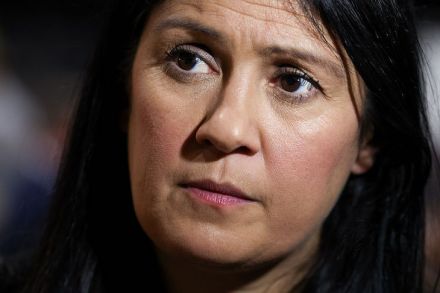
Lisa Nandy’s media-round sounds like the sort of thing you might be signed up to if you failed to make the cut as a Newsround Press Packer. Unfortunately for us, it’s actually a key part of the government’s comms strategy as the Culture Secretary was sent out on to the airwaves this morning. Inevitably she was asked about the Piddington fiasco. The government is ‘listening’ to villagers in Piddington, purred Nandy, but is ‘not going to change our plans’. Nothing shows you’re ‘listening’ to people quite like doing the exact opposite of what they’re asking you to do.

America is not our friend

Imagine, if you will, King Charles in the Deep South. The aesthetics are easy enough: it doesn’t take much to picture His Majesty in crumpled linen, Her Majesty the right side of a large mint julep. But imagine if, in Richmond, Virginia, Charleston or New Orleans, His Majesty makes an off-the-cuff comment about how good it would be if the territories he was speaking in seceded from the United States and that it would be ‘a very great thing’ if claims of the Confederacy were honoured. His Majesty, in a show of tact, acknowledges that Washington D.C. might be a little miffed, but does so with a chuckle. After all, everyone knows that the aspirations of the US are old hat anyway. Except of course the King didn’t do that. He went to Washington and was the epitome of grace and charm.

On assisted dying, sense prevailed

Sequels to horror films can be a mixed bag. Some become classics in their own right, others fall into the category of things better left forgotten. Think Leprechaun: Origins. The House of Commons was back this week debating assisted suicide again. Just when you thought it was safe to go back into the chamber, here we were, the same arguments in favour, the same cast, the same lingering air of horror. The quality was not good: this was Children of the Corn II territory. This was partly due to the Bill’s new sponsor. It is quite hard to imagine a downgrade from the Grim Leadbeater, but Dignity in Dying (the quondam Voluntary Euthanasia Society) had found it in the form of Lauren Edwards.

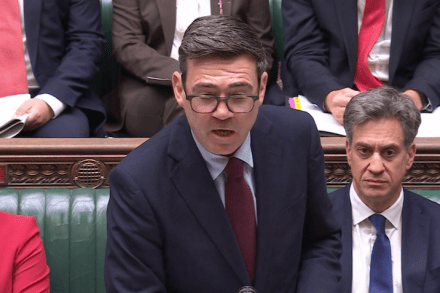
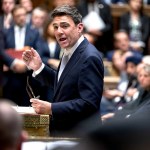
Andy Burnham resembled an extreme train enthusiast at PMQs

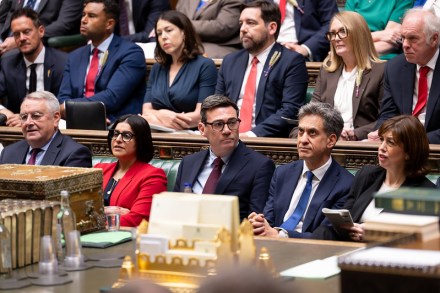
Today was Andy Burnham’s second Prime Minister’s Questions and also his last one for five weeks. The mini-recess for the extended exercise in masochism that is party conference season means Burnham will have gone a little over three months in the job while only answering questions twice. It’s quite hard to think of the last senior advisor to the crown to have faced so little direct Parliamentary scrutiny: the Munshi? The courtier in charge of wiping Henry VIII’s bottom? Merlin? There was no subject that couldn’t be unsubtly swerved towards this in an attempt to gain positive murmurings from the House Kemi Badenoch took advantage of this rare opportunity to subject Mr Burnham to questioning on perhaps the most important duty of any government – the defence of the realm.

Long live death’s dark humour

One of the things people don’t tell you about grief is the humorous side of it. Many will warn that grief can erupt at strange times and that memories of those who have died spring upon you in unusual places. But few mention the fact that loss can put you in situations where the only real solution is to laugh. My father died at the end of last month. He was much loved and is much missed. He was also a great raconteur and, as we have been sorting through photographs to display at the wake, I realise too that he was a great laugher. I’ve lost count of how many images we’ve seen of him with his head thrown back at a party, laughing. Consequently, it seems almost appropriate that there have been moments of laughter since his death.

Why has John Healey started speaking like Confucius?

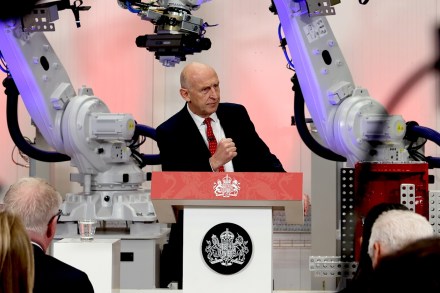
John Healey had been sent to Coventry, something he will have to get used to after his budget next month, at least if he ever intends to use any form of business again. He was visiting ‘The Manufacturing Technology Centre’ which is the sort of vague, ‘Universal Exports’ style name for a company that might have, in past years, made people think Healey was a double agent. In the last ministry, Healey had certainly got a reputation as a man of action, of something of a hard man who was prepared to put his job on the line to get what he wanted. That reputation, as it becomes pretty clear that he won’t be giving defence the spending it needs despite resigning because he said it was so important, is in tatters. Healey needs a new brand and Coventry was the place for it.

Reform conference has an air of unreality

It hasn’t been a glittering 24 hours for Reform UK. To lose one senior official might be regarded as misfortune etc. However there was no sense of impending doom at the Reform conference in Birmingham – indeed, in his speech Mr Farage obliquely referred to recent events as ‘a little local difficulty’.  These events are not like other conferences. They’re a strange fusion between political frustration and high camp. Think Liberace does the Battle of Orgreave. Speakers are announced with rock music and spotlights, the audience are bathed in a strange blue glow, making the NEC seem like a cross between a day spa and a level on the Crystal Maze.

Andy Burnham is about to face a hard lesson

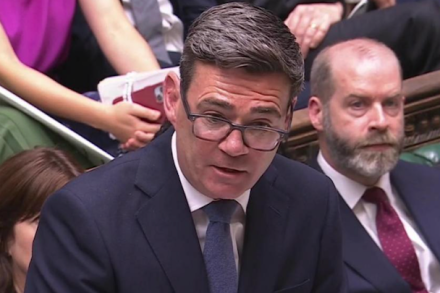
There was a cautious cheer for Andy Burnham as he stood up for his first PMQs. MPs were perhaps cautious of a repeat of the day before when Burnham delivered the longest opening statement of modern times. Or maybe the PM’s summer of lying low just meant that some of the more intellectually challenged members had forgotten who he was. I think we have found the new ‘my father was toolmaker’ and it’s Andy’s patented Ena Sharples tribute act It may have been 16 years, but Mr Burnham was at his ease as he rose for the first question. Clearly circumlocution is a bit like riding a bike – it’s the preferred way to get anywhere in the Labour Party.

Andy Burnham’s ‘triple helix’ is bizarre, meaningless guff

Andy Burnham was at the government despatch box for the first time in nearly 17 years, having had the sort of carefree summer that one would normally associate with an Enid Blyton story rather than a premiership. His grand entrance was somewhat overshadowed by one final act of petty vindictiveness by Sir Keir Starmer who announced he was resigning his seat – despite repeatedly promising not to do so – just a couple of hours before Burnham was due to speak. On current form Sir Keir is going to make Ted Heath’s ‘Incredible Sulk’ look like the picture of magnanimity. Burnham thanked Starmer for his service in the same way one might thank the veterinary nurse who euthanised your pet gerbil.

Burnham’s ‘cheesy Blairism’ exposed – as the Tories prepare for an early election

Kemi Badenoch has kicked off the new political term with a major reshuffle of her top team. Michael and Maddie ask what the changes tell us about the direction of the Conservative party, whether Andrew Griffith can sharpen its economic offer – and whether Badenoch is already preparing for an early election.Meanwhile, Andy Burnham returns to the Commons after a relatively comfortable summer. Has the Prime Minister been governing on ‘easy mode’ so far, and is his brand of politics simply the ‘cheesy side of Blairism’ without the substance?Also: ahead of Reform’s party conference, is Nigel Farage building a credible government-in-waiting – or is the party still fighting a battle for its soul?Produced by Henry Lloyd and Oscar Edmondson.

Madeline Grant, Harry Mount, Freddie Heffer & Toby Young

20 min listen

On this week’s Spectator Out Loud: Madeline Grant argues that the debate about the direction of James Bond mirrors Britain’s decline; Harry Mount makes the case for scrapping dinner parties; Freddie Heffer provides his notes on mulberries; and finally, Toby Young says that friendly fire hurts the most, as he reflects on the fallout from the Jason Arday scandal. Produced and presented by Patrick Gibbons.

Madeline Grant, Harry Mount, Freddie Heffer & Toby Young

The Victorian moralising of the Home Office’s migrant rape advice

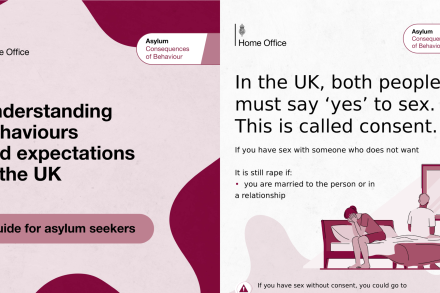
The legacy of the Victorians is everywhere; we depend on them for our sewage disposal, our railway networks, much of our infrastructure and housing stock. Even the hooded eyelids of our Royal Family mark them out as descendants of Victoria herself. The right often dwells on how far we’ve fallen from Victorian greatness – painting modern Britain’s existence amongst the physical debris of Victoriana as akin to living in the ruins of a superior civilisation, like mud-smeared Visigoths prowling around the remains of the Colosseum. Less discussed is how the Victorians are still very much with us.  ‘In the UK, both people must say “yes” to sex’, scolds one of the posters, which were handed out to asylum seekers. ‘This is called consent’.

Bond’s identity crisis mirrors Britain’s

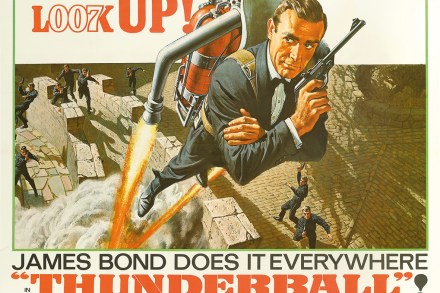
Sometimes I wake up in the night disturbed by dreams of James Bond. Surely, you might say, that’s the point of him; a man of such raw sex appeal that he can break the somnial boundary of women all over the world. But these aren’t sexy dreams about Bond’s past; they’re nightmarish visions of his future – Bond in the modern British public sector. Picture it, 007 walks in for his briefing with M. The process is not the quick-witted sparring of classic Bond but a long PowerPoint presentation complete with a quiz at the end to show he’s been listening. Miss Moneypenny doesn’t ‘feel comfortable’ booking Bond flights because of the carbon output, so he finds himself on a rail replacement bus service.

What Clacton taught us about Nigel Farage’s path to power

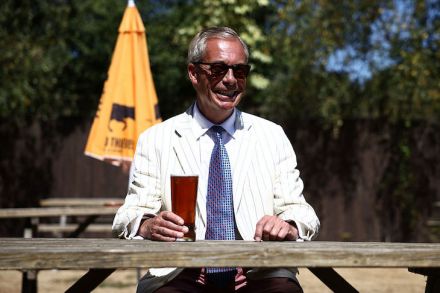
The Clacton by-election was finally over. Even by the standards of August news stories, it had grown pretty stale pretty quickly. The result was never in doubt, nor were the entrenched responses of the key players. Reform figures took to the airwaves to insist all questions about Nigel Farage’s finances had been answered by the ballot box. Those who opposed him took to the airwaves to insist the opposite was true. Back at the count, the media were having to make do with increasingly contorted attempts to pretend Binface was amusing In Clacton itself, Mr Farage was essentially playing a game of cat and mouse with the media circus.

How Project Spire will hurt England’s parishes

In this week’s episode of Holy Smoke, Damian Thompson is joined by Madeline Grant to dive into the contentious topic of Project Spire, the Church of England's ambitious plan to allocate £100 million in reparations for its involvement in the transatlantic slave trade. They will shed light on the Church's insistence on proceeding with this plan despite significant opposition from both the public and its own parishioners.

How Project Spire will hurt England's parishes