Lynn Barber

Lynn Barber is a former Sunday Times journalist and author of An Education and A Curious Career.

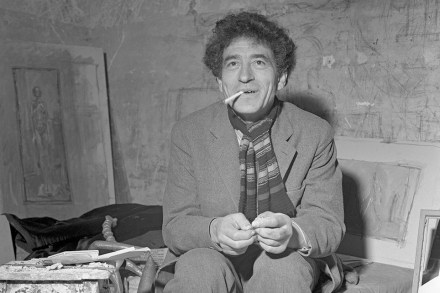
‘My attachment to Giacometti grew into the bedrock of my existence’

Michael Peppiatt is an octogenarian English art historian, based in London and Paris, who has met many of the artists he writes about. But, sadly, he never met Alberto Giacometti. He was working as a translator when, in 1966, he applied for a junior editor’s job at Réalités magazine in Paris and, much to his surprise, got it. He went to say goodbye to his friend Francis Bacon,who offered to give him an introduction to Giacometti. Bacon wrote it in felt-tip on a torn-out page of Paris Match and told Peppiatt to take it round to Giacometti’s studio, which he did. But then he stood irresolute at the door, lacking the courage to knock.

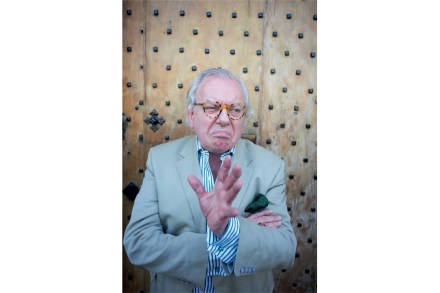
‘I have uncancelled myself’: David Starkey interviewed

David Starkey’s commentary on the Queen’s funeral on GB News was generally agreed to be the best of all the TV coverage, and now he is covering the coronation, and has made a three-part documentary about it for GB News called The Crown. Of course he knows the history, going back to King Edgar’s coronation in 973, but will he also be expected to recognise the guests? Will he have to say: ‘Oh look, there’s Elton John?’ No, he laughs, he leaves all that to his co-presenters. His job will be to explain what the coronation is about, and indeed that is what he proceeds to do when I arrive at his house in Highbury. He talks so seamlessly there seems very little chance of my ever asking any questions.

All talk and no trousers: is Oxford really to blame for Brexit?

Attacks on British elitism usually talk about Oxbridge, but Simon Kuper argues that it is specifically Oxford that is the problem, which has provided 11 (out of 15) prime ministers since the war. So what’s the explanation? Kuper thinks it’s all the fault of the Oxford Union, which fosters chaps who are clever at debating without particularly caring which side they are on. As a result, they acquire enough rhetorical skills to enable them to beat opponents who rely on thoughtful, fact-based arguments. Such arguments are ‘boring’, and being boring in the Oxford Union is the worst crime you can commit. This wouldn’t matter if it were confined to undergraduates but, Kuper argues, the Union is often the rehearsal for, and gateway to, a Westminster career.

How Britain prepared for Armageddon from the 1950s onwards

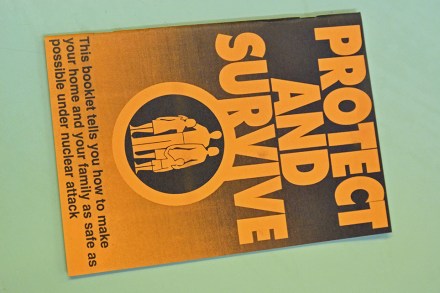
Julie McDowall ‘first encountered Armageddon’ in September 1984 when she was only three. Her father was watching a BBC Two drama called Threads about a nuclear attack on Sheffield, but instead of putting her to bed (which he obviously should have done) he let her watch it too. She saw ‘milk bottles melt in the nuclear heat, blackened fingers claw out from the rubble’ and was convinced this was really happening. ‘The experience scarred me for life,’ she declares, ‘and it is the reason you are reading this book.’ In her twenties, she suffered panic attacks and agoraphobia, so she decided to confront her fears by becoming a journalist specialising in the nuclear threat. This book – and it is a very good one – is the result.

The life of Elizabeth Taylor was non-stop drama 

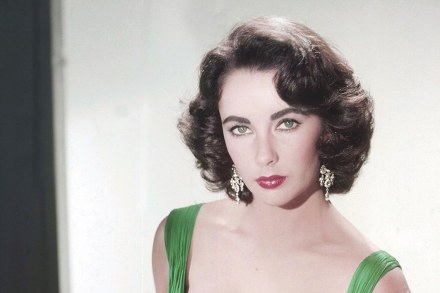
What is so startling about Elizabeth Taylor’s life story is how quickly everything happened. She was an MGM star at 12, a wife at l8, a widow at 26 and a grandmother at 38. Aged 16, she was playing Robert Taylor’s wife in Conspirator while still doing school lessons every day. ‘How can I concentrate,’ she wailed, ‘when Robert Taylor keeps sticking his tongue down my throat?’ MGM paid her mother Sara to be her chaperone, and Elizabeth felt that the only way she could escape their control was to get married – which she did, to Nicky Hilton. He had managed to stop drinking while courting her, but two weeks into the honeymoon he started again, and beat her up so badly she had a miscarriage – ‘I saw the baby in the toilet,’ she said.

Meghan and Harry have never grasped the notion of ‘only connect’

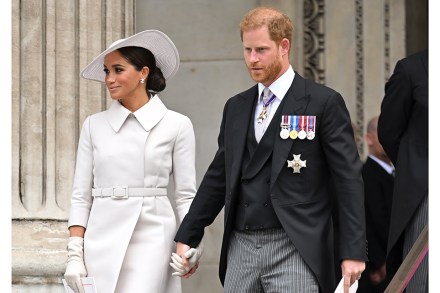
In June 2017 Graydon Carter, the editor of Vanity Fair, was surprised when Jane Sarkin, his features editor, told him they should do a cover story on Meghan Markle, the star of Suits. Carter had never heard of Markle, but then nor had most people. In her own eyes she was a huge Hollywood celebrity, but actually she was mainly unknown outside Canada, where Suits was filmed. She wasn’t even the star of the series; she was about sixth in the billing. But Sarkin knew something else about her: that she was rumoured to be marrying Prince Harry. Markle happily agreed to the interview, but said, of course, she could not talk about Harry. She wanted to be celebrated as a global ‘activist and philanthropist’.

The troubled life of Paul Newman

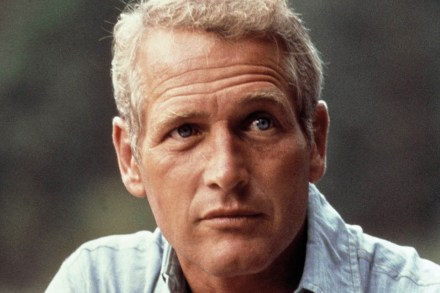
Paul Newman explains at the beginning how this book came about: ‘I want to leave some kind of record that sets things straight and pokes holes in the mythology that’s sprung up around me... Because what exists on the record has no bearing at all on the truth.’ Fair enough – but how come the book is only being published now, when Newman died in 2008? The answer seems to be that the material was lost for many years. In 1986, Newman asked his closest friend, the screenwriter Stewart Stern, to collect accounts of his life from his family and friends. He said he might use them one day to write an autobiography. Stern assembled interviews for five years and also talked to Newman extensively, but no autobiography appeared.

Jarvis Cocker measures out his life in attic junk

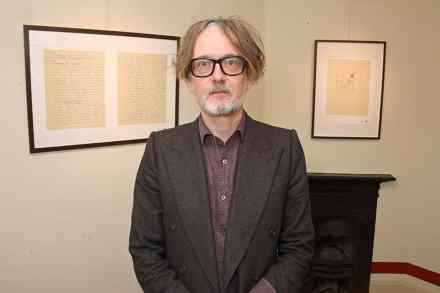
If you were hoping for an autobiography this isn’t it. Jarvis Cocker calls it ‘an inventory’ and insists: ‘This is not a life story. It’s a loft story.’ But anyway it’s as quirky and engaging as you would expect from Cocker and also the most beautifully produced book I’ve seen in years, designed by Julian House. And it does, in its circuitous way, tell us quite a lot about Cocker’s formative years in Sheffield. The MacGuffin is that Cocker is meant to be clearing out a loft where he’s been storing stuff for years and deciding what to ‘cob’ (chuck) and what to keep. Of course he has trouble cobbing anything, which is why he’s accumulated so much junk in the first place. He is a hoarder.

Sheila Hancock takes pride in her irascibility

This book begins with Sheila Hancock wondering why she is being offered a damehood. I must say I slightly wondered too, but it seems that most actresses become dames if they live long enough: vide Joan Collins, Penelope Keith, Joanna Lumley etc. And Hancock, as well as acting and making brilliant appearances on Radio 4’s Just a Minute, also does lots of charity work. She considers refusing the honour because ‘it’s hardly in keeping with my Quaker belief in equality’, but decides ‘no, it would be dreadfully rude and ungracious’. Anyway, she admires the Queen, and also Prince Charles, who left flowers and a handwritten note on her doorstep when her husband John Thaw died in 2002. So Dame Sheila it is.

Is Anna Wintour human?

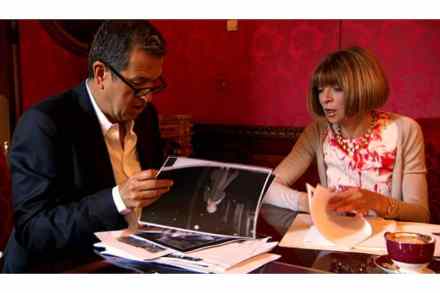
Apparently Anna Wintour wants to be seen as human, and Amy Odell’s biography goes some way to helping her achieve that aim. Nearly all the photographs show her smiling, looking friendly, even girlish. And the text quite often mentions her crying. On 9 November 2016 she cried in front of her entire staff because Hillary Clinton lost the election. But then she immediately set about trying to persuade Melania Trump to do a Vogue shoot. Melania, another tough cookie, refused unless she was guaranteed the cover. Dame Anna has been the editor of American Vogue since 1988 and holds a position of extraordinary power in the fashion world. Designers, photographers, models and celebs tremble to obey her whim.

The party’s finally over for Nigel Farage

Nigel Farage was never even an MP, but Michael Crick argues convincingly that he is one of the top five most significant politicians of the past half century. Without him we might still be in the EU. All political careers supposedly end in failure, but maybe his didn’t. As with Boris Johnson (whom he resembles in many ways), Farage’s bluff, bonhomous public image is misleading. He is far more ruthless than he appears. Many of those close to him believe that his air crash on polling day in 2010 changed his personality. He was in a two-seater plane towing a banner saying ‘Vote Ukip’ when the banner wrapped itself round the rudder and the plane nose-dived to the ground.

How Shane MacGowan became Ireland’s prodigal son

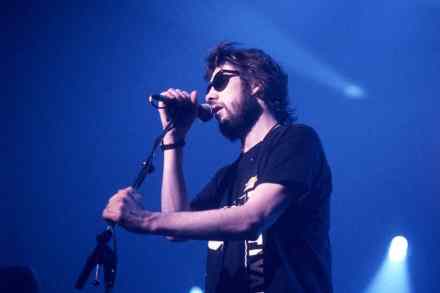
I once stood on a Dublin street with Shane MacGowan and watched little old ladies who can’t ever have been Pogues fans blessing him as they passed by: ‘God love you, Shane!’ On his 60th birthday, in 2017, Michael D. Higgins, the President, presented him with a lifetime achievement award, while Nick Cave, Bono, Johnny Depp, Sinead O’Connor and Gerry Adams applauded. He is, if not Ireland’s national treasure, then certainly its prodigal son. Yet he was not even born in Ireland. He likes to make out that he grew up as a barefoot urchin on his grandparents’ farm, The Commons, in Tipperary, but in fact he was raised in Tunbridge Wells, in a big, detached house. His parents, Maurice and Therese, were Irish, but they moved to England before he was born.

‘I’m plagued by worries of disaster’: an interview with Dominic Cummings

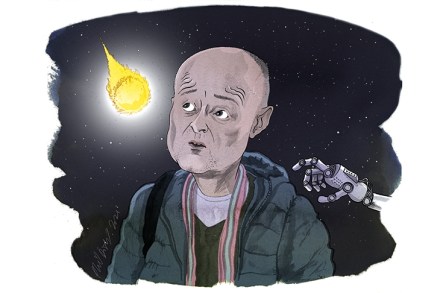
I’ve been waiting over a year to meet Dominic Cummings. Any time Mary Wakefield asked me to interview someone for The Spectator, I said: ‘I’d rather interview your husband.’ And she promised he would do it, one day. I began to lose faith, but at last the day dawns. On the way to see him I run into Mary and their son Ceddy outside their home in north London and she takes me to the kitchen to meet Dom. He is friendly, hospitable, takes me to sit in the garden to talk, and gently shoos Ceddy indoors. The one thing everyone, friend and enemy alike, agrees about Dominic Cummings is that he has a habit of telling the truth. So I am quite surprised, to put it mildly, when he tells me that Boris offered him a peerage when he left No. 10. Seriously?

‘I’m plagued by worries of disaster’: Dominic Cummings interviewed

I’ve been waiting over a year to meet Dominic Cummings. Any time Mary Wakefield asked me to interview someone for The Spectator, I said: ‘I’d rather interview your husband.’ And she promised he would do it, one day. I began to lose faith, but at last the day dawns. On the way to see him I run into Mary and their son Ceddy outside their home in north London and she takes me to the kitchen to meet Dom. He is friendly, hospitable, takes me to sit in the garden to talk, and gently shoos Ceddy indoors. The one thing everyone, friend and enemy alike, agrees about Dominic Cummings is that he has a habit of telling the truth. So I am quite surprised, to put it mildly, when he tells me that Boris offered him a peerage when he left No. 10. Seriously?

Abandoned by Paul Theroux: the diary of a sad ex-wife who sadly can’t write

When I interviewed Paul Theroux 21 years ago at his home in Hawaii, there were already rumours that his ex-wife Anne had written a book about him. In fact their son Marcel said in an interview that she had sent Paul the manuscript. Theroux denied it to me, and said breezily that he wished Anne would write a book, because then she’d have greater respect for the work involved. And: I don’t see that if she wrote a book it’s going to be an attack on me. I don’t think it’ll be ‘I discovered his lies’. So it doesn’t worry me. I’m sure she’d show it to me, but it doesn’t really matter — I’m happy to just buy it off the bookstalls. So is this the long-awaited book?

The sexploits of Mariella Novotny

Orgies! Gangsters! Drugs! Spies! Scandals! This biography promises much but I’m not sure it actually delivers, or not in any credible way. Searching for facts in the foetid gloop of Pizzichini’s prose feels like bog-snorkelling. The subject, Mariella Novotny, was a ‘party girl’, or prostitute, who turns up like Zelig in many 1960s scandals. She claimed to have had sex with John F. Kennedy and his brother Bobby when she was only 20, and she was on the scene when Christine Keeler was having her affairs with Profumo and the Russian spy Ivanov. She featured in several News of the World exposés, and later contributed an autobiographical serial to the porn magazine Club International. She was born Stella Marie Capes in 1942 in Sheffield.

A new blossoming: David Hockney paints Normandy

In 2018 David Hockney went to Normandy to look at the Bayeux Tapestry, which he had not seen for more than 40 years. He liked its great panoramic length and the absence of shadows. But while there he found himself seduced by the scenery of Normandy, its winding lanes and orchards of blossom trees. He decided he would like to paint the arrival of spring there, as he had in Woldgate, East Yorkshire, a decade earlier. He asked his long-standing assistant, Jean-Pierre Goncalves de Lima, known as J-P, to look into the possibility of renting a house. He was so delighted with the first one J-P showed him, La Grande Cour, that he exclaimed: ‘Let’s buy it!

Why is buying a car such an ordeal?

Why is it so insanely difficult to buy a car? And especially if you are a woman? Part of the trouble is that car salesmen are a particularly unreconstructed breed of men who think ‘lady’ customers will be more interested in the size of the vanity mirror than the fuel consumption. But it’s not just that — it’s the fact that they treat the transaction with all the pomp and gravitas of applying for a half-million-pound mortgage. This started back in February when I left a party (remember those?), got into my Volkswagen and set off into St James’s. Somehow I pressed the accelerator instead of the brake and drove smartly into the side of a taxi, making a serious dent.

Tom Bower pulls his punches with his life of Boris Johnson

Tom Bower explains in his acknowledgements that this is not an authorised biography and he did not seek Boris Johnson’s co-operation. Instead, he followed his usual biographical method of interviewing well over 100 people who knew Boris, some named, some not. Obvious sources are his mother Charlotte, his sister Rachel, his first wife Allegra, his long-serving mistress Petronella Wyatt, but not his second wife Marina, nor his current fiancée Carrie Symonds. He also explains, rather coyly: Readers should be aware that Boris Johnson is not a stranger in my home. Veronica Wadley, my wife, has known him as a journalist since he joined the Daily Telegraph in l988... Their long relationship is one of colleagues rather than friends.

When sexism was routine: the life of the female reporter in 1970s London

This book made me almost weep with nostalgia, but heaven knows what today’s snowflakes will make of it. Fleet Street working conditions were horrendous — the offices were filthy, and covered in a thick pall of cigarette smoke. There’d be frequent wastepaper bin fires when someone threw a smouldering cigarette into a bin full of paper and a male journalist would pee on it to put it out. (Nobody had bottles of water on their desks in those days.) The noise was ear-splitting, with everyone shouting into their phones above the constant clatter of Remingtons. When the presses started to roll around 4 p.m., the whole building shook. ‘Actually,’ Julie Welch observes, ‘that was quite erotic.’ Sexism was routine.