Lynn Barber

Lynn Barber is a former Sunday Times journalist and author of An Education and A Curious Career.

Natalie Wood’s death remains a mystery

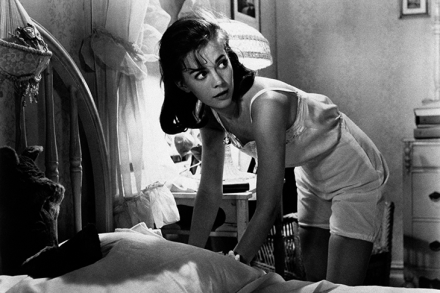
Are all children of famous parents told they must have a book in them? Since Allegra Huston’s wonderful memoir Love Child in 2009, standards have been slipping. More Than Love is by a minor actress whose only claim to fame is that she is the daughter of Natalie Wood and won’t ever let you forget it. The book begins with Natasha Gregson Wagner waking up on 29 November 1981 and hearing a voice on the radio saying that Natalie Wood’s body had been found in the sea off Catalina Island. Suddenly the house was full of people and there were mobs of cameramen outside. Robert Wagner (who she always calls Daddy, though he was not her father) came home and told her and her half-sister Courtney that their mother had died but that he was there for them always.

Trick or treat: the pros and cons of being hacked

The phone rang at 9 a.m. on Monday, with an old friend from Italy saying: ‘Of course I’ll do you a favour, my dear, but you don’t say what it is.’ I thought he’d finally lost his marbles (always a possibility with friends my age) but he said I’d just sent him an email asking if he would do me a favour. I hadn’t sent any emails that morning so I was mystified. As soon as I put the phone down, another friend rang saying of course he would help, but he was on Hampstead Heath and it would have to wait till he got home. But what had to wait? ‘Sending the gift token you wanted.

Pointless but beautiful – and good for going to sleep to: Monument Valley reviewed

I was going to write about Monument Valley, and I suppose I will eventually, but first I have to write about this total catastrophe that has overwhelmed my life. Online Scrabble has gone! This was the proper Mattel trademark version that I’ve been playing for years with friends and it has suddenly been replaced by some hideous all-singing all-dancing version called Scrabble GO which looks like Candy Crush and — worse — is infested with ads. Not quick flash ads either but interminable videos about, say, a new type of squeegee. Everyone tells me I will get used to it eventually but I’m not sure I want to. Did you ever, as a child, lose your favourite old sucking blanket when some hygiene Nazi put it in the washing machine and it came out in shreds?

Splashing the cash at VIP nightclubs is now the favourite recreation of the rich

The world described in this book is weird enough anyway, but reading about it during lockdown is positively surreal. It’s about VIP nightclubs, mainly in New York, but also in Miami, Cannes, St Tropez or wherever rich people congregate. Ashley Mears is a professor of sociology, as she likes to remind us with references to Bourdieu, Durkheim, Veblen, etc, but mainly she is a very good reporter. The reason she was allowed into the VIP clubs is that she used to be a model and can still pass as one, though actually too old for admission (at 31) by most club standards. But it amused some of the promoters to have a professor who looked like a model taking an interest in their work. Some definitions first.

Why do they call it a game? It is servitude: Nintendo Switch’s Animal Crossing reviewed

Welcome to my debut as gaming correspondent, the apex of my journalistic career! And how witty of The Spectator to choose someone who has never played a computer game in her life. But luckily I have some grandchildren to advise me. First decision is what games console I want and the general consensus is Nintendo Switch, which has the advantage of being small and portable and not attached to the television. Then — what game? The experts recommend Animal Crossing because, they say, it is foolproof. (Ha!) So I order a Nintendo, which takes days to come (apparently ‘everyone’ is into gaming during lockdown) and go through the rigmarole of registering. What name do I want to call myself? Well, Lynn has the advantage that I might remember it. And what avatar? Huh?

Unspeakably prolix and petty: will anyone want to read John Bercow’s autobiography?

John Bercow obviously intended his book to annoy people, and he’s certainly succeeded in that. MPs who don’t find their names in the index can generally count themselves lucky. He just loves pouring shit over other politicians, especially Tories. He finds David Cameron ‘an opportunist lightweight, sniffy, supercilious and deeply snobbish’; Theresa May ‘as wooden as your average coffee table’; Michael Gove ‘prone to oleaginous flattery’; Amber Rudd ‘all gong and no dinner’; Michael Howard ‘a decidedly cold fish’.

A lovable, impossible man: Bryan Robertson, gifted curator and Spectator critic

Andrew Lambirth claims that Bryan Robertson was ‘the greatest director the Tate Gallery never had’; but on the evidence of this book, he would have been a disaster — chaotic, hopeless with money and eternally late. What he actually was was the inspired and inspiring director of the Whitechapel Gallery from 1952 to 1969. He also wrote on art and ballet for The Spectator and was an esteemed contributor to The Critics radio programme. But he did not get the Tate appointment he longed for and was effectively forgotten by l990, so it’s a bit mysterious why he is being written about now.

Burnt out at 27: the tragedy of Janis Joplin

Janis Joplin hated the word ‘star’, but she loved the trappings. As soon as she made serious money she bought a Porsche convertible and had it painted with psychedelic images to make it the most recognisable car in San Francisco. She also rejoiced in her lynx fur coat, courtesy of Southern Comfort. She sent them a file of all the numerous press clippings that said Southern Comfort was her favourite tipple and they responded with a cheque. ‘Oh man, that was the best hustle I ever pulled,’ she crowed to a reporter. ‘Can you imagine getting paid for passing out for two years?’ If only she’d stuck to Southern Comfort she might still be alive (she was born in 1943) instead of dying at 27, like so many rock stars, of a heroin overdose.

‘I’ve had two totally successful marriages’: Stanley Johnson interviewed

If anything could make me feel sorry for Boris Johnson, it’s meeting his father, Stanley. Before we met, he sent me a great list of press cuttings about his appearances with the Extinction Rebellion campaign, and ordered me to watch his recent reality show Celebrity Hunted on Channel 4 and read his latest novel, Kompromat. (The former, where celebrities become ‘fugitives’ and go on the run, was excruciating. But the novel — soon to be retitled The Brexit Conspiracy — is good fun, containing thinly disguised portraits of Putin, Trump, Murdoch, and also an ex-London mayor ‘whose ebullient exterior concealed a razor-sharp mind and a pronounced streak of political cunning’.

The Lynn Barber Edition

26 min listen

Lynn Barber is an award-winning journalist known for her incisive interviews and her best-selling books An Education and How to Improve Your Man in Bed. On this episode, she talks to Katy about her lifetime of interviewing the great and the good, from Salvador Dali to Katie Price; the death threats she received from Rafa Nadal's fans; and her favourite (and least favourite) BBC journalists.Presented by Katy Balls.

A life apart: an interview with Frank Field

Frank Field has announced today that he is forming the 'Birkenhead Social Justice Party' to stand at the next election. Field resigned from the Labour whip in July last year. In December he spoke to Lynn Barber and explained why he's used to doing things differently: Frank Field was given a standing ovation when he won The Spectator’s Parliamentarian of the Year award two weeks ago. Normally there’s polite applause, but he is the hero of the current clash between the Corbynistas and what used to be the Labour party.

‘Duty howled’

We could all forget about Ann Widdecombe for the past nine years while she was doing Strictly Come Dancing and panto and Celebrity Big Brother and the rest. But now she has risen from the political grave to become a Brexit MEP. Tragically, it has meant cancelling her Christmas panto booking as Chop Suey in Aladdin, which she was hugely looking forward to, but ‘Duty didn’t just call,’ she says, ‘it positively howled.’ So now she is playing Chop Suey to Nigel Farage’s Aladdin. They certainly made an eye-catching entrance to their first plenary session in Strasbourg, turning their backs on parliament while the ‘Ode to Joy’ was played.

A fatal misunderstanding

What is it about Naomi Wolf that inspires such venom? Perhaps that she’s American, brash, media-savvy and not averse to showing off her impressive embonpoint, which might go down badly in academe. But also — she makes mistakes. She made a pretty bad mistake in her very first book, The Beauty Myth, published in l990, by saying that 150,000 women died of anorexia in the US every year — whereas in fact she should have said 150,000 women suffered from anorexia. In this book, she seems to have dropped an even bigger clanger. Matthew Sweet started the ball rolling on his Radio 3 Free Thinking programme, when he told her that she was quite wrong to say that the number of executions for sodomy increased in the latter half of the l9th century.

Interview with Andrew Adonis: a master of social media

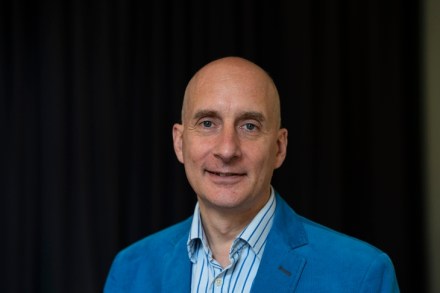
The news over Easter that Lord Adonis, the counterweight to nominative determinism, was standing as a Labour Remain MEP was greeted with a fair degree of scepticism. Many commented that it would be a novelty for him to stand for anything — in his early twenties he became an SDP councillor in Oxford, but that’s the last time he was elected to anything. His career has been based entirely on patronage, mainly from Tony Blair, who plucked him from journalism (he worked for the Financial Times and then the Observer) to run his policy unit, and then made him a peer so that he could become minister for education. (Adonis is still good friends with Blair, and says: ‘He’s unchanged. He is God’s gift to charisma and dynamism.

Split personality | 2 May 2019

The news over Easter that Lord Adonis, the counterweight to nominative determinism, was standing as a Labour Remain MEP was greeted with a fair degree of scepticism. Many commented that it would be a novelty for him to stand for anything — in his early twenties he became an SDP councillor in Oxford, but that’s the last time he was elected to anything. His career has been based entirely on patronage, mainly from Tony Blair, who plucked him from journalism (he worked for the Financial Times and then the Observer) to run his policy unit, and then made him a peer so that he could become minister for education. (Adonis is still good friends with Blair, and says: ‘He’s unchanged. He is God’s gift to charisma and dynamism.

Back to the fabulous Fifties

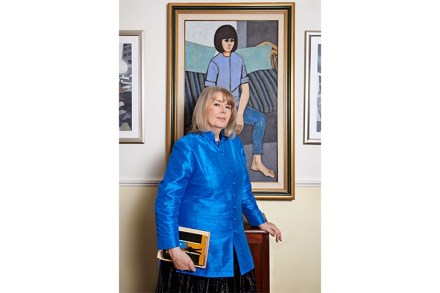
Charlotte Bingham has had an extraordinary writing career. She wrote her first book, Coronet Among the Weeds (newly republished by Bloomsbury), when she was just 19. It was a memoir of her life as a 1950s debutante — the ‘weeds’ were the chinless wonders she met at debs’ dances — and it became an instant hit in 1963. She then wrote another 33 bestselling novels and co-wrote, with her husband Terence Brady, various TV series, including Upstairs Downstairs. But when he was dying of cancer two years ago, she suddenly skipped back to the 1950s and picked up the story of Coronet Among the Weeds where it left off. The result was a very surprising memoir called MI5 and Me, published last year, to which Spies and Stars is the follow-up.

A life apart

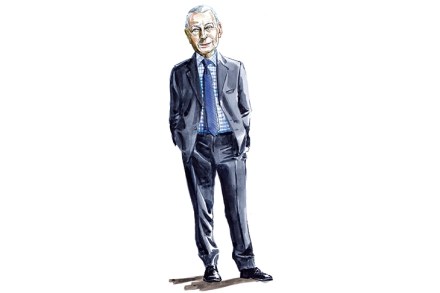
Frank Field was given a standing ovation when he won The Spectator’s Parliamentarian of the Year award two weeks ago. Normally there’s polite applause, but he is the hero of the current clash between the Corbynistas and what used to be the Labour party. His local party in Birkenhead has threatened to deselect him so he plans to stand as an Independent next time, and he said in his acceptance speech: ‘If I’m successful in winning the seat again, then in some small way, as with Brexit, we will begin to change British politics.’ I met him in Portcullis House at the height of the Brexit furore when all the commentators were saying they had never known such cliffhanging times.

On being sacked

It was a shock but not really a surprise. I came back from holiday at the beginning of August to find an item in the UK Press Gazette saying that Decca Aitkenhead had just been appointed chief interviewer at the Sunday Times, and an email from the Sunday Times magazine editor, Eleanor Mills, saying we needed to meet. It was not difficult to put two and two together. Eleanor suggested we meet at the Flask in Highgate — which was kind because it’s near my home — and when I arrived she was already sitting there with a glass of red wine lined up for me. Such unprecedented thoughtfulness made me wonder for a mad moment if she was planning to offer me a rise instead of sacking me, but no.

In memory of Alexander Chancellor

This year began badly with the death of Alexander Chancellor, former editor of this magazine. He was the most fun of anyone I ever knew. Everyone at his funeral tried to describe his laugh and some even tried to imitate it, but with little success. It was as unique as the boom of the bittern. Explosive, volcanic, often involving quite a lot of spitting, it was also infectious: it was impossible to be glum in his company. Alexander liked to appear a dilettante, but as well as being a brilliant writer and editor, he was an excellent cook and a seriously good pianist. (He even briefly thought of making music his career.) He was also, of course, one of the last of the great lunchers.

Theresa May’s skirts are a disgrace

I asked a Tory friend in the country if she had any strong views about the Prime Minister that she would like me to express on her behalf. Yes, she said, her skirts are a disgrace. Why does she always have to show her knees? I relayed this to a friend in London, saying I sometimes wondered whether women should ever have been given the vote, but she eyed me sternly and said: ‘I couldn’t agree more. Nobody wants to see Theresa May’s knees.’ Honestly! It’s not as if she wears ra-ra skirts or pussy-pelmets. But I notice that she wore a knee-length coat and skirt for the Remembrance Day service.