Lucy Dunn

Lucy Dunn

Lucy Dunn is The Spectator's political correspondent. She is a qualified doctor from Glasgow.

The PMQs question that should really worry Keir Starmer

The leader of the opposition found it difficult to land her punches in Wednesday’s Prime Minister’s Questions, with Kemi Badenoch not quite able to work out how she wanted to attack Sir Keir Starmer. The Prime Minister fended off a number of issues from the Tories, from the economy to the Chagos Islands to Gerry Adams – but in the end it was a question from his own side that threw the Labour leader off balance. It wasn’t the usual soft questioning the Prime Minister might have expected from his own party when new Labour MP Brian Leishman stood up to speak.

Are the SNP exploiting Labour woes?

13 min listen

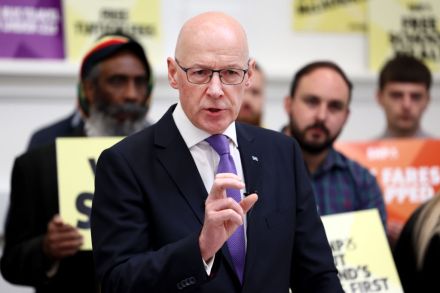
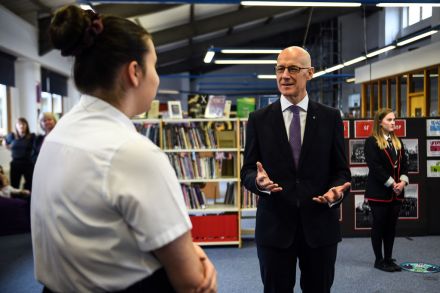
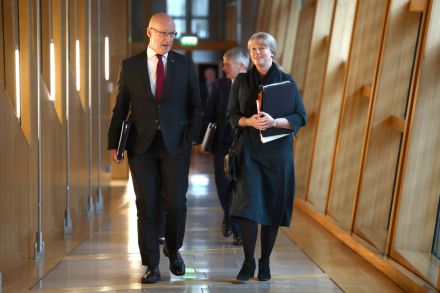
The SNP presented their budget this week in Holyrood with the news that all pensioners would receive a winter fuel allowance and a pledge to scrap the two-child benefit cap. Questions remain about how they will make this budget work financially, but it is clear that they have one eye on the 2026 Scottish Parliament elections. How could this impact Labour north, and south, of the border? And, after a torrid year for the SNP, can First Minister John Swinney turn things around?  Iain MacWhirter and Lucy Dunn join James Heale to discuss.  Produced by Patrick Gibbons.

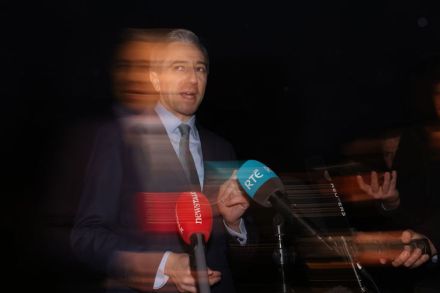
Will Ireland’s fed-up voters punish the Taoiseach in the snap election?

Will the elections taking place across Ireland today result in a whole new government? Not really, is the conclusion most Irish citizens seem to be coming to. ‘It’ll be the same two main parties in government – nothing will change,’ one hospitality manager notes reluctantly, nodding to the current three-party coalition in the Dáil of the centre-right Fine Gael and Fianna Fáil with the left-wing Greens. ‘Ireland likes a moderate government,’ another voter added. ‘Anything that’s not radical.’  Fine Gael has suffered an exodus of longstanding politicians The current Taoiseach, Fine Gael’s Simon Harris, saw his popularity soar by 17 points to 55 per cent just months after he replaced Leo Varadkar in March.

Now the SNP must prove it can govern

In the history of devolution, no Westminster government has ever given Scotland as large a block grant settlement as the one announced by Labour on Wednesday. In her fiscal statement, the chancellor declared that politicians north of the border will receive £1.5 billion this year and a record £3.4 billion next year via the Barnett formula. It’s a move that caught the SNP by surprise, and one that has thrown the nationalist’s political strategy into doubt.

Tory leadership debate: who came out on top?

13 min listen

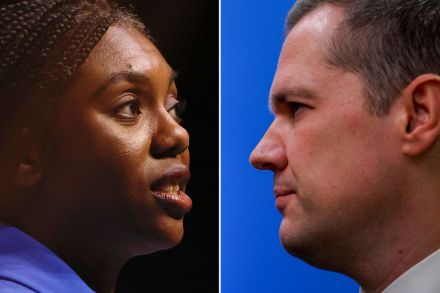
Robert Jenrick and Kemi Badenoch, the final two candidates for the Tory leadership, went up against each other on a special GB News show last night. Kemi came out swinging in defence of her ‘culture warrior’ tag, but many wanted some more meat on the bones when it comes to her stance on policy. Meanwhile, Jenrick clearly had a message to land – but will the membership see through his plea to ‘end the drama’? And did either of them manage to change any minds? Katy Balls speaks to Lucy Dunn and Giles Dilnot, editor of Conservative Home. Produced by Cindy Yu and Oscar Edmondson.

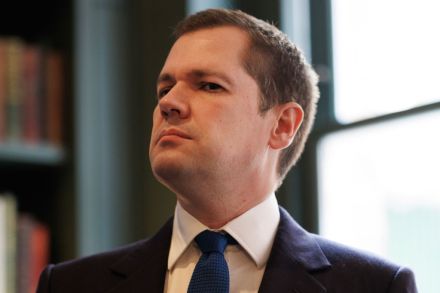
Robert Jenrick must do more

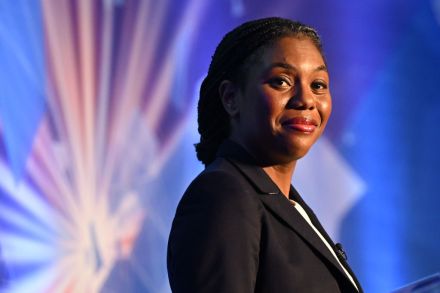
When Kemi Badenoch took to the floor during GB News’s TV Q&A on Thursday evening, the atmosphere in the room climbed a notch. Robert Jenrick had just finished his pitch to the party and handled questions well, but it was clear even before the audience rated their leadership candidates that it was Badenoch the majority were there to see. While Jenrick’s ECHR rhetoric received applause, almost every sentence of his rival’s opening pitch was met with cheers. If the audience was representative of the wider Tory membership, Badenoch is on track for an easy win in the leadership race.

Scotland’s doctors ‘half way’ to full pay restoration

Junior doctors in Scotland – now called 'resident' doctors following a recent name change agreed by the British Medical Association and the UK government – have received more good news this morning. Humza Yousaf pushed by the prospect of strike action last year by offering medics a 12.4 per cent pay rise and Scotland's doctor have today been offered another increase of 11 per cent over 2024/25. The doctors' union is recommending that staff vote for the rise, and now it's up to medics to accept the latest pay uplift presented to them. The cumulative rise would see an uplift of 8.5 per cent backdated to April this year, with a further 2.3 per cent boost implemented from 1 October.

This is a ten-year plan, says Labour health minister

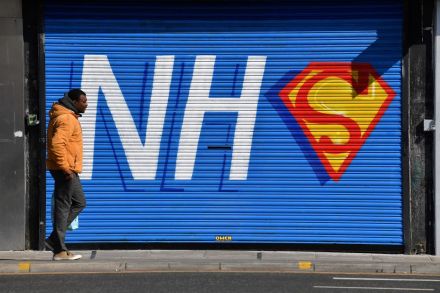
Sir Keir Starmer’s Labour government has made a lot of noise about the perilous state of the NHS, insisting the institution must ‘reform or die’. But while the rhetoric is right, what does Labour actually plan to do about it? There are ‘three shifts’, health minister Stephen Kinnock told Isabel Hardman at The Spectator’s ‘How to fix a broken NHS’ audience today: a change of focus from hospital care to a more community-centred approach, a move from a paper-based, analogue-style practice to better use of AI and digital technology, and a transition from dealing with sickness to emphasising prevention. But it’s not just the NHS that has to adapt and modernise: other facets of Britain’s healthcare system require change.

Stop calling us ‘junior’, demand doctors

Junior doctors made headlines this week after they begrudgingly accepted the government’s pay deal. Two thirds of British Medical Association (BMA) members voted in favour of Health Secretary Wes Streeting’s offer, meaning medics across England will see a 22.3 per cent rise consolidated into their pay. Yet the move hasn’t entirely eased tensions between junior doctors and the government, with co-chair of the BMA Dr Vivek Trivedi insisting that medics will still ‘expect pay uplifts each and every year’. The co-chair of the doctors’ union went on to warn Streeting that wage increases must ‘occur in a timely fashion and at the pace that our members have asked for’ – otherwise, as Kate Andrews wrote, medics will consider striking again.

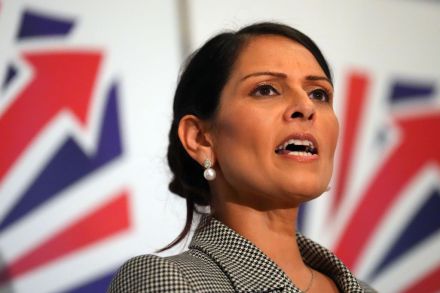
Will Priti Patel’s ‘unity’ pitch succeed?

Priti Patel’s Tory leadership launch in Westminster this afternoon was an upbeat affair, featuring mango lassi and a tonne of merchandise. With caps, tote bags and even festival-esque ‘tour’ date t-shirts on offer for enthusiastic supporters, today’s event was excitedly dubbed a ‘political Glastonbury’ by one of her team, already kitted out in pro-Priti gear. Certainly, Patel’s speech took on an optimistic tone. Leading on her 14 years of experience as a Tory MP (including three as Home Secretary) she touched only briefly upon the recent ‘historic defeat’ suffered by her party at the general election.

Keir vs Elon: round II

14 min listen

Elon Musk has it in for the Labour government, his latest tweet screenshotting a racist comment Labour MP Lauren Edwards made over a decade ago. On this episode, Lucy Dunn talks to Katy Balls and John McTernan about whether Big Tech can be regulated, and how DSIT Secretary Peter Kyle thinks the government should treat tech tycoons. Produced by Oscar Edmondson and Cindy Yu.

How the Tory candidates have responded to the riots

12 min listen

The last week has been dominated by rioting, and last night was expected to be a particularly explosive night. How did it measure up against expectations?  Meanwhile, the Tory leadership race continues to chug along, with each of the six candidates providing their own take on Keir Starmer's response to the violent disorder. Rishi Sunak has been surprisingly absent. How do you provide effective opposition during a time of civil disobedience? Lucy Dunn speaks to Katy Balls and Paul Goodman, former editor of Conservative Home.  Produced by Cindy Yu and Oscar Edmondson.

Scotland’s poorest students are being failed by the SNP

Scotland’s exam results day has been something of a disaster this year. An already stressful time for anxious pupils has been made worse after hundreds of students across the country received blank email templates instead of their grades – a gaffe which the Scottish Qualifications Authority is scrambling to fix – while a flailing Scottish government struggles to explain why the poverty-related attainment looks worse, and wider, than ever. The bad news for Scottish students doesn’t end there. 2024’s national exam results don’t just demonstrate that the gap has widened; today’s figures have almost all eclipsed pre-pandemic levels.

Is Robert Jenrick emerging as a leadership frontrunner?

Robert Jenrick chose a swelteringly hot day in sunny Newark to stage his official leadership campaign launch. ‘I’m in politics for you,’ he told the packed-out room, filled with a mixed crowd of young families and veteran Tory supporters. ‘We can persuade young people to join the Conservatives again,’ the 42-year-old insisted. ‘We must be better. We can be better.’ It was in this optimistic vein that Jenrick’s speech continued. In a rosy summary of the Conservatives’ time in government, the former government minister first pointed to his party’s achievements: school reforms, keeping Corbyn out, swooping to the side of Ukraine and – despite being a Remainer himself – Brexit. ‘All of this begs a big question,’ Jenrick concluded.

Will Starmer’s thug crackdown get results?

When Sir Keir Starmer arrived in Southport on Tuesday to pay his respects for the victims of the stabbing tragedy, he was heckled by locals. ‘How many more children are going to die in our streets, Prime Minister?’ called one distraught resident, as another cried: ‘Get the truth out!’ Just hours after the PM left, the roads were filled by far-right protesters after misinformation about the identity of the perpetrator spread on social media. Two days of rioting and over 100 arrests later, the Prime Minister today called an emergency press conference after urgently meeting with the country’s top police chiefs.

England’s GPs vote to take industrial action

Just days after junior doctors in England were offered a cumulative pay rise of 22 per cent, general practitioners across the country have voted in favour of industrial action over funding. Now over 98 per cent of senior unionised GPs have voted to take industrial action, on a turnout of just under 70 per cent. It comes after months of disputes over contract changes that would see community doctors receive a practice funding uplift of just 1.9 per cent. Slamming the sub-inflationary rise, the BMA says that without more support GP surgeries will ‘struggle to stay financially viable…and risk closure’.

Will Labour give in to Sinn Féin’s demands?

It’s not often that Irish republican party Sinn Féin hosts events in London, but the group included the UK capital in its post-election victory lap this week. Five of its seven MPs gathered in a dimly-lit hall in Hammersmith’s Irish Cultural Centre on Tuesday as the room filled with jubilant supporters, with many a Guinness in hand. There is certainly cause for celebration in the party: Sinn Féin has achieved a ‘perfect hat-trick’, as Belfast West MP Paul Maskey described it, becoming the largest group in local government, the Stormont Assembly and now Northern Irish party in Westminster. Retaining all seven of its seats, Sinn Féin increased its vote share in the general election by four points to 27 per cent.

Tory leadership race latest: what’s going on?

14 min listen

The Conservatives need to choose a new leader, but first they need to agree on the process... Easier said than done. Lucy Dunn talks to Fraser Nelson and Katy Balls about the latest on the upcoming leadership race: what will the race look like, who are the the runners and riders, and how do they rate Rishi Sunak's performance as leader of the opposition? Produced by Patrick Gibbons.

Every bill announced in Labour’s King’s Speech

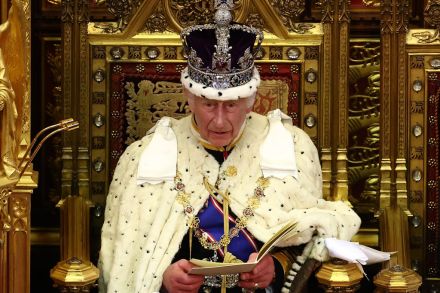
King Charles has now finished taking part in the state opening of parliament for the first time as monarch. The purpose of today’s King’s Speech was to set out the government’s legislative agenda for the upcoming parliamentary session, the first since the general election. Sir Keir Starmer has put forward a big government programme that promises to ‘always put the country first’. It will be based upon ‘security, fairness and opportunity for all’, with a heavy emphasis on economic stability and the need for decisions to be ‘consistent with its fiscal rules’. In a lengthy statement by the King, the new Labour government announced the highest number of bills since 2005.

Two-child benefit cap row – Starmer’s first big test?

13 min listen

Keir Starmer is coming under pressure to commit to scrapping the two-child benefit cap, introduced in 2017 by the Conservatives. Plaid Cymru, the Greens, Nigel Farage, the SNP, and now some Labour backbenchers are all calling for its removal. Can Starmer hold the line? Elsewhere: in Wales, First Minister Vaughan Gething has resigned after four months in the job, and in the US, Donald Trump has chosen the junior senator from Ohio J.D. Vance as his nominee for Vice-President. What could these developments mean for Labour?Lucy Dunn speaks to Katy Balls and Isabel Hardman.  Produced by Patrick Gibbons and Oscar Edmondson.