Lucy Dunn

Lucy Dunn

Lucy Dunn is The Spectator's political correspondent. She is a qualified doctor from Glasgow.

EU-UK reset: ‘brexit betrayal’?

15 min listen

As EU leaders arrive in London for a summit hosted by Keir Starmer, there has been an announcement that the UK and EU have reached a deal. The UK has extended its agreement on EU fishing boats in British waters, while in return fewer checks on British food exports are expected. There have also been discussions about a defence pact, reduced tuition fees for EU students and access to electronic passport gates for British holiday-makers.  While we await further details, deputy political editor James Heale and director of the Centre for European Reform Charles Grant join Lucy Dunn to unpack what we know so far. Will the deal be an easy sell, or does it risk being seen as a ‘brexit betrayal’?

Can the assisted dying bill survive?

16 min listen

Labour MP Kim Leadbeater’s assisted dying bill is back in the Commons for the report stage today – returning to parliament for the first time since major changes were made to the legislation. While Leadbeater has insisted the bill is coming back ‘even stronger’ than before, support among MPs appears to be fading. The mood in parliament was different to the second reading – which listeners will remember as a self-congratulatory affair, hailed as a ‘historic’ day by Leadbeater – but today’s debate was notably more ill-tempered. The majority of speeches seemed to oppose the bill rather than support it, and a late intervention by Esther Rantzen did not help.

Mixed signals for Labour as GDP rises but the rich leave

13 min listen

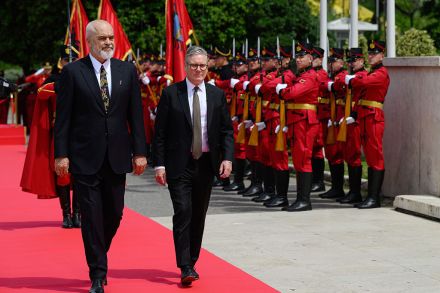
The Prime Minister is in Albania today to focus on immigration: the government has announced that the UK is in talks to set up 'return hubs' with other countries to send failed asylum seekers abroad.  Unfortunately for the government though, also going abroad are Britain's millionaires. In the cover article for this week's Spectator, our economics editor Michael Simmons writes that London lost 11,300 dollar millionaires last year alone. These figures run in stark contrast to today's news that GDP increased by 0.7% in the first quarter of 2025. This continues a trend of mixed signals for Britain's economy.

Is Badenoch getting better, or is Starmer getting worse?

12 min listen

Prime Minister’s Questions today, and there was lots on the agenda. It is often a fool’s game to guess what the leader of the opposition will lead on, but today she had a wide choice of ammunition – from unemployment to welfare to the government’s new stance on migration to the war in Gaza. Kemi Badenoch looked assured when holding Keir Starmer to account on the Chancellor’s ‘jobs tax’ and on funding for children’s hospices. But can we attribute her performance to growing confidence in the role – or is the news just getting worse for Keir Starmer?

Coffee House Shots Live with Zia Yusuf and Jacob Rees-Mogg

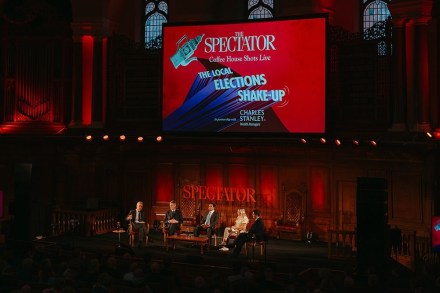
The post-mortem has begun on a historic set of local elections – but where does each party go from here? Is Reform unstoppable? Is Kemi the one to lead the Conservative rebuild? Do Labour really ‘get it’? Michael Gove, James Heale and Lucy Dunn are joined by special guests Zia Yusuf and Jacob Rees-Mogg to unpack these questions – as well as the broader ramifications of the local elections on British politics. Listen for: Zia’s understanding of why Reform did so well; Jacob’s concession that a Tory/Reform pact of some description could be the only way for the Conservatives to avoid extinction; and Michael’s assessment of whether Labour will force us closer to the EU. This podcast was originally recorded live at the Emmanuel Centre in Westminster on Wednesday 7 May.

Is support for Scotland’s euthanasia bill dying?

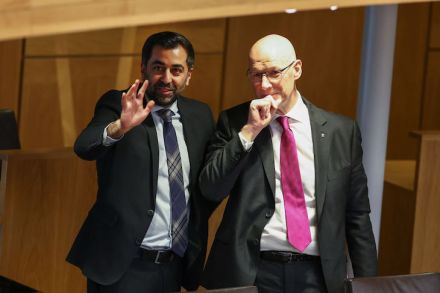
While Kim Leadbeater’s assisted dying bill makes its way through the UK parliament, in Scotland a separate assisted dying bill will be voted on next week. Scottish Liberal Democrat Liam McArthur has put forward legislation that would allow those deemed terminally ill north of the border to take their own lives, with MSPs allowed a free vote on the issue on 13 May. The decision to back the bill is a matter of conscience for parliamentarians. But now, less than a week before decision day, both First Minister John Swinney and his predecessor Humza Yousaf have announced that they will vote against it.

US trade deal: ‘a political win, not an economic win’

11 min listen

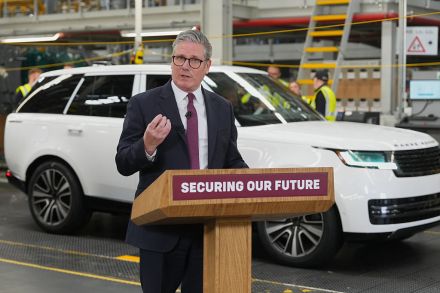
On Thursday afternoon Prime Minister Keir Starmer gave a speech about closing the long-awaited UK-US trade deal. Not that his announcement went without a hitch however; after first directing lobby journalists to the wrong Jaguar Land Rover factory in Coventry, Starmer then had his limelight stolen by the election of a new Pope. Although, Labour’s ‘historic’ trade deal has pipped the Pope on most front pages. The reception has been positive across government too, with many heralding a political win for Labour – just when they really needed one after the local elections. But is this an economic win as well? Critics say the deal is shallow, clearly just a start, and are at pains to point out that we are still in a worse trading position than earlier this year.

Reform looms large for Scotland’s Unionists

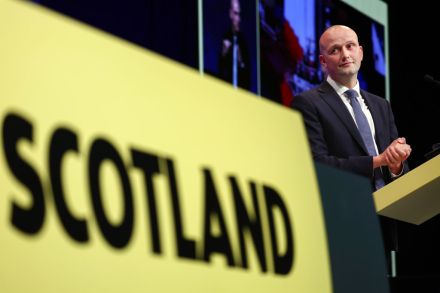
The last twelve months in Britain have seen a general election, leadership contests, council polls, mayoral races and even a parliamentary by-election – and the next year isn’t looking to be much quieter as the Scottish and Welsh parliamentary elections loom. The starting gun was fired on the race for Scotland’s Holyrood poll today, as party leaders from all sides of the Chamber took to podiums across the country to make their pitches to the public.  Speaking from Edinburgh this morning, SNP First Minister John Swinney celebrated an anniversary of his own: his first year in the top job, after he replaced his beleaguered predecessor Humza Yousaf in April last year.

What was new in John Swinney’s Programme for Government?

The countdown is on, with only a year to go until Scottish voters cast their ballots in the 2026 Holyrood election. This is why SNP First Minister John Swinney has decided to bring forward his Programme for Government – usually held in September – to today, allowing him a full twelve months to deliver on his latest set of commitments before his party’s popularity is put to the test in next year’s poll. Having taken on the top job only a year ago, Swinney has had limited time to turn his vision for Scotland, organised across four clearly-defined priorities, into a reality.

Ash Regan: Scottish politicians have been gaslighting the public for years

Ash Regan quit Nicola Sturgeon’s SNP government almost three years ago in protest at the former first minister’s controversial gender reform bill. Regan rose to prominence after she left her role as community safety minister over the legislation and then stood, unsuccessfully, to be leader of the party in 2023 after Sturgeon stepped down. Fast forward about six months and Regan ditched the SNP altogether, defecting to the late Alex Salmond’s Alba party. Now, the pro-independence party’s Holyrood leader speaks to The Spectator about the changing state of politics north of the border, the first in a series of special Coffee House Shots episodes in the run-up to the 2026 Holyrood elections.

Ash Regan on the rise of Reform in Scotland, what is a woman and why ‘no-one resigns anymore’

21 min listen

In this special edition of Coffee House Shots, Lucy Dunn speaks to the Holyrood leader of the pro-independence Alba party, Ash Regan. Regan was formerly a member of the SNP and even ran to be the party’s leader after Nicola Sturgeon resigned in 2023. She defected to the late Alex Salmond’s Alba party 18 months ago and ran for party leader after his death. On the podcast, she talks to Lucy about the difference between Alba and the SNP, the threat of Reform in Scotland, the ‘performative’ nature of Scottish politics, the Supreme Court ruling over what is a woman, and why she was right to resign over the Gender Recognition Bill.

Does Keir Starmer ‘get it’?

16 min listen

As the parties regroup following the local elections, both Labour and the Conservatives have to face a miserable result. Lucy Dunn speaks to Isabel Hardman and pollster Luke Tryl about the anger and disillusionment amongst the electorate, and why Keir Starmer message 'we need to go further and faster' can't cut through.

Reform’s next challenge is delivery

The Cholmondeley Arms is set just off the main road of the quaint, red-bricked market town of Frodsham. Not that this watering hole is much of a tranquil escape: it’s lavishly draped in Union Jacks and VE day memorabilia and boasts a spacious beer garden out the back. It doesn’t serve food and features a healthy crowd of regulars sat by the bar. It plays clubland classics from 11am to 2am, when it ejects its clientele. Ex-Labour MP Mike Amesbury should be able to testify to that, given this is the pub he stayed at ‘til closing last year before he decided to knock one of his constituents for six.

Local elections: Reform seizes Runcorn in teal tsunami

14 min listen

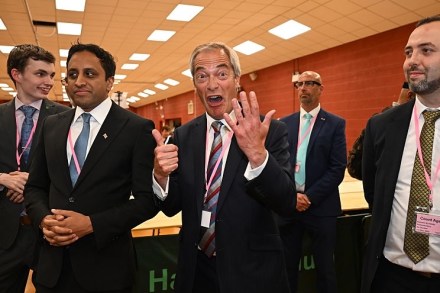
Votes are being counted across England, but there is a clear early winner from these local elections: Nigel Farage. His party triumphed in the Runcorn and Helsby by-election this morning, overturning a 14,000-odd majority and winning by just six votes! Elsewhere, Andrea Jenkyns triumphed in Lincolnshire; Reform came second in a number of mayoral races; and their 38 per cent vote share in Runcorn matches the best-ever performance that Ukip achieved in a by-election. So far, the story is one of teal triumph – at the expense of the two main parties. Labour are already pointing to the difficulty incumbents often face at local elections, and will claim victory after narrowly holding out in three mayoral races: North Tyneside, the West of England and Doncaster.

Your guide to the 2025 election results

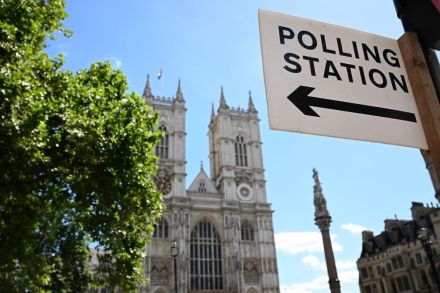
Tomorrow, voters will go to the polls in Sir Keir Starmer’s first big electoral test as Prime Minister. Across England, there are 1,641 wards, 14 county councils, eight unitary authorities, six mayors and one parliamentary constituency up for grabs. Nine months after coming to power, Labour’s honeymoon period has worn off – and voters turning out tomorrow could make their feelings known. It is the smaller parties which are widely expected to benefit in this set of local polls: namely the Lib Dems and Reform UK. Below are ten races to keep an eye on: West of England mayoral election – expected 2 a.m.

‘The spring of discontent’

11 min listen

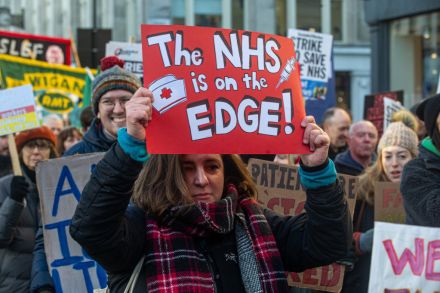
Are we looking at a spring of discontent? It’s the final push ahead of this week’s local elections, and what Keir Starmer wants to talk about is expanding the NHS app – which he says will cut waiting lists and end the days of the health service living in the ‘dark ages’. However, what people are actually talking about is public sector pay. The independent pay review body has recommended pay rises of around 4 per cent for teachers and nurses. Will there be industrial action? Are Labour going to be pushed into another round of public sector pay increases? Meanwhile, after Ben Houchen’s comments this weekend, the murmurs of a Tory/Reform pact refuse to go away. Was his a helpful intervention? Lucy Dunn speaks to James Heale and Isabel Hardman. Produced by Oscar Edmondson.

Is a Scottish visa the answer to Scotland’s workforce crisis?

There aren’t many politicians calling for a rise in immigration to Britain at the moment, but you can count on the SNP to be different. Today the party’s Scottish visa bill had its second reading in the sparsely-populated Commons, with sponsor Arbroath and Broughty Ferry MP Stephen Gethins spending 50 minutes elaborately making the case for its passage through parliament. Taking aim at the ‘poisonous’ Reform stance on Britain’s borders, Gethins’ speech dipped between reprimanding Labour for their lack of support and pleading with them to back his call to fully devolve immigration powers to Scotland. Neither carrot nor stick seemed to have much effect.

Who do voters trust most on the economy?

12 min listen

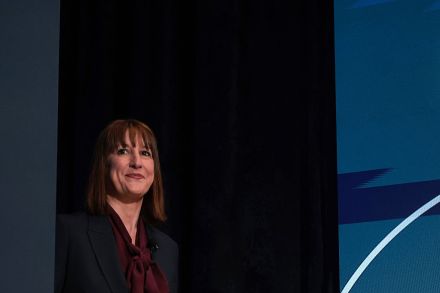
Chancellor Rachel Reeves has been in Washington D.C. this week at the IMF’s spring meetings, and will meet US Treasury Secretary Scott Bessent tomorrow. Cue the ususal talk of compromising on chlorinated chicken. Not so, reports the Spectator’s economics editor Michael Simmons, who explains that Reeves may offer a reduction in long-standing tariffs already imposed on American cars. But, it’s been a bad week of economic news for the Chancellor as the IMF downgraded the UK’s growth forecast.  We’re also one week away from the local elections – Starmer’s first big test since last year’s general election.

How well are Wes Streeting’s health reforms going?

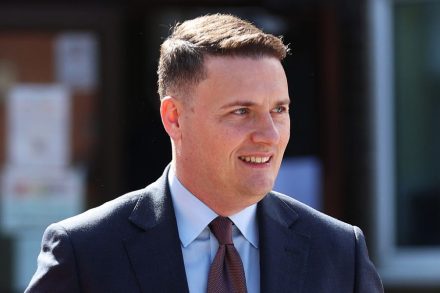
Health Secretary Wes Streeting has made a lot of promises about the NHS. Before he got into power, he talked about slashing bureaucracy, introducing AI and improving patient autonomy. While he claims to have made progress in the last nine months, is it enough?  As Katy Balls and Michael Gove say in their interview with the Health Secretary for this week's issue, Streeting is keen for more ‘responsive and entrepreneurial’ healthcare. He wants a devolved approach that means healthcare services across the country could better deal with local problems in a personalised way.

Helen Joyce shares her joy at Supreme Court ruling

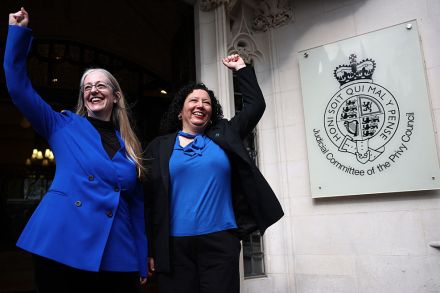
The Supreme Court has unanimously backed the biological definition of a woman. Women’s rights campaigners across the country are celebrating at the news while author and Sex Matters campaigner Helen Joyce told Spectator TV that she feels ‘vindicated and amazed’ by the decision. But politicians in the Scottish National party won’t be feeling quite as jubilant. As lawyer and lecturer Michael Foran told me on today's episode, what will now happen with the gender bill is down to the Scottish government. With just a year to go until the Scottish parliament elections, letting the trans debate rear its head again could spell trouble for the SNP.  The party has in recent years become embroiled in the trans debate.