Lloyd Evans

Lloyd Evans

Lloyd Evans is The Spectator's sketch-writer and theatre critic

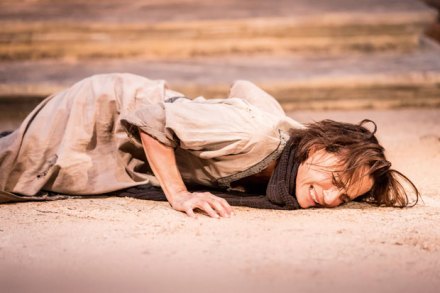
Mark Benton’s Hobson spares us nothing in his journey from rooftop to gutter

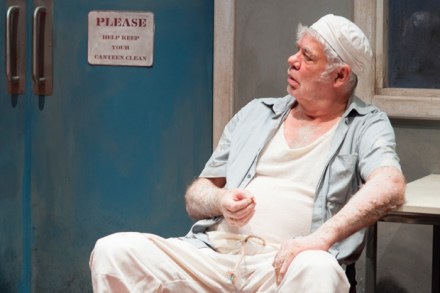
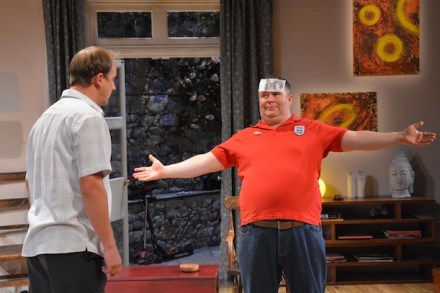
Nice one, Roy. Across the West End secret toasts are being drunk to the England supremo for his exquisitely crafted belly flop in Brazil. A decent run by our boys in the World Cup has the potential to put a nasty dent in the box-office takings. As a welcome home present the lads deserve free tickets to Hobson’s Choice at the Open Air Theatre. The play is one of those dependable classics that directors don’t entirely trust. Few can resist the temptation to give it a tweak or stick it in a time machine. The storyline has the simplicity and boldness of a fairy tale. Hobson, a despotic widower, forces his three daughters to toil in his shoe shop for no wages. His eldest girl, Maggie, persuades a spineless underling, Willie Mossop, to marry her.

Red wine… with a hint of Diet Coke

A mixed case arrives from Corney & Barrow. My orders are to improvise so I pull out a bottle at random. Here it is. El Campesino, a 2013 Chardonnay (£7.13), from Chile, which has a full, direct flavour and a slightly bitter tang that cuts against the sweetness. The Dionysian experts who scour the earth on Corney & Barrow’s behalf describe it as ‘fresh’ and ‘modern’ but not ‘overly oaked’. That, I presume, is a reference to cheapskate vintners who chuck oak shavings into the barrel to enhance the flavour. No crime there, I’d say, if it produces results. Customising wine is as old as wine itself.

Ed Miliband bruises Cameron over Coulson. But will it make a difference?

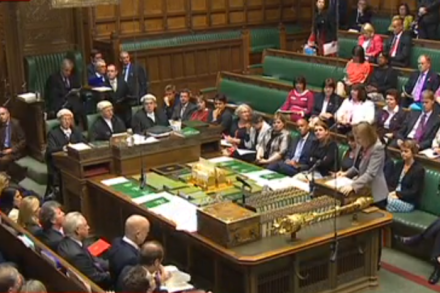
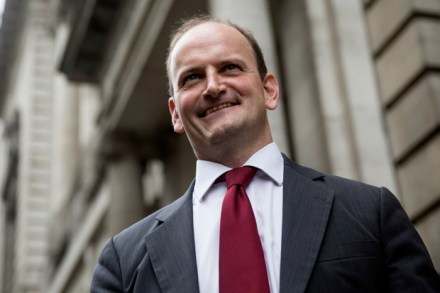
The pressure was all on Miliband today. With Cameron hurt, he needed to show that he can still press home an advantage. First, we all had to listen to the Speaker, who rather enjoys listening to himself. He began with a long and winding overture about the dangers of prejudicing the Coulson trial. One sentence would have done it: yesterday’s convictions are mentionable, those due today aren’t. But he rambled on and on. His legal witterings were delivered with all the clunking sonorities and ham pauses of an under-employed luvvie delivering the Gettysburg address. And he couldn’t stop interfering during the debate. Miliband had carefully planned his ambush and committed its wording to memory.

Alex Jennings interview: the new Willy Wonka on Roald Dahl’s ‘child killer’

‘Oompa Loompa juice,’ says the actor Alex Jennings when I ask if he takes any supplements to preserve his looks. He’s 57 but could pass for a decade younger. We meet backstage in his Drury Lane suite, which boasts a fridge crammed with pink champagne, where he’s preparing to play the lead role in Charlie and the Chocolate Factory. His relaxed demeanour and silky voice create an air of instant geniality that is reinforced by his towering figure. He’s six foot four and as lean as a fast bowler. Though he’s due on stage in 90 minutes, he lounges semi-horizontal in an armchair showing no trace of anxiety. ‘I do get nervous before the first big number. The great thing is, once the music starts, it don’t stop.

Did Turgenev foresee Russia’s Stalinist future?

Fans of Chekhov have to endure both feast and famine. Feast because his works are revived everywhere. Famine because he concentrated all his riches in just four great plays that grow stale with repetition. For fresh nourishment we turn to Brian Friel, whose stage adaptations of the short stories go some way to appease our hunger. In 1987, Friel applied his skills to Fathers and Sons, by Turgenev, which is now revived at the Donmar. The magical charm of a Russian estate is superbly conjured by Rob Howell’s set. Slatted timbers and peeling paintwork. Golden shafts of sunlight falling on crimson rugs and scattered wicker baskets.

PMQs sketch: The bombshell from a man who could be a bore

Explosive stuff at PMQs. Question two and Sir Peter Tapsell, the Father of the House, was called. This quaint semi-official title makes him, potentially, the chamber’s most dependable bore. Not today. He called on backbenchers to enact their ‘ancient but still existing power’ to commence procedures of impeachment against ‘the Rt. Hon. Tony Blair’. Not for war crimes. For lying to parliament about the Iraq invasion. Wow. This bombshell took the pressure off Miliband who’s in lousy shape and could do with a win at PMQs. Badly. He hasn’t got near Cameron for months. But he decided to shelter behind the nation-quake in Iraq, and he spent all six questions exchanging lightly-armed platitudes with the PM.

The Globe’s larf-a-minute Antony and Cleopatra

It’s hilarious. It’s also annoying that it’s so hilarious. Jonathan Munby’s earthy and glamorous production of Antony and Cleopatra goes almost too far to please the Globe’s fidgety, giggly crowds. The Egyptian queen is often treated as a female Lear, a trophy role, a lap of honour for a transatlantic facelift as she enters her bus-pass years. But Eve Best is the same age, around 40, as the real thing, and she invests the character with a fine mixture of romanticism, majesty and erotic guile. She also has a strong Home Counties branding. Slender-limbed and deeply tanned, she drifts around her palace in a range of floaty white linen dresses. Her dark-brown hair extensions wouldn’t disgrace a Clairol advert.

PMQs sketch: easy sling-shots and grubby sloganising

If there’s a problem in Birmingham it’s too gnarled and subtle for PMQs. Easy sling-shots and grabby sloganising are all that’s required. Ed Miliband had found a simple point of entry to the issue. Buck-passing. Who, he asked, is responsible for monitoring schools that incubate extremism?

When the big-boobed whisky monster met the upper-class snoot

Lionel is a king of the New York art scene. An internationally renowned connoisseur, he travels the world creating and destroying fortunes. He anoints a masterpiece, here. He defenestrates a forgery, there. He visits the Californian city of Bakersfield (code in America for Nowheresville) to determine the authenticity of a Jackson Pollock bought for three bucks in a garage sale by an unemployed drunk named Maude. This is a great set-up. Power meets destitution. Sophistication frowns at simplicity. Wealth hits the dirt-heap. It’s enormous fun, too. As the impeccably tailored Lionel walks into Maude’s cluttered hovel, he’s attacked by two ravening Alsatians. She offers him a whisky ‘to take the edge off’. ‘I’d rather keep the edge on.

Joan Littlewood has a lot to answer for – but Fings Ain’t With They Used T’Be’ makes up for it

Joan Littlewood’s greatest disservice to the theatre was to champion ‘the right to fail’, which encouraged writers and directors to inflict a thousand shades of bilge on play-goers for many decades. But she deserves a place in the pantheon for an inspired decision taken in 1959. Offered a new play about Soho’s underworld, written by the ex-con Frank Norman, she invited a young pop composer to turn it into a larky musical. Fings Ain’t Wot They Used T’Be opened at Littlewood’s East End lair and transferred to the Garrick where it ran for nearly 900 performances. The young composer was Lionel Bart.

Polly Teale interview: Cuts are making the theatre ‘a place where you can only survive if you are from a privileged background’

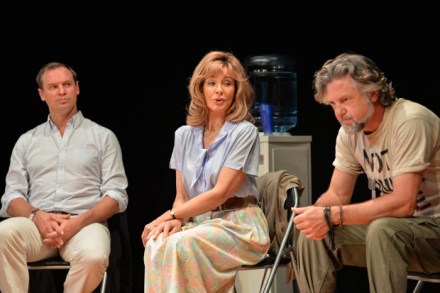
I spend an hour with the theatre director Polly Teale. She’s 50ish with a tall, willowy physique and strong, aquiline features. Her hair is arranged in a combed bob whose flicky fringe overhangs her bright, deep-set eyes. She’s easy-going and so good-natured that at one point she asks me about myself — a courtesy few interviewees extend to journalists. But she’s focused, almost obsessively, on her current job and she steers all my questions back to her upcoming production of Bakersfield Mist, by the LA writer Stephen Sachs. The story has elements of mystery, comedy and class war. It’s set in a trailer park in Bakersfield, a ruined backwater 60 miles from LA, whose name is shorthand in America for ‘the scrapheap’.

Memo to Nick Payne: filling your plays with cosmic chit-chat doesn’t make you intelligent

How do you write a play? Here’s one theory. Put a guy up a tree, throw rocks at him, get him down again. It’s a good working template. Nick Payne’s latest script, Incognito, uses a different scheme. You put 21 guys up a tree, set them jabbering for 90 minutes and then go home. This cumbersome structure is greatly damaged by the decision to hire just four actors to play all 21 characters. And the locations, covering six decades, leap so often between Britain and America as to induce dizziness and possibly vomiting. There are no changes of costume, or set, to indicate where you are. You just have to guess. One storyline involves a camp young Brit with chronic amnesia. Another traces a Scottish physicist who is turning, rather grandly, into a lesbian.

The Silver Tassie: a lavish, experimental muddle that slithers into a coma

The Silver Tassie is the major opening at the Lyttelton this spring. Sean O’Casey’s rarely staged play introduces us to a group of Dublin sportsmen, and their womenfolk, as they prepare to volunteer for service on the Western Front. They parade the ‘silver tassie’, a newly won football trophy, mistakenly believing it to presage victory and good fortune. O’Casey’s characterisation is a little perfunctory. The men are boastful studs, quailing dolts, blarneying drunks or violent despots. The women aren’t much better: a weeping mum, a caustic shrew, a battered martyr, a snooty beauty. It may sound colourful but the storyline develops at the pace of tree rings.

From Bletchley Park to Take Your Pick – this baroness’s memoir is a blast

Jean Trumpington’s memoir, published as she closes in on her 92nd birthday, is an absolute blast from the opening page. She was born in 1922 to a posh but poor English father and a loaded but nouveau American mother. ‘The paint business’ filled the coffers. They lived in a Georgian townhouse with ten servants, just north of Hyde Park. ‘Kensington and Chelsea were not posh at all then. Kensington was very much cheap flats for the respectable retired.’ The money vanished in the Wall Street crash and they moved to a smaller place in Kent.

PMQs sketch: Cameron deploys his resources skilfully

Miliband’s approval rating among Tory MPs has never been higher. They roared with joy as he got to his feet today. A foolish grin spread across his face, and his lips revealed a mouth full of showroom-white teeth. Then he began to giggle, which was unnerving. Either he had a deadly weapon up his sleeve. Or he was about to resign. ‘I welcome today’s fall in unemployment,’ he said. The Tory cheers could be heard across the river in Labour’s Lambeth heartland. Miliband has spent the last year on disaster-watch. But the promised calamities have inflicted no damage.  The slump? A memory. Inflation? Becalmed. The NHS? Don’t mention it. The bedroom tax? A dead issue.

Everyone should see this pious anti-war monologue – seriously

Off to the Gate for a special treat: a pious anti-war monologue from the prize-winning American George Brant. Curtain up. And within seconds all my preachy prejudices have fallen apart. The speaker is a female pilot in a jump suit sealed within a see-through cage. Slaying men is her vocation. Interesting! The story moves with amazing deftness and clarity. She flies missions over Iraq. Loves it. The speed, the jeopardy, the power, the solitude. ‘The blue’ is her term for her intoxicating and deadly haven in the skies. Home on leave, she hits the bars. A one-night stand. She likes the guy. Back in Iraq, she’s pregnant. Skypes him. He weeps with joy. She’s honourably discharged. Back home, they marry. A daughter arrives. She’s settled and fulfilled.

Complacent Cameron slips on Miliband’s bananas

Easy triumphs soften victors. Cameron demonstrated this truism today as he took two unexpected blows from Ed Miliband at PMQs. The Labour leader led on his new policy of rent controls. Cameron, rather weakly, seemed amenable to the reform but offered no concrete proposals of his own. Miliband struck. ‘That was a pretty quick U-turn, even for him.’ Miliband then asked about the preparations to surrender AstraZeneca, trussed and bound, to Pfizer – with all the attendant risks to jobs and investment. Cameron flushed as red as a rhubarb crumble and accused Miliband of ‘playing politics’ while the government was ‘getting stuck in’ and defending the national interest.

The Guardian didn’t much like Noel Coward’s Relative Values – but you will

Cripes. How did I get that one wrong? A few issues back I blithely predicted that Harry Hill’s musical I Can’t Sing would run for three years. It closes this month, so I’m a little reluctant to praise another glittering comedy, Relative Values by Noël Coward, which, like Hill’s stricken satire, has received a few snubs from the critics. In his early dramas, Coward portrayed servants as amiable bunglers or bossy cynics and he rarely gave them more than one wisecrack per act. In Hay Fever, for example, the leading lady can’t even recall the housekeeper’s name, and her forgetfulness is supposed to be funny and attractive. Relative Values dates from 1951, when domestic service was in decline and social divisions were being steam-rollered flat.

Ed Miliband slapped in the face by bouncy Dave

As the economy bounces back it keeps smacking Ed Miliband in the face. At PMQs today he tried to pose as the people’s champion fighting fat-cat capitalism. He started with Royal Mail, which is now worth a billion more than when it was floated. In hindsight, any privatisation can look like a Westminster mega-blunder or a Square Mile stitch-up. Miliband took the latter view. Referring to the clique of 16 ‘golden ticket’ investors, he asked why these lucky speculators had been allowed to flip their shares for an instant profit while the hard-working posties had been ordered to retain theirs for three years. Cameron spotted the trick. Posties got free shares. The City paid hard cash. The PM praised the flotation for turning a commercial dead-horse into a ripping triumph.

The real original kitchen-sink drama

Rewrite the history books! Tradition tells us that kitchen-sink drama began in 1956 with Look Back in Anger. A season of lost classics at the White Bear Theatre has unearthed a gritty below-stairs play that predates John Osborne’s breakthrough by five years. Women of Twilight by Sylvia Rayman (which has transferred to the Pleasance) was a thumping West End hit in the early 1950s. It spawned several touring productions, one of which featured the young June Whitfield. When the script was filmed in 1952 it became the first British feature to attract the enticing ‘X’ certificate (over 18s only). The setting is a lodging house in Hampstead where unmarried mothers are crammed together, three to a room.