Lloyd Evans

Lloyd Evans

Lloyd Evans is The Spectator's sketch-writer and theatre critic

Is Starmer more afraid of Badenoch or Farage?

We have two leaders of the opposition. Labour can’t decide which is the larger threat. Prime Minister's Questions opened with a botched query from Labour backbencher Dan Tomlinson. He asked Sir Keir Starmer to comment on a possible pact between the Tories and Reform. An amazing spectacle. An MP so clueless that he can’t ask a question without being ruled out of order. ‘The Prime Minister has no responsibility for any of that,’ said the Speaker. Tomlinson sat down, unanswered. But the timing of the question, at the start of the session, indicates that Sir Keir’s team are terrified of an anti-Labour alliance. We have two leaders of the opposition. Labour can’t decide which is the larger threat Tory leader Kemi Badenoch asked about the rape-gang scandal.

The case for replacing nurses with robots

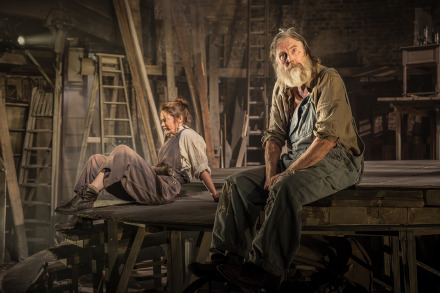
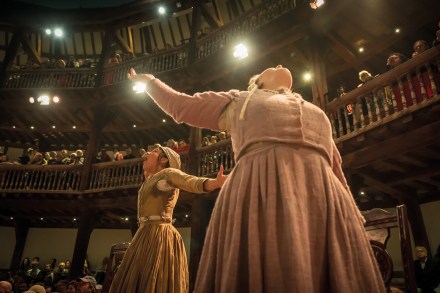
Tending is a work of activism on behalf of the NHS. The script brings together the testimony of 70 nurses in a show spoken by three performers. It’s full of surprises and shocks. All NHS nurses are obliged to annotate their actions as they work. ‘If you haven’t documented it, you haven’t done it,’ they’re told. A nurse estimates that she spends 20 per cent of her time caring for patients and the rest of it chronicling her doings on bits of paper. There appears to be no feedback mechanism that enables the nurses to help managers find ways to improve the service. A nurse tells the story of a lunatic who barricaded himself inside a lavatory cubicle and slit his throat open. He couldn’t be helped because the locks operated from the inside only. Could this flaw be corrected?

PMQs: Kemi had Keir on the ropes

Women and Sir Keir Starmer. That was the issue that dominated a fiery PMQs today. Tory leader Kemi Badenoch asked Sir Keir if he’d been ‘wrong to say trans women are women.’  His bland but careful answer expressed a wish that ‘service providers’ should obey the ruling. Then he loftily advised the house to ‘lower the temperature.’  Kemi noted his failure to admit that he was wrong. And she accused him of targeting Rosie Duffield, ‘the brave member for Canterbury,’ and of ‘hounding her out of the Labour party for telling the truth.’ Would he apologise? No chance. Sir Keir boasted that Labour’s approach is to ‘treat everyone with respect’ and never to use the issue as a political football. Then he went off on a weird tangent.

Those behind this fabulous new comedy are destined for big things

Rhinoceros by Eugene Ionesco is a period piece from 1959. It opens with the invasion of a French village by a herd of rhinoceroses. This paranormal event is never explained. In Act Two, the villagers start to imagine that they’ve become rhinoceroses and changed species. But one plucky sceptic, who defies conformity, refuses to swap his human character for an animal alternative. That’s it. Ionesco is offering the same arguments about peer-group pressure that Arthur Miller made with far more grace, artistry and psychological penetration in The Crucible. The show can’t decide what register to aim for and the cast are dressed in a mishmash of cheap costumes. Some wear white coats like asylum orderlies and some are in Primark expendables.

A horribly intriguing dramatic portrait of Raoul Moat

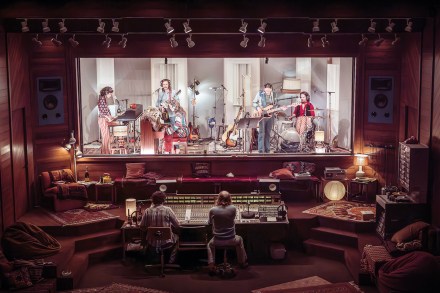
Robert Icke’s new play examines one of the least appetising characters in British criminal history. Raoul Moat went on a shooting spree in July 2010 that left his wife injured, a cop blinded and an innocent man dead. This superb piece of reportage offers us a glimpse into the mind of a damaged brute. Moat had a rough childhood, like a lot of kids. His dad was absent, his mother was mentally unstable and when he was seven, she set fire to all his toys. Very traumatic, no doubt, but kids have survived worse. He grew into a 17st bully who felt cheated by the system and blamed everyone else for his woes. Part of the tragedy is that he had talent. He was energetic and ambitious. He worked as a bouncer, as a scrap-metal dealer, and as a tree surgeon with the tradename ‘Mr Trimmit’.

Visit the King’s Head Theatre for one of the greatest theatrical surprises of the year

Amanda Abbington’s new show is heavily indebted to Noël Coward’s Hay Fever.Coward’s early play follows the tribulations of the superficial Bliss family and at first it was rejected by producers because it lacked action or incident. The oddly titled show, (This is not a) Happy Room, opens on the eve of a family wedding. Disaster strikes when the groom dies in a car cash and the nuptials are hastily transformed into a funeral. (Don’t ask how the dead body was released for burial so quickly.) Abbington plays Esther Henderson, a careless matriarch, who walked out on her children when they were small and left her firstborn, Laura, in charge of the parenting duties. Laura struggled to raise the youngsters properly and she now feels responsible for their wonky personalities.

I am deeply impressed by Ayoub Khan

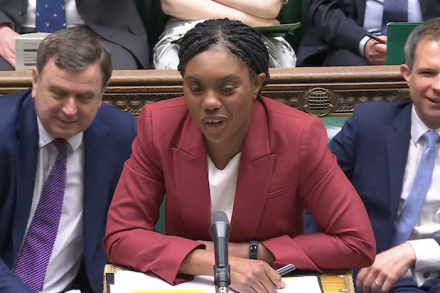
Kemi Badenoch is doing all right at PMQs. The Tory leader is effective in the build-up but her finishing is weak. The point of the inquisition is make the interviewee tremble with fear. Here’s how she ended each of today’s question to Sir Keir Starmer: 'What’s his advice to business owners laying off staff?' 'Why should voters trust Labour again?' 'Does he regret promising a council tax freeze?' 'Will he break his fiscal rules or raise taxes?' 'Does he disagree with the Bank of England?' 'Is the motor industry being protected?' Hardly killer points. Sir Keir swatted them aside without effort. The Prime Minister counter-attacked with a booby-trap that Kemi had set for herself.

I wish someone would kill or eat useless Totoro 

My Neighbour Totoro is a hugely successful show based on a Japanese movie made in 1988. The setting is a haunted house occupied by two little girls who encounter various creatures rendered on stage by puppets. The story has no action, danger or jeopardy so it’s likely to bore small boys and their dads. Perhaps mums and daughters will appreciate it more. The big selling point is the puppetry whose quality varies. The naturalistic animals are done well. Cute yapping dogs, fluffy chickens scampering about, mischievous goats that steal maize from unguarded fields. The silliest creature is an orange latex cat equipped with 12 spindly legs that don’t work. It looks like a cross between a bed bug and a crippled tiger.

Reeves’s Spring Statement just doesn’t add up

Is Rachel Reeves toast? Not according to her. The Chancellor delivered an aggressively self-confident statement about Labour’s spending plans this afternoon. Soberly dressed in maroon, she rattled through her speech like a garden shredder grinding up branches and reducing them to pale little woodchips. Anyone would think she was pondering a leadership bid. After listing her achievements since last July, she issued a warning to the doubters.  ‘I will return in the autumn to deliver the Budget.’  She relied on a good deal of amateur magicianship to conceal her fibs and exaggerations. Last autumn she claimed that £6.5 billion could be raised by cracking down on tax evasion. But that’s only the start.

The Zoom call that confirmed my fears about Just Stop Oil

Just Stop Oil are their own worst enemies. I support their aims and I do my best to minimise my carbon footprint. I haven’t flown since 1993, I don’t own a car and I have eleven solar panels on my roof, but I’m losing patience with the movement. Meeting the JSO activists who disrupted a West End play only confirmed my suspicions that the movement has gone off the rails. Weir and Walsh evidently care about the planet, yet they seem to lack ordinary human sympathy Most people think the protestors who sabotaged Sigourney Weaver’s performance as Prospero at London's Drury Lane theatre in January are a nuisance. Not JSO.

Irresistible: Clueless, at the Trafalgar Theatre, reviewed

Cher Horowitz, the central character in Clueless, is one of the most irritating heroines in the history of movies. She’s a rich, slim, beautiful Beverly Hills princess obsessed with parties, boys and clothing brands. According to her, the world’s problems can easily be settled by using the solutions she applied to the seating plan at her dad’s birthday dinner. But Cher is also a creation of genius because she draws us into her life and makes us understand the raw, damaged reality that lies behind her superficial perfection. She’s not a privileged brat. She’s all of us. At the start of this musical remake, Cher takes us on a tour of her luxury home. ‘The Greek columns date all the way back to 1975,’ she says.

Starmer looked scared of Badenoch at PMQs

At PMQs this week, Sir Keir Starmer got a proper grilling for a change. Kemi Badenoch used smarter tactics: short questions sharply focused; half-truths instantly rebutted. The Tory leader abandoned her normal habit of covering the entire spectrum of Labour’s shortcomings. She focused on their worst error: economic stagnation caused by the tax-grab Budget. Why, she asked, is the Chancellor holding ‘an emergency budget next week?’ A near fib from Starmer. She’d caught him out Sir Keir gave her a formulaic reply, crowing about his glorious achievements. ‘Record investment... three interest rate cuts...wages going up faster than prices.’ Kemi dismissed this as balderdash.

A treat for nostalgic wrinklies: Punk Off!, at the Dominion Theatre, reviewed

Punk rock, packaged, parcelled, and boxed up as a treat for nostalgic wrinklies. That’s the deal with Punk Off!, a touring show that recently completed a lap of the country at the Dominion Theatre. Most of the audience were there to recall their rebellious heyday. ‘It’s about to get really, really loud,’ announced the compère, Kevin Kennedy, as the four-piece band hammered out ‘Sheena Is A Punk Rocker’ ‘and ‘If the Kids Are United’. Both hits sounded eerily unfamiliar. Why? Those raucous, pulsing rhythms can’t be turned into elevator jingles or a background drone at a shopping mall – so we rarely hear them. Just as well. Kennedy rattled through the major turning points in the movement’s history.

Is Kemi Badenoch getting better at PMQs?

If Kemi Badenoch has a plan, she’s keeping it hidden. At PMQs she used her scattergun approach to complain about unemployment, farming, winter fuel payments, council tax, increases in NI, business closures, food-aid for underfed kids and the murder of David Amess. Eventually, she reached the chancellor’s awkward ‘spring statement’ which would have made a much better starting point. There was no shape to her performance, no dramatic climax, no electrifying revelation to dominate the afternoon news. And she’s low on energy. Does she even need six questions? She should sell half of them to the SNP who are adept at concealing illicit financial deals from the auditors.  Her best moment came when she mentioned the stinking dunes of refuse gathering in Labour-run Birmingham.

Let men do the housework!

Why are women still allowed to do housework? The question used to bother me during the years of my marriage when housework became a running sore between us. Perhaps the friction was inevitable. I was born in revolutionary times, the 1960s, and my mother taught me and my siblings to cook, clean and wash up for ourselves. We turned out as independent, self-sufficient adults. I would never ask a woman to make me a cup of coffee any more than I’d ask a bumblebee to build me a lighthouse. And doing jobs around the house suits my life as a writer. During the day I take frequent mini-breaks and do chores while my mind empties itself of clutter and my batteries recharge. Then I return to my laptop, renewed and refreshed. It’s like meditation – but with concrete results. Clean carpets.

Brian Cox’s Bach has to be heading for Broadway

The Score is a fine example of meat-and-potatoes theatre. Simple plotting, big characters, terrific speeches and a happy ending. The protagonist, J.S. Bach, receives a mysterious summons from Frederick the Great of Prussia. The long first act takes us through Bach’s professional woes and his physical infirmities. His weak vision is being treated by an English oculist, John Taylor, who tours Europe in a scarlet coach decorated with eyes. For unexplained reasons, Taylor decides to taste Bach’s urine, which is excessively sugary – a symptom of diabetes. When Bach reaches Frederick’s court in Potsdam he finds the atmosphere oppressive and alienating. Enter Voltaire. ‘Prussia is not a state in possession of an army,’ he says in a comedy French accent.

My brush with a rabid monkey

India A crowded bus station. A lady monkey with a baby clinging to its neck sidled past me, eyeing the banana I was eating. I barely noticed them. A moment later, claws dug into my back. A skeletal hand darted forward to grab my banana. The baby monkey was on my shoulder. I leapt up and shrugged vigorously but it climbed on to my head, so I twisted sharply this way and that to unseat the little nuisance. I felt a painful scratch on my neck. The furry bundle leapt off me and scampered away. I’d been bitten. A few bored locals gathered around to see if the kerfuffle was worth getting overexcited about. A samosa seller helpfully dabbed my neck with a rag soaked in oil from his smoking cauldron. I thanked him diplomatically for this pointless gesture. The crowd retreated.

PMQs was a façade

A bit of a stitch-up at PMQs, or so it seemed. The ‘opposition’ leader, Kemi Badenoch, ignored her duty to voters and spent ten minutes feeding softball questions to Sir Keir Starmer about President Zelensky. At issue was Donald Trump’s decision on Monday to withdraw military aid from Ukraine. Kemi meekly asked Sir Keir if he might help. ‘What is he doing to rebuild their relationship after a challenging week?’ Sir Keir can do nothing, obviously. Trump has lost patience with the leader of an impoverished, war-sick country whose eastern fringes are occupied by a hostile superpower. Britain has no influence either way. But Sir Keir wants to pose as a crucial member of an imaginary triumvirate that can redraw the map of Eastern Europe.

How Armando Iannucci lost his edge

The BBC celebrated one of its own on Monday night. Armando Iannucci was treated to a fawning retrospective by Alan Yentob, and it opened with a crass piece of TV trickery. ‘Armando Iannucci is not an easy man to pin down,’ said Yentob, as if his quarry were a master criminal or an international terrorist. ‘For ten years, I’ve been trying to talk to one of Britain’s greatest comic talents.’ Iannucci, in his heyday, would have enjoyed dissecting this sort of bombastic hyperbole. This week, he connived in the hoax. Yentob ran through Iannucci’s CV. He was raised by affluent Glaswegians (plenty of colour photographs suggesting a comfortable income), and after studying at Oxford he moved to BBC radio.

Shakespeare as cruise-ship entertainment: Jamie Lloyd’s Much Ado About Nothing reviewed

Nicholas Hytner’s Richard II is a high-calibre version of a fascinating story. A king reluctantly yields his crown to a usurper who wants his violent revolt to seem like a peaceful transfer of authority. This delicate, complex narrative is presented as a boardroom power struggle in corporate Britain. Snappy suits for the dukes and princes. Commando uniforms when they take to the battlefield. Jonathan Bailey (Richard) starts as a swaggering, coke-snorting yuppie who dreams of extending his realm overseas with someone’s else money. Disaster strikes, the crown slips. Calamity sharpens his awareness and he becomes a lyrical philosopher who laments the bewitchments and pitfalls of power.