Lloyd Evans

Lloyd Evans

Lloyd Evans is The Spectator's sketch-writer and theatre critic

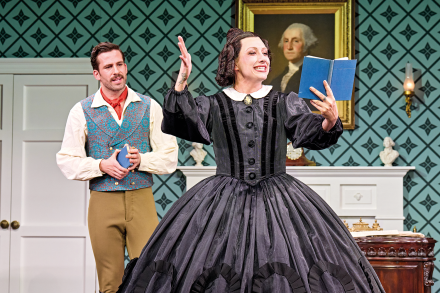
Oh, Mary!’s climax is an inspirational bit of comedy

High Noon, directed by Thea Sharrock, is a perfectly decent version of a trusty western which celebrates its 74th birthday this year. An elderly sheriff, Will Kane, marries a priggish beauty, Amy, on the day of his retirement but his marital plans are overturned by news that a dangerous convict, Frank Miller, has been released from jail and hopes to shoot Will dead. Amy is a devout Quaker and she grumbles bitterly as Will cancels their honeymoon and heads back to town to deal with the evil Frank. But Frank is not the brightest criminal in New Mexico. News of his plans have spread and everyone knows that he’ll show up at midday aboard the express train.

My advice to the next generation

Everyone went to the same school as someone famous. In my case it’s Spider-Man, Tom Holland, who joined my former school about 30 years after I left. Back in the mid-1970s, the most famous old boy was another superhero, Major Pat Reid, who’d been captured by the Germans during the war and briefly imprisoned in Colditz. His bestselling memoir popularised the notorious jail and led to a TV series, an Action Man model and various other spin-offs. He was known as the only man to have escaped from the Nazis and turned it into a board game. He showed up on sports day, in July 1975, to give us a pep talk and hand out prizes to the school’s top athletes. I wasn’t among them, of course. My great days as a sportsman lay ahead of me. They still do, in fact.

Why has the National got it in for Oirish peasants?

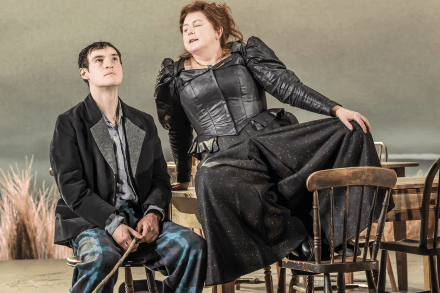
The Playboy of the Western World is like the state opening of parliament. Worth seeing once. Director Caitriona McLaughlin delivers a faithful production of John Millington Synge’s grand satire about dim-witted Oirish peasants and, perhaps unwisely, she spreads the show across the entire length of the vast Lyttelton stage. It looks as if it’s being performed on a railway platform. The drama consists of several broad, daring and improbable steps. A handsome farmer’s boy, Christy, rolls up in a sleepy village in Co. Mayo and claims to have murdered his father. The lustful local girls treat him as a hero rather than an outlaw and compete for his hand in marriage. When Christy wins a prestigious donkey race he sets the seal on his pluck and manliness. Then, disaster.

The bitter truth about New Year’s Eve

New Year’s Eve is the party we don’t need but can’t get rid of. The location varies according to geography. City-dwellers gather in public squares and cheer at midnight as the skyrockets explode overhead and add more fumes to the blanket of urban smog. In the countryside, revellers meet in freezing farmhouse kitchens and drink bathtub gin while grumbling mutinously about soaring taxes and declining freedoms. Compared with Christmas Day, the procedure is maddeningly vague. There are no special dishes or designated drinks In Britain, the festivities have a distinctly Caledonian flavour. Hogmanay is a Scots word of uncertain origin. The theme tune, ‘Auld Lang Syne’, means something like ‘past time’ or ‘time long since.

One for hardcore Stoppard fans: Indian Ink reviewed

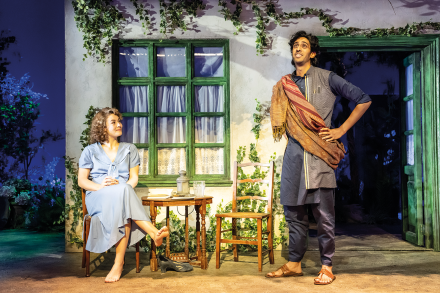
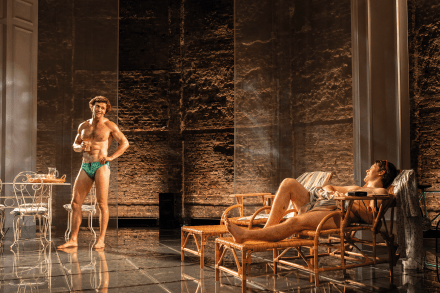
Unusual. After the press night of Indian Ink by Tom Stoppard, no one leapt up and cheered. The crowd applauded politely at the amusing dialogue and the marvellous acting in Jonathan Kent’s handsome three-hour production but there was no standing ovation. The script feels like a literary novel overstuffed with detail. Flora Crewe is a ravishingly beautiful but utterly sexless poet who floats around India in the 1930s provoking the adoration of lustful men. But she doesn’t evolve or change during the action. And she’s maddeningly indifferent to the romantic attention she excites. A maharajah tries to impress her with his fleet of Rolls-Royces. A dashing English captain proposes marriage and she laughs in his face.

Until Truss faces her enemies, she remains an irrelevance

Liz Truss is back. The ex-prime minister hosted a new current affairs show last night on Just The News, a multi-platform outlet. She’s not the first ex-PM to try her hand as a TV star. After Harold Wilson resigned, he briefly compered Friday Night, Saturday Morning, a BBC chat-show, which was considered a failure. Liz’s debut performance was a mixture of invective, self-justification and political brainstorming.  She opened with a barrage of bitter rhetoric.  ‘Britain is going to hell in a handcart,’ she announced, before adding coyly, ‘despite the valiant efforts of a certain prime minister in 2022.’  She laid into the ‘fake news BBC.’ ‘When they’re not lying about Donald Trump, they’re covering up sex criminals in their own midst.

What’s the greatest artwork of the century so far?

15 min listen

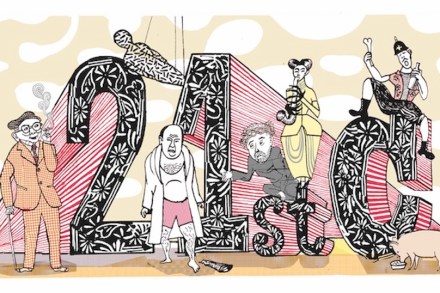
For this week's Spectator Out Loud, we include a compilation of submissions by our writers for their greatest artwork of the 21st century so far. Following our arts editor Igor Toronyi-Lalic, you can hear from: Graeme Thomson, Lloyd Evans, Slavoj Zizek, Damian Thompson, Richard Bratby, Liz Anderson, Deborah Ross, Calvin Po, Tanjil Rashid, James Walton, Rupert Christiansen and Christopher Howse. Produced and presented by Patrick Gibbons.

Paddington – The Musical is sensational

Who doesn’t love Paddington? The winsome marmalade junkie has arrived at the Savoy Theatre in a musical version of the 2014 movie. First of all, the show is sensational. Absolute box-office gold, full of joy, mirth and spectacle. It’s also quite pricey but never mind. Sceptics who feel indifferent to children’s fiction will be relieved to learn that the dyspraxic Peruvian asylum seeker doesn’t feature much in the story. Paddington’s main attribute is his physical clumsiness and once he succeeds in destroying the crockery and furniture at the Browns’ family home, he runs out of narrative possibilities. His fur is invitingly combustible. Could someone set him on fire? Not quite.

Ivo van Hove tries and fails to destroy Arthur Miller

All My Sons, set in an American suburb in the summer of 1947, examines the downfall of Joe Keller, a wealthy and patriotic arms manufacturer. During the war he was falsely accused of selling wonky parts to the US military which caused the deaths of 21 airmen. He blamed his partner for the blunder but when the truth emerges he also finds out why his eldest son, Larry, went missing in action. The plot is one of the greatest inventions in world drama and it deserves to be presented with candour, simplicity and naturalism. Director Ivo van Hove dislikes Miller’s decision to set the play on Joe’s front lawn where the neighbours mingle, chat and exchange secrets. In his version, the vacated stage is overlooked by a huge blank wall decorated to resemble a doormat.

A sack of bilge: End, at the Dorfman Theatre, reviewed

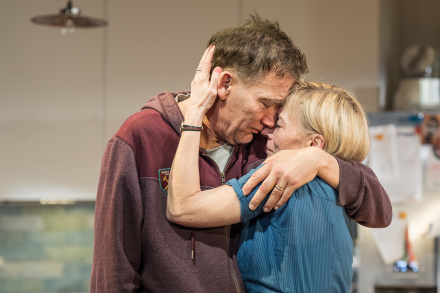
End is the title chosen by David Eldridge for his new relationship drama. Clive Owen and Saskia Reeves star as Alfie and Julie, a pair of wildly successful creative types who live in a mansion near Highgate. Both are 59. Alfie is a retired DJ who made a fortune touring the world at the height of the ecstasy craze and Julie earns a living from crime fiction. But she’s bored with detective stories and wants to publish her memoirs and to write a state-of-the-nation novel set during the 2012 Olympics. Despite their amazing careers, both characters are moaning dimwits who swear constantly and have nothing of value to say about their lives, their professions, or anything else. Listen to them discussing an unseen character named Boring Tone.

The babyishness of Hunger Games on Stage

The Hunger Games is based on a 2008 novel  about a despotic regime where brainwashed citizens are entertained with televised duels between teenagers. Not a bad idea. We go behind the scenes and watch Katniss (Mia Carragher) being selected to fight Peeta (Euan Garrett) who secretly adores her. As soon as the plot starts, it seizes up. Instead of a gripping tragedy about two lovers forced to kill each other on TV, we’re given a masterclass in the show’s elaborate format. The duellists take part in interviews, coaching sessions, target practice, public parades and a popularity contest which permits them to attract ‘sponsors’ whose role is opaque. At the same time, we get a civics lesson.

The art of having no friends

Apparently it’s easy to make money on YouTube by teaching a course in your specialism. Mine is having no friends. And I share my aversion to humanity with a number of very distinguished names. Isaac Newton, Charles Darwin, Emily Dickinson and Howard Hughes were all solitary creatures who didn’t allow social frippery to dilute the focus of their ambitions.  Psychologists tell me I have ‘autism’, which is promoted so widely in our society that we ought to call it ‘taughtism’. But I take issue with these experts. I don’t believe I have a neurological disorder. And I’m not some crazy hermit who lives in a cave or a ditch. I simply can’t help noticing that most human beings are a waste of space – myself included.

This Othello is almost flawless

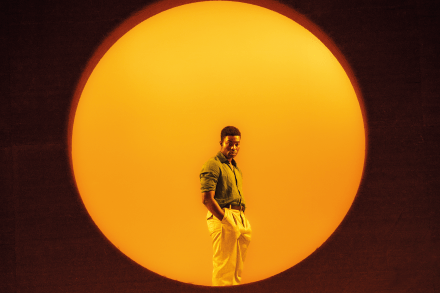
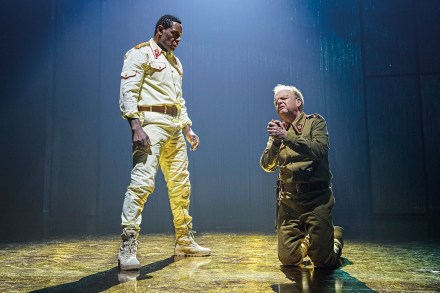
Othello directed by Tom Morris opens with a stately display of scarlet costumes and gilded doorways arranged against a backdrop of black nothingness. This is Venice at night with no hint of sea or sunshine. Crimson-robed senators gather to discuss Othello’s alleged abduction of Brabantio’s daughter. And here he comes, David Harewood as the Moor, wearing a gauche two-tone suit like a tasteless guest at a wedding. The scene is stiff, arid and over-ornate but the show opens up when the location shifts to Cyprus. Warmth and light fill the stage and the costumes improve. Othello and his men wear creamy white battle fatigues that look stylishly and subtly masculine.

One of the best plays about the 1980s ever staged

Alan Hollinghurst’s The Line of Beauty has been turned into a stage show directed by Michael Grandage. We’re in the early 1980s and Nick has just left Oxford with a literature degree. He lodges with his wealthy friend, Toby Fedden, in their family home and he offers to keep an eye on Toby’s troubled sister, Cat, who suffers from depression. Despite her disorder, Cat is a rebellious type who quizzes Nick about the intimate details of his casual flings with men. Her father, Gerald, wins a safe Tory seat and persuades Mrs Thatcher to attend a ball at their mansion in the country. The prime minister’s arrival throws the Feddens into a panic but Nick saves the day by smoothly asking Mrs Thatcher for a dance. ‘Do you know,’ she says, ‘I would like that very much.

Perfection: Hampstead Theatre’s The Assembled Parties reviewed

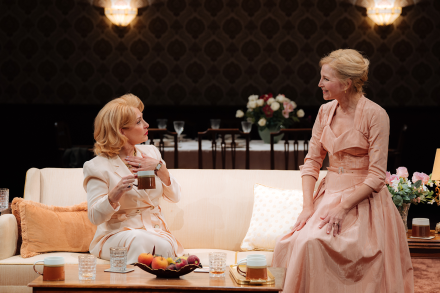
The Assembled Parties, by Richard Greenberg, is a rich, warm family comedy that received three Tony nominations in 2013 following its New York première. Hampstead has taken a slight risk with this revival. The cryptic title doesn’t suggest an easygoing drama full of excellent jokes. The Yiddish slang may be unfamiliar to English ears, and the social pedigree of the family needs explanation. These are wealthy New York Jews living in a 14-room apartment which they rent but don’t own, so their fortune is insecurely anchored. And the action starts in 1980 and fast-forwards to 2000 so it feels like a period piece aimed at the over-sixties. Those drawbacks aside, the show is a sensation.

Dominic Cummings: why the elites keep getting politics wrong

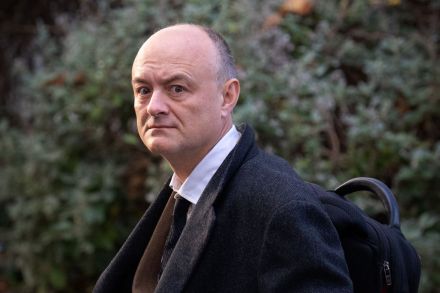
Last night, Dominic Cummings was interviewed at the O2 by the activist start-up, Looking for Growth. Cummings walked on stage in his trademark T-shirt and baseball cap and made a series of predictions about UK politics. A general election is unlikely before 2029, he said. ‘It won’t be earlier. The MPs will postpone the nightmare that’s coming to them.’ He warned that Keir Starmer's time is limited. ‘If Labour keeps losing voters to the Greens, Starmer will be got rid of next year.’ He made the same prediction about the Tory leader. ‘Kemi’s going to be got rid of after the May elections.’ Cummings chuckled over the idea that, ‘the UK is a multicultural success story. That idea is cracking up.’  He seemed amazed by the folly of Starmer’s administration.

Why was the 19th century so full of bigots and weirdos? 

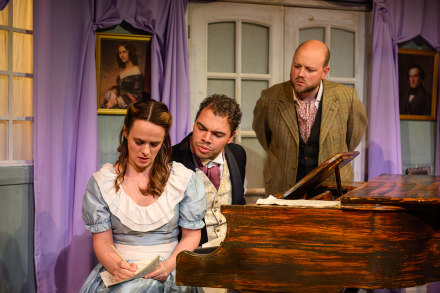
Da Vinci’s Laundry is based on an art world rumour. In 2017, Leonardo’s ‘Salvator Mundi’ sold at Christie’s for $450 million but some experts claimed that the attribution was inaccurate. Could the world’s costliest artwork be a fake? Writer, Keelan Kember, considers the provenance of a fictional Leonardo owned by a thuggish oligarch, Boris, who claims to have bought the masterpiece at a flea market. He invites two posh British experts, Christopher and Milly, to authenticate the painting and when Christopher questions its origins he earns Boris’s instant displeasure. Boris threatens to toss Christopher from the roof of his luxury mansion. Enter a brash American, named Tony, who wants to buy the Leonardo on behalf of a rich Saudi clan.

Tracy Letts’s magic touch

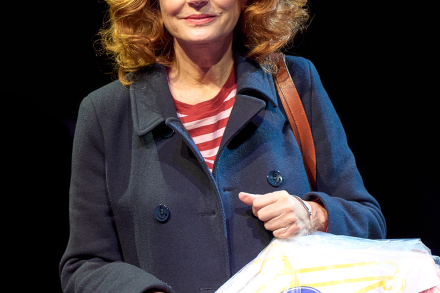
Tracy Letts’s Mary Page Marlowe is a biographical portrait of an emotionally damaged mother struggling with romantic and family problems. Susan Sarandon shares the lead with four other actresses which makes the show a little hard to follow. And the timeline is jumbled up so that the audience has to find its bearings at the start of each new episode. Why? Perhaps to give the material a complexity it doesn’t deserve. We first meet our heroine, aged 40 (played by Andrea Riseborough), as she tells her kids that they’re moving to Kentucky without their dad. This unpromising scene is hilarious because the word ‘Kentucky’ is repeated so often that it becomes a profanity. Pinter loved verbal games like this.

Yoga is slow-motion pole-dancing for grannies

It’s hard work being rich. I gave up trying years ago. You must waste money on everything, even the basics, to advertise your status as a big spender. Food and drink are easy. You buy organic veg from a dim-witted aristocrat at a farmers’ market. And you choose sparkling water filtered through the porous flanks of a Malaysian volcano. A tougher challenge is oxygen. The rich need top quality air as well. But how do you let people know that your breaths are costlier and more refined than the inhalations of the mob? Well, yoga. Yoga turns breathing into a five-star indulgence. You hire a servant (known as a ‘guru’ to make her feel important) who stands in attendance while you fill and empty your lungs for 45 minutes.

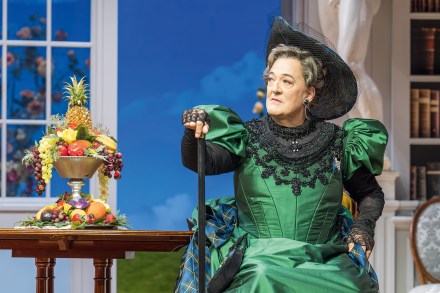
Stephen Fry is the perfect Lady Bracknell

Hamlet at the National opens like a John Lewis Christmas advert. Elegant celebrations are in progress. The stage is full of dining tables draped in white linen and adorned with flowers and beautiful glassware sparkling in the candlelight. Elsinore is reimagined as the home of a multicultural royal family. Claudius, resplendent in a dark dinner jacket, toasts his Asian bride, Gertrude, who wears a banana-yellow sari. Enter Hamlet, hunched and mutinous, in a snaky black suit like a moody star at a film première. He cheers up when he reaches his first soliloquy which he delivers to the crowd like a larky routine at a comedy club. Hiran Abeysekera (Hamlet) is a talented and hyperactive clown who gets big laughs from unpromising material. But he lacks the substance for the role.