Lloyd Evans

Lloyd Evans

Lloyd Evans is The Spectator's sketch-writer and theatre critic

PMQs Sketch: Sex scandals and private jets

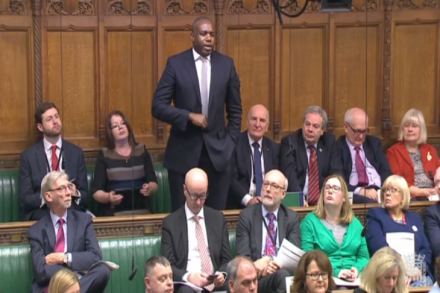
Bit of a rum PMQs. The evolving sexual scandals cast a pall over proceedings. Up first, Dennis Skinner, who revealed the truth about HS2. It’s a wicked plot to treat northerners as ‘second class citizens’. He said that tunnels are to account for 30 per cent of the southern route but only 2 per cent of the northern bits. Selectively-educated Mr Skinner knows perfectly well that this is about economics. A Home Counties property costs more than its northern counterpart so burrowing under a house is cheaper than sending an express train through the master-bedroom. But perhaps he’s got a point. Couldn’t HS2 be entirely subterranean? Effectively this would mean extending the London Underground from Euston to Edinburgh.  Not a bad idea.

Family planning

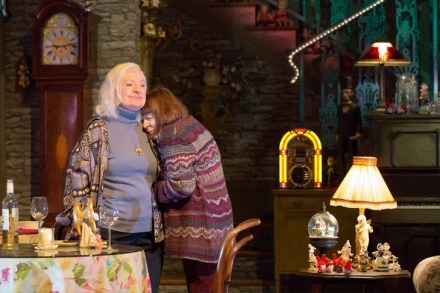
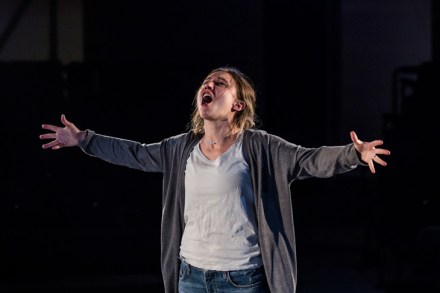
Beginning starts at the end. A Crouch End party has just finished and the sitting room is a waste tip of punctured beer cans, tortured napkins and crushed nibbles. Wine bottles lie scattered across the carpet like fallen ninepins. Hostess Laura invites her last guest, Danny, for a final glass of Chardonnay. Twitchy conversation ensues. Then she tells him point-blank that she’s fallen in love with him, even though they’ve only just met. He rejects her weird come-ons (‘Kiss me, you lemon’) with evasive hyperactivity. He dashes about the room filling a bin-liner with defunct wine bottles and pulverised cheesy Wotsits. She forces him to sit next to her on the sofa, where he squirms and flips like a beached haddock. What’s wrong with him?

It’s time to bin Bercow

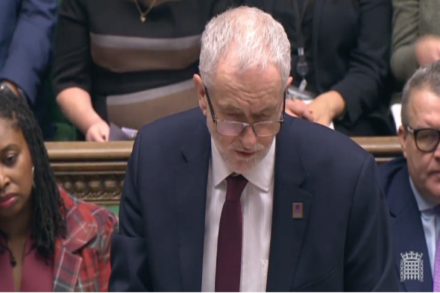
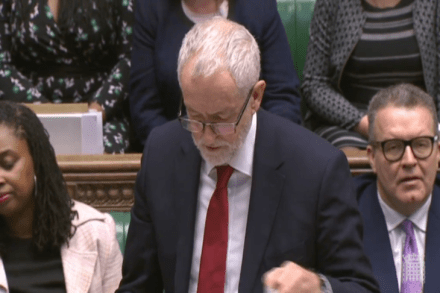
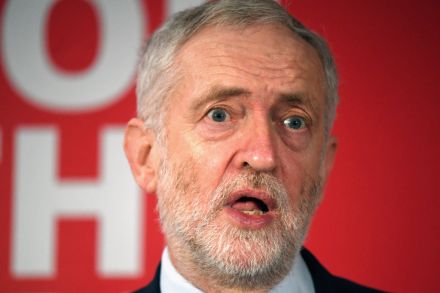
Jeremy Corbyn wanted to repeat last week’s victory on Universal Credit. He landed no serious blows but he made the government look silly in its handling of the reforms. Mrs May brought up Labour’s record, and the ‘tax credit’ merry-go-round devised by Gordon Brown. Voters were fleeced by one arm of government and reimbursed by another. And the pick-pocket prime minister denied responsibility for the theft while claiming credit for the reparations. Mrs May stressed the indispensable virtue of UC: it helps people ‘back into work’ rather than trapping them beneath the man-hole cover of dependence. Back into work. Corbyn was silent about that. Perhaps he’s aware of a conundrum that underlies his movement.

The bad sex award

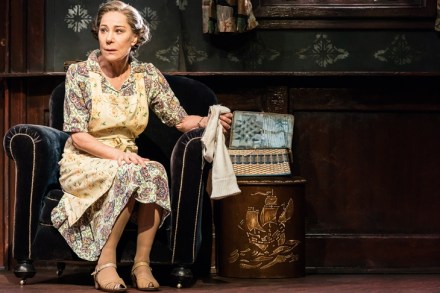
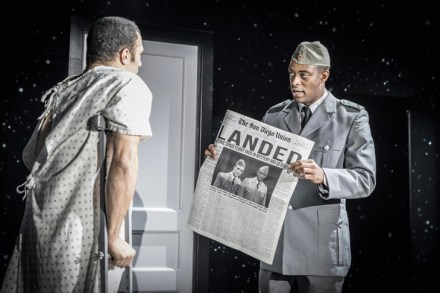
Simon Stephens gives his plays misleading titles. Nuclear War, Pornography and Punk Rock contained little trace of their advertised ingredients. Heisenberg: The Uncertainty Principle includes no information about the German physicist or his theories. This is a sentimental romcom starring Anne-Marie Duff as a giggling airhead who stalks a grunting Cockney shopkeeper played by Kenneth Cranham. He’s 75 years old and though she’s in her mid-forties she has the skittish desperation of a gold-digging pensioner trying to act the nubile bimbo. Both characters are bored loners adrift in London. And because they’re solidly working class (she’s a receptionist, he’s a butcher), they excite our curiosity as lesser beings far removed from our own social milieu.

John Bercow’s ego trip lets May off the hook at PMQs

PMQs began with an announcement. The life president of the John Bercow fan-club rose from the Speaker’s chair to welcome a distinguished Dutch parliamentarian sitting up in the gallery. No one recognised the name of this blow-in from the land of windmills. But he is no doubt as important in his own domestic circle as Mr Bercow is in his. Taxpayers will be thrilled to know that the Speaker makes pals on his overseas junkets. And how apt that a man of such humble stature has befriended a parliamentarian from the Low Countries. Mr Bercow spent most of the session demonstrating his mastery of events by interrupting MPs with his slim list of antiquarian heckles. ‘Calm yourself,’ ‘Take a rest, man’. ‘Honourable members must contain themselves.

Perishable goods

  Labour of Love is the new play by James Graham, the poet laureate of politics. We’re in a derelict colliery town in the East Midlands where the new MP is a malleable Blairite greaser, David Lyons. He arrives to find the office in crisis. The constituency agent, Jean, has handed in her notice but David is smitten by her acerbic tongue and her brisk management style so he asks her to stay. She agrees, reluctantly, and they settle into a bickering rivalry underpinned by affection. But is there more? Possibly, yes, but both are held back by their natural reticence and by fate. Secret declarations of love go astray. One letter is sent to the wrong person and another, written in code, makes sense only when read backwards. These contrivances aren’t entirely satisfying.

Theresa May has yet another bad day at the office

Theresa May needed to play a blinder today. But she left herself looking heartless and complacent. Jeremy Corbyn attacked her on the Universal Credit system which seems as useful as a windmill on the moon. He said UC was leading to ‘debt, poverty and homelessness.’ Mrs May replied that tremendous improvements had been achieved since January. Only 20 per cent of initial payments are late, she trumpeted, (although she used the formula '80 percent are on time’). Corbyn asked about delays twice more, and Mrs May’s patience dissolved. She did a little pantomime of being bored. Her eyes glazed over. Her chin tilted upwards. Her focus went into the middle-distance. A short breath was sucked in over her lower teeth.

Verbal diarrhoea

In Beckett’s Happy Days a prattling Irish granny is buried waist-deep, and later neck-deep, in a refuse tip whose detritus inspires a rambling 90-minute monologue. ‘An avalanche of tosh’ was the Daily Mail’s succinct summary. Wings is similar but worse. Mrs Stilson (Juliet Stevenson), an American pensioner sheathed in white, hovers over the stage on ropes and talks non-stop gibberish. ‘Three times happened maybe globbidged, rubbidged uff to nothing there try again window up!’ Thus begins her battle with intelligibility. ‘And vinkled I,’ she goes on, ‘commenshed to uh-oh where’s it gone to somewhere flubbished what?

Bloody minded

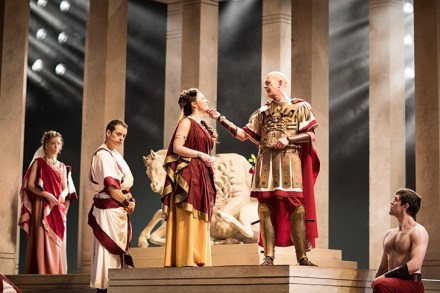
Tristan Bernays loves Hollywood blockbusters. His new play, Boudica, is an attempt to put the blood-and-guts vibe of the action flick on the Globe’s stage. The pacy plotting works well. Boudica revolts against the Romans who have stolen her kingdom. The queen is imprisoned and flogged while her two maiden daughters are savagely violated. Vowing revenge, she allies herself with the reluctant Belgics and they attack and destroy Camulodunum (Colchester). The first half is a rip-roaring crowd-pleaser. After the interval, an anticlimax. London is sacked but the Romans cling to power and when Boudica dies, her bickering daughters fight rather tediously over the succession. What counts here are the externals: the costumes, the accents, the fights, the stunts.

Speech therapy

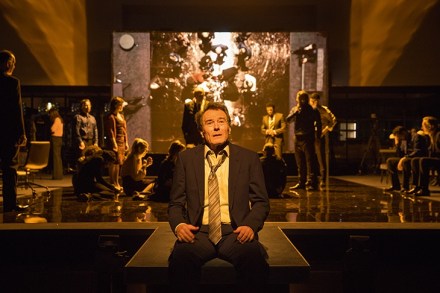
Oslo opened in the spring of 2016 at a modest venue in New York. It moved to Broadway and this imported version has arrived at the National on its way to a prebooked run at the Harold Pinter Theatre. It’s bound to be a hit because it’s good fun, it gives a knotty political theme a thorough examination, and it’s aimed squarely at the ignorant. In the early 1990s Norwegian diplomats set up ‘back-channel’ talks between the PLO and Israel. The play follows that process and it treats geopolitics like a flat-share comedy. The bickering partners are hauled in by the lordly Norwegians and forced to hammer out their differences around the table. Play-goers need have no prior knowledge of Israel and its fraught relationship with the Palestinians.

Age concern | 14 September 2017

Stephen Sondheim’s Follies takes a huge leap into the past. It’s 1971 and we meet two middle-aged couples who knew each other three decades earlier at a New York music hall. The building faces demolition and the owner is throwing a party for his old dancing-girls. Dominic Cooke’s lavish production of this vintage musical boasts 58 performers, 160 costumes and 200 production staff. Yet it’s a curiously small show that could be performed, with a few cuts, in a pub theatre. There are four main characters and a smattering of cameos. Phyllis and Ben are rich New York grandees, unhappily married. Their chums Bud and Sally are also wealthy and disappointed with life.

PMQs Sketch: Policy pay, child poverty, and Brexit

The news was bad at PMQs today. Gosh, it was terrible. Layla Moran started by announcing that Brexit would jeopardise thousands of jobs in Abingdon and wreck the local economy. Theresa May told her to stop spooking the voters with imaginary pessimism. ‘It’s what they’re telling me!’ shouted Ms Moran. Daniel Zeichner said the scourge of Brexit had now reached Cambridge. Migrants are fleeing in droves. University kitchens are without staff. Pubs are closing for lack of barmaids. Awful isn’t it? No hot dinners for dons. No tankards of goodly ale foaming in the city’s taverns. Mrs May urged him to ask businesses to train new staff. Mr Corbyn joined in.

Keeping it in the family

A new orthodoxy governs the casting process in Hollywood. An actor’s ethnicity must match the character’s. If you extend this decree to Shakespeare, you need Macbeth to be played by a Highlander, Shylock by a Venetian Jew, Richard III by an English hunchback and Cleopatra by an Egyptian who has slept with her brother. As for Hamlet, the play can only be entrusted to a family of incestuous Scandinavians. Gyles Brandreth (whose name means ‘firebrand’ or ‘sword’ in old Norse) has anticipated the trend by staging a production alongside his son and his daughter-in-law. Benet Brandreth plays the Dane while his wife, Kosha, plays Ophelia, Gertrude, Rosencrantz, Laertes and Horatio. Brandreth Snr takes the older roles.

PMQs Sketch: Theresa May and Jeremy Corbyn are back in control

Mrs May was back to her former self today. Cool, brusque, snappy and effective. Electoral disaster has served her well. Is it possible she planned this all along? Having brilliantly sacrificed her majority, she’s now indispensable to her weakened party. Her lack of defences defends her. Just one Commons defeat and Corbyn could walk into Number 10. The Labour leader was transformed too. The vegan diet appears to have drawn a circle of spiritual detachment around him. He didn’t get narked today. He wasn’t petulant or hoity-toity. He didn’t rant or snarl. The wheedling note of the dentist’s drill never entered his voice. He seemed measured and in control. Smooth, even.

Animal or vegetable?

Against by Christopher Shinn sets out to unlock the secrets of America’s spiritual malaise. Two main settings represent the wealthy and the dispossessed. At a university campus, an inquisitive Jesus-freak named Luke interrogates people about their experiences of violence. At an online retailer, oppressed wage slaves toil for hours and mate fleetingly during their tea breaks. Shinn’s characters also fall into two categories. The rich are eloquent, idealistic and disingenuous. The poor are earthy, impulsive and honest. The play is built around a series of formalised conversations, recorded interviews, writing tutorials, a Q&A session at a town hall, a stilted reunion between two old school-friends, and so on.

Hit and miss | 24 August 2017

Truman Capote should have been called Truman Persons. His father, Archulus, abbreviated his first name and introduced himself as Arch Persons. ‘And that,’ scoffed his son, ‘sounded like a flock of bishops.’ The young scribbler was thrilled when his divorced mother married a rich Cuban, Joseph Capote, whose zippy and eccentric name he gladly adopted. He got a job at the New Yorker and found the magazine’s celebrated wits, including Dorothy Parker and James Thurber, were embittered molluscs who hated each other. Capote’s literary life, as related by Bob Kingdom, is a parade of inspired bitchiness. He had the knack of getting to a character’s core problem. For Gore Vidal it was the knowledge that he had never written a masterpiece.

The many sides of satire

Brexit the Musical is a peppy satire written by Chris Bryant (not the MP, he’s a lawyer). Musically the show is excellent and the impressions of Boris and Dave are amusing enough, but the storyline doesn’t work and the script moves in for the kill with blunted weapons. Everyone is forgiven as soon as they enter. Boris swans around Bunterishly, Dave oozes charm, Theresa May frowns and pouts in her leather trousers, and nice Michael Gove tries terribly hard to be terribly friendly. Andrea Leadsom, known to the public as a furtive and calculating blonde, is played by a sensational actress who belts out soul numbers while tap-dancing in high heels and a pencil skirt. Was there ever a kinder portrait of a cabinet minister?

London calling | 10 August 2017

What is the Edinburgh Fringe? It’s a sabbatical, a pit stop, a pause-and-check-the-map opportunity for actors who don’t quite know where to go next. Alison Skilbeck has written a ‘serio-comic celebration’ of Shakespeare and her performance attracts a decent crowd for a show that starts at noon. She plays a fruity-voiced thesp, Artemis Turret, who delivers lectures about the Bard’s older females to groups of layabout pensioners gathered in a scout hut. It’s pure Joyce Grenfell. Good fun, too, but without much potential beyond the fringe. Dominic Holland’s show, Eclipsed, is about his life as a fallen comedy god. In the 1990s he was on telly all the time and he accepted the royal command to perform at Prince Charles’s 50th birthday party.

Ukip’s interim leader on Nigel Farage, Brexit and his party’s death spiral

‘Some wine? How about a beer? Shall we settle into a good old pub?’ I make these suggestions to Ukip’s interim leader, Steve Crowther, as we meet in central London, but he opts for a quiet bistro where he orders a cup of tea. He has a dapper suit, a ruddy, forceful face and a white beard of neatly trimmed bristles. His rat-a-tat laugh resounds across the bar like a well-oiled machine gun. Our intended subject is the Ukip leadership election (hustings this month, results on 30 September), but the n-word elbows its way through and claims our attention. The negotiations.

Whither Ukip?

‘Some wine? How about a beer? Shall we settle into a good old pub?’ I make these suggestions to Ukip’s interim leader, Steve Crowther, as we meet in central London, but he opts for a quiet bistro where he orders a cup of tea. He has a dapper suit, a ruddy, forceful face and a white beard of neatly trimmed bristles. His rat-a-tat laugh resounds across the bar like a well-oiled machine gun. Our intended subject is the Ukip leadership election (hustings this month, results on 30 September), but the n-word elbows its way through and claims our attention. The negotiations.