Lloyd Evans

Lloyd Evans

Lloyd Evans is The Spectator's sketch-writer and theatre critic

John Bercow’s authority has now collapsed

The title ‘Father of the House’ tends to give the bearer a chronic problem with wind. The present holder, Ken Clarke, stood up at PMQs and asked a question of Gibbonian magnitude and complexity. Among the gusts of prose was a useful point about spending. ‘It would be extremely unwise for the outgoing government to make reckless commitments,’ he said. He was ignored. Member after member tried to cadge money from Mrs May before she quits the Downing Street cash-pile. The Conservative MP Marcus Jones wanted a handout for shops in Nuneaton, while Paul Scully made the case for SEN children. Tim Loughton, whose constituency abuts the sea, proposed a whole new arm of government, the Coastal Schools Challenge Fund, to help kids living near a beach to swot harder.

Tory leadership debate: who won Emily Maitlis’ Brexit show trial?

Five hopefuls in a shallow arc of bar-stools. Last night, the BBC summoned the Tory candidates for a Brexit show trial overseen by Emily Maitlis. Michael Gove made an early impact with a burst of crazy egoism. ‘Because I started this, I will finish it.’ He forgot that countless campaigners such as Bill Cash, Dennis Skinner and (oddly enough) Jeremy Corbyn have been lobbying to extract Britain from Europe since long before Gove bought his first toot of coke. Boris seemed genial but over-relaxed. He leaned back on his bar-stool like an embroidered pillow hoping no one would sit on him. No one did. He failed to impress but he got away with it. A gaffe-free night is a victory of sorts. Plenty of guff though.

A whole lotta shakin’ goin’ on

Sometimes it’s hard to describe a play without appearing to defame the writer, the performer and the theatre responsible for the production. Here’s what I saw. A semi-naked woman lurks in a corner, with her back to the audience, shaking. Rap music pounds. The woman shakes and shakes. Then she shakes a bit more. And a bit more. As her weird spasms enter their 17th uninterrupted minute, the spectators glance anxiously at their watches. Finally the woman’s twitching ceases. Speaking in a New York accent, she recites a conversation between an inquisitive child and an older girl. The theme is explicit sex chat.

Boris Johnson had an easy ride at his campaign launch

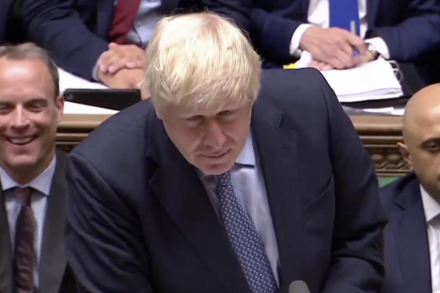
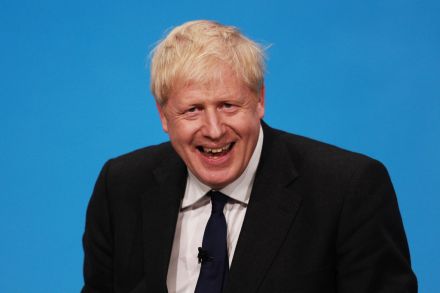
Boris Johnson made his pitch to become PM at a spirited mini-rally in central London. He began with a swipe at the stalling economies of the Eurozone which he compared unfavourably with ‘the commercial dynamism of the British people.’ His one-nation pitch bore almost too many adman’s sound-bites. He called England, Wales, Scotland and Northern Ireland ‘the quartet’, and ‘the awesome foursome’. Together they make Britain ‘the soft-power superpower of the world’. Towards the EU he was generous. He referred to them as ‘our friends and partners’, somewhat insistently and he hoped that Brussels would adopt his upbeat mood about Brexit. ‘I think there will be a symmetrical enthusiasm about getting this thing done’.

Poetic and profound

Kenneth Lonergan, who wrote the movie Manchester by the Sea, shapes his work from loss, disillusionment, small-mindedness, hesitation and superficiality, all the forgettable detritus of life. The Starry Messenger is about Mark, a disappointed astronomer aged 52, who gives public lectures at a city planetarium. He loves his subject even though it let him down and every week he tackles the daft questions of his pupils with superhuman patience. The same two pests always raise their hands. One is a burly misanthrope who disbelieves all experts, the other is a high-flying oddball who craves attention. Mark starts a slow-burn affair with Angela, a single mum who needs a role model for her nine-year old son: an expert on the stars and inter-planetary travel is just the ticket.

Rebecca Long-Bailey has exposed Labour’s climate-change muddle

A festival of inertia at PMQs today. A party without a leader, a Government without a purpose and a Parliament without a programme. Theresa May, in Portsmouth for the D-Day commemorations, was understudied by David Lidington who looks like a maths professor but performs like a comedian. His waggish streak is undermined by his gentlemanly dislike of mocking women. He blushed and giggled as he pointed out that Jeremy Corbyn’s regular deputy, Emily Thornberry, had been ‘despatched to internal exile somewhere’. Her crime, he teased, was to ‘outshine the Dear Leader’ at PMQs. In Corbyn’s place stood Rebecca Long-Bailey. Lidington warned that she too risked being ‘airbrushed out of Politburo history’ if her performance was deemed too effective.

The spying game | 30 May 2019

Arts Council England takes money from almost all of us and spends it on culture for almost none of us. Among its clique of favoured writers is Ella Hickson whose work has twice been staged at the subsidised Almeida. Her first effort was a historical sketch show about oil-drilling, the second looked at the problem of elderly gropers who commission scripts from vulnerable tragediennes We have the NT to thank for her latest, Anna, a title that’s unlikely to set the pulse of theatreland racing. Viewers take their seats and are asked to don headpieces. The stage is shielded from the auditorium by a soundproof membrane of glass that stays in place during the action. Listening to the dialogue through headphones makes us feel like secret policemen monitoring a bugged apartment.

Blond ambition | 23 May 2019

The opening of Jonathan Maitland’s new play about Boris purports to be based on real events. Just before the referendum, the Tory maverick invited some chums over to help him decide whether to opt for Leave or Remain. Mrs Johnson was present along with Michael and Sarah Gove and the Evening Standard’s owner, Evgeny Lebedev. For a bit of fun, the writer adds spectral appearances from three ex-prime ministers, Blair, Thatcher and Churchill. This is amusing at first but it slows the play down because the fantasy figures can’t affect the real-life action. There are dazzling performances here. Tim Wallers plays Evgeny as a name-dropping simpleton with naked ankles and an ultra-camp gait. Wonderful.

PMQs: May and Corbyn sound like a sketch about a deaf shopkeeper

Tories who still support Theresa May are as rare as bumblebees in Antarctica. Her backbenchers were too polite to mention her imminent departure at PMQs but her opponents couldn’t resist poking fun. The PM began with her ritual announcement about ‘meeting ministerial colleagues and others’. Up stood John Woodcock. ‘She may not have long left, and good luck with those "meetings later today”’. Mike Amesbury said his question about lease-holders would interest her, ‘now that she’s about to move house.’ Toby Perkins asked her to increase SEN funding ‘in her final days.’ Jeremy Corbyn led on school budgets too. They’re down, he claimed. As he always does. No, no, they’re up, said the PM.

Labour pains | 16 May 2019

Colour-blind casting is a denial of history. The Young Vic’s all-black version of Death of a Salesman asks us to believe that an ordinary African-American chap living in Brooklyn in 1928 might have owned a Chevrolet, and that a black businessman in the 1940s would consider asking a friend for ten grand to purchase a ranch in Texas. Younger viewers may assume that US society has been racially integrated for nearly a century. Is that the right message? Willy Loman, the duffer at the play’s core, is one of American drama’s least attractive heroes. A preachy, devious, boastful, fawning, angry, narcissistic misery guts, he’s professionally incompetent and morally bankrupt.

Jeremy Corbyn’s hypocritical appetite for bad news

It’s that time of year. The Sunday Times Rich-List is out. To most of us it’s a negligible frivolity. To the hard left it’s hard porn. Their trembling fingers swipe through its glossy pages. Their ravening eyes gaze with confused adoration at the wrinkled oligarchs and their marmalade-coloured wives. At PMQs today Jeremy Corbyn captured this covetous ardour by deriding Theresa May for accepting donations from ‘hedge-fund tycoons’. She replied that income inequality has fallen since 2010. ‘Labour,’ she said, ‘want to bring people down. Conservatives want to raise people up.’ Corbyn moved to the issue of starvation among poor children.

Hilarity with heart

Small Island, based on Andrea Levy’s novel about Jamaican migrants in Britain, feels like the world’s longest book review. We meet Hortense, a priggish school teacher, and her cool, handsome boyfriend who survive on a pittance in the Caribbean. Then we skip back to Hortense’s childhood in a house dominated by a bullying preacher who forbids conversations at mealtime. Then we cross the Atlantic to Lincolnshire and meet a chirpy blonde, Queenie, whose auntie runs a sweetie shop. Does Queenie want a job selling sweeties? Yes, says Queenie to her auntie. All this takes ages, and it feels like a deadly earnest sociology lecture. Then a stiff young bank clerk enters the shop and asks Queenie if she’d like to go for a walk. And the show takes off.

Theresa May tries out a new Brexit delay excuse

PMQs began with Janet Daby calling for a mass-cull of the working-class. The Labour MP relayed the experience of an industrious constituent who already has two jobs, on zero-hour contracts, and seeks a third. ‘Ban zero hours contracts!’ she declared in outrage. Obviously she’s fed up with people working in her constituency. Much easier if they all starve to death. And with her policies they will. Labour leader Jeremy Corybn had good news about the NHS which he’d failed to interpret correctly. Forty per cent of staff last year, he said, had suffered ‘work-related stress’. This means that 60 per cent of them hadn't. Not a twinge, not a whisper of anxiety during 12 long months of underfunded chaos.

One of the great whodunnits

It starts on a beautiful summer’s morning in the suburbs of America. A prosperous middle-aged dad is chatting with his neighbours in the garden of his comfortable home, but by nightfall his family has been destroyed. This is one of the most momentous convulsions in all drama. Arthur Miller’s masterful plotting, which he never again surpassed, is a match for the best. By the best I mean Oedipus. Jeremy Herrin’s production emphasises the lush fertility of America in the late 1940s. Trees in full leaf overlook the timber house that is perhaps a little too small for its millionaire owner. Joe Keller is a pioneering industrialist who served a brief jail term for supplying faulty components to the air force during the war. More than 20 pilots died.

Theresa May flounders horribly at PMQs

Best mates on Brexit, deadly foes on everything else. The highly suspicious search for a Lab/Con Brexit accord was suspended today as the party leaders exchanged blows at PMQs. These covert ‘talks’ are clearly a blackmail effort contrived in Downing Street. By threatening her MPs with a Labour-backed Customs Union, Theresa May hopes to secure their support for her thrice-rejected withdrawal agreement. It might just work. The EU wasn’t mentioned at PMQs but the Labour leader found alternative sources of distress. ‘Things are getting worse,’ he crowed at the Prime Minister as he ran through a hit-parade of sob-stories: inequality, malnutrition, rising crime, falling police numbers and care-home failures.

Keeping it real | 25 April 2019

It starts at a secretarial college. The stage is occupied by a dignified elderly lady who recalls her pleasure at learning shorthand in the 1920s. She lived in Germany and she took a job at a firm headed by a man named Goldberg. He was Jewish. These unremarkable disclosures are spoken by Brunhilde Pomsel, a woman of high intellect and modest ambitions, who was born in 1911 and died two years ago, aged 106. Her life story was turned into a documentary film, which Christopher Hampton has adapted for the stage. Pomsel’s words are spoken by Dame Maggie Smith. What makes her fascinating is that she worked for Josef Goebbels and spent the entire war in the propaganda ministry in Berlin. Her acceptance of Nazism is gradual and semi-conscious.

Why are our MPs fawning over Greta Thunberg?

Never mind sabotaging Brexit. The sight of MPs clamouring to be photographed alongside Greta Thunberg yesterday dealt yet another harmful blow to our democracy. The Swedish clairvoyant is the constituent of no British politician. She contributes not a penny in taxes to HM Treasury. And yet our parliamentarians lined up to listen in wonder to her ramblings about the future. Thunberg’s message, echoing the prophecies of Extinction Rebellion, comes as music to a politician’s ears. Humanity is doomed, says the pig-tailed time-traveller. MPs love the rhetoric of global catastrophe because it means more influence for them, and less for oiks like us. At PMQs the understudies took the stage.

Sweet nothings

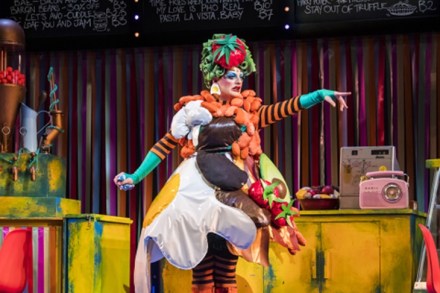
Nigel Slater is popular because he’s an exceptionally meek cook. Not for him the sprawling restaurant empire or the transatlantic TV career to excite envy and loathing. He writes about his trade in simple vivid prose and his bestselling memoir, Toast, has become a play. Young Nigel enters as a 1960s schoolboy, with shorts and a side parting, living in a posh suburb of Wolverhampton. Dad is a kindly but remote presence, an alien in his own home. Mum is a braindead kitchen-limpet who encourages Nigel’s first culinary experiments. The family are adventurous. They try spaghetti bolognese. Dad takes charge at the dinner table and loads each plate with a heap of yellow string topped by garnish the colour of lava spewed from a volcano. Nigel pronounces the dish quite good.

Rising to the top

Caryl Churchill’s best-known play, Top Girls, owes a large debt to 1970s TV comedy. It opens with a Pythonesque dinner party in which noted female figures from myth and history get drunk while swapping gags and stories. We meet a Victorian explorer, an emperor’s concubine, a 16th-century Flemish battle-axe and a long-suffering Italian peasant girl. The scene has no internal logic or dramatic direction and, just like a Python routine, it’s besotted with its own inventiveness and it relies on erudite banter and verbal shocks to sustain our interest.

Theresa May’s destiny is in Donald Tusk’s hands now

Is this the end? The tragedy is that she no longer knows. The Prime Minister’s destiny is in the hands of Britain’s de facto head of state, Donald Tusk. On March 20th, Mrs May told Parliament that ‘as Prime Minister’ she couldn’t countenance delaying Brexit beyond June 30th. If Tusk refuses her request for a second short extension, it’s hard to see how she can continue.  Theories and predictions abound. The noted political philosopher, Gina Miller, suggested yesterday that Mrs May could be using the Lab/Con talks as a scam that will enable her to complete a no-deal Brexit on April 12th and saddle Labour with the blame. The flaw in this scenario is that it credits the noodle-brained May with a degree of intelligence.