Lloyd Evans

Lloyd Evans

Lloyd Evans is The Spectator's sketch-writer and theatre critic

Boris Johnson is the Katie Price of politics

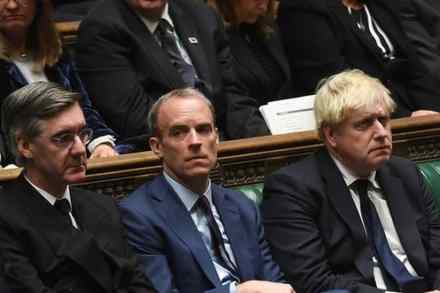
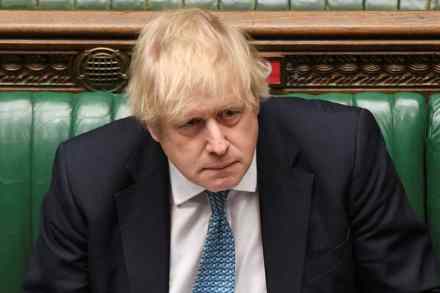
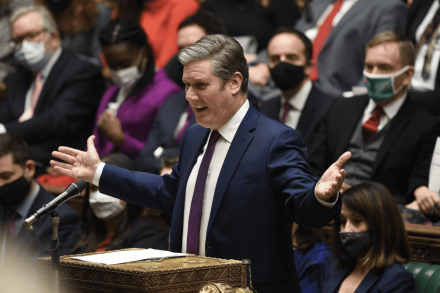
What a crazy muddle that was. Boris has spent two weeks digging a hole for himself and Sir Keir Starmer’s job at PMQs was to give him a shove and watch him disappear. The Labour leader pointed out that some in the cabinet have apologised for backing Owen Paterson but the PM has failed to follow suit. ‘Do the decent thing and say sorry,’ urged Sir Keir, ‘for trying to give a green light to corruption.’ Boris admitted to making a mistake, and then he raised Sir Keir’s receipt of £25,000 from the law firm, Mishcon de Reya. Speaker Hoyle leapt up and declared that Sir Keir’s affairs are outside the PM’s remit. Everyone knows this – not least because Hoyle mentions it virtually every week.

Mary Wakefield, Lloyd Evans, Tanya Gold

17 min listen

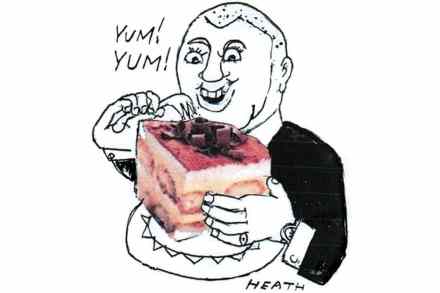
On this week's episode, we’ll hear from Mary Wakefield about the pattern of misandry in modern media. (00:48)Then Lloyd Evans on the British tradition of the pub theatre. (07:19)And finally, Tanya Gold on getting drunk on tiramisu. (13:55)Produced and presented by Sam HolmesSubscribe to The Spectator today and get a £20 Amazon gift voucher:spectator.

An affectionate exercise in comic sabotage: Pride & Prejudice* (*sort of) reviewed

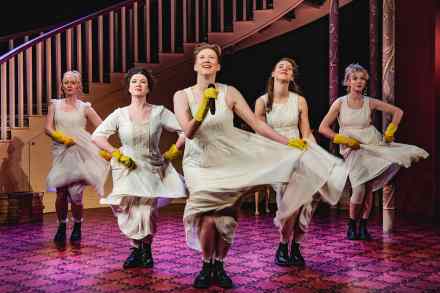
Let’s be honest. Jane Austen is popular because War and Peace doesn’t fit inside a handbag. Austen’s best-loved novel, Pride and Prejudice, has been updated in a fetching new production that treats the sacred text as a screwball comedy. The fun starts before curtain-up with the cast of five girls messing about on stage and struggling with a chandelier that almost shatters but doesn’t. This improv bit is irritatingly predictable. Then the show begins and the girls start to curse, laugh and pontificate their way through the tale. We get a feminist lecture explaining that Mrs Bennet’s predicament owes itself to the laws of bequest that prevented women from inheriting property. So if Mr Bennet dies, his wife and five daughters will be destitute.

Pub theatres are a British institution

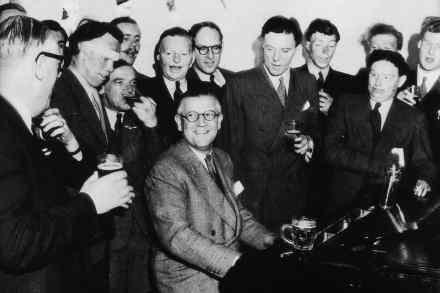
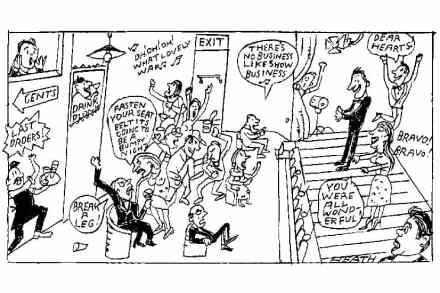
Which is the oldest pub theatre in London? The King’s Head in Islington claims that its American founder, Dan Crawford, established the trend back in 1970. But a rival venue, Pentameters, above the Horseshoe in Hampstead, maintains that its proprietor, Leonie Scott-Matthews, set it up as a fringe theatre in August 1968. The dispute rumbles on. Pubs are peculiar to British culture, and their conversion into theatres owes something to the quirks of architecture. Most have a small room on the first floor which is slightly inaccessible from the downstairs drinking area, and it’s hard to tempt boozers to climb a narrow flight of stairs and sup their pints in a cramped space that feels a bit like an attic. But these dank little rooms are ideal for theatre.

Like Alan Bennett but less funny: ‘night, Mother at Hampstead Theatre reviewed

’night, Mother is a two-hander that opens like a comedy sketch. ‘I’m going to kill myself, Mama,’ says Jessie. She’s cleaning a pistol and loading it with bullets. ‘I’ll shoot myself in a couple of hours.’ The pair live together in a lonely farmhouse, and Jessie wants to make sure her mother will be able to cope after her death. She tours the kitchen explaining where the fuses and the cleaning materials are kept. Mama, who doesn’t seem unduly alarmed, offers to phone her son and get him to thwart the suicide attempt. ‘I’ll just have to do it before he gets here,’ says Jessie. This is an intensely dramatic set-up which ought to be either gripping or hilarious, or both. Somehow it lacks punch.

Rayner nails Boris at PMQs

Angela Rayner is formidable. Until today, that adjective never suited Labour’s deputy leader. She can be combative, authentic, eye-catching and crowd-pleasing — and quite annoying. Clearly she’s as tough as a vintage Land Rover. But at PMQs, she added statesmanship to her roster of qualities. The session was sparsely attended. The press are in Glasgow covering the Frequent Flyers Summit, aka COP26. Boris came south, by jet of course, to put in a stint at Westminster. He was met by Rayner, soberly dressed and steely-eyed. Her tactics were well prepared in advance. She used feints and misdirection to keep Boris guessing and she varied long rhetorical assaults with punchy killer-blows. She began with a couple of questions about the alleged misconduct of Owen Paterson.

Every MP must see this play: Value Engineering – Scenes from the Grenfell Inquiry reviewed

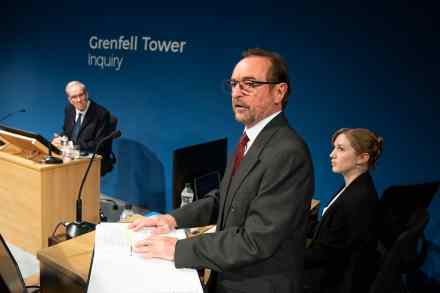
Scenes from the Grenfell Inquiry is a gripping, horrifying drama. Nicolas Kent and Richard Norton-Taylor have sifted through the public hearings and dramatised the most arresting exchanges. Ron Cook, often miscast as a comedian, is superb as the frosty and occasionally irascible inquisitor, Richard Millett. Early on, he asks the witnesses ‘not to indulge in a merry-go-round of buck-passing’. Later, he comments acidly, ‘That invitation has not been accepted.’ Every witness has something to hide and something to be ashamed of. A fireman searching for a child on the upper floors can’t explain why he didn’t rouse families from their flats and help them escape. A witness describes the inferno’s ghastly noise, ‘like sparklers’.

Joanna Lumley and the art of food rationing

Well done, Joanna Lumley. The 75-year-old actress has solved the climate crisis. She proposes a return to wartime rationing when shoppers had to surrender government coupons whenever they bought meat, sugar, petrol, bread and even soap. ‘You’re given a certain amount of points,’ she told the Radio Times, ‘and it’s up to you how to spend them, whether it’s on a bottle of whisky or flying in an aeroplane.’ The rarer the pleasure, the greater the relish. It sounds ideal. We can defeat the climate crisis by tightening our belts and agreeing to a common set of rules. And on Thursday evenings we’ll stand on our doorsteps flapping our ration-books and cheering like maniacs. However, it's likely that double standards will emerge.

Would the real Rishi Sunak please stand up?

It was a tale of two chancellors at today’s high-spending Budget. Rishi Sunak began by embracing the big-state profligacy pursued by Cameron and May, and maintained by their successors, Boris and Carrie.  The Chancellor reeled off stacks of figures indicating that the economy is roaring back to life. 'Growth up! Wages up! Employment up!' he shouted. And he announced that government spending sprees will also surge by £150 billion. He plans to restore the 0.7 per cent spending target for foreign aid by the end of this parliament. And he has ordered civil servants across Whitehall to find more stuff to buy.  ‘A real-terms rise in spending for every single department,’ he boasted.

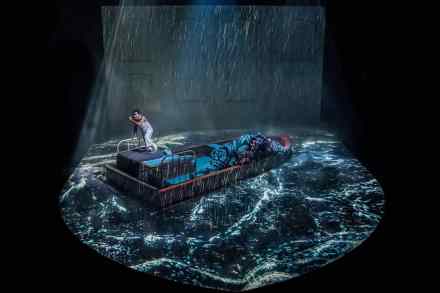
Somewhere in this production lies Shakespeare’s tragedy: Almeida’s Macbeth reviewed

Yaël Farber’s Macbeth sets out to be a great work of art. The director crams the Almeida’s stage with suggestive props, glass panels, microphones, a wheelbarrow full of jackboots. The witches are not the usual vagrants or carbuncled mystics. These grim-looking ladies have expensive hairdos and nicely ironed shirts — like a panel of disgruntled academics at a tribunal. William Gaunt is a decrepit Duncan who looks ready to receive his telegram from the Queen. He can barely rise from his NHS wheelchair. But one wonders why this frail old chap had to be knifed to death? Much easier to smother him with a pillow and claim he expired naturally.

The unstoppable pessimism of Ian Blackford

Peace reigned at PMQs today. That was the plan, anyway. Both leaders agreed to sheath their weapons and to blunt their sabres in honour of the late Sir David Amess. But one-upmanship started to break through almost immediately. The issue on which they agreed to agree was internet extremism. Sir Keir Starmer saluted the ‘collaborative spirit’ of the House and cited an instance of violent footage which had ‘stayed online because it didn’t contravene the guidelines.’ Boris promised to strengthen the rules and to make companies accountable for extremist content on their sites. ‘I’m glad he’s taking this new tough line,’ added the PM, hinting that Sir Keir is as squishy as a warm marshmallow on violent crime.

A triumph: Young Vic’s Hamlet reviewed

Here goes. The Young Vic’s Hamlet, directed by Greg Hersov, is a triumph. This is a pared-back, plain-speaking version done with captivating simplicity and perfect trust in the text. The star is Shakespeare and the production merely opens up an aperture to his dazzling account of human greatness and frailty. The action takes place on a small, level stage that could be covered by two bedspreads. Designer Anna Fleischle adds an oblong arch of distressed stone along with three tall blocks that rotate to create internal hiding places, corridors and cubby-holes. That’s all she needs to suggest a house of horrors, a court of nightmares, a royal palace beset by plots and whispers of secret killings.

A well-meaning but dull Official History: Olivier’s Normal Heart reviewed

The Normal Heart is not about Aids. Larry Kramer’s play is set in New York in 1981 at a time when clinicians were struggling to find a link between a handful of rare diseases that struck only gay men and heroin addicts. The term ‘Aids’ wasn’t adopted until late in 1982. And this dampens the wheels of Dominic Cooke’s production. A playgoer is likely to stifle a yawn as the characters on stage try to discover medical facts that have been common knowledge for decades. There are other problems with Kramer’s ageing script. The story follows an indignant activist, Ned, who has to persuade the city authorities to take the plague seriously. He embarks on a laborious campaign whose numerous battlegrounds the script exhaustively covers.

Gripping slice of old-fashioned entertainment: Old Vic’s Camp Siegfried reviewed

Boy meets girl. Girl gets pregnant. Then the entire world collapses. That’s the story of Camp Siegfried, which is set in the late 1930s at a holiday park in Long Island where German-Americans come to enjoy the outdoor life and to celebrate their ancestral culture. The boy is a strapping 17-year-old who chats up an awkward geeky girl with little sexual experience. Or so it seems. The boy is keen on Germany’s dynamic new chancellor but the girl finds Hitler too ‘excitable’. But when she’s invited to give a speech to the entire camp, she becomes an overnight convert and extolls the Nazi virtues of unity and patriotism. And she’s tempted to believe a rumour that the Führer himself travelled from Germany to hear her speak.

Why have A-listers stopped washing?

Something's in the air in Hollywood. It’s the whiff of A-list celebs who’ve given up washing. Jake Gyllenhaal recently revealed that, ‘more and more I find bathing to be less and less necessary.’ Cryptically, he added, ‘we naturally clean ourselves,’ without explaining how he keeps himself smelling of roses while avoiding soap and water. Hollywood’s new dirty dozen is said to include Brad Pitt and Ashton Kutcher. Kutcher and his wife Mila Kunis have said they ‘seldom’ take the trouble to bathe. Power-couple Dax Shepard and Kirsten Bell offered this stern warning to anyone on the brink of a morning shower. ‘You should not be getting rid of all the natural oil on your skin with a bar of soap every day.

Labour’s bid to lose the next election has begun

Sir Keir stamped the Labour conference with his personality today. And the mark he left was very bland, vague and colourless – but hard to dislike. Mum and Dad featured prominently. Sir Keir treats his parents like a couple of pet hedgehogs whose habits still amuse him as he looks back on his childhood. His father, a busy tool-maker, liked to toil over his instruments and to dispense wisdom at the kitchen table.  His mother was a hard-working nurse whose career was curtailed by a debilitating illness. He described her sprawling helplessly in intensive care – ‘Mum’s bed a riot of tubes’ – while four nurses strove to keep her alive. All very touching.  More Kleenex was required as he moved to the failings of the police.

Madam Butterfly and a pointless discussion about colonialism

Welsh National Opera’s new version of Puccini’s Madam Butterfly opens today. To help audiences understand the opera's historical significance this week the producers staged an online discussion, ‘The Long Arm of Imperialism.’  It was chaired by professor Priyamvada Gopal who teaches postcolonial studies at Cambridge. She began by reminding us that many of the greatest operas in the canon were written in the 19th century, ‘when 85 per cent of the earth was, in some form or other, annexed to the cultural project…so there is no culture untouched by that project.

Jennifer Saunders is brilliant: Blithe Spirit at the Harold Pinter Theatre reviewed

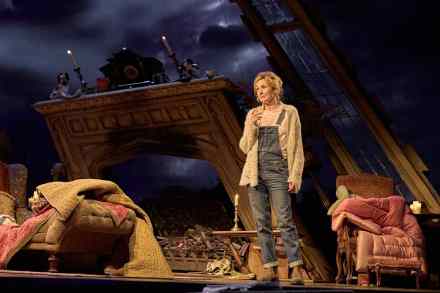
Blithe Spirit is a comedy with the plot of a horror story. Charles, a middle-aged novelist, lives happily with his second wife, Ruth, but he accidentally conjures up the spirit of his first wife, Elvira, during a séance. He becomes the target of a ghostly murder plot. Elvira decides to bump Charles off and enjoy his company in the afterlife. The play was one of Noël Coward’s biggest hits and although the script is 80 years old, this production features intriguing new material. The spiritualist, Madame Arcati, suffers from wind. She refers to her dietary anxieties several times and she mentions her dislike of red meat and roast pigeon.

Angela Rayner’s PMQs performance wasn’t a triumph

The firecracker and the damp squib stood in at PMQs today. With Boris abroad, the deputies took to the dispatch box. Angela Rayner and Dominic Raab have certain qualities in common. Both are eyeing the leadership of their parties and both are keen to offer a contrast with the present incumbent. The pendulum of popularity tends to swing in predictable directions. The dashing showman is often succeeded by the dead-safe dullard. Major after Thatcher. Brown after Blair. Why not Raab after Boris? And Angela Rayner’s eye-catching flamboyance would be a welcome change from the dreary swattishness of Sir Keir Starmer. Today was all about appearances. Raab will be pleased to note that he played to a half-empty house and bored everyone rigid.

Sexist, classist and pro-global warming: Frozen, at Theatre Royal Drury Lane, reviewed

Frozen the musical declares war on woke politics. The 2013 Disney movie has been turned into a song-and-dance show that openly celebrates sexism, classism and misogyny. Plus, it salutes the joys of global warming. It’s set in a Scandinavian realm ruled by a kindly monarch who lives in a castle attended by fawning servants. No sign of social mobility here. An impetuous young princess, Anna, falls in love with an eligible duke, Hans, but their betrothal annoys Anna’s sister, Princess Elsa. This is dangerous because Elsa has magical powers that she can’t control. She accidentally casts a spell on Anna, who falls to the ground with a terrible illness. Things get worse when a cold snap arrives from the north and plunges the entire kingdom into a new ice age.