Lisa Haseldine

Lisa Haseldine

Lisa Haseldine is The Spectator's online commissioning editor - foreign affairs.

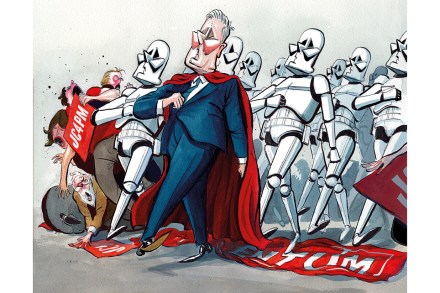
The Starmtroopers: Labour’s new recruits

From our UK edition

43 min listen

This week: In her cover piece for the magazine, The Spectator’s political editor Katy Balls writes that as Labour prepares for government, Keir Starmer is rooting out the far left sections of his party and replacing them with moderates. She is joined by John McTernan, former political secretary to Tony Blair, to discuss the return of the Blairites (01:06). Also this week: The Spectator’s Russia correspondent Owen Matthews writes about Putin's three most prominent political prisoners. He joins the podcast alongside The Spectator’s assistant online editor Lisa Haseldine to consider the cost of speaking up against the regime (17:50).

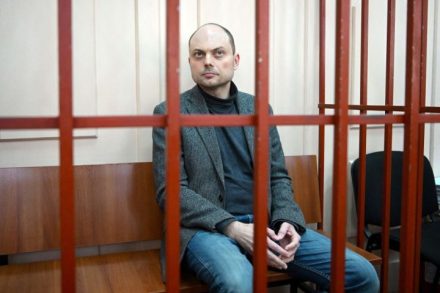
The jailing of Kremlin critic Kara-Murza is a message from Putin

From our UK edition

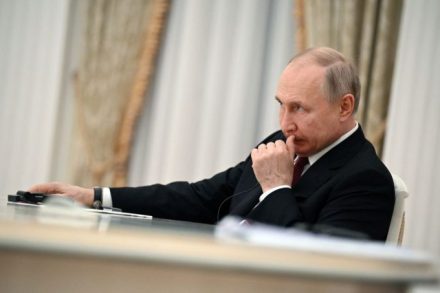
In a warning to Kremlin critics everywhere, the prominent Russian opposition leader Vladimir Kara-Murza has today been sentenced to 25 years in a penal colony by a Moscow court. His conviction is based on several charges, all of which he denies, including treason and ‘discreditation of the Russian Army’ – a move that has been internationally criticised as politically motivated. Kara-Murza’s sentence is significant for being the longest to be handed down to critics of Vladimir Putin’s regime so far. Not even Alexei Navalny, so hated by Putin he famously refuses to ever call him by name, received a sentence that long – last year he began a nine-year term on the basis of trumped up fraud charges.

Are Germany’s Greens on borrowed time?

From our UK edition

Have cracks started to show in Germany’s traffic light government? Less than 18 months after chancellor Olaf Scholz’s Social Democratic party (SDP) formed a coalition with the Green and Federal Democratic (FDP) parties, collaboration and harmony have been replaced by division – not least when it comes to the push for net zero. Scholz summoned his coalition partners to a three-day summit last week. Their mission? To hash out policy differences that had been hanging over the government for several months. Emerging from 30 hours of negotiations, however, the SDP, FDP and Greens seem further apart than ever. The main point of contention for the three parties is, perhaps surprisingly, the environment.

Katy Balls, Lisa Haseldine and Graeme Thomson

From our UK edition

20 min listen

This week: Katy Balls discusses why Humza Yousaf is the Union's best hope (01:00), Lisa Haseldine reads her interview with former Georgian defence minister David Kezerashvili (07:00), and Graeme Thomson asks whether supergroups are really that super (13:54).  Produced and presented by Oscar Edmondson.

Putin’s crackdown on Russia’s school children

From our UK edition

In Russia, nowhere – and no one – is safe from the insidious reach of Putin’s war in Ukraine. In April 2022, during a school art class, twelve-year-old Masha Moskaleva drew a picture of a Russian and Ukrainian flag with missiles flying at a mother and child. Inside the flags, she had written ‘Glory to Ukraine’ and ‘No to War’.  Masha’s art teacher saw her drawing and called in the head teacher who then called the police. Officers interrogated her and her classmates, but Masha managed to slip away after giving them a false name. The following day, as her father, Alexei, was picking her up from school, the two were apprehended by police and taken for questioning.

David Kezerashvili: ‘Georgia is a proxy of the Russian state’

From our UK edition

David Kezerashvili knows better than most what standing up to Russia entails. He helped to overthrow the Kremlin-aligned Georgian government during the 2003 Rose Revolution. Then he served as Georgia’s defence minister for two years including when Russia invaded in 2008. He eventually fled to London in 2012 when the Kremlin-backed Georgian Dream government accused him of embezzling $5.2 million in state funds. Seven criminal charges were levelled against him, including extortion and money laundering. None was upheld in court, until two years ago when the country’s Supreme Court overturned the embezzlement acquittal, sentencing him in absentia to ten years in prison.

Is Putin struggling to maintain his strongman image?

From our UK edition

China’s president Xi Jinping has arrived in Russia for the start of a three day state visit. The aim of the trip, according to the Chinese, is to strengthen relations between the two countries in a world threatened by ‘acts of hegemony, despotism and bullying’.  Xi and Putin will meet in person this afternoon, before holding bilateral talks tomorrow. Their meeting comes just weeks after China published a twelve-point ‘peace plan’ for Ukraine calling for the ‘sovereignty of all countries’ to be respected. This morning, the Kremlin’s spokesperson Dmitry Peskov confirmed Ukraine would be discussed by the two leaders: ‘President Putin will give exhaustive explanations so that President Xi can get Russia’s view on current matters firsthand.

Can the Liberal Democrats become relevant again?

From our UK edition

With neither the Conservatives nor the Labour party keen to talk publicly at least about softening Brexit, is there a gap in the market for an unashamedly pro-EU party? This is – once again – the hope of the Liberal Democrats. Speaking in York on Sunday at their first in-person party conference since the pandemic, Ed Davey played to the Europhile base – describing Brexit as 'the elephant in the room of British politics'. A best case scenario at the next election for Davey would be if Labour had to be propped up by Lib Dem votes ‘Let me shout it, yet again,’ Davey said, ‘if you want to boost our economy, you have to repair our broken relationship with Europe.

Thousands protest against ‘Russian-style’ laws in Georgia

From our UK edition

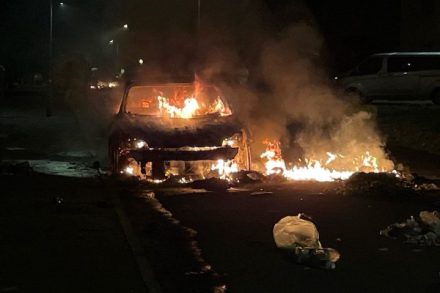
Thousands of protesters have taken to the streets of Georgia’s capital Tbilisi for a second day. Riot police have used tear gas, stun grenades and water cannons to control the crowds; protestors responded by throwing stones, flares and in some cases even Molotov cocktails. A group of those demonstrating even tried to break into the parliamentary building. Over sixty arrests have been made so far. The focus of demonstrators’ anger is legislation to create a ‘foreign agents’ register. People’s Power (PP), the populist party which introduced the legislation, claim it will encourage ‘transparency over foreign influence’ in Georgia.

Did Belarusian rebels blow up one of Putin’s planes?

From our UK edition

Belarusian president Alexander Lukashenko has some awkward explaining to do to Vladimir Putin after a Russian military plane, being stored in Belarus, was reportedly blown up last weekend by Belarusian rebels.  According to reports, one of the nine working Beriev A-50 airborne early warning and control aircraft (Awacs) owned by the Russian military was attacked at the Machiulishchy airfield, just under eight miles from the capital Minsk, where it had been kept since early January this year. The aircraft, said to be worth £274 million, was capable of detecting and targeting air defence systems and formed a key part of Russia’s battlefield strategy.

What Belarus gets out of its friendship with China

From our UK edition

What has Alexander Lukashenko been up to in China? The purpose of the Belarusian President’s three-day visit, according to state media outlet BelTA, was to continue ‘the long-term course of building friendship and mutually beneficial cooperation’ between the two countries. But the truth is somewhat murkier. Lukashenko is Vladimir Putin’s closest ally. He allowed Russian troops to launch the northern flank of the invasion from Belarus back in February last year. Since then, he has given Russia free rein to consistently transport troops, weapons and supplies through the country. So, could he have travelled to China as a de facto Russian emissary?

Why is Russia ignoring the anniversary of the Ukraine war?

From our UK edition

If you read the Russian newspapers this morning, you would be forgiven for thinking today was a day like any other. You would have almost no clue that 24 February marks the one year anniversary of Putin’s bloody, stalling invasion of Ukraine, in which nearly 200,000 of the country’s men have so far been killed or injured. Not a single Russian newspaper carried any articles commemorating the anniversary this morning. The closest they got to directly acknowledging it was to report the news that Putin wouldn’t be giving a speech today to mark the occasion.  While surprising, Putin’s decision not to commemorate the start of his invasion is, admittedly, not totally unexpected.

Did Putin just START a nuclear arms race?

From our UK edition

The war with Ukraine is here to stay – and Russians better get used to it. That was Vladimir Putin’s message to the Federal Assembly when he addressed them this morning for the first time in nearly two years. Kremlin watchers looking for obvious signs of where Putin wanted to take his ‘special military operation' in Ukraine may have been disappointed. But Russia's president did use his speech to ratchet up tensions with the United States – by announcing that Russia is suspending its involvement in the New START nuclear arms deal with America. ‘Our relations have degraded and that’s completely and utterly the fault of the US’, he thundered.

Is Putin scared of Ukrainian bombs?

From our UK edition

Putin’s war has finally made its way to the Russian home front. A leak from the Kremlin reveals that Russia’s regional governments are being ordered to conduct surveys of and update bomb shelters across the country. Speaking to the independent newspaper the Moscow Times, one Kremlin source said this audit had been going on since at least last spring. Renovating Russia’s bomb shelters is, however, easier said than done. A relic of the Soviet Union, the country’s shelters were decommissioned in the 1990s, with many being leased or sold to the private sector and many more falling into disrepair.

Putin can’t keep Russians in the dark forever about the Ukraine death toll

From our UK edition

Nearly 188,000 Russian soldiers have been killed or injured since the start of Vladimir Putin’s invasion of Ukraine eleven months ago, according to the latest estimate by US intelligence. This devastating toll amounts to an average of over 500 Russian dead or wounded soldiers for each of the 341 days Russia has been at war with Ukraine. Russia is also believed to have lost as many as two thirds of its tanks on the battlefield in the past eleven months. Perhaps unsurprisingly, the Kremlin has yet to acknowledge these figures that were confirmed in a UK cabinet meeting this morning, even to deny them. The last time the Russian Ministry of Defence acknowledged any army casualties at all was on 21 September.

Is Putin about to gamble on a second mobilisation wave?

From our UK edition

Is Vladimir Putin finally about to announce a second mobilisation wave? Ukraine has been warning for weeks that up to half-a-million more troops could be forced into the army. Jitters are growing in Russia that a call-up might be imminent: rumours are circulating that the Kremlin might shut Russia’s borders and resort to a second round of mobilisation. The Kremlin has denied these reports: but Putin is increasingly getting desperate. He needs to find a way to turn this war around. He also needs to fulfil defence minister Sergei Shoigu’s quota that an army of approximately 1.5 million is needed ‘to guarantee the fulfilment of tasks to ensure Russia’s security’ – and defeat Ukraine.

In pictures: Bolsonaro supporters storm Brazil’s presidential palace

From our UK edition

A few days after the anniversary of the 6 January events in Washington DC, thousands of Jair Bolsonaro supporters stormed Brazil’s congress, its presidential palace and supreme court to protest against the inauguration of Lula da Silva. They were evicted within hours, but that they got so far - in the face of a heavy military police presence - made worldwide news. Here are pictures of events as they unfolded: 3:30 p.m. local time: Protesters dressed in Brazil's national green and yellow colours are repelled with tear gas outside Planalto Palace, official residence of the Brazilian president. Da Silva, 77, himself was not in the city yesterday, visiting flood victims in the state of São Paulo. He was elected in October with 51 per cent of the vote. Credit: Getty images 4 p.m.

Putin violates his own Christmas ceasefire in Ukraine

From our UK edition

Vladimir Putin’s 36 hour ceasefire in Ukraine, which came into effect at noon today, didn’t last long: less than two hours in, the Russian army broke it. The temporary truce had been announced yesterday by the Russian president to allow soldiers and civilians to celebrate Orthodox Christmas and attend church.  But shortly before 2pm local time, air raid sirens sounded across Ukraine, including in the capital Kyiv. Artillery fire and shelling were reported in the eastern cities of Bakhmut and Kramatorsk in the Donetsk region, later confirmed by the Ukrainian presidential administration. One unverified video quickly surfaced, showing two Ukrainian soldiers who claimed to be recording the sound of shelling in Bakhmut.

Moscow is playing a risky blame game in Makiivka

From our UK edition

At one minute past midnight on 1 January, as Putin uttered the last words of his new year’s address, Ukraine sent six Himars rockets into the Russian-occupied territory of Donetsk. Four landed on a vocational school in the town of Makiivka, which had been acting as a temporary Russian military base, reducing its buildings to rubble. The domestic fallout for Russia is proving messy. From the moment they announced news of the strike, the Russian Ministry of Defence (MoD) has made considerable efforts to downplay the death toll and pin the blame for the incident on the dead Russian soldiers themselves. They, the MoD says, are the reason Ukraine knew where to find them.

Putin’s wish for 2023

From our UK edition

Following an unusually quiet December for the Russian president, Vladimir Putin has emerged to deliver his traditional New Year’s Eve address. The first since his invasion of Ukraine ten months ago, many across Russia’s eleven time zones will today be glued to TV screens and internet live-streams at five minutes to midnight to hear what he has to say. With 2023 already beginning in half of those time zones, we too have been able to view his speech. In years gone past, Putin’s typically predictable and formulaic pre-recorded New Year’s Eve speech has been a staple fixture of Russia’s countdown to midnight. It is a useful touchstone for Putin and the Kremlin to feign a connection with the Russian people.