Lisa Haseldine

Lisa Haseldine

Lisa Haseldine is The Spectator's online commissioning editor - foreign affairs.

Navalny’s cause of death changed to ‘sudden death syndrome’

From our UK edition

How did Alexei Navalny die? The official version is that he collapsed after a walk in his Siberian prison. But his family are, like much of the world, sceptical – and have shared what they have been told so far. His mother and lawyer were originally told his body had been taken to the morgue at Salekhard, a town some 30 miles from the ‘Polar Wolf’ colony where he had been imprisoned. Upon arriving there, they found the morgue shut; when they finally got in touch with staff there they were told Navalny’s body was not in fact there. It appears the prison authorities have also deliberately been spreading confusion about Navalny’s cause of death.

In Russia, Navalny is already becoming an unperson

From our UK edition

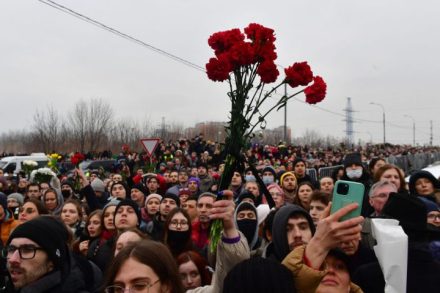
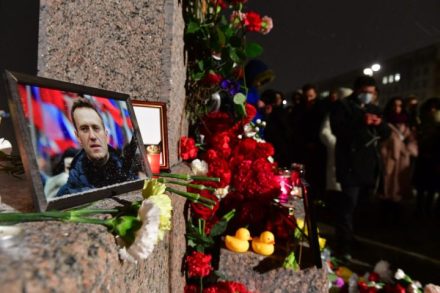
Newspapers across Britain and the democratic world are dominated by the news of the death - perhaps murder – of Alexei Navalny. But not so in Russia. Less than 24 hours after the news broke and his supporters started to come out in sympathy, almost all traces of this news has disappeared from the country’s media. Masked men were sent last night to remove the flowers placed in his memory. Navalny is becoming an unperson. The only news homepage to even mention him is the business and politics-focussed broadsheet Kommersant where it features in a round-up of ‘what made the week of 12-17 February memorable’. Just three lines are allocated to Navalny, focussing on the announcement that the Russian authorities will be conducting an investigation into his death.

Kremlin critic Alexei Navalny dies in prison

From our UK edition

Just over three years after he was imprisoned in Russia, the Putin critic Alexei Navalny has died. The news was announced by the local administration of Russia’s Federal Penitentiary Service shortly before 2:30 p.m. Moscow time. In a statement, the prison service said: ‘In correctional colony No. 3 the convict A.A.Navalny fell ill after a walk and almost immediately lost consciousness. All necessary resuscitation measures were carried out, but did not yield positive results. Emergency doctors confirmed the death of the convict. The causes of death are being established.’ It was not stated when Navalny is reported to have died. Navalny’s team say they have yet to receive any official confirmation of his death.

Why has Vladimir Putin endorsed Joe Biden?

From our UK edition

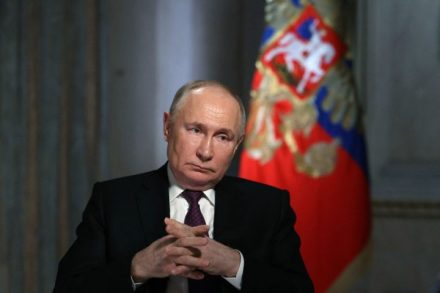
Who does Vladimir Putin want to win the US presidential election this autumn? Last night, the Russian president gave an unexpected answer to that question. In an interview on the Russian state TV channel VGTRK, Putin was asked ‘Who is better for us, Biden or Trump?’ The smirk on journalist Pavel Zarubin’s face suggested he thought the question would be a slam dunk. And yet, to Zarubin’s visible surprise, Putin threw him a curve ball: Putin would, in fact, prefer Joe Biden. The enigmatic Russian president is a showman and he likes to stir the pot. Following a few moments of somewhat intense eye contact, Putin elaborated: ‘He is a more experienced person, he is predictable, he is an old-school politician.

Will Boris Nadezhdin be allowed to run for president against Putin?

From our UK edition

Will the anti-war politician Boris Nadezhdin be allowed to run against Vladimir Putin for the Russian presidency? That’s the question Russians are wondering this week after the independent candidate submitted the signatures he needed to get onto the ballot for March’s election.  Nadezhdin claimed to have collected 105,000 signatures from across Russia – the maximum a non-party affiliated candidate can submit to be considered for the presidency. But just days after he submitted them last Wednesday, Russia’s central electoral commission declared that the paperwork was littered with ‘surprising errors’ – including, allegedly, the signatures of ‘dozens of people no longer of this world’.

Richard Dawkins, Douglas Murray and Cindy Yu

From our UK edition

31 min listen

On this episode, Richard Dawkins explains how to convert an atheist like him to a Christian (00:37), Lisa Haseldine says the German army is in a dire state (05:53), Douglas Murray looks at the return of the Trump show (12:44), Cindy Yu reviews a Chinese intelligence officers account of life under the CCP (20:14), and Mary Wakefield wonders if it’s wrong to track her child (25:14).

McMafia: inside the SNP’s secret state

From our UK edition

40 min listen

On the podcast: gangsterism or government?  The Covid Inquiry has moved to Scotland and, in his cover story for the magazine, our editor Fraser Nelson looks at the many revelations uncovered by Jamie Dawson KC. Fraser describes how civil servants were enlisted into what he calls an ‘SNP secret state’ and how SNP corruption is threatening devolution. Joining us to discuss is the Coffee House Scots team: Times columnist Iain Macwhirter, The Spectator’s data editor Michael Simmons and The Spectator’s social media editor Lucy Dunn who coordinates our Scotland coverage.

How can Germany deploy a tank battalion without any tanks?

From our UK edition

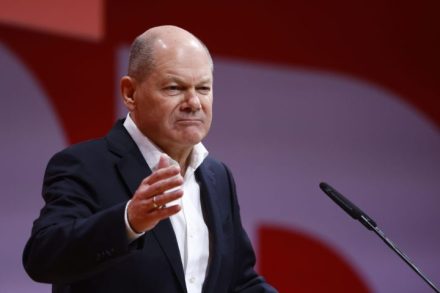
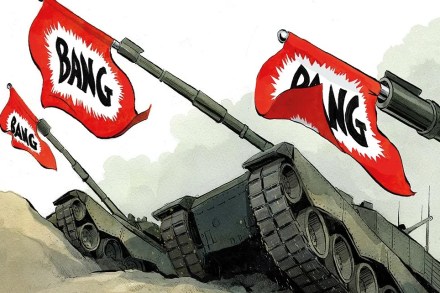
Last year, Olaf Scholz, the German Chancellor, made a pledge that would have been unthinkable not long ago: to send a combat brigade to be permanently deployed in Lithuania. The plan was to station almost 5,000 troops an hour away from the Suwalki Corridor, the 40-mile-long border between Poland and Lithuania, flanked by Belarus to the east and the Russian exclave Kaliningrad to the west. Scholz, and his new defence minister, Boris Pistorius, wanted to transform Germany’s military from a medium-sized operational force to one which can be Europe’s first line of defence if Vladimir Putin ever attacks a Nato territory. If Scholz’s announcement seemed too good to be true that’s because it was. So far just 30 German soldiers have been sent to Lithuania.

Are Germans turning against the AfD?

From our UK edition

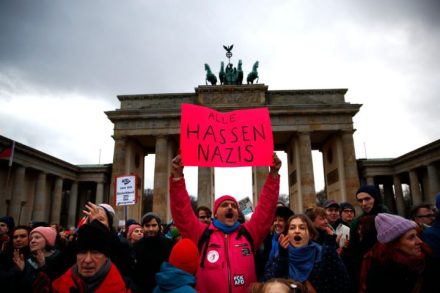
After months of steadily climbing in the polls, could this be the moment the bubble bursts for the right-wing party, Alternative für Deutschland (AfD)? Over the weekend, tens of thousands of people gathered in cities across the country to protest against the party and its ideology.  Over 25,000 people congregated by the Brandenburg gate in Berlin on Sunday, holding placards with slogans such as ‘AfD is not the alternative’ and ‘Defend Democracy’. At least 7,000 turned out in the northern port city of Kiel, a further 5,000 protested in the south-western city of Saarbrücken, and in the city of Dresden just under 1,000 came out to protest. On Friday, 2,000 people also picketed the AfD headquarters in Hamburg.

Even in the Arctic Circle, Navalny remains uncowed

From our UK edition

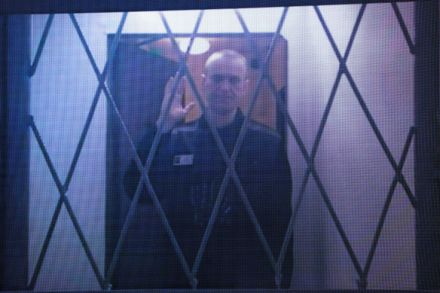
Alexei Navalny had a brutal December. At the start of the month the Putin critic abruptly disappeared from his prison colony in Vladimir, east of Moscow. For 20 days no one knew of his whereabouts until his lawyers tracked him down to the ‘Polar Wolf’ colony of Kharp, deep within the Arctic Circle. Yesterday, he was seen by the public for the first time since his transfer.   Appearing over video link, the gaunt Kremlin critic held a short press conference ahead of his appointment in court to sue the Vladimir colony where he was being held until December. Standing behind a metal grille, head shaved and dressed in a prison jumpsuit, Navalny looked thrilled, and a little relieved, to be allowed to interact with journalists.

Russia’s curious reaction to Britain’s hacking allegations

From our UK edition

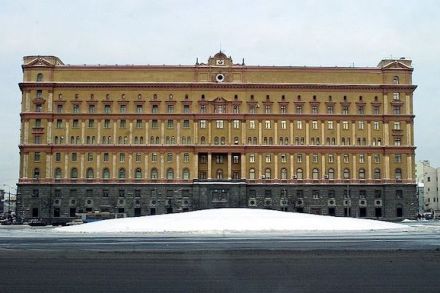
That Russia's security services have been targeting British politicians and other high-profile figures won't come as a surprise. But the scale of the accusations levelled today at the Russian Federal Security Service (FSB) by the British government is still shocking. GCHQ has said that, since 2015, Russia has carried out hundreds of hacks against MPs, journalists and civil servants. Former trade secretary Liam Fox and the ex head of MI6 Richard Dearlove are among the victims. British intelligence revealed a surprising amount of detail about the FSB unit responsible for this hacking activity. The group allegedly goes by the name ‘Star Blizzard’ and belongs to the FSB’s Centre 18.

Is Russia trying to flood Finland with migrants?

From our UK edition

Against the background of the war in Ukraine, a diplomatic row is brewing between Russia and Finland. Last week, Finland announced that it would imminently be closing four of its eight border crossings into Russia, promptly doing so on 18 November. The reason? An unexpected increase in the number of illegal migrants coming over the border from Russia in recent weeks. Finnish minister of internal affairs Marie Rantanen put the blame for this squarely on Russia. ‘The activities of the Russian authorities have changed in such a way,’ she said, ‘that it has become possible to get from Russia to Finland, despite the lack of necessary documents.

Cameron’s Ukraine trip provides a welcome boost for Zelensky

From our UK edition

Just days after returning to government as Lord Cameron, the former prime minister and new Foreign Secretary has made his first foreign visit. Unsurprisingly, the destination of this trip was Kyiv, to meet with Ukrainian president Volodymyr Zelensky.  The news of Cameron’s visit broke early this morning, although whether it took place this morning or earlier in the week remains unclear thanks to the wartime high security protocols that exist around such visits. In footage posted by Zelensky to X/Twitter, the Ukrainian premier is shown welcoming Cameron and his delegation to Kyiv. Shaking hands, Cameron calls it an ‘enormous honour’ to meet Zelensky.

Why Putin thinks war with Ukraine is like the Israel-Palestine conflict

From our UK edition

Who is to blame for the shocking pogrom in the Dagestani city of Makhachkala, where a mob of hundreds stormed the local airport in search of Jews on a flight from Tel Aviv? Vladimir Putin has offered a predictable answer: the West. In a meeting with Russia’s security council and law enforcement agencies, president Putin said the actions of the anti-Semitic mob in Dagestan were ‘inspired through social media, including originating from Ukraine, created at the hands of agents of Western intelligence services’.

Why Putin hosted Hamas at the Kremlin

From our UK edition

Since Hamas’s attack on Israel nearly three weeks ago, Vladimir Putin has been torn between who to back. It took the Russian president several days to address the conflict, and even longer to speak to Israeli premier Benjamin Netanyahu. Now, it increasingly appears that he has made up his mind. Yesterday afternoon, at the invitation of the Kremlin, a Hamas delegation touched down for talks in Moscow. The visit was not briefed out in advance and was only confirmed by the Russian foreign ministry once news of the meeting began appearing in the Russian state media. The delegation was led by Moussa Abu Marzouk, a senior member of the Palestinian group.

Putin will be hoping for gifts from Xi in Beijing

From our UK edition

In the early hours of this morning, Vladimir Putin touched down in Beijing to attend the third forum of the Belt and Road initiative (BRI) at Xi Jinping’s invitation. The trip is clearly important to Putin: it is just the second time that he has left Russia, and the first time travelling beyond the former Soviet Union, since the international criminal court (ICC) issued a warrant for his arrest in March. Xi invited Putin to attend the forum back in March in a show of unity when the former visited Moscow just days after the ICC issued its warrant.

Juncker dismisses ‘corrupt’ Ukraine joining EU in near future

From our UK edition

Just days after Ukraine’s President Zelensky declared his intention to start EU membership negotiations by the end of this year, the bloc’s former president Jean-Claude Juncker has poured cold water on the idea, branding it a country ‘corrupt at all levels of society’. In an interview with the South German regional Augsburger Allgemeine paper, Juncker accused current EU officials of making ‘false promises’ to Ukraine and ‘telling Ukrainians that they can become members immediately’.  The Ukrainian government admitted that only two of the seven EU membership conditions had been met ‘Despite its efforts, it is not eligible to join and needs massive internal reform,’ he said.

How a pro-Russia party triumphed in Slovakia’s election

From our UK edition

The staunchly pro-Russian Robert Fico is back in power for a third time in Slovakia. Fico’s Smer party clinched at least 23 per cent of the vote – enough to lead a coalition government. His victory comes five years after Fico was forced to resign following mass protests over the murder of a journalist investigation corruption in his government.  Fico has not been shy during campaigning about his views on Russia and Ukraine. His most striking pledge was to immediately end military support for Kyiv, promising to ‘not send a single round’ of ammunition to Ukraine if voted into power; now that he is, Ukraine’s allies are concerned about whether he will follow through – and what other trouble he may cause.

The West and Russia are at war, says Sergei Lavrov

From our UK edition

The United States and Britain are at war with Russia. So said the Russian Foreign Minister Sergei Lavrov at a UN press conference on Saturday. ‘You can call this whatever you want,’ said Lavrov. ‘But they are directly at war with us. We call this a hybrid war but that doesn’t change the reality.’ Lavrov was answering the question: ‘At what point does this actually become a direct conflict with the United States, not simply a proxy conflict via Ukraine?’ Earlier that day it had been announced that President Biden had agreed to supply Ukraine with long-range army tactical missile systems (ATACMS), capable of hitting targets 190 miles away.

Olaf Scholz’s failing coalition is leaking support to the AfD

From our UK edition

Germans are increasingly fed up with their hapless chancellor Olaf Scholz and his traffic light coalition. Just a quarter of voters believe the government has any long-term goals for the country, according to research conducted for the Frankfurter Allgemeine Zeitung by the Allensbach Institute for Demoscopy. Seven in ten voters said they associated the coalition with poor decision making and infighting. The Green-SPD-FDP coalition has had a rocky time since it came to power less than two years ago. Scholz has had to wean the country off Russian oil and gas, deal with an economic recession and manage the dilemma of whether or not to send weapons to Ukraine.