Lisa Haseldine

Lisa Haseldine

Lisa Haseldine is The Spectator's online commissioning editor - foreign affairs.

Ukraine’s Kursk attack shows no signs of slowing down

From our UK edition

It has been seven days since Ukraine began its attack on the Russian region of Kursk – with Ukrainian soldiers launching the first successful cross-border invasion of Russia since the second world war.  Still, Ukraine is showing no signs yet of slowing down. This morning, local authorities in the neighbouring Russian region of Belgorod announced that the evacuation of civilians from the area had begun. This is the second Russian region to evacuate since Kyiv’s invasion began last Tuesday.

Ukraine’s Kursk offensive is a disaster for Putin

From our UK edition

It’s four days into Ukraine’s surprise offensive in the Russian region of Kursk and Moscow is only just sending reinforcements to repel the advance. Multiple launch rocket systems, artillery guns and armoured vehicles – which were probably redeployed from other parts of the front line – have been sent to shore up defences, according to the Russian ministry of defence.The delayed response has reportedly allowed Ukrainian forces to advance as far as 10 kilometres inside Russia’s territory, forcing Moscow to declare a ‘federal emergency’ in the region and tell several thousand of civilians from districts around the town of Sudzha to relocate. It’s the deepest cross-border advance by Kyiv since Russia launched its invasion in February 2022.

Russia and the West agree largest prisoner swap since the Cold War

From our UK edition

The Kremlin has released Wall Street Journal reporter Evan Gershkovich, former marine Paul Whelan and British-Russian dissident Vladimir Kara-Murza from captivity. This is the biggest prisoner swap between Russia and the West since the end of the Cold War. The three men form part of a group of prisoners released this morning, reportedly numbering as many as 16. In return, the US and its allies will return as many as eight prisoners to Russia. While it is unclear exactly when and where the exchange is taking place, a plane belonging to the elite flight squadron ‘Russia’ was tracked flying from Moscow to the Russian enclave of Kaliningrad this morning.

Inside the Lib Dems’ campaign to tear down the Blue Wall

From our UK edition

‘We would not put in this effort if we weren't the challengers, and we clearly are.’ Liberal Democrat candidate Paul Kohler is sitting on a park bench on a sunny Sunday afternoon in Wimbledon, South West London. In 2019, this was the tightest Tory-Lib Dem marginal seat in the country: Kohler lost out to the Conservative incumbent Stephen Hammond by a mere 628 votes.  Last time may have been painfully close (‘You’re telling me!’) but now Kohler fancies his chances – and the polls suggest he’s right to be confident. With just four days to go until polling day, the latest surveys suggest that he could win the seat with as much as 50 per cent of the vote.

Who will Russia blame for the Dagestan shootings?

From our UK edition

Twenty people have been killed – including 15 police officers and a priest – following two coordinated gun attacks in the southern Russian republic of Dagestan. The attacks began simultaneously at approximately 6pm local time yesterday in the cities of Derbent and Makhachkala, with the groups targeting two synagogues and two churches. In Makhachkala, the assailants also opened fire on a traffic police checkpoint. According to the Dagestani authorities, at least 46 people have been injured, although unconfirmed reports suggest the true number may be higher. The church and synagogue targeted in Derbent have both burnt down.

Olaf Scholz’s party suffers worst EU election defeat as AfD surges

From our UK edition

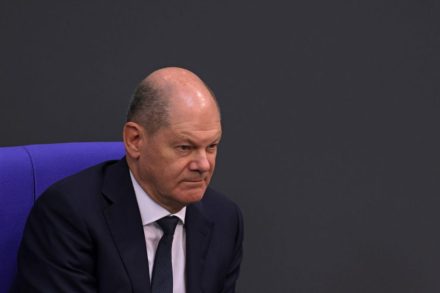
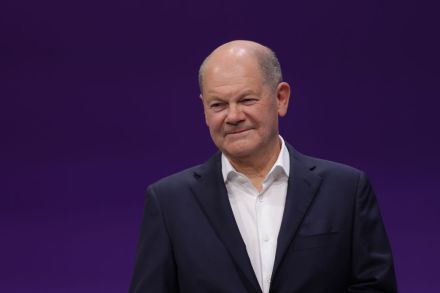
The mood in Olaf Scholz’s SPD party headquarters in Berlin is despondent this morning. The German Chancellor’s party won just 13.9 per cent in the European elections – placing them third in the country and a full two percentage points behind the far-right AfD party. The SPD hasn’t done this badly in a national vote since 1949 – and the result comes less than 18 months until Germany holds its federal election. SPD Leader Lars Klingbeil called it a ‘bitter defeat’. ‘There is no way to sugarcoat it,’ he said. ‘I think it is crystal clear that things have to change.’ The SPD hasn’t done this badly in a national vote since 1949 At the AfD’s Berlin election night party, on the other hand, the mood was one of jubilation.

Olaf Scholz unveils Germany’s deportation plans

From our UK edition

‘Anyone who threatens our freedom and disturbs our peace should be afraid.’ That was Olaf Scholz’s message today as he stood up in the Bundestag to announce that foreigners who commit serious crimes in Germany are no longer welcome in the country – even if they are refugees or asylum seekers.  The Chancellor announced that the German Ministry of the Interior is drawing up plans to make it easier to deport foreign-born dangerous individuals and serious criminals to their home countries, even if they come from warzones or countries controlled by authoritarian regimes such as Afghanistan and Syria. ‘Such criminals should be deported – even if they come from Syria and Afghanistan,’ Scholz confirmed.

The European elections will test the AfD’s strength

From our UK edition

As Olaf Scholz gathers alongside other European leaders on the beaches of Northern France tomorrow to commemorate 80 years since the allied invasion of Normandy, the German Chancellor may have another D-Day in mind. Tomorrow morning, the polls open across the continent for the European parliamentary elections.  Over the coming three days, voters in each EU member state will vote for candidates put forward by their home country’s national parties. The natural result of this model is that voters tend to cast their ballots based on domestic concerns, rather than what those MEPs might necessarily be able to do for them in Brussels.

Real Southerners never liked Elvis

From our UK edition

Cowboy boots are ubiquitous in Nashville – although not hats. ‘That’s Texas,’ one woman told us earnestly. Locals say, ‘y’all,’ ‘yes, ma’am,’ and make eye contact when they speak to you. Despite the lack of cowboy hats, this is still the South. Welcome to Music City, the capital of country and the gleaming buckle of the Bible Belt. Nashville is home to over 700 churches and numerous evangelical choirs. The Union Gospel Tabernacle, built in the 1890s by a Tennessee businessman, was once the largest church in the city. Now its simply the Ryman Auditorium. After the first world war, the owners found they made more cash booking secular performers.

Putin can’t hide how dependent he is on Beijing

From our UK edition

Vladimir Putin has arrived in China for a two-day state visit, the first since the start of his fifth term as president. The trip began in Beijing, where Putin met with Chinese premier Xi Jinping for the first of several talks. There remained a distinct sense that once again Putin has come to Beijing with begging bowl in hand  The meeting began with the effusive pleasantries that have become a standard part of any interaction between the two leaders. Putin called Xi a ‘dear friend’ once again and said he had chosen to make his first post-inauguration trip abroad to China to return a favour, after Xi travelled to Russia for the first trip of his new term in 2023.

Zelensky feels the pressure as Russian offensive intensifies

From our UK edition

Volodymyr Zelensky this morning cancelled all of his upcoming foreign trips. He was scheduled to travel to Madrid on Friday to meet King Felipe VI. The news was announced by the president’s press secretary, and comes as Ukrainian troops struggle to hold back a renewed offensive by Russia in the Kharkiv region. Recognising the urgency of the situation, Antony Blinken, the US Secretary of State, who has been in Kyiv this week, said the US would provide another $2 billion (£1.6 billion) in funds on top of the $60 billion aid package signed off by Joe Biden earlier this month. The fighting in the Kharkiv region has been intensifying for days. It’s centred around Vovchansk, a town 45 miles from the regional capital of Kharkiv.

Sergei Shoigu out as Russia’s defence minister

From our UK edition

It’s reshuffle time in Moscow and it seems that Sergei Shoigu, who has served as Vladimir Putin’s defence minister for the last 12 years, is out. He’s being replaced with Andrei Belousov, an academic economist who has been advising Putin for 20 years and spent the last four as deputy prime minister. It’s a surprise appointment given Belousov’s lack of military experience. Sergei Lavrov, 74, stays as foreign minister, as does Valery Gerasimov, 68, head of the army. Rumours had been swirling about the demotion of Shoigu, 68, for some time, especially after one of his deputies and close allies, Timur Ivanov, was last month thrown in jail pending trial for taking bribes. His treatment was seen by some quarters as an attempt by Putin to chip away at Shoigu’s authority.

In Putin’s Russia, Victory Day is no longer about 1945

From our UK edition

Stepping out onto Red Square for today’s Victory Day parade in Moscow, it was clear to see that Vladimir Putin was in a good mood. Arms swinging with almost comic vigour as he walked, he sat down in the stands above Lenin’s mausoleum with a smug smile on his face. The pathetic fallacy of the flurries of snow on this uncharacteristically cold day were not going to interfere with his glee. The Russian president has reason to be cheerful: two days ago, he indulged in his fifth inauguration ceremony in the Kremlin, handing himself another six years in power. The war in Ukraine is currently working in his favour; Ukraine has been struggling with a lack of troops, weapons and funding that has made repelling the advancing Russian troops increasingly difficult.

Putin’s next six years in power spell more repression for Russia

From our UK edition

Amidst the golden splendour of the Kremlin’s Hall of the Order of St Andrew, Vladimir Putin was once again inaugurated as president of Russia this morning. But while today’s event was in many ways a carbon copy of the ceremony that has taken place five times now since 2000, it marks a significant watershed in the history of Putin’s rule: for the first time since assuming power 24 years ago, his leadership can no longer be considered constitutionally legal. Technicalities such as this, though, matter little to Putin. Taking to the podium in the hall that once served as the throne room to the Tsars of Russia, Putin placed his hand on a specially-bound copy of the Russian constitution.

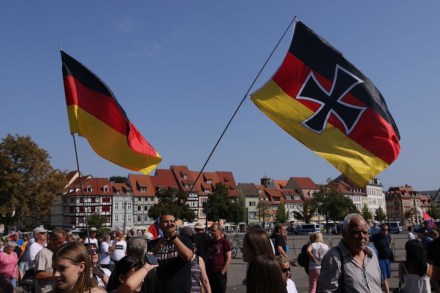
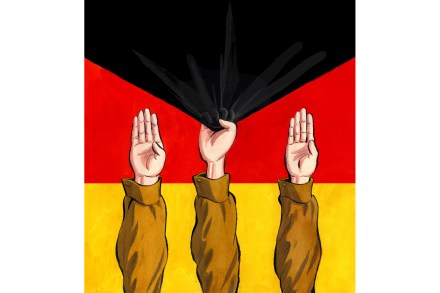
Germany’s AfD has become its own worst enemy

From our UK edition

As the German AfD’s European election campaign kicks off tomorrow, the far-right party’s leadership could be forgiven for counting down to polling day in June with dread. This campaign launch marks the end of a torrid fortnight for the party that is threatening to jeopardise the AfD’s future in Brussels. Two of the party’s top politicians have been embroiled in foreign influence scandals that have plunged the party into crisis. On 19 April, Der Spiegel reported that Petr Bystron, the AfD’s second-choice party list candidate at the European elections, was caught in a sting operation receiving ‘small packages’ of money from a Russian businessman who managed a now-sanctioned Kremlin-backed propaganda site, Voice of Europe, in Prague.

Sunak and Scholz gear up for an awkward meeting in Berlin

From our UK edition

Rishi Sunak arrived in Poland today to announce a £500 million boost in aid to Ukraine, using the trip to Warsaw to also finally put a timeline on increasing Britain's defence spending. By 2030, the Prime Minister pledged to increase defence spending to 2.5 per cent of GDP. His announcements come ahead of a much anticipated meeting with German chancellor Olaf Scholz tomorrow – one which may prove to be more awkward than either leader had originally anticipated. This morning, Berlin briefed out its displeasure at Westminster’s heel-dragging on UK spending contributions to European security. ‘There does not seem to be any plan to increase defence spending at all,’ a senior German official told Politico.

Is Georgia’s future with Europe, or Russia?

From our UK edition

On Wednesday, Georgia’s government came one step closer to realising its desire to embed the country deeper within Russia’s sphere of influence. A year after mass protests forced them to pull the plug on a controversial ‘foreign agents’ law, the Kremlin-sympathetic ruling Georgian Dream (GD) party is once again trying to force this ‘Russian-style’ legislation through parliament.  While the bill was undergoing its first reading in parliament, 20,000 Georgians turned out onto the streets to demonstrate. Several thousands protested in Tbilisi alone. Shouts of ‘No to the Russian law’ rang out alongside renditions of the Georgian national anthem and ‘Ode to Joy’, the EU’s official song. Once again, like last year, riot police were deployed.

Time is ticking to save Vladimir Kara-Murza

From our UK edition

A year ago today, the Putin critic Vladimir Kara-Murza was jailed for 25 years – the longest sentence handed down to a political prisoner in Russia since the collapse of the Soviet Union over 30 years ago. For the last year, Kara-Murza has been held in a prison in Siberia, often in solitary confinement, with only occasional visits from his lawyer, a couple of books and hostile prison guards watching over him. Kara-Murza was arrested in April 2022 and held for over a year in pre-trial detention after being accused of treason and spreading ‘fake information’ about the Russian army.

Can conscription save Germany’s armed forces?

From our UK edition

Could compulsory military service soon be reintroduced in Germany? Since becoming defence minister at the beginning of last year, Boris Pistorius has grappled with the challenge of how to rejuvenate Germany’s dwindling armed forces. He increasingly appears convinced that conscription is the answer to his problems. Last week, Pistorius dropped the latest hint that a plan for the reintroduction of conscription was around the corner. Compulsory military service ‘of some kind’ was currently being ‘considered’ by the ministry of defence, he said.

Why is Putin still blaming Ukraine for the Moscow terror attack?

From our UK edition

In the fortnight since four Isis gunmen stormed Crocus City Hall in the Moscow suburbs, Vladimir Putin has done his best to dodge as much of the blame as possible. Speaking at a trade convention in Moscow on Thursday, Russia’s president once again reiterated the implication that Ukraine, and not the Islamist terror group, was responsible for the atrocity. But there are growing questions not only about what Putin knew in advance of the attack, but also the Russian president’s willingness to face up to who was responsible. ‘We have every reason to believe that the main goal of those who ordered the bloody terrorist attack in Moscow was to damage our unity,’ he mumbled into the microphone on stage. ‘No other motives have emerged.