Lisa Haseldine

Lisa Haseldine

Lisa Haseldine is The Spectator's online commissioning editor - foreign affairs.

Who will Putin blame for the terror attack?

From our UK edition

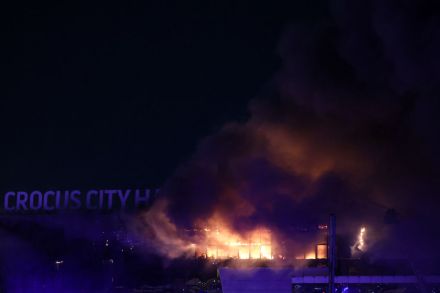
A branch of the Islamic State terror group, Isis-K, has claimed responsibility for last night's stadium terror attack in Moscow. US officials, who had warned of such an attack two weeks ago have said this sounded credible. But the Kremlin has not accepted the Isis-K claim and says it’s looking at all explanations – even (as some Russian journalists are advocating) that the attack was organised by the Ukrainians. Putin himself has hinted at this, saying the FSB had apprehended men on their way to the Ukrainian border. As I reported last night, western intelligence warned the Kremlin of a likely terrorist attack on Russian soil earlier this month.

Putin rejected US warning of terror attack

From our UK edition

As Russia comes to terms with what seems to be the largest terrorist attack on its soil in recent times, Vladimir Putin has something difficult to explain. For some time, Western intelligence agencies have been picking up chat about potential strikes in Moscow – and the US took the unusual step of making a public warning. 'The Embassy is monitoring reports that extremists have imminent plans to target large gatherings in Moscow, to include concerts, and US citizens should be advised to avoid large gatherings over the next 48 hours,' ran the advice. Just three days ago, as reported by the Russian state media agency TASS, Putin branded these warnings ‘outright blackmail’ whose intention was ‘to intimidate and destabilise our society’.

Putin crowns himself president of Russia again

From our UK edition

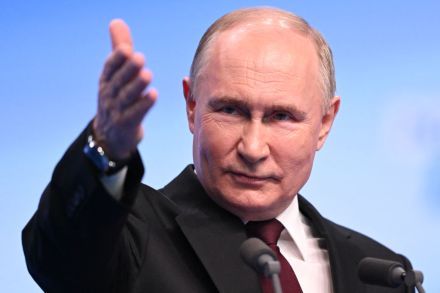
As expected, following a three day ‘vote’, Vladimir Putin has once again crowned himself president of Russia. As of 9 a.m. Moscow time, according to the central electoral commission, 99.7 per cent of ballot papers had been counted with Putin claiming 87 per cent of the vote – higher than he’s managed in any other previous election. That didn’t stop Putin calling a press conference on Sunday evening – when supposedly just 40 per cent or so of the vote had been counted – to declare himself the victor. As his gloating press conference showed, Putin considers the democratic charade of the past three days to have been a success Putin’s press conference was extraordinary, not just because he’d clearly dropped the pretence of the result still being unknown.

It’s time to declare Putin an illegitimate president

From our UK edition

For the next three days, Russians are heading to the polls supposedly to choose the country’s next president. Except we already know, as do most Russians, who the winner will be. It is a foregone conclusion that after this weekend Vladimir Putin will win another six years in power.  But just because the Russian elections are a sham doesn’t mean they are insignificant. In fact, quite the opposite. This weekend marks a threshold in Putin’s grip on Russia: regardless of the margins by which he will claim to have won another presidential term, he will no longer legitimately hold power. Putin’s fifth term will shortly see him overtake Stalin as the second longest ruler in Russia’s history Putin’s current term as president is due to expire on 7 May.

Why Germans don’t want to send Taurus missiles to Ukraine

From our UK edition

Yet again the question of whether to send arms to Ukraine is plaguing Olaf Scholz’s chancellorship. The issue was once more thrown into sharp focus when Russian intelligence leaked a discussion by Bundeswehr officials on the probability of sending long-range Taurus missiles to Kyiv. A recording of the conversation was splashed across the world by Russian state media.  Scholz has spent the past week trying to get a grip on the debate over Taurus missiles and shut it down, even fielding questions from plucky students on a school visit as to why he had yet to relent: ‘I am the chancellor and that’s why’. But it seems the true reason Scholz is dragging his heels is one he is reluctant to admit: that month by month support for Ukraine is plummeting in Germany.

‘We are not afraid’: Russians gather for Navalny’s funeral

From our UK edition

Today is a sad day for Russia. Two weeks after his death in an Arctic penal colony, Alexei Navalny, Putin’s most vociferous opponent, has been buried in Moscow. Thousands of mourners lined the streets in southern Moscow to pay their respects, their sorrow compounded with a sense of anger and defiance that grew as the funeral wore on. Addressed quite clearly to Vladimir Putin, shouts of 'We won't forgive you' intermingled with chants of Navalny's name and 'There are more of us'. The odd verse of harmonious Russian Orthodox sung funeral liturgy occasionally broke through the noise. The funeral took place at the Church of the Icon of the Mother of God ‘Quench My Sorrows’ in the south Moscow district of Maryino. The queue of mourners stretched to over three kilometres.

Will Navalny be given a public funeral?

From our UK edition

Nine days after Alexei Navalny died in an Arctic prison colony, his body was finally handed over to his mother on Saturday for burial. The Russian authorities had been refusing to release his remains to her and his legal team while they claimed to be carrying out a ‘forensic examination’ to determine his cause of death.  The authorities’ decision to withhold Navalny’s body for more than a week was clearly a stalling tactic. His widow Yulia accused Putin of being directly responsible for this. ‘Murder was not enough for Putin. Now he is holding his body hostage,’ she said in a video address before the body was released.

Max Jeffery, Lisa Haseldine, Christopher Howse, Philip Hensher and Calvin Po

From our UK edition

43 min listen

This week: Max Jeffery writes from Blackpool where he says you can see the welfare crisis at its worst (01:29); Lisa Haseldine reads her interview with the wife of Vladimir Kara-Murza, whose husband is languishing in a Siberian jail (06:26); Christopher Howse tells us about the ancient synagogue under threat from developers (13:02); Philip Hensher reads his review of Write, Cut, Rewrite (24:34); and Calvin Po asks whether a Labour government will let architects reshape housing (34:42).  Produced by Oscar Edmondson and Margaret Mitchell.

Germany’s new anti-Ukraine party is unnerving the establishment

From our UK edition

Her party may be less than two months old, but already Sahra Wagenknecht has put a cat amongst the pigeons in Germany. She launched her eponymous party, the Bündnis Sahra Wagenknecht (BSW) on 8 January this year, a few months after sensationally quitting the left-wing Die Linke party in October over disagreements on the party's Ukraine and refugee policies, among others. Now, nearly a quarter of Germans now say they could imagine voting for her party at the next general election. According to a survey conducted by the pollsters Allensbach, 24 per cent of Germans say they could vote for the BSW next year. In the former east Germany, Wagenknecht’s popularity is even higher, with a staggering 40 per cent apparently considering backing the party.

Putin’s British prisoner: Vladimir Kara-Murza is languishing in a Siberian jail

From our UK edition

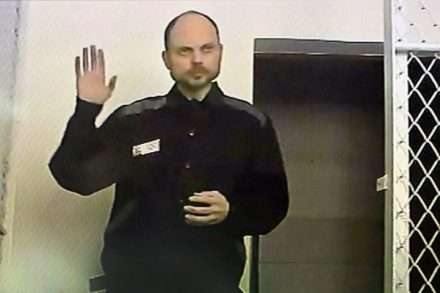
Opposing Vladimir Putin is a lethal business. The world was reminded of this last week after the sudden death of the opposition leader Alexei Navalny. The Russian authorities are blaming Navalny’s demise on ‘sudden death syndrome’, but whether it was outright murder or simply the result of three years spent in Russia’s penal system, the responsibility lies squarely with Putin. The danger of standing up to Putin is something the Russian-British journalist and author Vladimir Kara-Murza knows only too well. An active campaigner for Russian democracy, Kara-Murza was an ally of Navalny. He is responsible for convincing the West to sanction Putin-friendly oligarchs.

‘Putin killed my husband’: Navalny’s wife vows to fight on

From our UK edition

Three days on from his death, the widow of Alexei Navalny today vowed to continue the work of her husband to bring democracy to Russia and free it from Putin’s grip. Speaking on her husband’s YouTube channel for the first time, Yulia acknowledged that she ‘shouldn’t be sitting here, shouldn’t have had to record this video’ but the person who should have been, she said, ‘was murdered by Vladimir Putin’. ‘Three days ago, Vladimir Putin killed my husband Alexei Navalny,’ she said.

Navalny’s cause of death changed to ‘sudden death syndrome’

From our UK edition

How did Alexei Navalny die? The official version is that he collapsed after a walk in his Siberian prison. But his family are, like much of the world, sceptical – and have shared what they have been told so far. His mother and lawyer were originally told his body had been taken to the morgue at Salekhard, a town some 30 miles from the ‘Polar Wolf’ colony where he had been imprisoned. Upon arriving there, they found the morgue shut; when they finally got in touch with staff there they were told Navalny’s body was not in fact there. It appears the prison authorities have also deliberately been spreading confusion about Navalny’s cause of death.

In Russia, Navalny is already becoming an unperson

From our UK edition

Newspapers across Britain and the democratic world are dominated by the news of the death - perhaps murder – of Alexei Navalny. But not so in Russia. Less than 24 hours after the news broke and his supporters started to come out in sympathy, almost all traces of this news has disappeared from the country’s media. Masked men were sent last night to remove the flowers placed in his memory. Navalny is becoming an unperson. The only news homepage to even mention him is the business and politics-focussed broadsheet Kommersant where it features in a round-up of ‘what made the week of 12-17 February memorable’. Just three lines are allocated to Navalny, focussing on the announcement that the Russian authorities will be conducting an investigation into his death.

Kremlin critic Alexei Navalny dies in prison

From our UK edition

Just over three years after he was imprisoned in Russia, the Putin critic Alexei Navalny has died. The news was announced by the local administration of Russia’s Federal Penitentiary Service shortly before 2:30 p.m. Moscow time. In a statement, the prison service said: ‘In correctional colony No. 3 the convict A.A.Navalny fell ill after a walk and almost immediately lost consciousness. All necessary resuscitation measures were carried out, but did not yield positive results. Emergency doctors confirmed the death of the convict. The causes of death are being established.’ It was not stated when Navalny is reported to have died. Navalny’s team say they have yet to receive any official confirmation of his death.

Why has Vladimir Putin endorsed Joe Biden?

From our UK edition

Who does Vladimir Putin want to win the US presidential election this autumn? Last night, the Russian president gave an unexpected answer to that question. In an interview on the Russian state TV channel VGTRK, Putin was asked ‘Who is better for us, Biden or Trump?’ The smirk on journalist Pavel Zarubin’s face suggested he thought the question would be a slam dunk. And yet, to Zarubin’s visible surprise, Putin threw him a curve ball: Putin would, in fact, prefer Joe Biden. The enigmatic Russian president is a showman and he likes to stir the pot. Following a few moments of somewhat intense eye contact, Putin elaborated: ‘He is a more experienced person, he is predictable, he is an old-school politician.

Will Boris Nadezhdin be allowed to run for president against Putin?

From our UK edition

Will the anti-war politician Boris Nadezhdin be allowed to run against Vladimir Putin for the Russian presidency? That’s the question Russians are wondering this week after the independent candidate submitted the signatures he needed to get onto the ballot for March’s election.  Nadezhdin claimed to have collected 105,000 signatures from across Russia – the maximum a non-party affiliated candidate can submit to be considered for the presidency. But just days after he submitted them last Wednesday, Russia’s central electoral commission declared that the paperwork was littered with ‘surprising errors’ – including, allegedly, the signatures of ‘dozens of people no longer of this world’.

Richard Dawkins, Douglas Murray and Cindy Yu

From our UK edition

31 min listen

On this episode, Richard Dawkins explains how to convert an atheist like him to a Christian (00:37), Lisa Haseldine says the German army is in a dire state (05:53), Douglas Murray looks at the return of the Trump show (12:44), Cindy Yu reviews a Chinese intelligence officers account of life under the CCP (20:14), and Mary Wakefield wonders if it’s wrong to track her child (25:14).

McMafia: inside the SNP’s secret state

From our UK edition

40 min listen

On the podcast: gangsterism or government?  The Covid Inquiry has moved to Scotland and, in his cover story for the magazine, our editor Fraser Nelson looks at the many revelations uncovered by Jamie Dawson KC. Fraser describes how civil servants were enlisted into what he calls an ‘SNP secret state’ and how SNP corruption is threatening devolution. Joining us to discuss is the Coffee House Scots team: Times columnist Iain Macwhirter, The Spectator’s data editor Michael Simmons and The Spectator’s social media editor Lucy Dunn who coordinates our Scotland coverage.

How can Germany deploy a tank battalion without any tanks?

From our UK edition

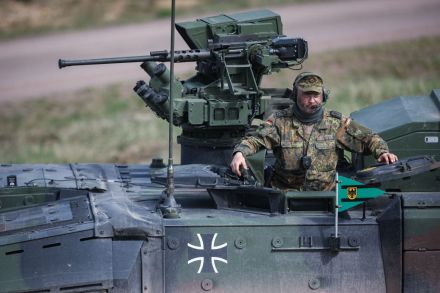
Last year, Olaf Scholz, the German Chancellor, made a pledge that would have been unthinkable not long ago: to send a combat brigade to be permanently deployed in Lithuania. The plan was to station almost 5,000 troops an hour away from the Suwalki Corridor, the 40-mile-long border between Poland and Lithuania, flanked by Belarus to the east and the Russian exclave Kaliningrad to the west. Scholz, and his new defence minister, Boris Pistorius, wanted to transform Germany’s military from a medium-sized operational force to one which can be Europe’s first line of defence if Vladimir Putin ever attacks a Nato territory. If Scholz’s announcement seemed too good to be true that’s because it was. So far just 30 German soldiers have been sent to Lithuania.

Are Germans turning against the AfD?

From our UK edition

After months of steadily climbing in the polls, could this be the moment the bubble bursts for the right-wing party, Alternative für Deutschland (AfD)? Over the weekend, tens of thousands of people gathered in cities across the country to protest against the party and its ideology.  Over 25,000 people congregated by the Brandenburg gate in Berlin on Sunday, holding placards with slogans such as ‘AfD is not the alternative’ and ‘Defend Democracy’. At least 7,000 turned out in the northern port city of Kiel, a further 5,000 protested in the south-western city of Saarbrücken, and in the city of Dresden just under 1,000 came out to protest. On Friday, 2,000 people also picketed the AfD headquarters in Hamburg.