Lisa Haseldine

Lisa Haseldine

Lisa Haseldine is The Spectator's online commissioning editor - foreign affairs.

Wagner Group exposed recruiting Russian prisoners for Ukraine

From our UK edition

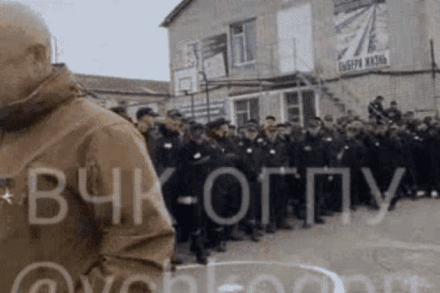
The Wagner Group thrives in the shadows, but now its founder has been caught on camera: recruiting prisoners from a Russian penal colony for the war in Ukraine. In the video, Yevgeniy Prigozhin paces about a large group of prisoners, giving them the hard sell on joining the Russian war effort. He offers them a deal: six months of service in return for a pardon for their crimes. But, should they arrive in Ukraine and refuse to fight, they will be considered deserters and shot. ‘The war is difficult,’ he says; the pro-Kremlin group has used ‘more than two and a half times’ the amount of ammunition used by Soviet forces during the battle of Stalingrad in the second world war. https://twitter.com/wartranslated/status/1570123353331011586?

Has Kadyrov turned on Putin?

From our UK edition

Just how much of a grip does Vladimir Putin have on the situation currently unfolding in Ukraine? Over the weekend, the Ukrainian Army made a series of rapid advances, reportedly regaining control of as much as 3,000 square kilometres of formerly Russian-controlled territory. According to one Ukrainian commander, the counter-offensive had Russian soldiers fleeing for the border ‘like Olympic sprinters’. In a sign of just how dire a situation the Russian war effort looks to be in, Chechen leader and Putin loyalist Ramzan Kadyrov took to social media to criticise the campaign. In a rambling voice note on the messaging app Telegram, Kadyrov slammed the Russian retreat from the towns of Izyum and Kupiansk.

How Russia reacted to the death of Mikhail Gorbachev

From our UK edition

‘Some will say he bought us freedom. Others that he took our country. Mikhail Gorbachev, one of the most controversial politicians in Russian history, has died.’ This is the verdict of the tabloid Komsomolskaya Pravda - a mixed review of a politician with a mixed record. And one reflected in a Russian press which today reads rather differently to the British. The broadsheet Izvestia’s long obituary had a pitiful verdict: ‘A communist who buried the idea of communism six feet under (most likely against his own wishes), and the leader of a great country who helplessly watched it collapse.

Without Gorbachev, would I exist?

From our UK edition

Mikhail Gorbachev’s legacy will forever centre around his successful, albeit far from painless, promise to open the USSR, and Russia, to the rest of the world. He brought about the end of the Cold War, allowing the West to breathe a collective sigh of relief. However, my debt to him is more personal. For without Gorbachev, I almost certainly would not exist. Gorbachev’s accession as eighth, and final, leader of the Soviet Union in 1985 marked a turning point in the country’s history. The politicians who chose him could hardly have predicted quite what his rule would entail.

Landlords are exploiting generation rent

From our UK edition

As interest rates hit nearly 2 per cent and inflation tops 9 per cent, many Brits are feeling the pinch. But once again it seems that generation rent is worst off. Last month, my landlord hiked my rent by £450, or nearly 30 per cent. I’m far from alone: rents across the UK have gone up by as much as 17 per cent. Renters in the UK have been overlooked since the cost of living crisis began to grip the country earlier this year. With inflation soaring and the cost of energy, water, food, petrol and other essentials also rocketing, life is suddenly, alarmingly, getting more expensive. The Bank of England’s decision to raise interest rates has got homeowners in a flap, with many understandably concerned about the impact this will have on their mortgage repayments.

Belarus’s opposition leader on her plan to take down Lukashenko

From our UK edition

On this day in 2020, Belarus held presidential elections. Standing against the dictatorial incumbent of 26 years Alexandr Lukashenko was Sviatlana Tsikhanouskaya. An unlikely candidate, English teacher Tsikhanouskaya decided to stand for election in place of her vlogger husband Siarhei, who was arrested and subsequently jailed for 18 years after the authorities refused to register his own candidacy for the contest. Dismissed as a threat by Lukashenka on account of being a ‘housewife’, Tsikhanouskaya was permitted to run. Hugely underestimated, her rallies attracted tens of thousands of supporters, making them the largest in Belarus’s post-Soviet history.

Russia’s RuTube is no match for YouTube

From our UK edition

As Russia has stepped up its military campaign in Ukraine, the crackdown at home has intensified. The Kremlin has suppressed news sources that didn’t align with its world view, squashing the country’s last remaining independent media. But even Vladimir Putin couldn’t quite plug all the gaps as the truth about the reality of his deadly campaign continued to trickle back to Russians at home. Frequently this was happening via social media. At the time of the invasion, an increasing number of Russians, nearly 40 per cent, according to the independent Russian polling organisation Levada Center, most often got their news this way.

Struggling Brits need help, not free theatre tickets

From our UK edition

Lurking in the background of the Tory leadership contest, the cost of living crisis rumbles on. With Autumn round the corner, fears over the sharp rise in the energy price cap have once again hit the headlines, inflation continues to soar and ever more people are wondering how they’re going to pay their bills. In recent days, to the sound of muted trumpets, the government launched its latest initiative to tackle the crisis: Help for Households. Billed as a partnership scheme with businesses such as supermarkets and entertainment venues, the scheme boasts a variety of deals over the summer period designed to help out struggling households.

‘Borexit’: How the foreign press covered Boris’s resignation

From our UK edition

Boris Johnson’s departure isn’t just front-page news in the UK. Germany’s press – which has never been much of a fan of Johnson since the days of Brexit – has taken a sombre, if derisive, tone towards his resignation. Today has seen the coining of a new term in the media, with popular tabloid Bild.de splashing the one-word headline ‘Borexit’ across the top of their homepage in a large green mockup of a fire exit sign. German broadsheet Der Tagesspiegel takes its readers through a chronology of the scandals that consumed Johnson’s time in office, eye-catchingly branding him a ‘scandal noodle’.

Chechen warlord Kadyrov mocks Zelensky in spoof video

From our UK edition

A strange video of Ukrainian President Volodymyr Zelensky is currently circulating online. In it, he sits at his presidential table, dressed in his trademark khaki t-shirt. Staring straight down the camera, he addresses the Ukrainian people: ‘Dear citizens!’ At first glance, it could really be one of Zelensky’s nightly addresses. Except, almost immediately, you notice the meaty disembodied hand gripping him by the left shoulder. With apparent distress, Zelensky continues, announcing the surrender of Ukraine on ‘land, sea and air’. The meaty arm shakes him to get him to spit the words out, committing Ukraine to ‘complete denazification’ within a month of signing.

Could Belarus join forces with Russia in Ukraine?

From our UK edition

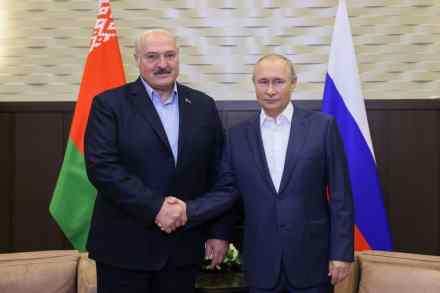
Next week Putin is due to meet Alyaksandr Lukashenka, self-proclaimed president of Belarus, for the sixth time since the invasion of Ukraine. This will also be the first time in three years that they have met in Belarus. Much hooha is usually made by the Russian and Belarusian press of their meetings. There is always a ‘happy families’-style photoshoot: Lukashenka towering over Putin, grasping his hand in his meaty fist, looking like Laurel and Hardy’s grotesque reincarnation. According to official readouts, their long meetings tend to cover a variety of mundane topics: agricultural output, the state of their economies, general commitments of mutual support.

Are rail strikes the start of a summer of discontent?

From our UK edition

This morning, the UK woke up to the largest rail strike in thirty years. As many as 50,000 workers are striking, with just one in five trains running across the country. Commuters have been told to work from home or travel by other means while stations are deserted. This scenario is one that Brits will have to get used to. The RMT rail union is to strike again on Thursday and Saturday and has vowed to continue striking for ‘as long as it takes’ to get the 7 per cent pay rise it demands. The RMT argue that the 3 per cent rise offered by Network Rail does little to plug the gap caused by rising inflation and the cost of living crisis. There really does seem no end in sight. At least not a swift one.

Is Lithuania next on Putin’s hitlist?

From our UK edition

For countries bordering Russia, Putin’s war on Ukraine raises a disturbing question: might they be next? A bill put forward to the Duma’s lower house on June 8 suggests Lithuania is in the country’s sights. If passed, the proposal by MP Evgeniy Fedorov could see Russia potentially try to lay claim to Lithuania's territory. Bonkers and alarming in equal measure, it seems that, not content with focussing on the war it started in Ukraine, some factions of the Russian government are already setting their sights further afield.

The ironic reincarnation of McDonald’s on Russia Day

From our UK edition

Today is Russia Day. A muted affair compared to the pompous and bellicose displays seen on Victory Day, today is the day Russia commemorates no longer being a part of the Soviet Union and becoming the Russian Federation instead. Unlike other patriotic holidays in the country, most ordinary Russians pay little attention to its significance. The end of the Soviet Union and the ensuing ‘Perestroika’ period was filled with economic hardship and upheaval, and is therefore a time many would prefer to forget. Today, for most Russians, is just a nice day off, filled with wholesome family activities, the odd bit of cultural indulgence in museums and the like, and a lot of socialising with family and friends, nothing more.

How Russia’s press covered the death sentence of two British fighters

From our UK edition

Two Brits and a Moroccan national captured while fighting for Ukraine have been sentenced to death by a court in Russian-controlled eastern Ukraine. Accused of being ‘mercenaries’ committed to ‘carrying out acts of terrorism’ and ‘seizing power by force’, Aiden Aslin, Shaun Pinner and Brahim Saadoun have a month to appeal the sentence handed down by the Supreme Court of the Donetsk People’s Republic (DNR). Widely considered a show trial by the West, the Russian media covered the fighters’ court case with earnest gravity. Now their sentence has been handed down, Russia’s coverage has only expanded, capitalising on the propaganda opportunities it has brought them.

What’s going on with the Russian economy?

From our UK edition

The Russian economy is headed for its deepest recession since 1991. That’s the British government’s latest assessment of whether sanctions are successfully, in the words of Liz Truss, ‘choking Putin’s war machine’. As the West’s most effective non-military tool for putting pressure on the Kremlin, sanctions have been under the microscope from the beginning: are they working? Are they targeting the right people? Could they actually benefit Putin’s regime? Indeed, just last month it was reported that Russia had doubled its fossil fuel revenues since February, by some accounts raking in as much as €62 billion (approximately £53 billion), benefiting from global prices driven skywards by the sanction-induced shortages.

Why the Russian media thinks Britain is on the verge of cannibalism

From our UK edition

Russian disinformation has reached new levels of absurdity. According to the pro-Kremlin media, the UK is on the verge of cannibalism. The unlikely source of this terrifying rumour? None other than TV presenter, journalist and part-time farmer Jeremy Clarkson. Over the past few weeks, the British media has been awash with reports on the spiralling cost of food, utilities and just about everything else. The government and commentators alike have drawn links between the Russian invasion of Ukraine and the cost of living crisis engulfing the country. You’d be hard-pressed to miss it. It seems the Russian media have also picked up on the notes of alarm coming from the UK and in the process, have stumbled across Clarkson’s musings.

Are military conscription offices in Russia being torched by protesters?

From our UK edition

Something strange is happening in Russia. Protest is banned, referring to 'a war' is punishable by up to 15 years in jail - but there are increasing signs of pushback. At least 12 military conscription offices appear to have been vandalised - some set on fire - since the start of the invasion of Ukraine. That’s according to the Ukrainian army, so we might take that with a pinch of salt. But there has been enough corroboration of this on Telegram (one of the few social media firms not blocked by the Kremlin) to take this seriously. A look around Telegram shows buildings with varying degrees of damage, some having clearly been torched.

What Russians are really being told about war in Ukraine

From our UK edition

'They are lying to you here,' declared the placard held aloft by the journalist who stormed the set of one of Russia's most popular news channels this week. Marina Ovsyannikova also recorded a video saying she was ashamed to work for what she called a Kremlin propaganda network. So what are Russians really being told about Putin's war in Ukraine? British viewers might be surprised to learn there are plenty of similarities in what Russia’s media is reporting on compared to the Western media: the ever-increasing list of sanctions imposed by Europe and the United States on Russian companies and state figures, the shelling of Ukrainian cities and the meetings of leaders attempting to broker peace.

A war ‘crime’: How the Russian press covered the invasion of Ukraine

From our UK edition

What do Russians make of Putin's invasion of Ukraine? The violence has been condemned around the world, and it seems that thousands of Russians who have taken to the streets on anti-war protests agree that Putin has gone too far. But some Russians continue to support their president, in spite of suggestions from abroad that he has 'lost the plot'. The coverage in the Russian press of the first day of the invasion of Ukraine reflects the mixed feelings about the conflict. Here's how Russian newspapers reacted to war in Ukraine: Izvestiya Izvestiya is one of Russia’s most widely-circulated broadsheet newspapers, with a focus on bringing business news to its readership.