Lisa Haseldine

Lisa Haseldine

Lisa Haseldine is The Spectator's online commissioning editor - foreign affairs.

Are rail strikes the start of a summer of discontent?

From our UK edition

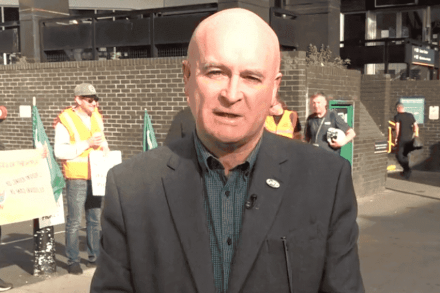
This morning, the UK woke up to the largest rail strike in thirty years. As many as 50,000 workers are striking, with just one in five trains running across the country. Commuters have been told to work from home or travel by other means while stations are deserted. This scenario is one that Brits will have to get used to. The RMT rail union is to strike again on Thursday and Saturday and has vowed to continue striking for ‘as long as it takes’ to get the 7 per cent pay rise it demands. The RMT argue that the 3 per cent rise offered by Network Rail does little to plug the gap caused by rising inflation and the cost of living crisis. There really does seem no end in sight. At least not a swift one.

Is Lithuania next on Putin’s hitlist?

From our UK edition

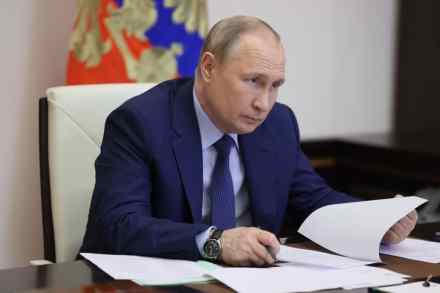
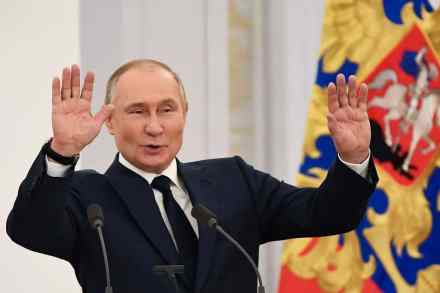
For countries bordering Russia, Putin’s war on Ukraine raises a disturbing question: might they be next? A bill put forward to the Duma’s lower house on June 8 suggests Lithuania is in the country’s sights. If passed, the proposal by MP Evgeniy Fedorov could see Russia potentially try to lay claim to Lithuania's territory. Bonkers and alarming in equal measure, it seems that, not content with focussing on the war it started in Ukraine, some factions of the Russian government are already setting their sights further afield.

The ironic reincarnation of McDonald’s on Russia Day

From our UK edition

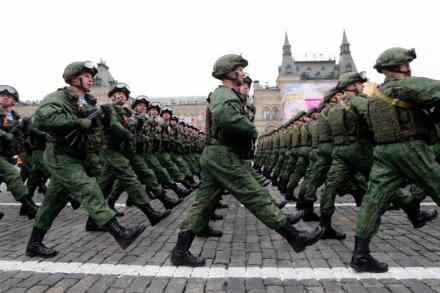
Today is Russia Day. A muted affair compared to the pompous and bellicose displays seen on Victory Day, today is the day Russia commemorates no longer being a part of the Soviet Union and becoming the Russian Federation instead. Unlike other patriotic holidays in the country, most ordinary Russians pay little attention to its significance. The end of the Soviet Union and the ensuing ‘Perestroika’ period was filled with economic hardship and upheaval, and is therefore a time many would prefer to forget. Today, for most Russians, is just a nice day off, filled with wholesome family activities, the odd bit of cultural indulgence in museums and the like, and a lot of socialising with family and friends, nothing more.

How Russia’s press covered the death sentence of two British fighters

From our UK edition

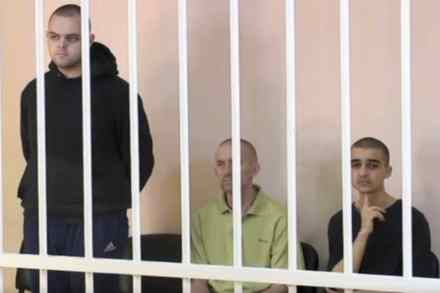
Two Brits and a Moroccan national captured while fighting for Ukraine have been sentenced to death by a court in Russian-controlled eastern Ukraine. Accused of being ‘mercenaries’ committed to ‘carrying out acts of terrorism’ and ‘seizing power by force’, Aiden Aslin, Shaun Pinner and Brahim Saadoun have a month to appeal the sentence handed down by the Supreme Court of the Donetsk People’s Republic (DNR). Widely considered a show trial by the West, the Russian media covered the fighters’ court case with earnest gravity. Now their sentence has been handed down, Russia’s coverage has only expanded, capitalising on the propaganda opportunities it has brought them.

What’s going on with the Russian economy?

From our UK edition

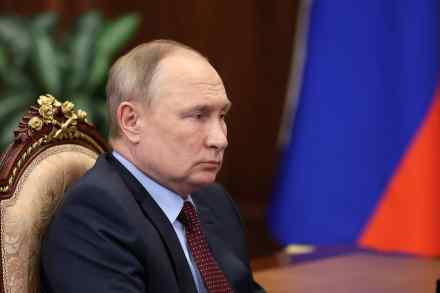
The Russian economy is headed for its deepest recession since 1991. That’s the British government’s latest assessment of whether sanctions are successfully, in the words of Liz Truss, ‘choking Putin’s war machine’. As the West’s most effective non-military tool for putting pressure on the Kremlin, sanctions have been under the microscope from the beginning: are they working? Are they targeting the right people? Could they actually benefit Putin’s regime? Indeed, just last month it was reported that Russia had doubled its fossil fuel revenues since February, by some accounts raking in as much as €62 billion (approximately £53 billion), benefiting from global prices driven skywards by the sanction-induced shortages.

Why the Russian media thinks Britain is on the verge of cannibalism

From our UK edition

Russian disinformation has reached new levels of absurdity. According to the pro-Kremlin media, the UK is on the verge of cannibalism. The unlikely source of this terrifying rumour? None other than TV presenter, journalist and part-time farmer Jeremy Clarkson. Over the past few weeks, the British media has been awash with reports on the spiralling cost of food, utilities and just about everything else. The government and commentators alike have drawn links between the Russian invasion of Ukraine and the cost of living crisis engulfing the country. You’d be hard-pressed to miss it. It seems the Russian media have also picked up on the notes of alarm coming from the UK and in the process, have stumbled across Clarkson’s musings.

Are military conscription offices in Russia being torched by protesters?

From our UK edition

Something strange is happening in Russia. Protest is banned, referring to 'a war' is punishable by up to 15 years in jail - but there are increasing signs of pushback. At least 12 military conscription offices appear to have been vandalised - some set on fire - since the start of the invasion of Ukraine. That’s according to the Ukrainian army, so we might take that with a pinch of salt. But there has been enough corroboration of this on Telegram (one of the few social media firms not blocked by the Kremlin) to take this seriously. A look around Telegram shows buildings with varying degrees of damage, some having clearly been torched.

What Russians are really being told about war in Ukraine

From our UK edition

'They are lying to you here,' declared the placard held aloft by the journalist who stormed the set of one of Russia's most popular news channels this week. Marina Ovsyannikova also recorded a video saying she was ashamed to work for what she called a Kremlin propaganda network. So what are Russians really being told about Putin's war in Ukraine? British viewers might be surprised to learn there are plenty of similarities in what Russia’s media is reporting on compared to the Western media: the ever-increasing list of sanctions imposed by Europe and the United States on Russian companies and state figures, the shelling of Ukrainian cities and the meetings of leaders attempting to broker peace.

A war ‘crime’: How the Russian press covered the invasion of Ukraine

From our UK edition

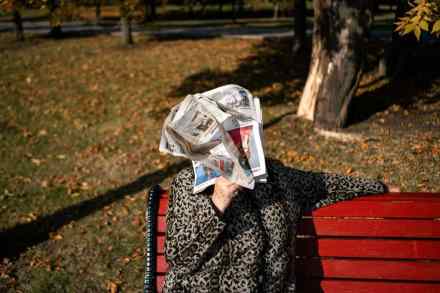
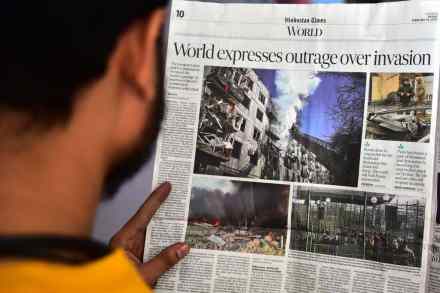
What do Russians make of Putin's invasion of Ukraine? The violence has been condemned around the world, and it seems that thousands of Russians who have taken to the streets on anti-war protests agree that Putin has gone too far. But some Russians continue to support their president, in spite of suggestions from abroad that he has 'lost the plot'. The coverage in the Russian press of the first day of the invasion of Ukraine reflects the mixed feelings about the conflict. Here's how Russian newspapers reacted to war in Ukraine: Izvestiya Izvestiya is one of Russia’s most widely-circulated broadsheet newspapers, with a focus on bringing business news to its readership.