Laura Gascoigne

Laura Gascoigne was the chief art critic of The Spectator from 2020 to 2025

Do critics make good artists? Come and judge ours

From our UK edition

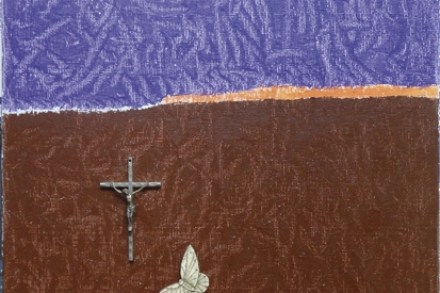
Artists make good critics, but do critics make good artists? It’s hard to tell, when most are too chicken to try. For over 20 years, Spectator critic Andrew Lambirth has been making collages. He caught the habit from the British Surrealist Eileen Agar in the late 1980s and kept it private, until forced to go public last year when Eileen Hogan selected six of his works for The Discerning Eye. Now 20 are going on show at the Minories in Colchester in a joint exhibition with his friend and fellow Suffolk resident Maggi Hambling (8–14 March, closed Sundays). Hambling’s contribution to the show is a new five-day series of paintings grappling with her old adversary, the ‘raging beast’ that is the North Sea.
Who knew that Cézanne had a sense of humour?

From our UK edition

Tourists are attracted to queues, art lovers to quietude. So while the mass of Monet fans visiting Paris line up outside the Musée d’Orsay and the Orangerie, connoisseurs head to the Musée Marmottan, an institution so surprisingly little known that it had to rename itself the Musée Marmottan Monet to flag up the fact that it owns the world’s largest collection of Monets. Even so, it remains a haven of peace. Now, on its 80th anniversary, this discreet museum in a charmingly furnished mansion overlooking the Jardins du Ranelagh is making another bid for attention with an exhibition of 100 rarely seen Impressionist works borrowed from 50 private lenders.

When soldiers have golden helmets and the wounded have wings

From our UK edition

‘If I go to war, I go on condition I can have Giotto, the Basilica of Assisi book, Fra Angelico in one pocket, and Masaccio, Masolino and Giorgione in the other,’ Stanley Spencer wrote to the artist Henry Lamb in 1914. The sixpenny Gowans & Gray edition of the Masterpieces of Giotto now in a glass case in Somerset House’s exhibition Stanley Spencer: Heaven in a Hell of War is the one that travelled with him two years later to the Macedonian front, where its imagery fused with his memories of war.

‘Squiggle, squiggle, ooh, good…’ Tate St Ives shows how sexy the octopus can be

From our UK edition

One of the more exotic attractions at the 1939–40 World’s Fair in New York was Salvador Dalí’s ‘Dream of Venus Pavilion’, which behind its surreal façade — an architectural marriage between Antoni Gaudí and a coral reef — catered to the public’s aquatic fantasies of spume-born goddesses and topless sirens. Something similar is going on behind the cool modernist exterior of Tate St Ives. Aquatopia: The Imaginary of the Ocean Deep is a bottom-trawler of an exhibition that dredges the depths of the human psyche for fishy fantasies.

The master of living, breathing landscapes

From our UK edition

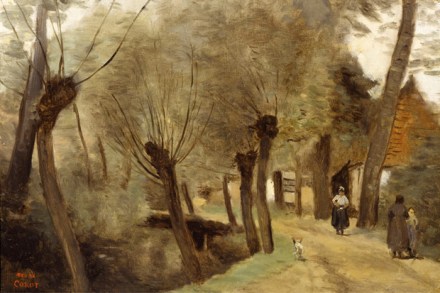
One sometimes forgets when looking at French 19th-century art that the painting revolution that produced Impressionism coincided with a political one. This is because most French painters, Delacroix and Manet excepted, chose to ignore it — none more completely than Camille Corot, who, as a travelling view painter, had every excuse to get out of Paris when the musket balls started to fly. The July Revolution of 1830 found the 34-year-old artist heading north to Pas de Calais, where he painted a ‘Windmill near St Omer’ and two foreground cows with a bucolic breeziness worthy of Cuyp; the Paris Commune of 1871 found him back in the north, painting the peaceful countryside around Arras.

Julian Trevelyan, a Jekyll and Hyde painter, at the Bohun Gallery

From our UK edition

Between 1917 and 1923, Julian Trevelyan produced a map and an illustrated guide to Hurtenham, an industrial town on the Tees between Stockton and Darlington. You’ll search in vain for the place in an atlas today, as the entire town, with its warren of streets, railways, parks, public buildings and monuments to local luminaries, was the figment of a pre-teen imagination. But the wit and ingenuity of its conception — and its bird’s-eye views of an abstracted world — set the creative pattern for what was to follow. Born into a family of writers and intellectuals, Trevelyan was not destined for an artistic career. When he dropped out of an English degree at Cambridge in 1931 to study art in Paris, his uncle G.M.

The two sides of painter Joan Eardley

From our UK edition

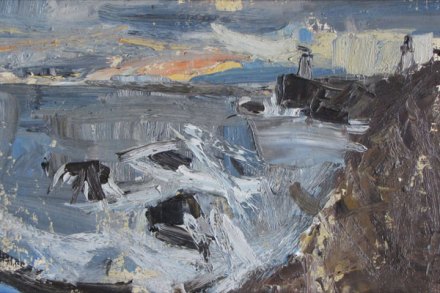
There were two Joan Eardleys, according to a new biography of the Scottish painter by Christopher Andreae. There was ‘the tender and gentle Joan’, as revealed by her bosom friend Audrey Walker, and ‘the tough, cussing, swearing, bulldozing, indomitable creator of what may be masterpieces’. Both are reflected in the Portland Gallery’s new exhibition of drawings and paintings from the last 20 years of her short life (until 17 May). The tough Joan chose the challenging subject matter, dividing her time between the rotting tenements of unreconstructed Glasgow and the leaky fisherman’s cottages of Catterline, south of Aberdeen.

Free spirits

From our UK edition

‘Gypsies seem to have been born into the world for the sole purpose of being thieves,’ Cervantes begins his story of The Little Gypsy Girl. ‘They are born of thieving parents, they are brought up with thieves, they study in order to be thieves, and they end up as past masters in the art of thieving.’ But despite their thieving reputation, the bands of gypsy travellers who appeared in western Europe in the 1420s — from Egypt thought the English, from Bohemia thought the French — were a source of fascination. They came and went like the wind, they predicted the future and their costumes and dancing were the definition of exotic. Their appeal to artists was irresistible.

New dawn for Newlyn School

From our UK edition

‘The street scenes in Newlyn lack nothing of subject for the painter,’ reported the young Frank Richards from the Cornish art colony in 1895; ‘paved with cobblestone, some of the narrow streets are occasionally strewn over with fishheads and entrails, so that one’s progress in going “up” or “down”-along is sometimes considerably facilitated by an alarmingly quick slide to an unexpected destination.’ Thirty-six years earlier, Brunel’s bridge across the Tamar had connected England’s westernmost tip to the railway system, speeding the transport of fish one way and tourists the other. And, as elsewhere in Europe, before the tourists came the plein-air painters.

Imperialist ambitions

From our UK edition

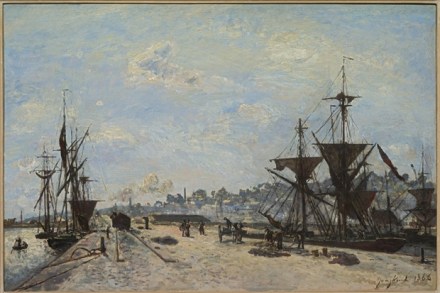
In 1997, the Russian Academy of Sciences gave the names Hermitage 4758 and Piotrovsky 4869 to two small planets discovered 500 million kilometres from earth. The signal honour paid to the State Hermitage Museum and Boris and Mikhail Piotrovsky— its dynastic succession of directors — heralded a new era of post-Soviet expansionism for the former Imperial museum: from now on, the sky would be the limit. Since then, the Hermitage has opened branches in London, Las Vegas, Amsterdam, Kazan, Ferrara and Vyborg. More than a goodwill gesture, the St Petersburg museum’s overseas expansion has been a way of getting its collections seen.

Keeping the faith

From our UK edition

In 1929 the founder of Italian Futurism, Filippo Tommaso Marinetti, reported from Milan that, after a wartime setback, the movement was ‘in full working order’ under the leadership of ‘the very young and very ingenious Bruno Munari’. Bruno Munari (1907–1998) was 22 at the time. He had arrived in Milan two years earlier as a refugee from his family hotel business in the Veneto and embraced with enthusiasm Giacomo Balla’s suggestion in The Futurist Universe that ‘useful and pleasing’ consumer products in shop windows were ‘a much more rewarding sight than the grimy little pictures nailed on the walls of the passéist painter’s studio’.

Bizarre visions

From our UK edition

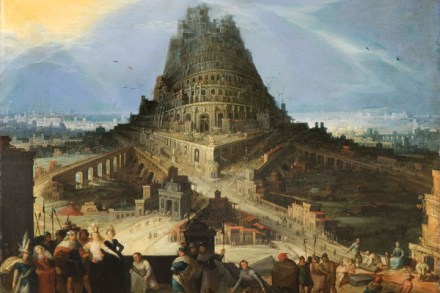
If you want to see how myths arise from misunderstandings, the Tower of Babel provides a textbook example. In ancient Assyrian babilu means ‘door of God’ and thus correctly describes the Babylonian ziggurat erected to the god Marduk by Nebuchadnezzar II and later seen in ruins by Herodotus. But in Hebrew the word bâlal means ‘to confuse’, hence the confusingly different account in Genesis.

A civilised way of death

From our UK edition

‘Luxury high-rise duplex: lower floor comprising entrance hall with recessed guard posts, grand reception area, kitchen with crockery store, larders and walk-in fridge, armoury and staff WC; upper floor comprising master bedroom with two en-suite bathrooms, staff accommodation, guard rooms and safe deposit. Property provided with the latest hi-tech security systems and 24-hour manned guarding.’ Apart from the lack of a cinema and a gym, this property sounds just the ticket for the jittery billionaire looking to invest in London real estate. But its location is not the fringes of Hyde Park or the South Bank, it’s the side of a mountain near Xuzhou in northeast China, and its accommodation is designed not for the living but for the dead.

Madrid’s golden triangle

From our UK edition

Under the statue of Charles III in the Puerta del Sol a hellfire preacher is competing for custom with a mariachi band. ‘Porque la paga del pecado es muerte!’ he shouts. ‘Ay, ay, ay, ay,’ they sing, ‘porque cantando se alegran, cielito lindo, los corazones.’ The weather is with the preacher: the cielo is not lindo. The El Greco cumulonimbus overhead flickers with lightning as God adds a rumble of thunder to the mix. Apart from the angry heavens and the five police vans lined up opposite — for prevención, they tell me — there’s little sign that Spain is on the brink. The leaning towers of Bankia may be tottering, but to judge from the queues outside the Prado the culture industry has not been affected.

A most eccentric master

From our UK edition

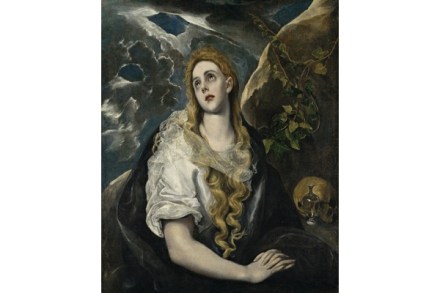
In 1895 the Spanish art collector John Charles Robinson donated a picture to the National Gallery. ‘On the whole I think it is very much above the average of this most eccentric master’s work,’ he phrased his offer less than enticingly. ‘At the same time you know the man was mad as a hatter and his work must be taken with “all faults” of which there are plenty.’ The man was Domenikos Theotokopoulos, aka El Greco, and the picture was ‘Christ Driving the Traders from the Temple’. To an English late 19th-century audience weaned on Murillo this ‘most eccentric master’ — a Cretan-born Byzantine icon painter turned Venetian colourist turned Spanish Mannerist — looked dangerously outré.

Down but not out | 3 March 2012

From our UK edition

It’s not every J.D. Wetherspoon’s pub that has a preservation order slapped on it. In fact, I’m prepared to bet there’s only one: The Trafalgar in Portsmouth, Grade II-listed in 2002 for its mural by Eric Rimmington. Rimmington was 23 in 1949 when he won the commission to decorate the clubroom of the old Trafalgar House Services Club and chose to paint a view of Portsmouth and Southsea Station with passengers coming and going on the platforms. More than 60 years on, comings and goings on station platforms haven’t lost their fascination for the artist, though for his latest London show at The Millinery Works he has plunged down the metropolitan rabbit hole to pursue his observations underground.

Adventurous rogue

From our UK edition

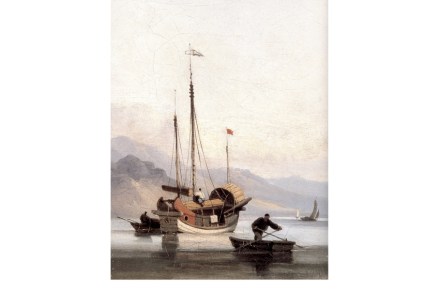
Historically, British artists have not been good at money management. George Morland (1762–1804) was chronically insolvent; Benjamin Haydon (1786–1846) served four jail terms for debt and eventually killed himself after being reduced to pawning his spectacles; even Sir Thomas Lawrence (1769–1830) died leaving debts of £30,000. But the painter who turned serial defaulting into an art was George Chinnery (1774–1852). Absconding was the making of him as an artist suggests a new exhibition, The Flamboyant Mr Chinnery, at Asia House. A Londoner and fellow student of Turner at the Academy Schools, Chinnery launched his portrait-painting career in Dublin four years before the Act of Union emptied the Irish Parliament of MPs, and his studio of sitters.

Ford Madox Brown: Pre-Raphaelite Pioneer

From our UK edition

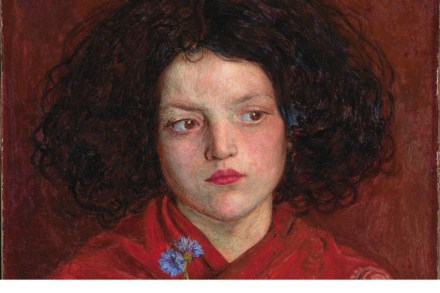
Photographs of roadworks feature regularly in the Hampstead Village Voice but, even with the postmodern fashion for grungy subjects, no contemporary residents have made paintings of them. Yet that, astonishingly, was what Ford Madox Brown did in the 1850s, lugging his two-metre canvas on to The Mount, off Heath Street, to do it. Brown’s unlikely masterwork ‘Work’ was the first ‘Pre-Raphaelite’ painting bought by Manchester Art Gallery, where it is now the centrepiece of a major exhibition dedicated to the artist. I put ‘Pre-Raphaelite’ in inverted commas because Brown — a prickly individual with a deep distrust of all ‘Bodies, Institutions, Art unions & academies’ — was never strictly a member of the Brotherhood.

‘An obsolete romantic’

From our UK edition

In 1982 Sven Berlin placed a sealed wallet labelled ‘Testament’ on top of a rafter in his studio with instructions for it not to be opened before his 100th birthday on 14 September 2011. Inside was a key to the identities of the characters in his notorious roman à clef about post-war St Ives, The Dark Monarch, published 20 years earlier and immediately withdrawn after four of those characters sued for libel. None of them was a major artistic figure and by today’s standards the libels were laughable, but Berlin’s exposure of the petty politics behind the St Ives idyll — which he later compared to ‘going for a bathe and swimming into a shoal of barracudas’ — caused permanent damage to his artistic career.

In Monet’s garden

From our UK edition

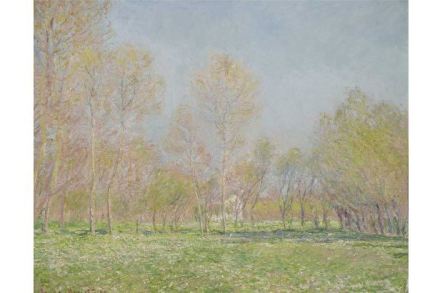
We owe Giverny to the generosity of Americans Whoever coined the famous aphorism ‘When good Americans die, they go to Paris’ didn’t tell the full story. For American plein-air painters, Paris was never more than limbo. Heaven, they eventually discovered, was Giverny, presided over by the Impressionist deity Monet. It was 1887 when the first American scouts came to reconnoitre the small Normandy village 80 kilometres down the Seine. They reported back to Paris, and within a few summers Monet’s rural retreat was infested with artists’ studios and the fields around were sprouting clumps of painters’ white umbrellas.