Laura Gascoigne

Laura Gascoigne was the chief art critic of The Spectator from 2020 to 2025

The artistic response to the pandemic has so far been mind-numbingly banal

From our UK edition

Travelling around Latin America three years ago, Stephen Chambers was attracted by pharmacy signs with pictograms advertising treatments to illiterate customers, and on his return he painted a series of serio-comic pictures of fatal diseases from the plague to bird flu. Could he get a gallery to show them? Could he hell. They all complained that they weren’t ‘cheery’ enough. Art is particular: loves death, hates sickness. Look at the first world war: an inspiration to cubism, futurism, vorticism, expressionism and dada. And the Spanish flu? Forgotten. In the face of death from disease, the avant-garde that sharpened its cutting-edge on conflict retreated.
I wish John Chamberlain was still around to crush this hideous toothpaste-blue Ferrari

From our UK edition

For three months art lovers have had nothing but screens to look at. As one New York dealer complained to the Art Newspaper in May, ‘Everything is so flat — except for the curve,’ referring to the infection rate. Flatness isn’t such a problem for paintings, which are flat anyway, or for digital media obviously. The art form that has suffered most from the lockdown is sculpture, since no 360˚navigation technology yet invented can replicate the experience of walking around a 3-D object. So it’s fortuitous that Gagosian is unlocking its three London spaces to a trio of new exhibitions of 3-D works, under wraps since March.

Europe’s eye-popping first glimpse of the Americas

From our UK edition

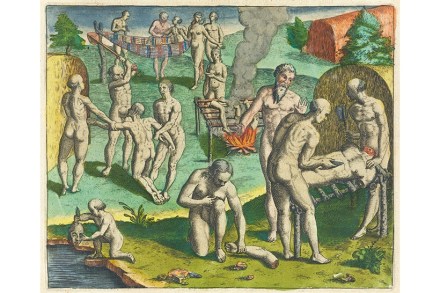
Coronavirus has cast a dampener over this year’s Mayflower 400 celebrations due to a hidden enemy with which the Pilgrim Fathers were all too familiar: within months of their arrival in America more than half of them had died of a disease whose principal symptom was violent coughing. There was no official artist on the Mayflower. Its ragtag party of Separatist Puritans had only been granted a charter on condition that their religious affiliation, banned in England, was not formally recognised.

The artist who left no physical record of her work

From our UK edition

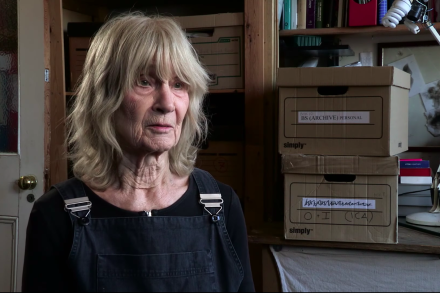
While locked-down galleries compete to keep their artists in the public eye — or ear — by uploading interview podcasts, a treasure trove of earlier recordings is being overlooked. Artists’ Lives, part of the British Library’s oral history archive, is a collection of interviews with 370 artists, 200 of which are available on the British Library Sounds website. As an account of British art of the past century they are more comprehensive than Vasari’s Lives and more reliable, coming as they do from the horse’s mouth. They are also exhaustive. But for those who haven’t got all day to follow the fascinating career of Guyanese-born Frank Bowling RA through 17 hours of recordings, edited extracts are now available as Voices of art.

How to succeed in sculpture (without being a man)

From our UK edition

Whee-ooh-whee ya-ya-yang skrittle-skrittle skreeeek… Is it a space pod bearing aliens from Mars? No, it’s a podcast featuring aliens from Venus: women sculptors. If the intro music to Sculpting Lives: Women & Sculpture sounds like Dr Who, its two jolly presenters — Jo Baring, director of the Ingram Collection of Modern British & Contemporary Art, and Sarah Turner, deputy director for research at the Paul Mellon Centre for British Art — come across as younger, slimmer, artier versions of the Two Fat Ladies. ‘Jo can talk about Liz Frink’s work until the cows come home,’ Sarah informs us at one point before warning Jo: ‘You’re going to have to convince me a little bit.

The gloriously indecent life and art of Aubrey Beardsley

From our UK edition

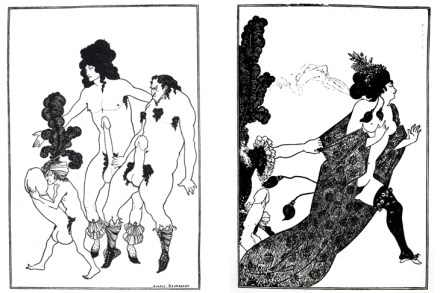
Picture the young aspirant with the portfolio of drawings pitching up nervously at the eminent artist’s studio, only to be turned away at the door by a servant; then the master catching up with him, inviting him in and delivering the verdict on his portfolio: ‘I seldom or never advise anyone to take up art as a profession; but in your case I can do nothing else.’ Within two short years of this fairy-tale meeting in the summer of 1891 between Edward Burne-Jones and the 18-year-old Aubrey Beardsley, the self-taught insurance clerk who had fallen under the Pre-Raphaelite spell had turned himself into the most talked-about artist in London.

Master of white

From our UK edition

Artists can be trained, but they are formed by their earliest impressions: a child of five may not be able to draw like a master but he can see better and more intensely. The light of Valencia was burnt into Joaquin Sorolla y Bastida’s mental retina and he could not get it out of his mind: ‘I live here like an orange tree surrounded by heaters,’ he told an interviewer in Madrid in 1913. Never a studio painter, he worked best under the lamp of his native sun and returned to Valencia from wherever he was living every summer to set up his easel on the beach.

Pyramids of piffle: Tate Britain’s British Baroque reviewed

From our UK edition

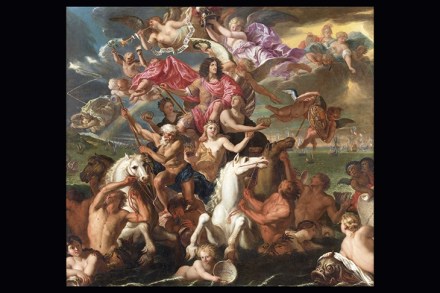
British Baroque: it was never going to fly. Les rosbifs emulating the splendour of le Roi Soleil? Pas possible. Still, we had a go and the evidence is assembled in British Baroque: Power and Illusion, Tate Britain’s survey of the art of the Stuart court from the restoration of Charles II in 1660 to the death of Queen Anne in 1714.

Dazzling and sex-fuelled: Picasso and Paper at the Royal Academy reviewed

From our UK edition

Picasso collected papers. Not just sheets of the exotic handmade stuff — though he admitted being seduced by them — but any scrap that could inspire, support or become part of an image. He jettisoned muses like there were endless tomorrows but clung on to Métro tickets, postcards, restaurant bills, bottle labels. When the thrill of a muse was gone her creative possibilities were exhausted, but you never knew, with synthetic cubism, when that old Métro ticket might come in handy. In a garret he would have had a hoarding problem. ‘Picasso throws nothing away,’ reported one lover. There was no filing system: a photograph in the exhibition shows a bulldog-clipped bunch of correspondence hanging from the ceiling at rue des Grands-Augustins.

How capitalism killed sleep

From our UK edition

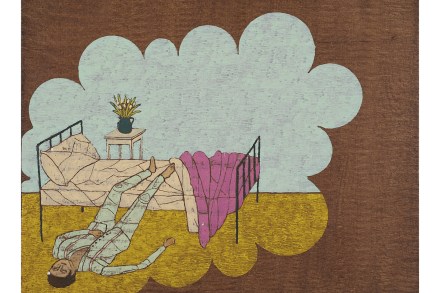
What can you make a joke about these days? All the old butts of humour are off limits. No wonder the top ten jokes at the Edinburgh Fringe are starting to sound as though they were banged out in a cracker factory. But this one, from Ross Smith, did make me laugh: ‘Sleep is my favourite thing in the world. It’s the reason I get up in the morning.’ If laughter is an escape valve for our fears, then sleep, or the lack of it, is now comic material. When 10 per cent of the population pops sleeping pills at least three times a week, self-help books about sleep — yawn, yawn — are international bestsellers and the President of the United States is up tweeting before the birds, something has gone awry in the land of nod.

The enduring allure of ‘er indoors

From our UK edition

‘She’s only a bird in a gilded cage, a beautiful sight to see. You may think she’s happy and free from care; she’s not though she seems to be.’ When the British lyricist Arthur J. Lamb first offered the lyrics of ‘A Bird in a Gilded Cage’ to the Tin Pan Alley tunesmith Harry Von Tilzer, he was told to go back home and clean them up. Lamb had made the subject of his song a rich man’s mistress; for mass-market appeal she needed to be married. In its revised version ‘A Bird in a Gilded Cage’ shot to the top of the 1900 sheet-music charts. For some strange reason the idea of the kept woman, married or unmarried, continues to exert a fascination on both sexes.

Why did Mrs Lowry hate her son’s paintings?

From our UK edition

‘I often wonder what artists are for nowadays, what with photography and a thousand and one processes by which you can get representation,’ L.S. Lowry muses in Robert Tyrrell’s 1971 documentary. ‘They’re totally unuseful. Can’t see any use in one. Can you?’ I can: as fodder for biopics. Cinemato-graphers have always been inspired by painting, but the appeal of the artist’s biopic lies less in the representation than the lifestyle: mainly the sex.

Joining the tea set

From our UK edition

It had to happen. Since almost everything became either ‘artisan’ or ‘curated’, conditions have been ripe for a curator of artisan teas. And sure enough, if you Google ‘tea curator’ you’ll find one promising regular infusions of ‘a curated selection of single-origin, artisan teas’. Now Compton Verney has done the sensible thing and curated an exhibition about the stuff. The starting point of A Tea Journey: from the Mountains to the Table is a copy of a painting by Johan Zoffany showing John Peyto-Verney, 14th Baron Willoughby de Broke, taking tea with his wife and three daughters around a tray loaded with Chinese porcelain, overlooked by a gigantic silver tea urn.

Some like it hot | 13 June 2019

From our UK edition

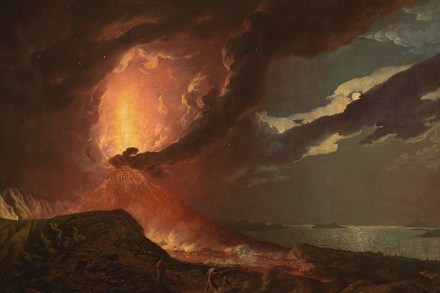
‘Playing God is indeed playing with fire,’ observed Ronald Dworkin. ‘But that is what we mortals have done since Prometheus, the patron saint of dangerous discoveries.’ There’s no Prometheus in the RWA’s new exhibition Fire: Flashes to Ashes in British Art 1692–2019, but there are plenty of flames, some dangerous, some not. The third in the Bristol gallery’s trilogy of shows on elemental themes, following The Power of the Sea (2014) and Air (2017), Fire features the most dramatic of the four elements, and the most fun to paint. Artists love playing with fire.

Gerald Scarfe meets Dr Seuss

From our UK edition

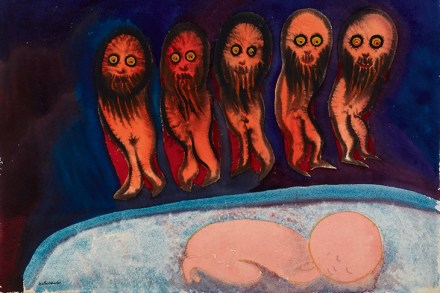
Holding the International Surrealist Exhibition in London in 1936 was a coup for the British avant-garde, putting newbie surrealists such as Paul Nash and Roland Penrose on an equal footing with founding members of the European movement. But André Breton, who opened the show, was unimpressed by Nash, Penrose and co. Instead, he singled out two complete unknowns, Grace Pailthorpe and Reuben Mednikoff, as ‘the best and most truly surrealist’ of the British contingent. Pailthorpe and Mednikoff came out of nowhere. He was the artist son of a Russian-Jewish tinplate maker from the East End; she was the daughter of a Sussex stockbroker and had served as a surgeon during the first world war before training as a psychoanalyst.

England, their England | 28 March 2019

From our UK edition

All good narrative painting contains an element of allegory, but most artists don’t go looking for it on a Coventry council estate — unless, that is, they happen to come from there. Since starting his Scenes from the Passion series while at the Royal College in the 1990s, George Shaw has been painting the Tile Hill estate where he grew up. In 20 years he has produced 200 images of the same square mile, revisiting the pubs, library and short cut to the shops of his youth, winkling out the Englishness of the place while lamenting the decline of its fabric and post-war community spirit. Tile Hill is Shaw’s Cookham, imbued by this former Catholic schoolboy with an English mysticism more covert and far less cosy than Spencer’s.

Dream on | 14 March 2019

From our UK edition

Art movements come and go but surrealism, in one form or another, has always been with us. Centuries before Freud’s scientific observation that the stuff of dreams will out, artists were painting it. The English have never been much cop at surrealism — too buttoned up; the Celts are better. The Scottish painters Alan Davie and John Bellany, jointly celebrated in Newport Street Gallery’s latest show, Cradle of Magic, were both surrealists in different ways. Both attended Edinburgh College of Art — Davie in the late 1930s, Bellany in the early 1960s — and both came out fighting in a punchy style of painting combining expressionistic brushwork with strong colour.

Privates on parade | 28 February 2019

From our UK edition

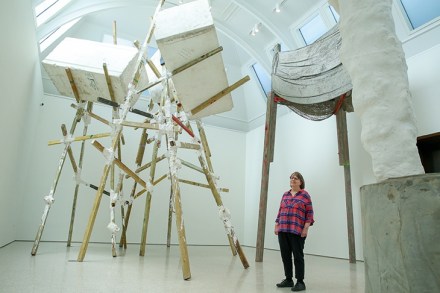
‘Those who can, do; those who can’t, teach.’ If there’s an exception to prove Shaw’s rule, it’s Phyllida Barlow. The 40 years the sculptor spent teaching at the Slade, where her pupils included Rachel Whiteread, have not only left her creative energies intact, but completely failed to keep a lid on them. After turning Tate Britain’s Duveen Galleries into a cross between a lumberyard and an enchanted forest in 2014, then filling the British Pavilion to bursting point at the 2017 Venice Biennale, the septuagenarian who can conjure a sculptural wonderland from the contents of your local branch of Travis Perkins has been let loose on the Royal Academy’s Gabrielle Jungels-Winkler Galleries. Unusually for Barlow, it’s not a jungle in there.

Small wonders | 21 February 2019

From our UK edition

When Henry VIII died in 1547, he left a religiously divided country to a young iconoclast who erased a large part of its visual culture. In a brief six years the government of Edward VI effectively whitewashed over England’s native heritage of sacred art, leaving a country already reliant on foreign painters for its royal portraits bereft of an artistic identity. Artistically speaking, Tudor England was the sick man of Europe — and the signs of recovery, when they first appeared, were tiny. Nicholas Hilliard, born in the year of Henry VIII’s death, paradoxically owed his art education to his family’s Protestantism.

Get your skates on

From our UK edition

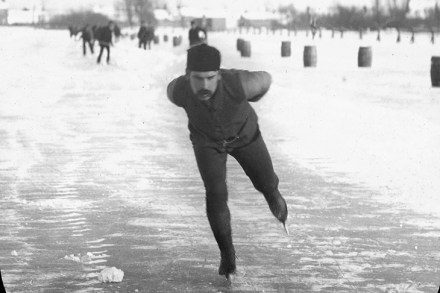
In landscape terms, the Fens don’t have much going for them. What you can say for them, though, is that they’re flat — a selling point for lovers of flat racing. This aspect was not lost on James I when, while out hunting in 1605, he came across the village of Newmarket, and 60 years later his grandson Charles II, who inherited the Stuart love of the sport of kings, would build a palace and stables in the Suffolk village. Today the remains of Palace House and the King’s Yard are home to the National Heritage Centre for Horseracing & Sporting Art, which houses a world-class collection of sporting art by Stubbs, Landseer, Munnings and Skeaping. But its latest exhibition focuses on a sport with a more surprising Stuart connection — skating.