Laura Gascoigne

Laura Gascoigne was the chief art critic of The Spectator from 2020 to 2025

Marital tensions

From our UK edition

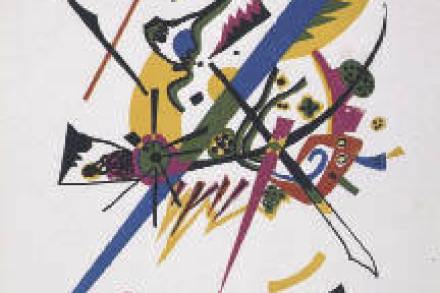
Bauhaus 1919–1933, Middlesbrough Institute of Modern Art, until 17 February With all the ‘boundary-blurring’ going on in contemporary art, the old distinction between art and craft ought to be history. But snobbism is apparently so hard-wired into our aesthetic psyche that the distinction has managed to survive by appealing to the Wildean doctrine, ‘All art is quite useless.’ If something has a use, the theory seems to go, it isn’t art: if it’s useless, it’s in with a chance. The new Middlesbrough Institute of Modern Art — mima for short — set out with a mission to show arts and crafts under the same roof.
Multiple choice | 24 November 2007

From our UK edition

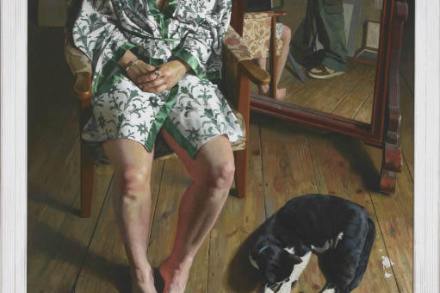
Lynn Painter-Stainers PrizePainters’ Hall, until 1 December Art competitions suffer from a basic problem: how to apply a first-past-the-post system designed for racing to art. In some cases, contestants don’t even qualify for the same event — this year’s Turner Prize, typically, pits film and photography against installation. To avoid this sort of stupidity, the Lynn Painter-Stainers Prize — now holding its third exhibition at Painters’ Hall — confines itself to ‘creative representational painting’ displaying ‘the skill of draughtsmanship’. But even this allows for invidious differences of subject, medium and approach. How is it judged?

Ways of being

From our UK edition

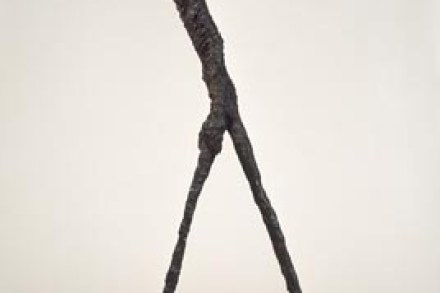
Exhibitions 2: L’Atelier d’Alberto Giacometti: Collection de la Fondation Alberto et Annette Giacometti In terms of body shape, the week of the Rugby World Cup final was an odd choice for the Pompidou Centre to kick off a new exhibition of Alberto Giacometti, an artist whose attenuated vision of humanity seems better suited to Paris Fashion Week. In fact, those looking to apportion blame for size 0 models might well start with his spindly figures with platform-soled feet. In post-war Paris, Giacometti was himself something of a style icon. With his austerely sensuous face, rumpled tweed suits and ever-burning cigarette, he embodied existentialist cool. The camera loved him.

Scottish love affair

From our UK edition

In 1838 the Duke of Sussex was presenting the awards for drawing at the Society of Art, when the silver medallist failed to appear. His Grace complained that he was taking his time, until someone pointed out the nine-year-old Mr J.E. Millais hovering below his line of vision. The Duke patted the young prodigy on the head and told him to write if there was ever anything he needed. Millais took up the offer, but not to advance his artistic career. Instead, he begged the Duke for the restoration of fishing rights for himself and his brother William in the Round Pond. That the painter of all those bloodless Pre-Raphaelite beauties should have had a passion for blood sports is not such a contradiction as it may seem.

Out of this world | 14 July 2007

From our UK edition

Masquerade: the work of James Ensor (1860–1949) It’s hard to imagine a more unlikely place for a James Ensor exhibition than the Lady Lever Art Gallery in Port Sunlight, the squeaky-clean temple to Edwardian taste in art founded by Viscount Leverhulme on the profits of soap. Among the fragrant creations of Millais, Holman Hunt, Burne-Jones, Leighton, Waterhouse and co., the dark imaginings of this Belgian proto-Expressionist look like dirty laundry tipped on to a parlour floor. ‘I feel more English than most of the English artists now slavishly imitating the early Italians,’ Ensor declared in 1900; now here he is holed up with this slavish crew — and to rub it in, one of them fronted his ticket.

Pastoral visions

From our UK edition

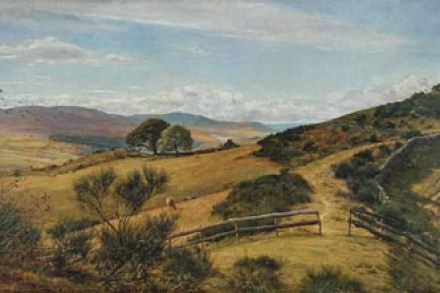
I’d never really looked at landscapes with cows until a student experience brought them sharply into focus. I was standing in front of one at a tutor’s party when I noticed the boy next to me staring at it. As I wondered what had so captured his imagination, he suddenly gasped, ‘God, I’m hungry!’ There are a lot of cows, and sheep, in Compton Verney’s new exhibition of landscapes from the Royal Academy’s collection, but they’re not there to whet the appetites of starving students. Rather, runs the thesis behind the show, their presence lends credibility to a pastoral vision of England designed to appeal to the new class of industrialist collector that came into being with the Royal Academy in 1768.

Middlesbrough’s lofty ambitions

From our UK edition

The most exciting thing to do in Middlesbrough on a Sunday afternoon, Ronnie Scott used to say, is watch the traffic lights change. Not any longer, since the opening in January of Middlesbrough Institute of Modern Art. Mima is the latest addition to the band of new public galleries stretching across Britain from the West Midlands to the north-east. In the six years since the Millennium, our old industrial heartlands have been ruthlessly rejuvenated by the erection of landmark gallery buildings designed by what my dyslexic cowboy builder used to call ‘artitects’.

Going wild

From our UK edition

In November 1905, in the Galerie Ernst Arnold, four young architecture students from the Dresden Technical School had their first encounter with Vincent van Gogh. Only six months earlier, Ernst Ludwig Kirchner, Erich Heckel, Karl Schmidt-Rottluff and Fritz Bleyl had formed an avant-garde artists’ group, Die Brücke (The Bridge), to represent ‘all who express directly and truthfully what urges them to create’. At the sight of 54 paintings by van Gogh, remembered a teacher, they ‘went wild’. The extraordinary impact of one man’s singular vision on the birth of modern art in Germany and Austria is the subject of an ambitious new exhibition at the Van Gogh Museum, Amsterdam.

Who needs prizes?

From our UK edition

This week the Painters’ Hall in the City of London opened its doors for the second time to The Lynn Painter-Stainers Prize, launched last year by the Worshipful Company of Painter-Stainers and the Lynn Foundation to promote the art of representational painting. The exhibition (on view until 2 December) is the newest addition to a growing list of prizes set up since the 1980s by interested parties to reverse the decline in specific areas of art. Some have been conspicuously successful: the BP Portrait Award, now the National Portrait Gallery’s most popular annual show, has played a major role in reviving the interest of younger artists in the genre of portraiture, as has the Singer & Friedlander/Sunday Times Watercolour Competition in the medium of watercolour.

Stone jewels

From our UK edition

Sheffield seems to be in a constant state of redevelopment. Last time I went, the Millennium Galleries had just opened; now they’re already history, overtaken by newer developments that have turned the walk from the station into a rat maze of roadworks. But the maze is worth negotiating for the reward of Art at the Rockface, the Millennium Galleries’ latest exhibition. A joint venture with Norwich Castle Museum, Art at the Rockface is a literal blockbuster — an exhibition exploring art’s fascination with stone.

Followers of fashion

From our UK edition

The word ‘flâneur’ — from the French ‘flâner’, to stroll — is enjoying a comeback among a new generation of artists attracted to the idea that art is more about looking than doing. It was Baudelaire who first used it to describe the modern artist with his finger on the urban pulse — a ‘botanist of the sidewalk’ was how he defined him. The sidewalk in question being in Paris and the botanist being French, it’s a fair assumption that the principal objects of his naturalist interest were not the weeds growing up through cracks in the pavement, but the millinery flowers adorning the hats of female passers-by.

Another country

From our UK edition

There’s something different about Tai-Shan Schierenberg’s new show at Flowers Central: it has a title, Myths. This may not sound like much — and Schierenberg shrugs it off — but when an artist abandons the neutrality of New Paintings for a title with so much historical baggage you suspect something is afoot. And when you enter the gallery and find paintings of the Black Forest intermingled with his usual English subjects, you can guess what it is. Despite his name — his mother was Chinese and his father is German — Schierenberg has passed until now for an English painter.

Carpenter of colour

From our UK edition

On Monday 15 October 1906, Paul Cézanne was painting on the hillside above his Les Lauves studio on the outskirts of Aix-en-Provence when he was caught in a violent rainstorm. Having sacked his coachman the week before in a row over money, the 67-year-old painter was on foot, and by the time he was picked up by a passing laundry cart and driven home to his house in Aix he was soaked to the skin. On the Tuesday, after rising at dawn to continue work on a portrait of his gardener Vallier, he collapsed into bed, and on the following Monday his wife and son were summoned from Paris. They arrived too late — according to local gossip, Mme Cézanne hadn’t wanted to miss a fitting with her dressmaker.

Birds and buoys

From our UK edition

Listing page content here You learn something every day, so the saying goes, though these days it rarely happens in a gallery.

Talent to amuse

From our UK edition

The restaurant at Tate Britain is famous for two things — its wine list and its mural. The restaurant at Tate Britain is famous for two things — its wine list and its mural. Hamish Anderson, compiler of the former, began with the advantage of a famous cellar; Rex Whistler, creator of the latter, began with the blank walls of a dingy basement previously referred to as a ‘dungeon’. Whistler was only 20 and still a student at the Slade when he won the restaurant commission in 1926. His rare gifts of draughtsmanship and imagination had persuaded Henry Tonks he was the man for the job, and the Professor’s faith in his favourite pupil was rewarded.

New world orders

From our UK edition

This year’s Tate Triennial has been so universally panned it seems cruel to add to the chorus of criticism. Still, it’s fair to ask why it’s so dreadfully dreary — and the answer, I think, is a lack of fantasy. Fantasy, as an ingredient of visual art, has fared badly under modernism and postmodernism.

An inside view

From our UK edition

It’s a little cheeky of Christopher Simon Sykes to have chosen a line from Rupert Brooke’s ‘The Soldier’ as the title of a show of photographs of country houses, but A Richer Dust Concealed does happen to combine the three essential ingredients of his subject: riches, concealment from the outside world and dust. Sykes has an unusual photographic pedigree. He made his reputation with informal pictures of rock aristocracy shot behind the scenes of the Rolling Stones’ 1975 Americas tour, but he grew up at Sledmere House among a different sort of aristocracy, whose houses he has documented in several books.

Through the eyes of a tourist

From our UK edition

In the summer of 1811 the 37-year-old Turner packed his sketchbooks, paints and fishing rod and headed west for his first tour of Devon and Cornwall. The purpose of his trip — from Poole in Dorset around Land’s End and back along the Bristol Channel to Watchet in Somerset — was to gather material for a series of Picturesque Views on the Southern Coast of England to be published as engravings by the Cooke brothers. On the bone-rattling roads of the day the tour will have taken eight weeks, but Turner was an enthusiastic traveller, ‘capable of roughing it in any mode the occasion might demand’, according to one local travelling companion.

Visual tapas

From our UK edition

Last spring, in honour of the reopening of the refurbished York Art Gallery, the statue of local artist William Etty RA outside the entrance — striking a swagger pose to rival Reynolds’s outside the Royal Academy — got a wash and brush-up from the City Council. This spring, it welcomes the public to an ambitious exhibition for a provincial gallery: Spanish Masters, the first Spanish painting survey in Britain since the one at the Academy in 1976. Admittedly, York’s survey is a little smaller.

That elusive something

From our UK edition

There’s a central chapter in Moby Dick where the narrator Ishmael traces his fascination with the whale to the colour white. For all its associations ‘with whatever is sweet, and honourable, and sublime’, he feels that ‘there yet lurks an elusive something in the innermost idea of this hue which strikes more of panic to the soul than that redness which affrights in blood’. Could it be, he wonders, that ‘by its indefiniteness ...it shadows forth the heartless voids and immensities of the universe, and thus stabs us from behind with the thought of annihilation?’ Ishmael is on to something here. Chromatically, as the colourless sum of all colours, white is already enough of a contradiction; symbolically, it’s a whole new can of worms.