Laura Gascoigne

Laura Gascoigne was the chief art critic of The Spectator from 2020 to 2025

All about his mother

From our UK edition

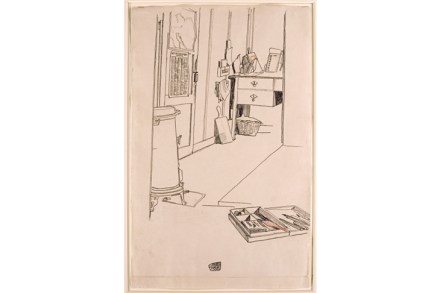
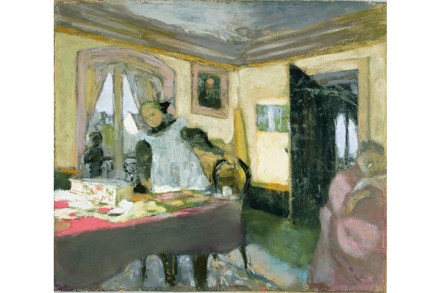
Fin-de-siècle Paris was not just the art capital of the world, it was also the fashion capital. In 1901, 300,000 Parisians were employed in the rag trade, and one of them was Édouard Vuillard’s mother. Stout, sensible and self-sufficient, Mme Marie Vuillard was no Mimi out of La Bohème, embroidering flowers in a draughty garret. She was the independent patronne of a dressmaking atelier — more of a couture flat, admittedly, than a couture house, operating out of rented apartments in the garment district. Before being left a widow with three children, she had prudently invested in a small business producing dresses and made-to-measure corsets for a fashion-conscious petit bourgeois clientele.
Girls from the black stuff

From our UK edition

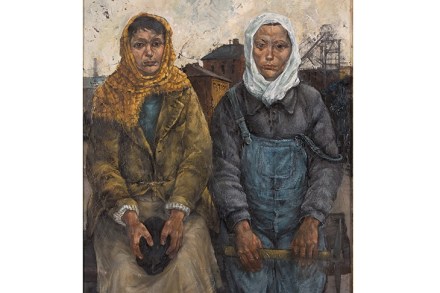
‘They did not look like women, or at least a stranger new to the district might easily have been misled by their appearance, as they stood together in a group, by the pit’s mouth.’ As opening sentences go this is a cracker, but few modern readers of Frances Hodgson Burnett’s That Lass O’Lowrie’s get far beyond it because the novel’s characters speak in a Lancashire dialect that makes Mark Twain’s Huck Finn sound like a Harvard preppy. In real life, though, it wasn’t the Lancashire pit girls’ lingo that put contemporaries off so much as their costume.

Out of this world | 5 July 2018

From our UK edition

In G.F. Watts’s former sculpture studio in the Surrey village of Compton, a monstrous presence has interposed itself between the dusty plaster models of ‘Alfred, Lord Tennyson’ and ‘Physical Energy’. Standing 14ft tall, the brightly painted soldier with fez and sabre is a replica of a colossal puppet made by James Henry Pullen (1835–1916) while an inmate of the Royal Earlswood Asylum for Idiots in Redhill. So terrifying was Pullen’s ‘Giant’ to the local children that it was confined to quarters after causing a rout at a Guy Fawkes procession. Its maker was inside, operating a system of pulleys and levers that batted the eyelids, waggled the ears, rattled the sabre and, through a mechanical larynx, emitted amplified shrieks.

Occupational hazards

From our UK edition

A conservator at Kansas City’s Nelson-Atkins Museum was recently astonished to find a tiny grasshopper stuck in the paint of Van Gogh’s ‘Olive Trees’ (1889). The discovery would not have surprised Van Gogh, who complained to his brother Theo in 1885: ‘I must have picked up a good hundred flies or more off the four canvases that you’ll be getting.’ On the evidence of a new exhibition of drawings on the theme of Artists at Work at the Courtauld Gallery, insects are the least of the plein-air painter’s problems: the 19th-century protagonist of Eduard Gehbe’s ‘The startled painter’ has been sent flying by a passing roebuck. Animals aside, there’s the physical discomfort to contend with.

Water, water, everywhere | 28 March 2018

From our UK edition

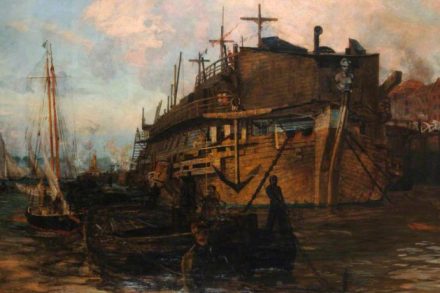
‘Ding, Clash, Dong, BANG, Boom, Rattle, Clash, BANG, Clink, BANG, Dong, BANG, Clatter, BANG BANG BANG!’ is how Charles Dickens transcribes the sound of 1,200 men building the first iron-clad frigate Achilles at the Royal Dockyard, Chatham, in the 1860s. A Chatham boy, Dickens lived to see — and hear — the age of sail turn into the age of steam, when the creak of ropes, the flap of canvas and the ding of bells gave way to the hiss of steam, the chug of motors and the shriek of whistles. As soundscapes go, both strike the modern imagination as more musical than the roar of road traffic.

Seeing the light | 22 February 2018

From our UK edition

The impermanence of works of art is a worry for curators though not usually for artists, especially not at the start of their careers. But Anthony McCall was only in his mid-thirties when his creations vanished before his eyes. It was in New York in the early 1970s that McCall came up with the idea of ‘solid light works’, animated projections of simple abstract shapes in which the beams of projected light assumed a physical presence. Not being taken seriously by commercial galleries — ‘It did occur to me that I hadn’t made a terribly wise career decision’ — McCall’s solid light works were initially shown in the sorts of dusty, smoky downtown lofts where devotees of ‘expanded cinema’ gathered.

Emotional rescue

From our UK edition

In the 1880s the young Max Klinger made a series of etchings detailing the surreal adventures of a woman’s glove picked up by a stranger at an ice rink. At a certain point the glove washes up, nightmarishly large, beside a sleeping man’s bed on to which a shipwrecked sailor is desperately hauling himself. Storm-tossed billows merge with rumpled pillows in an image simply titled ‘Angste’. Klinger’s nightmare vision came back to haunt me at the exhibition Tracey Emin, ‘My Bed’/JMW Turner. Yes, you read that right. Since its loan to the Tate in 2015, Emin’s most famous oeuvre has been partnered in exhibitions with the work of Francis Bacon at Tate Britain and William Blake at Tate Liverpool.

Raw materials

From our UK edition

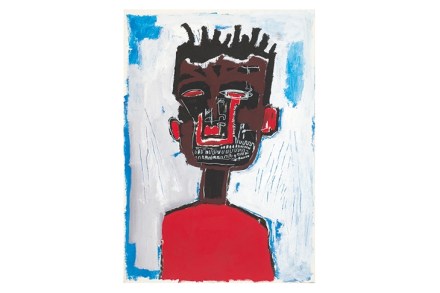
‘Art by its very essence is of the new… There is only one healthy diet for artistic creation: permanent revolution.’ Jean Dubuffet wrote those words in 1963, and when Jean-Michel Basquiat burst on to the New York art scene 20 years later — barely out of his teens, untrained and black — he seemed to embody them. Together with his friend Al Diaz, he had grabbed attention in the late 1970s with a campaign of cryptic graffiti signed SAMO© targeted on the SoHo gallery district. Born to middle-class Haitian-Puerto Rican parents in the South Bronx, Basquiat didn’t waste time tagging trains. He knew the value of location; his dad was an accountant. Photographs of the graffiti fill a room in the Barbican’s exhibition Basquiat: Boom for Real.

Frills and furbelows

From our UK edition

Over the winter of 1859–60, a handsome young man could be seen patrolling the shores of the Gulf of Messina in a rowing boat, skimming the water’s surface with a net. The net’s fine mesh was not designed for fishing, and the young man was not a Sicilian fisherman. He was the 25-year-old German biologist Ernst Haeckel from Potsdam searching for minute plankton known as Radiolaria. In February he wrote excitedly to his fiancée, Anna Sethe, that he had caught 12 new species in a single day — ‘among them the most charming little creatures’ — and hoped to make it a full century before leaving. Haeckel had a degree in medicine but no interest in treating patients, whose visits he curtailed by holding surgeries from 5 to 6 a.m.

Repo women

From our UK edition

Aren’t you getting a little sick of the white cube? I am. I realised how sick last week after blundering around White Cube Bermondsey, where the walls are so pristine no label is allowed to sully them, struggling to work out what I was looking at. I was reduced to photographing the works in order and tracing my itinerary in ink on the ground plan — shoot first, ask questions later — and even then I had to keep getting the attendants to tell me where exactly on the plan I was. One of them admired my wiggly drawing. Well, it was a surrealist exhibition. Dreamers Awake sets out to repossess surrealism for women.

Roving eye

From our UK edition

Photography has many genres, even more than painting, and most photographers achieve fame by focusing on one of them. There are technical reasons for this. Armed only with a bunch of brushes and a palette of colours, a painter can achieve a variety of effects — close-up, distance, soft or sharp focus, motion — for which a photographer needs a battery of cameras and associated paraphernalia in the form of lenses, films, lights and filters, and the technical know-how to get the best out of each. There is also professional snobbery. Jobbing photographers who work across genres for magazine assignments are less likely to be taken seriously as artists. The distinction may be artificial (pun intended) but it exists, and it explains why New York photographer Marvin E.

A woman of genius

From our UK edition

‘Your favourite virtue?’ ‘I don’t have any: they are all boring,’ wrote the 21-year-old Camille Claudel in a Victorian album belonging to an English friend in 1886. The remark perfectly matches the photograph of the aspiring sculptor taken two years earlier by César: childlike, sullen, attitudinous, beautiful. Claudel was in England on a break from working in Auguste Rodin’s studio, where she had been taken on as an assistant in 1884. She had met Rodin through her mentor Alfred Boucher, who discovered her precocious teenage talent on a visit to his hometown of Nogent-sur-Seine in the 1870s, and continued to supervise her subsequent studies in Paris.

Some like it hot

From our UK edition

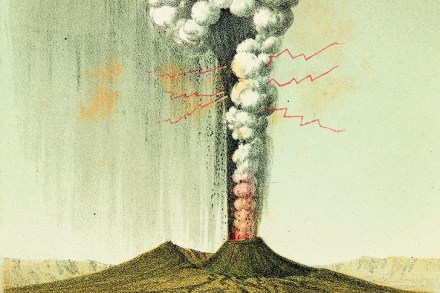
In the mid-6th century, legend has it, St Brendan set off from Ireland with a currach-load of monks on a mission to find the Isle of the Blessed. The Irish like to think that his Atlantic odyssey took him to Newfoundland before the Vikings; what seems more probable, if you believe the medieval account, is that it brought him close to the shores of Iceland where he passed a mountainous island with ‘a great smoke issuing from its summit’ and ‘flames shooting up into the sky’. If there were any doubts that what is meant here is a volcano, they would be dispelled by the drawing in the margin of the version of the Navigatio Sancti Brendani Abbatis currently on show at the Bodleian Libraries.

Going Dutch | 27 October 2016

From our UK edition

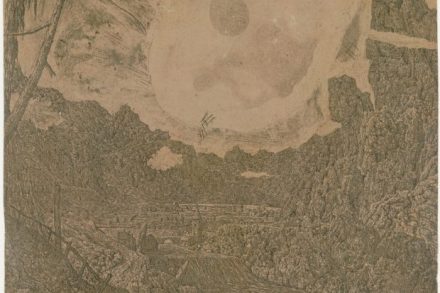
In debates about what should and should not be taught in art school, the subject of survival skills almost never comes up. Yet the Dutch, who more or less invented the art market, were already aware of its importance in the 17th century. In his Introduction to the Academy of Painting (1678), Samuel van Hoogstraten included a chapter headed ‘How an Artist Should Conduct Himself in the Face of Fortune’s Blows’. Top of his casualty list of artists ‘murdered by poverty ...because of the one-sidedness of supposed art connoisseurs’ was the landscape painter and printmaker Hercules Segers (c.1589–1633).

Skinny dipping

From our UK edition

For a 21st-century gallery, a Victorian collection can be an embarrassment. Tate Modern got around the problem by offloading its Victoriana on to Tate Britain, but York Art Gallery decided to make the best of it. As the birthplace of William Etty, York found itself lumbered with a major collection of work by a minor Victorian artist whose reputation nosedived after his death. While Etty’s statue still dominates the gallery forecourt, most of his paintings languish in the stores. For contemporary audiences, though, he has a USP. An avid frequenter of the life room, Etty acquired a mastery of flesh tones and a penchant for painting nudes that many of his fellow Victorians regarded as pervy.

Are the British too polite to be any good at surrealism?

From our UK edition

The Paris World’s Fair of 1937 was more than a testing ground for artistic innovation; it was a battleground for political ideologies. The Imperial eagle spread its wings over the German Pavilion; the Soviet hammer swung above the Russian Pavilion; and the Spanish Pavilion unveiled Picasso’s shocking monument to the civilian dead of the bombed city of Guernica, raising the clenched fist of the Spanish Republic in the capital of non-interventionist France. Not everyone was convinced by ‘Guernica’ as art. Anthony Blunt in The Spectator commended Picasso’s political gesture but dismissed the painting as ‘the expression of a private brainstorm’.

Pizza, choc-ice and Leonardos – the treasures of Turin

From our UK edition

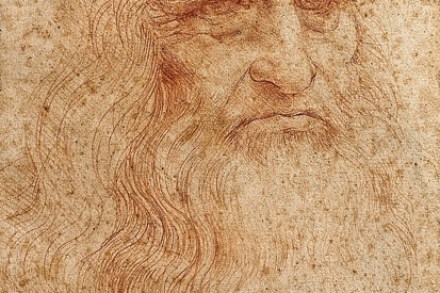
To most non-Italians Turin spells Fabbrica Italiana Automobili Torino (Fiat). But this subalpine city has a longer history than the internal combustion engine. It may be twinned with Detroit, but its cavalcade of equestrian monuments testifies to an older sort of horsepower — the sort harnessed by the condottieri of the House of Savoy to turn their little Duchy into a major player on the European stage and, for four brief years from 1861 to 1865, into the capital of the Kingdom of Italy. So while Detroit has the Detroit Institute of Arts, Turin has 55,000 sqm of royal museums, currently undergoing unification into a single complex called the ‘Polo Reale’.

The home of Holland’s celebrity paintings gets a makeover

From our UK edition

If things had turned out differently for Brazil — I don’t mean in the World Cup — Recife might now be known as Mauritsstad. But when the Portuguese expelled the Dutch in 1654, the name of the new capital of Pernambuco built by governor Johan Maurits van Nassau-Siegen was lost to history. Today Johan Maurits is remembered for a house, not a city: the splendid private mansion he had built for himself in The Hague right next to the Dutch parliament in the Binnenhof. Designed by the architect Jacob van Campen, the Mauritshuis is a Dutch Classicist doll’s house of a palace that took 11 years to build and was only lived in by its owner for three after his return from Brazil in 1644.

When Raquel Welch danced on a table at Cinecittà

From our UK edition

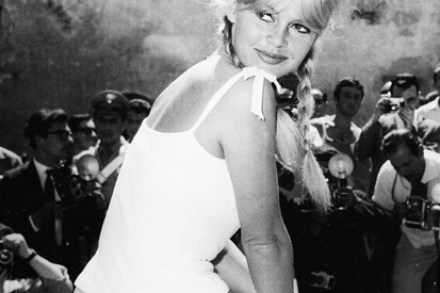
Before there was Hello!, OK! and Closer, there was Oggi. Oggi was the magazine my Italian mother used to flick through on the long dark English winter evenings. Its celebrity photo spreads were for her the armchair equivalent of the Italian national pastime, the ‘passeggiata’. The Years of La Dolce Vita, revisited in a new exhibition at the Estorick Collection, were the glory years of Oggi. The show draws on an archive of more than a million images taken by Marcello Geppetti (1933–1998), the street photojournalist ranked by American Photo ‘the most undervalued photographer in history’.

Henri Le Sidaner: the artist who fell between two schools

From our UK edition

Like other species, artists club together in movements not just for purposes of identification but for longevity. Individuals who don’t belong to schools take longer establishing reputations during their lifetimes, and tend to lose them sooner after their deaths. Henri Le Sidaner (1862–1939) was one such individual: a contemporary of the Post-Impressionists who painted in dots but was not a Pointillist; revelled in complementary colours but was not a Fauve; and drew a veil of dreams over reality but was not a Symbolist, or only briefly. He was, as his friend the critic Gabriel Mourey described him, ‘a sort of mystic who has no faith’. When asked what school he belonged to, his own reply was: ‘None.