Laura Gascoigne

Laura Gascoigne was the chief art critic of The Spectator from 2020 to 2025

Brueghel’s peasant paintings were the D.C. Thomson comics of the 17th century

From our UK edition

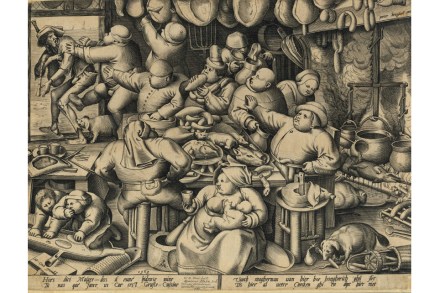
‘Psst! Someone’s coming!’ the skinny man with the ragged breeches and the bandaged jaw warns his fat companion out of the corner of his mouth. The two men, busy bundling sticks in a wood, look around apprehensively while a third man up a ladder attacks a tree with a billhook. The three of them are clearly up to no good, and we’ve caught them at it. The focus of an intriguing little exhibition at the Barber Institute, ‘Two Peasants Binding Firewood’, c.1604-16, (see p31) was once thought to be by Pieter Bruegel the Elder, but as it’s one of several copies from the same workshop it has since been reattributed to his son. Pieter Bruegel the Elder didn’t churn them out; with a waiting list of collectors queuing to acquire his paintings, he didn’t need to.
Does gender matter? Making Modernism, at the Royal Academy, reviewed

From our UK edition

 The catalogue to Making Modernism opens with an acknowledgment from the Royal Academy’s first female president, Rebecca Salter, that in the past it has overlooked women artists. To compensate, it has bundled seven – four headliners and three of their lesser-known contemporaries – into this one show. Excluded from official art schools and reliant on private tuition and ‘ladies’ academies’, these seven women escaped the feminine curse of the three ‘Ks’ – Kinder, Küche, Kirche (children, kitchen and church) – to forge independent careers in Germany before the first world war. They didn’t constitute an art movement, though Gabriele Münter and Marianne Werefkin – both comfortably off – facilitated one.

The careers of artists like Carolee Schneemann and Stephen Cripps are unthinkable today

From our UK edition

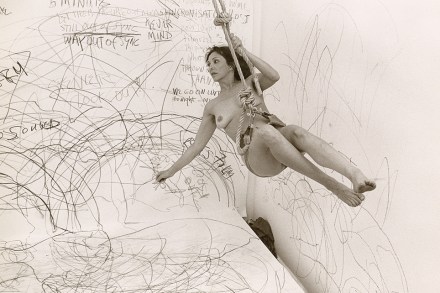
During the 1964 debut of Carolee Schneemann’s ‘Meat Joy’ in Paris, a man in the audience tried to throttle the artist before being hauled off by three female spectators. Schneemann’s performance, an ‘exuberant sensory celebration of flesh’, involved semi-naked dancers tangling and grappling while bits of chicken, raw fish and hot dogs rained from above and buckets of paint sloshed underfoot.

Thrilling: Hieroglyphs – unlocking ancient Egypt, at the British Museum, reviewed

From our UK edition

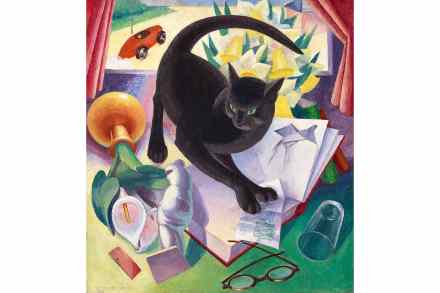
‘Poor old Mornington Crescent, I feel sorry for it with this highly made-up neighbour blocking the view it had enjoyed,’ commiserated Professor C.H. Reilly in the Architects’ Journal in 1928. He was talking about the new reinforced-concrete Carreras cigarette factory designed by architects Marcus Evelyn and Owen Hyman Collins that had just gone up across from the station. It wasn’t the concrete that bothered him so much as the make-up: the gaudily painted façade with papyrus-form columns copied from the ancient Egyptian tomb of Panehsy and the two huge black cats representing the goddess Bast – while advertising Black Cat cigarettes – flanking the entrance. How did this time-travelling lump of Egyptiana come to land in north London?

The genius of Cezanne

From our UK edition

Pity the poor curators of major exhibitions struggling to find fresh takes on famous masters. The curators of Tate Modern’s new Cezanne blockbuster have begun by dropping the acute accent from his surname, apparently a Parisian affectation not in use on the artist’s home turf. Anticipating grumbles about another major exhibition devoted to a dead white male artist, they have emphasised Cezanne’s outsider status by painting him as a provincial from Provence. It was a role the artist liked to play in Paris, once famously excusing himself from shaking Manet’s hand on the grounds that he hadn’t washed in a week. Cezanne’s peers put their money where their mouths were, creating an artists’ market for his work With or without his accent, Cezanne remains French.

Do we need another Lucian Freud exhibition?

From our UK edition

Do we need another Lucian Freud exhibition? After years of exposure to his paintings of naked bodies posed like casualties of a car crash in a nudist camp, we might have reached the ‘move along, nothing to see here’ point. But it seems we can’t get enough of the monstre sacré. To mark the centenary of his birth in 1922, London is being treated to a Freud fest of no fewer than seven exhibitions, the most prestigious of which is at the National Gallery.

Brilliant and distinctive but also relentless: William Kentridge, at the RA, reviewed

From our UK edition

William Kentridge’s work has a way of sticking in the mind. I can remember all my brief encounters with it, from my first delighted sight of one of his charcoal-drawn animations, ‘Monument’ (1990), in the Whitechapel’s 2004 exhibition Faces in the Crowd to my awestruck confrontation with his eight-channel video installation I am not me, the horse is not mine (2008) in Tate Modern’s Tanks in 2012. That marked a high point for the Tanks, since when they’ve tanked.

Biomorphic forms that tempt the viewer to cop a feel: Maria Bartuszova, at Tate Modern, reviewed

From our UK edition

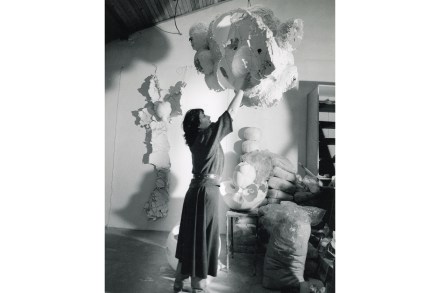
Art is a fundamentally childish activity: painters dream up images and sculptors play with stuff. It was while playing with an inflatable ball with her young daughter in the early 1960s that Maria Bartuszova had the idea of filling balloons with liquid plaster instead of air. The inspiration fed her muse for 30 years, seeding the mixed crop of biomorphic forms currently filling five rooms at Tate Modern. Trained in ceramics at Prague Academy of Arts under communism, Bartuszova turned to plaster after moving with her sculptor husband Juraj Bartusz to the industrial city of Kosice, now in Slovakia, in 1963. Plaster was cheap and plentiful: a 1987 photo in this exhibition, the first to bring her work to a British audience, shows her with stacks of sacks of it in the studio.

Fresh and dreamy: Edward Lear, at Ikon Gallery, reviewed

From our UK edition

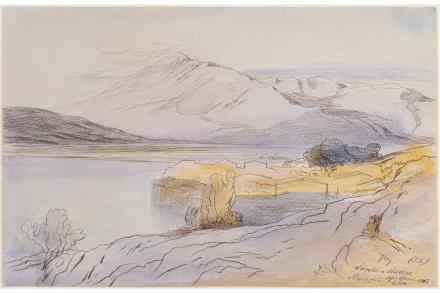
‘It seems to me that I have to choose between 2 extremes of affection for nature… English, or Southern… The latter – olive – vine – flowers… warmth & light, better health – greater novelty – & less expense in life. On the other side are, in England, cold, damp & dullness, – constant hurry & hustle – cessation from all varied topographical interest, extreme expenses…’ That choice was effectively made for Edward Lear in 1837 when he gave up the natural history studies by which he had made his name in his teens and headed south to Rome on doctors’ advice, aged 24. Prone to asthma and epileptic seizures, the myopic artist was now also suffering from eyestrain.

There’s much more to Winslow Homer than his dramatic seascapes

From our UK edition

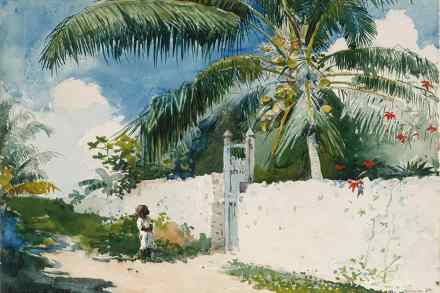
Until the invention of photography war reportage depended on old-fashioned illustration, and even after that the illustrated press took a while to catch up. Photographic reproduction didn’t work on cheap newsprint, which demanded a crispness of definition that early photography couldn’t provide. So reports on the American Civil War in the new illustrated periodicals aimed at the middle classes continued to rely on wood engraving, and it was as a print designer that the 25-year-old Winslow Homer was sent by Harper’s Weekly to cover the fighting in 1861. Apprenticed to a commercial lithographer at the age of 19, Homer had no formal training as an artist but he had a nose for the decisive moment that added drama to a reporter’s copy.

A victory of the imaginatively crafted over the conceptual: In the Black Fantastic reviewed

From our UK edition

‘These artists are offering other ways of seeing,’ says Ekow Eshun, curator of In the Black Fantastic, and from the moment you push open the Hayward’s heavy swing doors you see what he means. Outside, a world of grey utilitarian concrete; inside, a vibrant crew of invaders from planet Zog glittering like Technicolor Pearly Kings in bright carapaces of beads, sequins and buttons. The kind of thing a nimble-fingered alien might come up with if his spaceship crash-landed in a haberdashery department, Nick Cave’s ‘Soundsuits’ make Ziggy Stardust look Earthbound (see below). Brought up with seven brothers by a single mother in Missouri, Cave learned early how to pimp hand-me-downs and his suits are exquisitely tailored.

As cool and refreshing as a selection of sorbets: RA’s Milton Avery show reviewed

From our UK edition

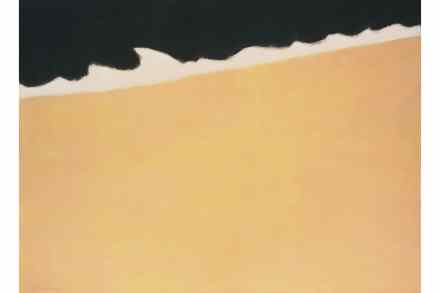
‘I like the way he puts on paint,’ Milton Avery said about Matisse in 1953, but that was as much as he was prepared to say. Contemporary critics tried to ‘pin Matisse’ on him as if art criticism were a branch of police work. He resisted, and remains a slippery customer. Post-impressionist or abstract expressionist? Colour field painter with added figures? To those who view art history as the march of progress towards modernism, he looks like a backslider. Clement Greenberg thought as much, dismissing him in 1943 as ‘a “light” modern who can produce offspring of Marie Laurencin and Matisse that are empty and sweet with nice flat areas of colour…’ Ouch.

A showstopper is at the heart of this winning show: Dulwich Gallery’s Reframed – The Woman in the Window reviewed

From our UK edition

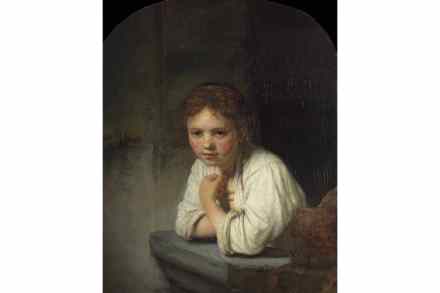
Themed exhibitions pegged to particular pictures in museum collections tend to be more interesting to the museum’s curators than to the general public. But with Reframed: The Woman in the Window Dulwich Picture Gallery is on to a winner, as not only is the particular picture a showstopper, but the theme opens up a whole can of feminist worms. Whether it’s her pensive pose, her idle fiddling with her necklace or the shy look in her shadowed eyes, Rembrandt’s ‘Girl at a Window’ (1645) is impossible to walk past. Scholars continue to bicker about her status. Serving wench? Kitchen maid? Prostitute? Rembrandt’s lover?

At her best when lightly ruffling the surfaces of things: Cornelia Parker, at Tate Britain, reviewed

From our UK edition

Cornelia Parker wasn’t born with a silver spoon in her mouth, but when she was growing up her German godparents sent her a silver spoon or fork every birthday. She seems to have had a thing about silverware ever since. She used to sell it on Portobello Market, and it formed the basis of her first large installation. ‘Thirty Pieces of Silver’ (1988) could be viewed as an elegy to the fish knife and all those other superannuated aids to aspirational dining whose genteel functions are now all but forgotten – salvers, sauceboats, toast racks, sugar tongs and those scalloped silver shells holding coils of butter beaded with condensation from the fridge – if it wasn’t in practice a mass grave.

The women’s lips are pursed; the men’s are kissable: Glyn Philpot at Pallant House reviewed

From our UK edition

Of all the photos of artists in the studio, the one of Glyn Philpot being served a martini by his white-jacketed Jamaican model Henry Thomas must be the strangest. Taken to publicise his 1934 exhibition, it would be unthinkable now but in the circles Philpot moved in at the time it might, I suppose, have been viewed as cool. For 20 years Philpot had been London’s leading portraitist, a position he inherited from Sargent. His sitters included admirals – four during the first world war – and King Fuad of Egypt, who commissioned a ‘dignified, decent, usual and rather sumptuous’ portrait from the 38-year-old artist for £3,000 in 1923, the year he was elected an RA. It was not his best work.

Nobody paints the sea like Emil Nolde

From our UK edition

In April, ten years after opening its gallery on the beach in Hastings, the Jerwood Foundation gifted the building to the local borough council. Thrown in at the deep end without a permanent collection, Hastings Contemporary, as it is now known, has to sink or swim on the strength of its exhibition programme. How to please local audiences while attracting outsiders? For a seaside gallery, nautical themes are an obvious answer: this summer’s offering is Seafaring, a dip into two centuries of maritime art from Théodore Géricault to Cecily Brown. What’s the worst that can happen? Shipwreck. The show opens with three recent canvases by Brown inspired by romantic paintings of the subject.

A brief introduction to Scottish art

From our UK edition

When Nikolaus Pevsner dedicated his 1955 Reith Lectures to ‘The Englishness of English Art’, he left out the Scots. The English art establishment has never bothered with what was going on north of the border, which explains, though doesn’t excuse, the underrepresentation of Scottish art in the Tate’s so-called national collection. This leaves a gap in the story of British art that the Fleming Collection has set out to fill. Since its reinvention as a ‘museum without walls’ by director James Knox – a former publisher of this magazine – the best collection of Scottish art outside a public gallery has gone on the road.

Artist, actor, social justice warrior, serial killer: the many faces of Walter Sickert

From our UK edition

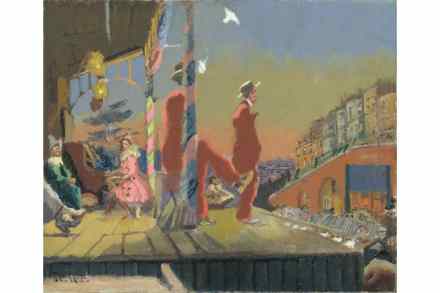
‘It’s too dark and life is too short,’ was Walter Sickert’s explanation of his decision to leave London in 1898. Separated from his first wife Ellen Cobden and in financial trouble, he did a flit across the Channel to Dieppe. A magnet for artists in the summer season, the town had long been a popular subject for tourist views. ‘I see my line…’ he wrote soon after his arrival. ‘Picturesque work. This place Dieppe, is my only up to now, goldmine.’ The place had already had a transformative effect on his painting.

Evocative tribute to the orphaned caped crusader: Superheroes, Orphans & Origins at the Foundling Museum reviewed

From our UK edition

Instead of wasting money, like other museums, on extravagant architectural statements, the Foundling Museum in Brunswick Square has sensibly chosen to welcome visitors with a written statement. In 2014 it commissioned the poet Lemn Sissay, who spent his teenage years in a children’s home, to create a memorial in its entrance hall to the many parentless heroes and heroines in fiction. ‘Heathcliff was a foundling… Harry Potter was fostered… Dorothy Gale was adopted… James Bond was fostered…’ The list goes on, running to more than 100 names. Sissay’s mural will trigger a lightbulb moment for any dimwit like me who has failed to notice this narrative trope – and there are further revelations in the show downstairs.

Exquisite and deranged: two glass exhibitions reviewed

From our UK edition

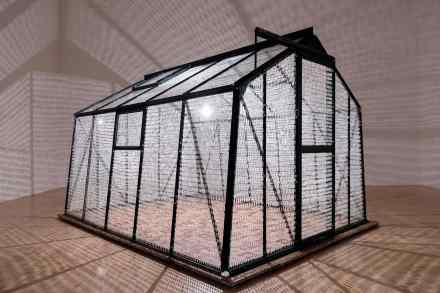
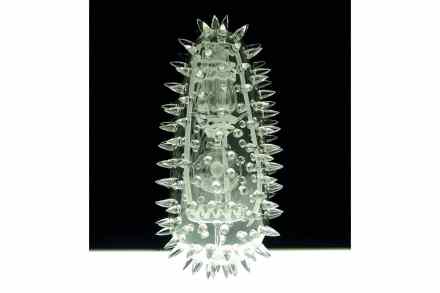
A ‘Ghost Shop’ has appeared between Domino’s Pizza and Shoe Zone on Sunderland High Street. Look through the laminated window glass and you’ll see more glass: glass shop fittings, a glass cheese plant, a glass pedal bin spilling disposable glass cups, glass chocolate wrappers and glass betting slips littering the floor. Ryan Gander likes the fact that there’s no explanation of his see-through betting shop: ‘If you tell everyone it’s a contemporary art project, they’d run away.’ Gander is one of four artists commissioned by Sunderland’s National Glass Centre to make works inspired by the history of the north-east.