Laura Gascoigne

Laura Gascoigne was the chief art critic of The Spectator from 2020 to 2025

Raphael – saint or hustler?

From our UK edition

For tourists to Rome, the must-see event of 1833 was the exhumation of Raphael from his tomb in the Pantheon. For years the city’s Accademia di San Luca had been claiming possession of the artist’s skull and running a profitable line in souvenirs. That September, the question would be settled. Was the ‘most eminent painter’, lauded in his friend Pietro Bembo’s fulsome epitaph as having ‘lived virtuously 37 virtuous years’, really buried there? And did his skeleton have a head? Hans Christian Andersen was one of 3,000 ticket holders for the six-day lying-in-state. The skeleton was there all right, complete with head, but its dignity, reported Andersen, was somewhat dented by the rattle of bones when it was returned to the tomb.
Fails to dispel the biggest myth of all: Whitechapel Gallery’s A Century of the Artist’s Studio reviewed

From our UK edition

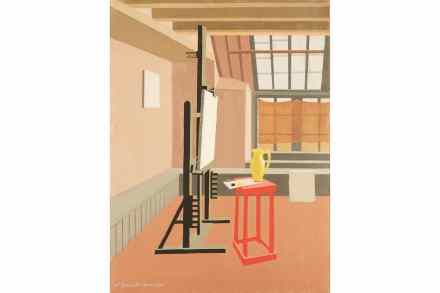
Picture the artist’s studio: if what comes to mind is the romantic image of a male painter at his easel in a grand interior with an admiring audience and a nude model at his elbow, you’re in the wrong century for the Whitechapel Gallery. Its new exhibition, A Century of the Artist’s Studio, runs from 1920 to 2020, and there’s precious little romance about it. To be honest, the studio was never that romantic; Gustave Courbet’s ‘The Artist’s Studio’ (1855), the main source of the stereotype, was itself a send-up. The Whitechapel’s show sets out to complete Courbet’s work, dismantling the myth cliché by cliché.

Part-gothic horror, part-Acorn Antiques: Louise Bourgeois, at the Hayward Gallery, reviewed

From our UK edition

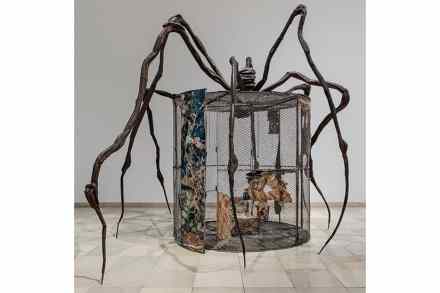
Louise Bourgeois was 62 and recently widowed when she first used soft materials in her installation ‘The Destruction of the Father’ (1974). The father in question was not her American late husband Robert Goldwater, the father of her children, but her own French father Louis Bourgeois, long deceased. Set in a space evoking the interior of a digestive tract, the installation’s centrepiece was a table bearing the remains of an imagined feast at which Louise and her brother had eaten their dominating father after dismembering him and cutting off his penis. You have been warned. There is nothing soft about Bourgeois’s soft sculptures, though — on the evidence of the Hayward’s new exhibition of her late textile works —they did soften with age.

The fascination of house fronts: Where We Live at Millennium Gallery reviewed

From our UK edition

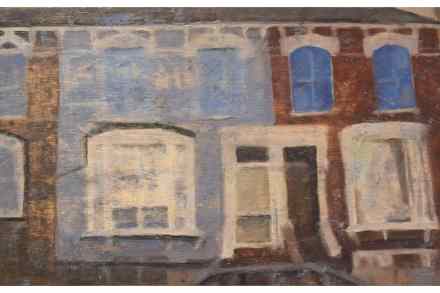
Paintings of houses go back a long way in British art: the earliest landscape in Tate Britain is a late 17th-century view of an estate in Belsize Park by the inventor of the country-house portrait, Jan Siberechts. The genre quickly became déclassé. By the 18th century Thomas Gainsborough was painting peasant cottages; by the 20th, Algernon Newton had turned his attention to middle-class villas on London’s canals. Not made for the owners of the houses they depicted, these paintings were destined to decorate the walls of strangers: the householders might not even know the pictures had been ‘taken’. A commissioned house portrait has legitimacy; a non-commissioned one feels like an invasion of privacy.

Ethereal and allusive, all nuance and no schmaltz: Helen Frankenthaler, at Dulwich Gallery, reviewed

From our UK edition

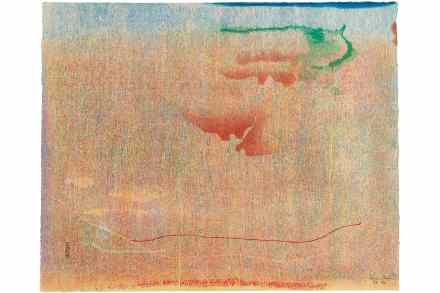
In 1950 the 21-year-old painter Helen Frankenthaler, fresh out of college, went to an exhibition at New York’s Betty Parson’s Gallery that changed her whole perspective on art. ‘It was as if I suddenly went to a foreign country,’ she later recalled. ‘I wanted to live in this land; I had to live there, and master the language.’ The language was in fact American and the discoverer of the new land was Jackson Pollock. After seeing his drip paintings Frankenthaler ditched her easel and, too impatient to bother with primer, applied oil paint straight on to canvas on the floor. The oil sank into the canvas, isolating the pigment on the surface; when thinned with turps, the paint acquired the transparency of watercolour.

Is Gauguin redeemable? No. Would he have wanted to be redeemed? Absolutely not

From our UK edition

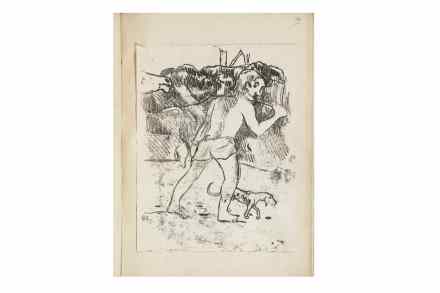
‘This is not a book,’ is the first line of Paul Gauguin’s final memoir, Avant et Après, written on Hiva Oa in the Marquesas Islands in 1903 a couple of months before his death aged 54 from syphilitic heart disease. In his dedication to the critic André Fontainas he describes the manuscript as ‘born of solitude and savagery — idle tales of a naughty child who sometimes reflects and is always a lover of the beautiful’. Fontainas failed to find a publisher as Gauguin had hoped, and although a facsimile appeared in 1918 it wasn’t until 1923 that the artist’s eldest son Émile had the memoir published in an English translation.

How crazy was Louis Wain?

From our UK edition

Before Tom Kitten, before Felix the Cat, before Thomas ‘Tom’ Cat, Sylvester James Pussycat Sr, Top Cat and Fat Freddy’s Cat, there were the cats of Louis Wain. The Wain cat came in a variety of breeds and colours: black and white, tabby, marmalade, white and blue (sky blue rather than Persian). But it always had the same disconcerting look in its wide, glassy eyes with the dilated pupils. It looked bombed out of its tiny mind. The original Wain cat was a black-and-white kitten called Peter belonging to a young late-Victorian magazine illustrator and his sick wife. In 1884 the 24-year-old Louis Wain had married his sisters’ governess, Emily Richardson, only for his new wife to fall ill with breast cancer.

The frisky side of a classical master: National Gallery’s Poussin and the Dance reviewed

From our UK edition

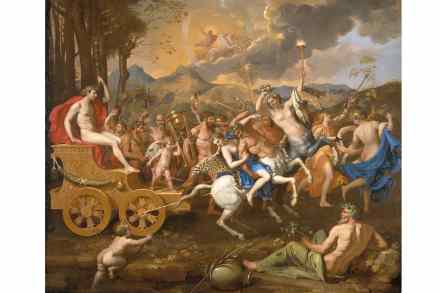
In the winter of 1861, visitors to the Louvre might have seen a young artist painstakingly copying one of the museum’s 39 paintings by Poussin. The subject was ‘The Abduction of the Sabine Women’ and the artist was the 27-year-old Edgar Degas, then at work on his own classical battle of the sexes, ‘Young Spartans’. Although lumped with the impressionists, Degas was a classicist at heart. ‘The masters must be copied over and over again,’ he believed, ‘and it is only after proving yourself a good copyist that you should reasonably be permitted to draw a radish from nature.’ A dedicated copyist himself, Poussin would have approved.

The genius of Frans Hals

From our UK edition

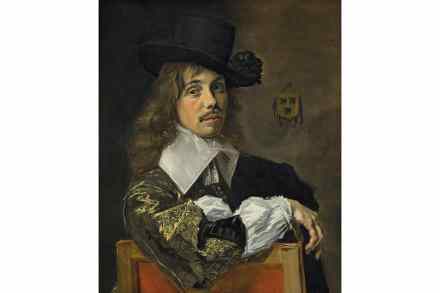
Since art auctions were invented, they have served to hype artists’ prices. It can happen during an artist’s lifetime — Jeff Koons’s ‘Balloon Dog’ — or half a millennium after their death — Leonardo’s ‘Salvator Mundi’. And it can sometimes restore a lost reputation, as happened with Frans Hals. When the picture now famous as ‘The Laughing Cavalier’ came up for auction in Paris in 1865, Hals was all but forgotten. A successful portraitist in his lifetime, he never made much money — with a wife and at least ten children, he remained a renter throughout his career — and after his death his reputation, overshadowed by Rembrandt’s, was tarnished by claims that he was a piss artist.

The art of the pillbox

From our UK edition

When Oscar Wilde famously claimed: ‘All art is quite useless’, he may not have had artistic subjects in mind. But it’s certainly true that since the Romantic era, artists have had a special affection for the superannuated. An image of an abandoned building with some sort of past, not necessarily glorious, appeals to our emotions, be it Rachel Whiteread’s ‘House’ or Constable’s ‘Hadleigh Castle’. Even ephemera pre-loved by strangers evoke nostalgia when incorporated in the shadow boxes of Joseph Cornell or the assemblages of Peter Blake. But what about things that are not just obsolete but have never had any use at all? That’s the curious question prompted by a new exhibition at Bodmin Keep, Cornwall’s Army Museum.

The magical art of boxer, labourer & sometime gravedigger Eric Tucker

From our UK edition

Artists’ estates can be a curse on a family. The painter dies, leaving the house stuffed with unsold canvases. What to do? If he or she has a dealer, they will drip-feed work on to the market with varying degrees of success. If the artist is famous there’s no problem; any unsold work will be fought over. If middlingly successful, shifting it can be a slog. But if unsuccessful — better still, completely unknown — the equation changes. When the art market discovers a ‘secret artist’, their estate acquires the cachet of a hoard. Such a hoard came to light three years ago in the Warrington home of former boxer, unskilled labourer and sometime gravedigger Eric Tucker.

Covid has been great for drawing

From our UK edition

Amid the greatly exaggerated reports of the death of painting issued and reissued over the course of the past century, nobody thought to check on the health of drawing, perhaps because what artists did in the privacy of their own studios was considered to be no one else’s business. Drawing wasn’t a saleable commodity. Yes, Hockney’s portrait drawings attracted admiration, but most artists kept their scribbles to themselves. Then about 20 years ago, just after Saatchi’s 1997 Sensation exhibition seemed to have consigned all traditional art forms to the bin of history, it was noticed that drawing was alive and, if not kicking, showing unmistakable signs of continued health.

How has this complete original been sidelined?

From our UK edition

A party of disorderly couples has gatecrashed the Picture Gallery at Bath’s Holburne Museum, climbing on to the antique furniture, hanging off the track lighting and sprawling on the floor, putting the noses of the resident Gainsboroughs, Constables and Zoffanys out of joint. Lawks-a-mercy! What has come over the Holburne? A passel of Mrs & Mrs Popes, that’s what: 36 years’ worth, to be precise. Nicholas Pope carved his first married couple from sliver-thin Forest of Dean stone in 1978 in homage to Van Eyck’s ‘Arnolfini Portrait’. At the time, this young minimalist contemporary of Antony Gormley, Richard Deacon and Tony Cragg was on the up and up: in 1980, aged 31, he would represent Britain at the Venice Biennale.

Why is the smoky, febrile art of Marcelle Hanselaar so little known?

From our UK edition

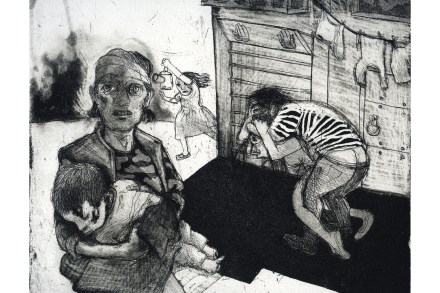
I first became aware of the work of Marcelle Hanselaar in a mixed exhibition at the Millinery Works in Islington. All I remember now about the show, and my review, is that I said she could teach Paula Rego to suck eggs. From the mischievous energy packed into her small figurative paintings I assumed she was young enough to be Rego’s granddaughter. That was in 2003; she was pushing 60. Born in Rotterdam in 1945, Hanselaar is essentially self-taught. She dropped out of art school in The Hague — it was the 1960s — and ran away to Amsterdam; what she learned about painting she picked up from the artists she lived with.

These rediscovered drawings by Hokusai are extraordinary

From our UK edition

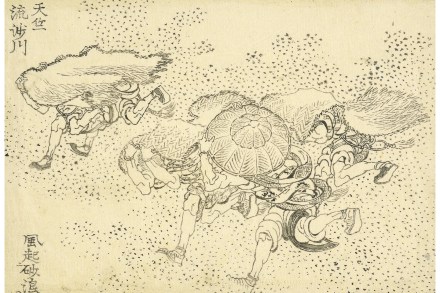
Lost boys, lost women, lost civilisations, lost causes — the romantic ring of the word ‘lost’ is media gold. So when the British Museum announced last autumn that it had acquired 103 ‘lost’ drawings by Hokusai, one was tempted to take it with a large pinch of salt. How do 103 drawings by Japan’s most famous artist simply disappear? The answer is, surprisingly easily. Hokusai’s works have never commanded the sorts of prices a draughtsman of his calibre would be expected to fetch, not even in Japan. His art was designed to be affordable: in his day, you could buy a print of ‘The Great Wave’ for the price of a double portion of noodles — and still stretch, if you were lucky, to a side order of ‘A High Wind of Yeijiri’.

Meet the woman who designed Britain’s revolutionary road signs

From our UK edition

‘Design. Humanity’s best friend,’ proclaims a row of posters outside the Design Museum. ‘It’s the alarm that woke you up… The card you tapped on the bus… And the words you’re reading right now. So embedded in our lives we almost forget it’s there.’ It is one of the ironies of good design that the better it is, the less we notice it. This is especially true when we really need it: when lost in an airport five minutes before the gate closes or battling helplessly down the wrong road. In these instances, the woman we invariably have to thank for helping us to find our bearings is currently the subject of an overdue tribute at the Design Museum.

A high-end car-boot sale of the unconscious: Colnaghi’s Dreamsongs reviewed

From our UK edition

In 1772 the 15-year-old Mozart wrote a one-act opera set, like The Magic Flute, in a dream world. Il sogno di Scipione was based on an account in Cicero’s Republic of a dream experienced by the Roman general Scipio Aemilianus while serving in North Africa in 148 BC. In the dream the younger Scipio is visited by his adoptive grandfather Scipio Africanus, who foretells his destruction of Carthage, dishes out advice on dealing with populist politics and shows him ‘the stars such as we have never seen them from this earth’. Scipio’s is a recurring dream: it inspired Dante’s vision of Heaven and Hell and it returns to haunt us in Colnaghi’s latest exhibition Dreamsongs.

The mediums who pioneered abstract art

From our UK edition

In the 1850s Britain was hit by an epidemic likened by The Illustrated London News to a ‘grippe or the cholera morbus’. It came from America rather than China and afflicted the mind rather than the body. The craze for table-turning was sparked in Hydesville, New York, in 1848 after two young sisters, Maggie and Kate Fox, claimed to hear mysterious rappings in the floor of the family home and attributed them to a spirit called Mr Splitfoot. Epidemics are by nature democratic, respecting neither education nor class. Eminent naturalists, scientists, novelists and social reformers were gripped by the grippe. When unseen forces such as electromagnetic waves were being discovered, who was to say they might not include channels for communication with the dead?

Imagine being married to Stanley Spencer

From our UK edition

It sometimes rains in Cookham. It rained all day when I visited the Stanley Spencer Gallery to see the exhibition Love, Art, Loss: The Wives of Stanley Spencer. But it rarely rained for Spencer, or at least never in his pictures of his hallowed birthplace, where even when skies are grey the red brick of the houses is warmed by the eternal summer sun of childhood. Not in the winter of 1937, though. That winter saw the 46-year-old artist rattling around his seven-bed family home, divorced from first wife Hilda Carline and separated from second wife Patricia Preece, painting pictures of grotesquely ill-matched couples who seemed unaccountably happier than him.

Figurative painting is back – but how good is any of it?

From our UK edition

An oxymoron is a clever gambit in an exhibition title. The Whitechapel Gallery’s Radical Figures: Painting in the New Millennium is designed to trigger the reaction: ‘Radical? Figures?’ before revealing quite how radical the figure can be. But like all good marketing, it is deceptive. Figurative art may have been consigned to history by Clement Greenberg 80 years ago, but history since — neo-romanticism, school of London, neo-expressionism — has repeatedly proved him wrong. The ten painters in this exhibition aren’t a school: the only thing their work has in common is its statement-making scale.