Lara Prendergast

Lara Prendergast

Lara Prendergast is executive editor of The Spectator. She hosts two Spectator podcasts, The Edition and Table Talk, and edits The Spectator’s food and drink coverage.

Don’t ambush parents with activism

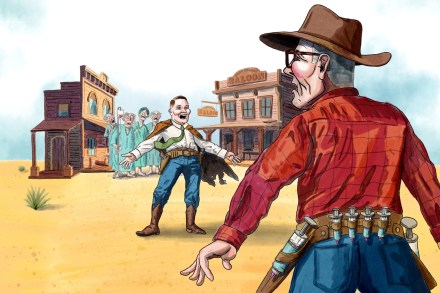
As we sat down at the Royal Opera House to watch one of the Royal Ballet’s soloists perform Letter to Tchaikovsky, an announcement began. ‘Tchaikovsky is understood to have been a gay man, who was forced by the conventions of society to marry a woman,’ explained an earnest female voice from off-stage. ‘The music, words and dance describe the pain and guilt he experienced as a closeted queer person… but like many others before and since, the fact that he was queer meant that he had to stay secret about who he really was… It is still illegal to be gay or queer in 69 countries, and queer people continue to face discrimination or violence all over the world, including here in Britain.

How twee triumphed, Graham Brady on Tory turmoil & celebrating pigs in blankets

37 min listen

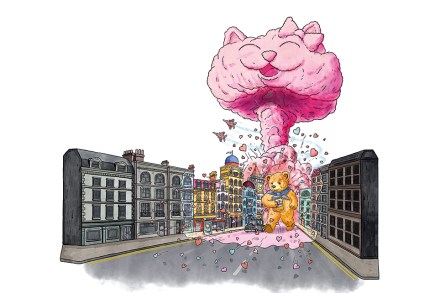
This week: are we drowning in a sea of twee? Gareth Roberts writes the cover article this week, arguing against what he sees as the hideous triviality of our times. ‘The British have lost their aversion to glutinous sentimentality,’ he declares. How did we get here, and who are the worst offenders? Gareth argues that the triumph of twee has left us unable to face serious things with seriousness. Could there be sinister consequences if we don’t take this more seriously? Gareth joined the podcast to make his case, alongside Josh Cohen, psychoanalyst and author of All The Rage (00:49). Then: was Graham Brady the ‘kingmaker’ or the ‘kingslayer’ of the past Tory era? The shadow cabinet member and Conservative M.P.

With Richard Madeley

28 min listen

Richard Madeley is a presenter, author and journalist who has been on our screens since the 1980s, most notably presenting This Morning with his wife Judy and more recently on Good Morning Britain. On the podcast, he discusses his early memories of Heinz tomato soup, implores Lara and Liv to try 'tuna casserole' – his mother’s speciality made from tinned tuna, canned soup and crisps – and makes the case for fish paste as the 'food of the gods'.

SAS betrayal, the battle for Odesa & in defence of film flops

48 min listen

This week: SAS SOS The enemy that most concerns Britain’s elite military unit isn’t the IRA, the Taliban or Isis, but a phalanx of lawyers armed with the European Convention on Human Rights (ECHR), writes Paul Wood in The Spectator. Many SAS soldiers now believe that if they kill a terrorist during an operation, they’ll spend decades being hounded through the courts. Paul speaks to former SAS soldiers who say that stories of men being ‘dragged back to be screamed at in interview rooms’ are ‘flying around the canteens now’. Soldiers feel like ‘the good guys have become the bad guys – and the bad guys are now the good guys’. This is hurting morale and may eventually hit recruitment.

Streeting vs Starmer, medical misinformation & the surprising history of phallic graffiti

43 min listen

This week: Wild Wes. Ahead of next week’s vote on whether to legalise assisted dying, Health Secretary Wes Streeting is causing trouble for Keir Starmer, writes Katy Balls in the magazine this week. Starmer has been clear that he doesn’t want government ministers to be too outspoken on the issue ahead of a free vote in Parliament. But Streeting’s opposition is well-known. How much of a headache is this for Starmer? And does this speak to wider ambitions that Wes might have? Katy joins the podcast to discuss, alongside Labour MP Steve Race. Steve explains why he plans to vote in favour of the change in the law next week (00:57). Then: how concerned should we be about medical misinformation? President-elect Donald Trump has announced vaccine sceptic Robert F. Kennedy Jr.

Paris

Catching my breath in Paris

From our US edition

September felt like a long month — and I needed to escape London. The Spectator had just been sold — and while the transition from one editor to another brought excitement, it was also exhausting for everyone. Paris felt like the perfect retreat. And of course, the Eurostar is the fastest — and most enjoyable — way to get there from London. A friend of mine lives near the Gare du Nord, and as she was in London for a night, I borrowed her keys, jumped on the train and arrived in Paris as evening fell. Alone and hungry, I made my way to Les Deux Gares, a stylish hotel nestled between Gare du Nord and Gare de l’Est. Designed by Luke Edward Hall, whose aesthetic is unmistakably English, the restaurant inside is quintessentially French — and superb.

With Julian Metcalfe, founder of Itsu

28 min listen

Julian Metcalfe is a British entrepreneur and one of the most influential individuals on the London high street. He revolutionised the grab-and-go lunchtime food industry in 1986 by co-founding Pret and did the same again in 1997 when he commercialised Japanese cuisine with the first Itsu. On the podcast, he tells Liv and Lara about the influence of his Ukrainian mother; why he decided to start Itsu, in many ways a competitor to Pret; what he thinks is the future of the grab-and-go industry; and why uni is the ultimate comfort food.

Elon’s America, Welby’s legacy & celebrating Beaujolais Day

45 min listen

This week: welcome to Planet Elon. We knew that he would likely be a big part of Donald Trump’s second term, so it was unsurprising when this week Elon Musk was named – alongside entrepreneur Vivek Ramaswamy – as a co-leader of the new US Department of Government Efficiency, which will look at federal government waste. When Musk took over Twitter, he fired swathes of employees whose work was actively harming the company, so he’s in a perfect position to turn his sights on the bloated federal government. It is, writes Douglas Murray, a once-in-a-generation opportunity to strip a whole layer of rot from the body politic. But can he translate his success in the private sector to the public sector?

Trump’s comeback, Labour’s rural divide, and World of Warcraft

37 min listen

This week: King of the HillYou can’t ignore what could be the political comeback of the century: Donald Trump’s remarkable win in this week’s US election. The magazine this week carries analysis about why Trump won, and why the Democrats lost, from Freddy Gray, Niall Ferguson and Yascha Mounk, amongst others. To make sense of how Trump became only the second President in history to win non-consecutive terms, we’re joined by the journalist Jacqueline Sweet and Cliff Young, president of polling at Ipsos (00:58).Next: is Labour blind to rural communities? The changes to inheritance tax for farmers are one of the measures from Labour’s budget that has attracted the most attention.

With Terry Wiggins, Parliament Chef

18 min listen

Terry Wiggins is a chef who led the catering team at Westminster’s Portcullis House. During his time, he served 13 prime ministers and received an MBE for services to Parliament. He has recently retired. On the podcast, Terry reminisces about 50 years of service in Parliament, reveals some of the weirdest requests he has received and gives the inside scoop on the eating habits of some of the House of Commons’ most recognisable names.

Team Trump, astrologers versus pollsters & debating history

43 min listen

This week: Team Trump – who’s in, and who’s out? To understand Trumpworld you need to appreciate it’s a family affair, writes Freddy Gray in the magazine this week. For instance, it was 18-year-old Barron Trump who persuaded his father to do a series of long ‘bro-casts’ with online male influencers such as Joe Rogan. In 2016, Donald’s son-in-law Jared Kushner was the reigning prince; this year, he has been largely out of the picture. Which family figures are helping Trump run things this time around, and which groups hold the most influence? Freddy joins the podcast alongside economics editor Kate Andrews. What are the most important personnel decisions facing Trump if he wins next week? (0:58).Next: do astrologers predict elections better than pollsters?

Cambridge in crisis, Trump’s wicked humour & the beauty of AI ceramics

53 min listen

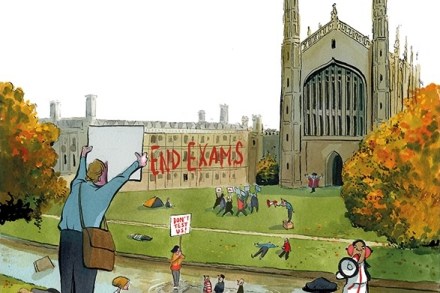
This week: Decline and Fall – how our greatest universities are betraying students.Our greatest universities are betraying students, writes David Butterfield, who has just resigned from teaching Classics at Cambridge after 21 years. What went wrong? First, class lists of exam results became private, under alleged grounds of ‘data protection’, which snuffed out much of the competitive spirit of the university. Now even the fate of examinations hangs in the balance. Grade inflation is rampant, and it is now unheard of for students to be sent down for insufficient academic performance. For students, the risks have never been lower.

Could AI lead to a revival of decorative beauty?

In front of me is what appears to be an authentic Delft tile. The surface of the tile is mottled, and painted on to it is a picture of a man. The blue tones blur and fade into the edges. Delicate brush strokes are visible if you peer closely. It looks as though it were made many years ago. Except it wasn’t. It was designed this morning by artificial intelligence and created in a small factory near Stoke-on-Trent, using some of the most advanced printing technology available. ‘Josiah Wedgwood would have loved what we are doing… I suspect William Morris would have hated it,’ says Adam Davies, the co-founder of the company creating these tiles.

With Tim Spector

27 min listen

Tim Spector is a leading professor of genetic epidemiology at King’s College London and a renowned expert in nutrition, gut health, and the microbiome. He is the founder of the Zoe Project, which focuses on personalised nutrition and how individual responses to food impact health. His new book, The Food for Life Cookbook, is out now. On the podcast, he tells Lara about his time growing up in Australia, how a skiing accident changed his view on nutrition, and why ham-flavoured crisps are his guilty pleasure. Produced by Oscar Edmondson and Joe Bedell-Brill. Click here for tickets to our Americano live event, with Nigel Farage.

Reeves’s gambit, a debate on assisted dying & queer life in postwar Britain

52 min listen

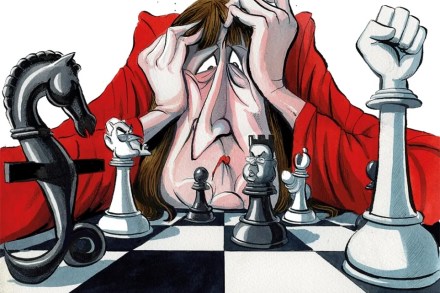
This week: the Chancellor’s Budget dilemma. ‘As a former championship chess player, Rachel Reeves must know that the first few moves can be some of the most important of the game,’ writes Rupert Harrison – former chief of staff to George Osborne – for the cover of the magazine this week. But, he says, the truth is that she has played herself into a corner ahead of this month's Budget, with her room for manoeuvre dramatically limited by a series of rash decisions. Her biggest problem is that she has repeatedly ruled out increases in income tax, national insurance and VAT. So which taxes will rise, given that the easy options have been ruled out? The answers appear to be evolving rapidly when ministers are confronted with the OBR’s harsh reality.

Labour’s China pivot, Yvette Cooper’s extremism crackdown & the ladies who punch

48 min listen

Successive governments have struggled with how to deal with China, balancing them as a geopolitical rival yet necessary trade partner. Recent moves from Labour have sent mixed signals, from the free speech act to the return of the Chagos Islands. Further decisions loom on the horizon. As Rachel Reeves seeks some economic wiggle room, can Labour resist the lure of the Chinese market? The Spectator’s Katy Balls, and visiting fellow at the European Council on Foreign Relations (ECFR) James Crabtree, join the podcast to discuss further (02:05). Plus: as the first issue under The Spectator’s new editor Michael Gove, what are his reflections as he succeeds Fraser Nelson? He reads an excerpt from his diary (19:05).

With Claire Dinhut

26 min listen

Claire Dinhut is known to thousands on social media as CondimentClaire. Raised in a European household in Los Angeles, her upbringing and her background studying history have influenced her other passion, for cooking. Her book The Condiment Book: a brilliantly flavourful guide to food's unsung heroes is out now. On the podcast, Claire tells hosts Lara Prendergast and Olivia Potts about how Anthony Bourdain was her inspiration, the impact of covid on her career, and her French and Greek culinary influences. She also answers important questions such as: should we pair branston pickle with avocado; is cereal a soup; and what's the deal with pumpkin spice? Produced by Oscar Edmondson and Patrick Gibbons.

Israel’s revenge, farewell Fraser & the demise of invitations

37 min listen

This week: Israel’s revenge and Iran’s humiliation. As the anniversary of the October 7th attacks by Hamas approaches, the crisis in the Middle East has only widened. Israel has sent troops into southern Lebanon and there have been attempted missile strikes from the Houthi rebels in Yemen and from Iran. Is there any way the situation can de-escalate? And how could Israel respond to Iran? Former BBC foreign correspondent Paul Wood and defence and security research Dr Limor Simhony join the podcast (1:03). Next: it’s the end of an era for The Spectator. This issue is Fraser Nelson’s last as he hands over the reins to Michael Gove. Having spent 15 years as editor, with 784  issues to his name, what are his reflections on his time here at 22 Old Queen Street?

With Charlie Bigham

31 min listen

Charlie Bigham founded his eponymous ready to cook meals over 25 years ago. Having left a career as a management consultant, his company has gone on to report annual sales in the tens of millions, with a focus on ‘creating delicious dishes for people who love proper food’. His first cookbook ‘Supper with Charlie Bigham’ is out now.    On the podcast, Charlie tells hosts Lara Prendergast and Olivia Potts about recovering from ‘revolting’ school food, the difference between packaged meals and ready meals, and how he views cooking as alchemy. Produced by Oscar Edmondson and Patrick Gibbons.

Farage’s plan, the ethics of euthanasia & Xi’s football failure

45 min listen

This week: Nigel’s next target. What’s Reform UK’s plan to take on Labour? Reform UK surpassed expectations at the general election to win 5 MPs. This includes James McMurdock, who Katy interviews for the magazine this week, who only decided to stand at the last moment. How much threat could Reform pose and why has Farage done so well? Katy joins the podcast to discuss, alongside Jovan Owusu-Nepaul, who fought Nigel Farage as the Labour candidate for Clacton (1:02). Next: who determines the morality of euthanasia? Matthew Hall recounts the experience of his aunt opting for the procedure in Canada, saying it ‘horrified’ him but ‘was also chillingly seductive’. Does Canada provide the model for the rest of the world? Or should we all be worried of where this could lead?