Lara Prendergast

Lara Prendergast

Lara Prendergast is executive editor of The Spectator. She hosts two Spectator podcasts, The Edition and Table Talk, and edits The Spectator’s food and drink coverage.

The Tories aren’t too white. They’re too blue

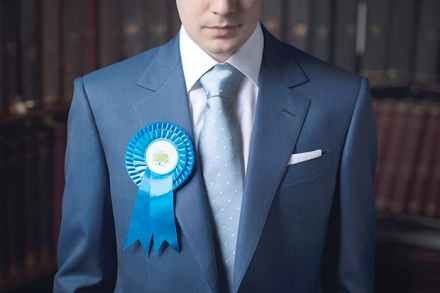
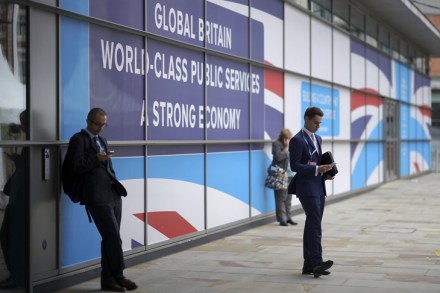
Why do Tories all look the same? This year, having never been to a party conference before, I went to the Labour one in Brighton, then the Tory one in Manchester. At each, the political weather was what you’d expect. What struck me most, however, was the difference in clothing. In Brighton, I saw women with pink hair and men wearing T-shirts that read ‘Stop the war’ or ‘Never kissed a Tory’; scruffy young Corbynistas rubbing up against nervous-looking Blairites. At the Conservative conference, there was only one tribe — and its uniform was a bland blue suit. I expected to find a mix of styles as at the Labour convention.

The sinister power of family courts

It’s right that some children are taken into care. One case in point is that of Ayeeshia-Jayne Smith, the toddler who was stamped to death by her violent young mother in 2014. She was known to social services for all of her short life, from the point when her pregnant mother was found living in a garage, but she was never removed. This week, a serious case review found that social workers ‘missed the danger signs’. Danger signs. A nebulous phrase with numerous interpretations. In tragic cases like this one, the danger signs are ignored, possibly because it is tempting for social workers to avoid dealing with the most aggressive and confrontational families.

The Chloe Ayling story masks slavery’s sad truth

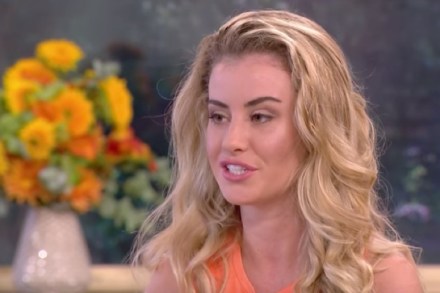
Do you believe Chloe Ayling? She is the 20-year-old glamour model whose dramatic story has been all over the newspapers throughout August. She claims to have been lured to a fake photoshoot in Italy, injected with ketamine, stuffed inside a suitcase and shoved into the boot of a car. So far, so just about credible. But the story becomes ever more bizarre. Ayling says she was then driven to a farmhouse, where she was threatened with being sold via an online auction as a sex slave to a man in the Middle East, who – we must assume – has a taste for busty blonde British babes. Not only was he willing to stump up £273,000; he was also prepared to ‘feed her to tigers when he became bored’. In a thrilling twist, Ayling then apparently managed to charm her captor.

Snobbery in the age of social media

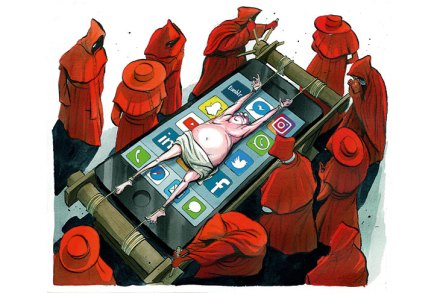
We like to think we have moved on from the age of snobbery. Judging others by birth or status, or at least being seen to, is the height of rudeness, and just not very cool. But English snobbery is in fact as potent as before — and possibly even more insidious. Among my age group of twentysomethings, it is rife. Our elders might think of us as fiercely egalitarian, and in some ways that’s true. We aren’t as obviously obsessed with class. But we’ve found sneakier ways of being snobs. It starts with social media. Everyone has an online profile, and that has created a new generation of ultra snobs, who lurk behind their phones watching their peers, noting subtle differences. I do it and I know many of my friends do too.

Why must I have a view on everything?

At a party earlier this summer, I was chatting to a man who asked me how I voted in last year’s EU referendum. I don’t see why anybody asks that question more than a year on, and I don’t see why anyone should be expected to answer. There is no faster way to sour a perfectly fine evening. Whatever you say, you risk causing offence, so why bother? I told the man I preferred not to say, and that I still don’t really know what I think about Brexit. He appeared put out by my reluctance — as if I was the one being rude. Before long he made his excuses and moved on. I find myself in that situation more and more in social encounters — skirting round questions in order to avoid an embarrassing argument only to find I’ve caused more awkwardness.

Harry Potter and the millennial mind

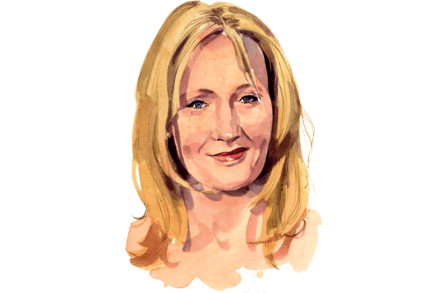
Which Hogwarts house would you be in? There are four options, and everybody fits into one. The brave and chivalrous are put in Gryffindor. Patient and loyal types head to Hufflepuff. Ravenclaw is for the witty and intelligent. The cunning and ambitious — and potentially evil — are destined for Slytherin. In the Harry Potter books, a pugnacious talking hat, known as the ‘Sorting Hat’, carries out the selection. If you are like me and under 35, you probably didn’t need that explaining. Almost every young person who can read has read Harry Potter — 450 million copies have been sold worldwide. Not to do so was an act of rebellion. On Monday, fans will celebrate the 20th anniversary of the first book’s publication — two decades on and J.K.

Theresa May’s mistake? Putting style over substance

There are many lessons to learn from the utter calamity of the general election, but here is just one: be cautious of any politician who asks you to judge their ideas via their clothes. Theresa May did – and it should have been a warning sign. As she discussed 'boy jobs and girl jobs' on The One Show, she wore pearls and a tweed jacket, to keep the Daily Mail happy. The election was announced, business-like, in a blue-and-white pinstriped power suit. She appeared in Vogue – her favourite magazine – wearing expensive leather trousers, then spent the following weeks having to defend the decision. The chainmail necklace became her talisman throughout the campaign. Then there were the shoes. So many shoes. Kitten-heeled.

Fashion is about change – and British Vogue’s first male editor is exactly that

After months of speculation, Alexandra Shulman's successor at British Vogue has finally been announced. And in what may come as a shock to Samantha Cameron - who recently launched a new fashion line, and whose sister Emily Sheffield was hotly tipped for the role - the job has gone to someone cut from slightly different cloth. In fact, the powers that be at Condé Nast have gone for something quite radical: British Vogue now has its first black, male editor.   There will be plenty of people annoyed by Edward Enninful's appointment. Some will believe that editing Vogue is a woman's job - and that giving it to a man is a step in the wrong direction.

Israel Notebook | 16 March 2017

On the Israeli side of the Syrian border, near al-Quneitra, you can watch the war. From my vantage point on the hill, I see a town held by Jabhat al-Nusra and another held by Nusra’s enemy, Bashar al-Assad’s regime. Behind a hill in the distance, I’m told by my Israeli guide, is an area controlled by Isis. Near a road blockade, a sign reads ‘Mortal Danger. Any person who passes endangers his life’ — a point reinforced by the rumble of mortars exploding and the screams that follow. I’ve never heard anything like it. The photographer I’m with is braver than me, or perhaps more foolish. He ventures past the sign for a better view. Almost instantly, a sniper in the distance starts firing in his direction. We both panic and leg it back to our bus.

Needle time

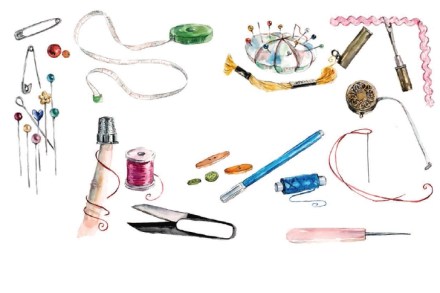
The intern stood up from his desk and the button popped off his trousers. He walked over to me and asked what he should do. I suggested he stitch it back on. He said he didn’t know how, so I offered to do it for him – but he declined. Instead, he spent the whole day walking round the office with a paperclip holding his trousers up. The next day he came in and told us he had bought a new pair. Had nobody taught this young man to sew on a button? It’s the sort of simple task that everyone should know how to do. It takes 20 minutes to learn, yet it is knowledge that will last a lifetime. So why not arm young people with as much information like this as possible? How to cook lunch. How to wash clothes. How to iron. These were once seen as feminine activities.

It’s all too personal

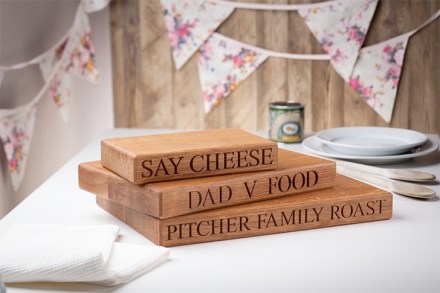
When I was little I owned a set of pencils that had my name engraved on them. I didn’t have anything else with ‘Lara Prendergast’ on it other than my school uniform. The pencils seemed so rare and precious that I tried not to use them. The other day I found one stored away, the lead still sharp. Personalised pencils aren’t too rare any more. In fact, stationery sits at the most mundane end of the personalisation spectrum. These days you can have your name on pretty much anything you buy. Personalised swings. Personalised bird feeders. A personalised ‘selfie’ toaster, which singes a picture of your face on to every piece of bread. Personalised tennis balls and horse saddles. Or a personalised quiver for your personalised arrows, perhaps.

The ‘clean eating’ gurus are now repenting – but the damage has been done

Ella Mills, née Woodward - aka 'Deliciously Ella' - was on Radio 4 this morning discussing 'clean eating'. Many will know her as one of the main advocates of this fashionable nutritional advice, even though she now says she doesn't like to use the phrase 'clean'. Her best-selling book suggested that food could be used as medicine and could help cure illness. In August 2015, Isabel Hardman and I looked at the cult of clean eating in The Spectator. It had all the elements of a classic cult - devotees, a life-changing, inspirational message, a distinct lack of evidence to back up any of it - and now, it seems, even its most prominent priestesses are starting to repent. Mills's book became one the fastest-selling debut cookbooks of all time.

Italy: I’ve got Rome on repeat

My year was topped and tailed with trips to Rome. In March, as the blossom unfurled along the Tiber and the city’s churches prepared for Easter, I met four girlfriends from university, one of whom was working as a chef for the Rome Sustainable Food Project based at the American Academy. Then, in late November, I went back by myself and stayed at the Villa Spalletti Trivelli. It’s hard to say which was more pleasurable; Rome is Rome in every season. In spring, we all crammed ourselves into a bedsit in an old pasta factory in the fashionable Trastevere district.

Will feminists be kind to Melania Trump?

It was a race between the first dude — Bill — and the first nude — Melania. And in the end, the first nude won, appearing next to her husband in the early hours wearing a white jumpsuit straight out of Charlie’s Angels. It may seem unfair to judge Mrs Trump so early on, but judged she will be. She awaits her turn, just as Hillary Clinton once did. How will she fare? Well, liberal American voters will want targets, and she looks like one. People are already making jokes about Michelle Obama writing Melania’s first speech, to save her the trouble of plagiarising again. There is so much for her to live up to. She must be as elegant as Jacqueline Kennedy; as eloquent as Mrs Obama; as astute as Nancy Reagan; as political as Hillary Clinton.

The new first lady

It was a race between the first dude — Bill — and the first nude — Melania. And in the end, the first nude won, appearing next to her husband in the early hours wearing a white jumpsuit straight out of Charlie’s Angels. It may seem unfair to judge Mrs Trump so early on, but judged she will be. She awaits her turn, just as Hillary Clinton once did. How will she fare? Well, liberal American voters will want targets, and she looks like one. People are already making jokes about Michelle Obama writing Melania’s first speech, to save her the trouble of plagiarising again. There is so much for her to live up to. She must be as elegant as Jacqueline Kennedy; as eloquent as Mrs Obama; as astute as Nancy Reagan; as political as Hillary Clinton.

Notes on California

The mood in California was apologetic. Most people we met seemed embarrassed that their country’s dirty laundry was being aired quite so publicly. Hillary or the Donald? It will have to be Hillary, they sighed. Few seemed stirred by the prospect, but it was hard to avoid the subject. In Half Moon Bay in San Mateo county, we stayed at the Ritz-Carlton, perched on top of the cliffs. While salty mist drifted across the Pacific and pods of whales floated by, the second presidential TV debate rumbled on in the hotel bar. As the two candidates sparred, guests tut-tutted over their gin fizzes and tried not to look entertained. It was pumpkin season and the fields were dotted with swollen, pimply gourds.

Unhappy Pill

A study came out last week that should have caused great alarm. For 13 years, researchers at the University of Copenhagen studied more than a million women between the ages of 15 and 34 who were taking a type of drug — one that is popular in all developed countries. Taking this drug, the researchers found, correlated with an increase in the risk of depression. The correlation was particularly strong in adolescent girls, who showed an 80 per cent higher chance of being diagnosed with depression. Usually when a story about women’s health and depression breaks, a phalanx of activists and campaigners pop up all over the media to ‘raise awareness’ of the issue.

Nigel Farage says farewell: ‘We brought down a prime minister’

Nigel Farage has just delivered his speech at Ukip conference, in which he declared that he had put 'absolutely all of me' into Britain leaving the EU. 'I literally couldn't have worked any harder, or couldn't have been more determined - it's been my life's work to get to this point. I want my country back, but now folks I want my life back,' he said. He went onto claim that Ukip had 'changed the course of British history' and suggested that the party had 'brought down a prime minister' and had 'got rid of a chancellor'. On Theresa May's premiership, he suggested there was a 'great political battle ahead', before raising concerns that she might go for a 'soft Brexit'. Farage then couldn't resist taking a swipe at Douglas Carswell, his party's only MP.

‘I have become their voice’

When the model and actress Anastasia Lin was crowned Miss World Canada last year, a fairly easy and lucrative career lay in front of her: magazine shoots, sponsorship opportunities and being paid to turn up to parties. She instead decided to use her position to confront the Chinese Communist party and call out its human rights abuses. Her new film The Bleeding Edge is a feature-length dramatisation about the organ trade in China. It might not be in a cinema near you soon, but it does screen in the House of Commons next week, in front of MPs and peers. And this is the audience that 26-year-old Lin is seeking. Her website has the slogan ‘beauty with a purpose’, and Lin has both in abundance. Speaking from Toronto before her visit here, she tells me her unlikely story.

Heads in the cloud

The Spectator podcast: Listen to Isabel Hardman, Lara Prendergast, Charlotte Jee, Editor of Techworld, and Professor Martin Conway, head of psychology at City University discuss the memory gap. Ask me what I had for lunch yesterday and I couldn’t tell you. Names disappear as swiftly as smoke. Birthdays, capital cities, phone numbers — the types of facts that used to come so readily — are no longer forthcoming. I’m 26, yet I feel I have the memory of a 70-year-old. My brain is a port through which details pass, but don’t stay. I’m not alone. Many young people feel our memories have been shot to pieces. It’s the embarrassing secret of my generation. We can hardly recall a thing.