Kunwar Khuldune Shahid

Kunwar Khuldune Shahid is a Pakistan-based correspondent for The Diplomat

China is the latest victim of Pakistan’s Islamist problem

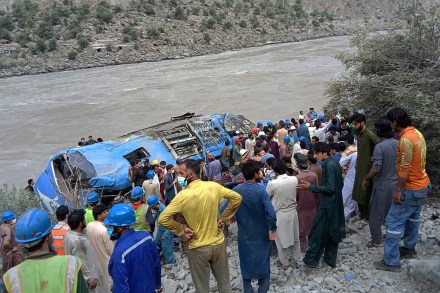
Nine Chinese engineers were killed in an explosion near Pakistan’s Dasu hydroelectric dam last Wednesday. The government initially said that their bus suffered a ‘mechanical failure’ after it plunged into a ravine, but officials eventually admitted that the incident was a terror attack after Beijing decided to send its own investigators. China has now postponed work on the $65 billion (£47 billion) China Pakistan Economic Corridor, a network of roads and infrastructure projects. The programme represents Beijing’s largest overseas investment and is a critical part of its Belt and Road Initiative.

Nigeria’s abduction epidemic and the silence of the West

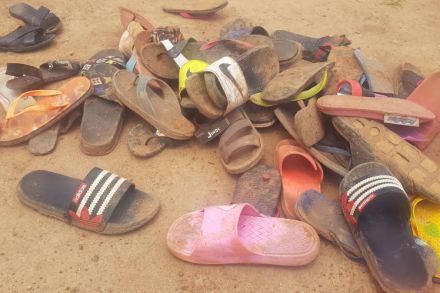
Every day, more and more children are going missing in Nigeria. At least 140 schoolchildren were kidnapped in Nigeria’s northwestern Kaduna city yesterday. A day earlier, another eight people – including two nurses and an infant – were abducted in Zaria, around 50 miles north of Kaduna. This marked the fourth attack on a Kaduna state school and the third on a Zaria hospital in the past five months. Over 1,000 schoolchildren have now been kidnapped in Nigeria since December; around 200 of them are still missing. Yet the international condemnation has been muted.

Austria’s ‘Islam map’ is dangerous

Austria's government has unveiled a map detailing the locations of mosques and other Muslim associations all over the country. The publication has been swiftly condemned by Austrian Muslim groups, including the Muslim Youth Organisation which announced a lawsuit in response. But Austria's government is so far refusing to back down.  The ‘Islam map’ is a project of the government-backed Political Islam Documentation Centre and the University of Vienna. The map has been designed ostensibly in response to growing Islamist radicalism in Austria, especially in the aftermath of November’s Vienna shooting. It marks a continuation of chancellor Sebastian Kurz’s self-proclaimed fight against ‘political Islam’.

Boko Haram’s demise will only strengthen Isis in Africa

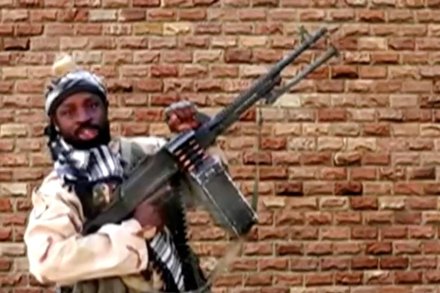
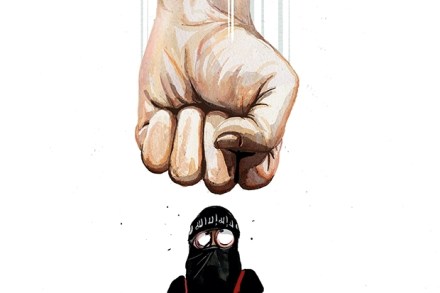
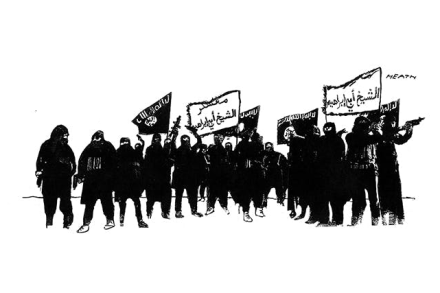
Multiple reports have confirmed that the Boko Haram chief Abubakar Shekau is dead. Shekau’s demise came after Boko Haram last week clashed with Isis in Sambisa forest in northeast Nigeria. Some reports suggested that the Boko Haram leader detonated a suicide vest rather than be captured by the Isis militants. Isis’s West African Province (ISWAP) is often characterised as being under the Boko Haram umbrella, but the two factions have become deadly rivals in the region. And with terror engulfing the continent, along with the rise of an African Islamic State, it is Isis that is now the beneficiary of Shekau’s death.

Imran Khan’s dangerous bid to export Pakistan’s blasphemy laws

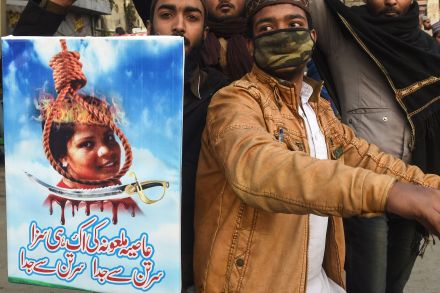
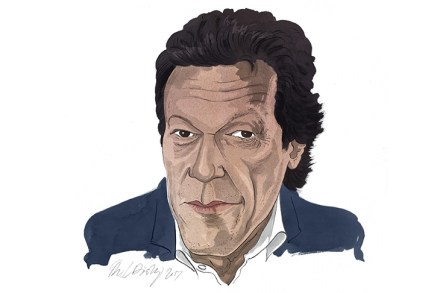
Imran Khan appears to want to impose Islamic blasphemy laws across the world. ‘I want the Muslim countries to devise a joint line of action over the blasphemy issue with a warning of trade boycott of countries where such incidents will happen,’ Khan said in an address on Monday. Last week, talking up his plan to launch a global movement, and his love for Islam’s prophet, Khan warned, ‘There will come a time when people in the West as well will be scared of blaspheming against our prophet (peace be upon him)’. The Pakistani premier’s rejuvenated bid to outlaw blasphemy against Islam came after he succumbed to the demands of proscribed radical Islamist group, Tehrik-e-Labbaik Pakistan (TLP), which Khan’s own government had banned.

Richard Dawkins is an ally to the oppressed

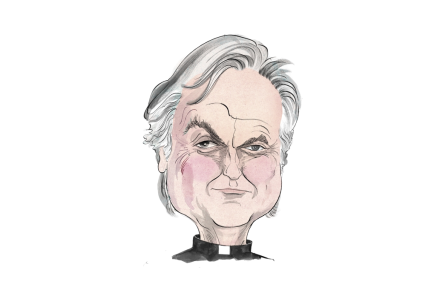
Richard Dawkins is no longer a humanist. At least, not one that deserves to be honoured as such, according to the American Humanist Association (AHA), which excommunicated him from the Humanist of the Year award last week. The fatwa issued by the AHA, which generously includes ‘critical thinking’ in a list of its own Ten Commitments, accused the evolutionary biologist of ‘demean[ing] marginalized groups’ when he asked his Twitter followers to ‘discuss’ the vilification of critics of transgender theory. Proponents of the new blasphemy codes have seemingly forgotten the decades of humanist work in favour of free speech.

India’s selective Covid crackdown

India's Covid crisis is raging out of control. Over the past two months, the country has witnessed a staggering ten-fold increase in infections. On Monday alone, 259,167 cases were reported. And there are fears the true infection rate might be much higher. Yet India's government is turning a blind eye to certain religious festivals which may be fuelling the problem. In recent days, millions of Hindu devotees have thronged the banks of the river Ganges for a dip in the water to commemorate the Kumbh Mela festival. The second and third Shahi Snan (holy bath) last week coincided with hundreds of Hindu pilgrims testing positive for Covid-19, as India recorded its highest spike since the start of the pandemic.

Imran Khan’s cowardly response to Pakistan’s rape crisis

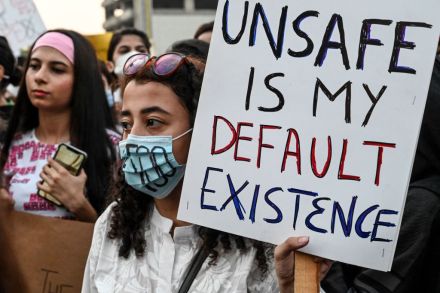
Pakistan's prime minister Imran Khan has once again blamed women for an appalling rise in rape cases. Khan used a televised question and answer session this week to say that sexual violence was a result of 'increasing obscenity'. Women in Pakistan should remove 'temptation' because 'not everyone has willpower', he added, urging females to cover up to help reduce the sexual violence which has plagued our country. Khan pointed the finger of blame at Bollywood and Hollywood, for spreading ‘vulgarity’. He also repeated the growing divorce tally of the UK as evidence of the ‘ethical plunge’ of the West, which he said is messing up the moral compass of the Muslim world and Pakistan.

How terror took over the African continent

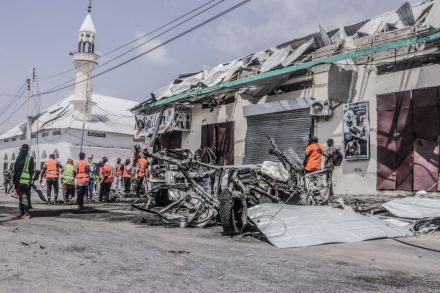
Eight law enforcement officials, including three policemen and five members of a local anti-jihadist force, were killed in a jihadist attack in Burkina Faso on Tuesday. Jihadist raids on two military bases in Somalia, using suicide car bombers, killed 23 on Saturday. On Friday, South Africa decided to deploy its troops in bordering Mozambique, days after Islamist militants took over the town of Palma, killing dozens of locals and forcing thousands to flee. The past week is only a sample of the jihadist peril currently engulfing Africa. These terror attacks reaffirm the growing strength of the world’s deadliest jihadist groups, including al-Shabaab, Isis, al-Qaeda, Boko Haram and their affiliates.

Bangladesh could pay for failing to crack down on its Islamist threat

Bangladesh turned 50 last week and the country has much to celebrate. Having inherited a dismal GDP growth rate of -14 at its birth in 1971, Bangladesh's most recent figures for the growth in the size of its economy (7.8 per cent) edged out India (6.1 per cent), and comfortably outdid Pakistan (5.8 per cent). Bangladesh overtook India in per capita income last year. And of the 14 World Development Indicators measured by the World Bank – including fertility rate and life expectancy – Bangladesh is faring better than Pakistan in all but one (air pollution), and outranking India in seven. The country's life expectancy average of 72.3 is ahead of the two South Asian nuclear powers; and poverty rates have also tumbled dramatically since the country's inception.

The triumph of Bangladesh’s third gender

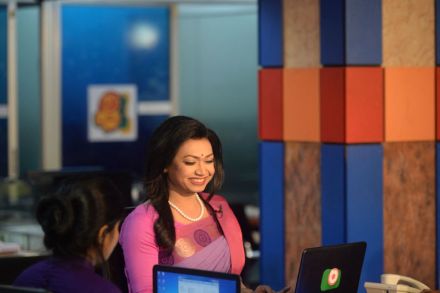
Tashnuva Anan Shishir last week became the first transgender person to read the news on Bangladeshi TV. The 29-year-old broke down in tears, overtaken by the momentous occasion, after delivering her first three-minute bulletin on March 8. Shishir reached this milestone after facing years of marginalisation, bullying and sexual assaults. A 2015 study of the media’s coverage of the transgender movement in Bangladesh underlines the mountains of prejudice that Shishir has had to overcome. She now hopes that other transgender people in Bangladesh won’t have to suffer anymore. Transgender people in Bangladesh have made small strides recently in their uphill battle to achieve basic human rights in a society largely intolerant of their community.

Are Switzerland and France really ‘Islamophobic’?

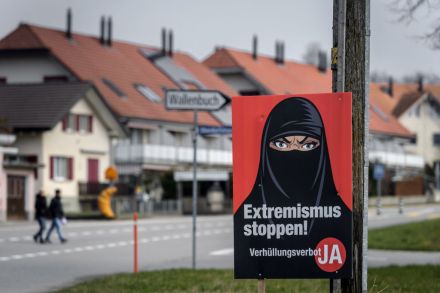
Is Switzerland 'Islamophobic'? Critics of the country's decision to outlaw face coverings think so. The 'Burqa ban', which passed into law this week as a result of a narrow vote in a referendum, applies to any form of face covering in a public gathering, unless worn for health reasons, at religious congregations, or carnivals. The legislation is not, at least directly, aimed at Muslims. And, what's more, very few Swiss Muslims wear a burqa or niqab: almost no-one in Switzerland wears a burka and only around 30 women wear the niqab, according to research by the University of Lucerne. But the condemnation has nonetheless been swift. It was 'a dark day' for Muslims, the Central Council of Muslims in Switzerland has said.

Indonesia’s mandatory hijab ban is a triumph for women

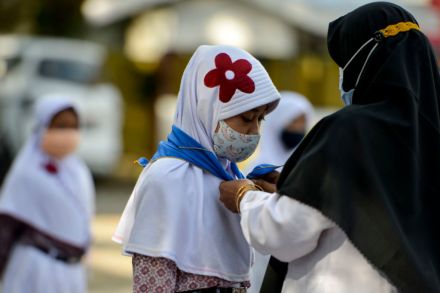
Last week, Indonesia banned schools across the country from forcing girls to wear the hijab, after the parents of a 16-year-old Christian schoolgirl uploaded a video of their daughter being forced to wear the headscarf in Padang, in West Sumatra. According to the Education Minister, schools that now fail to comply with the order will face sanctions. Before the ban, around 20 of Indonesia’s 34 provinces had mandated religious attire for female students and teachers in public schools. Millions of women in Indonesia, including non-Muslim minorities, have had to wear the hijab, with those who refuse facing intimidation and the possibility of expulsion. Public schools in Indonesia have now been given a month to change their policies.

When will Pakistan take a stand against terror?

Last week, Pakistan’s Supreme Court ordered the release of UK born Ahmed Omar Saeed Sheikh who was accused of kidnapping and beheading the Wall Street Journal reporter Daniel Pearl. The verdict came after Sindh High Court overturned the death penalty for Sheikh and three alleged abettors last year, ruling that there was insufficient evidence to find them guilty of murder and stating that they had served their sentence for their role in the kidnapping. The decision has outraged Washington, with Joe Biden’s new State Department chief Antony Blinken dubbing it an ‘affront to terrorism victims everywhere’ and announcing his readiness to prosecute Sheikh in the US.

The empty promise of Turkey’s charm offensive

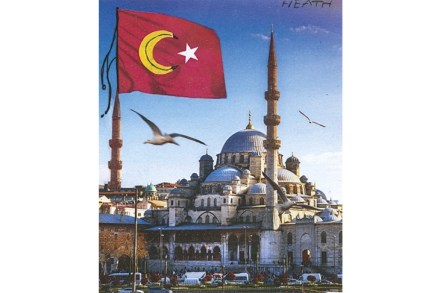
On Thursday, Turkey Foreign Minister Mevlüt Çavuşoğlu will land in Brussels to meet with European Union officials to start to ‘build Turkey’s future in Europe’. Next week, Turkey is expected to resume talks with Greece to resolve their maritime disputes after a five-year hiatus. The clash in the eastern Mediterranean between Ankara and Athens has brought the two states to the brink of war and is one of a long list of reasons why Turkey has so far failed to ‘build’ that ‘future in Europe’.

Are we witnessing the birth of an African Islamic State?

On Monday, 13 soldiers were killed by the Islamic State in northeastern Nigeria. A week ago, just after midnight on Friday morning, a Boko Haram suicide bomber blew up 14 villagers in northern Cameroon. These attacks — passing us by, as they do, in a stream of news and information — are becoming increasingly common in the beleaguered states of West Africa.  At the end of last year, Islamists kidnapped 344 schoolboys in an apparent ransom attempt. While the raid saw a continuation of Boko Haram’s strategy (in 2014 the group kidnapped 276 schoolgirls, to global condemnation) it marked a change in the terror group’s ambitions.

Islam must adopt the Moroccan model

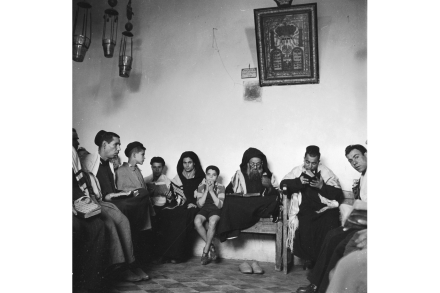
After becoming the latest Arab state to formalise ties with Israel, the fourth in as many months, Morocco has gone a step further; it will start teaching Jewish history as part of the school curriculum. Morocco is now the first modern Arabic state to embrace its tradition of religious pluralism — a pluralism that has over the decades faded into mono-cultural Sunni Islam. Over the last 70 years, the number of Jews living in Morocco has fallen from half a million to just 2,000. In January, Moroccan King Mohammed VI visited a Jewish museum and synagogue in Essaouira to celebrate the country’s pluralistic past as well as the Moroccan monarch’s recent attempts to restore Jewish heritage sites.

Imran Khan’s rape crackdown won’t make Pakistan safer for women

Rapists in Pakistan will soon face a stark choice. Under a law backed by the country's prime minister, Imran Khan, those convicted of rape can either be chemically castrated, face life imprisonment or even a death sentence. But while the new law sounds radical, it's unlikely it will be enough to curb the wave of sex attacks against women in Pakistan. The tough measures have been painted as something of a compromise by Khan, who has said those found guilty of sex attacks should be hanged in public. Dismissing this as an option, Khan said introducing such a punishment would 'not be internationally acceptable'. 'The trade status given to us by the European Union will be affected,' he added.

Could Saudia Arabia and Pakistan soon recognise Israel?

Mohammed bin Salman and Benjamin Netanyahu's meeting – albeit denied by Riyadh – shows it is surely only a matter of time before Saudi Arabia and Israel formalise their covert relations.  Israel’s recent peace deals with Bahrain and the UAE could not have materialised without Saudi backing. MBS is also arm-twisting Pakistan to help ‘normalise normalisation’ by extending the Muslim world’s recognition of Israel to South Asia. Such political manoeuvrings are not isolated; they are accompanied by religious rationale for Muslim-majority states to establish relations with the Jewish state.

Pakistan’s fight with Macron has taken a humiliating turn

The war of words between Pakistan and France – sparked by president Macron's comments about radical Islam – rumbles on. But the latest skirmish has led to an embarrassing climbdown from one of Pakistan's top politicians. 'Macron is doing to Muslims what the Nazis did to the Jews – Muslim children will get ID numbers (other children won’t) just as Jews were forced to wear the yellow star on their clothing for identification,' wrote Pakistan's federal minister for human rights Shireen Mazari. Mazari's tweet was quickly picked up by those who have suggested there is something sinister to Macron's recent interventions. But there was a problem: it was nonsense. France soon hit back, calling out Mazari’s 'fake news'.