Kristina Murkett

Kristina Murkett is an English teacher, private tutor and journalist

In defence of ‘free’ breakfast clubs

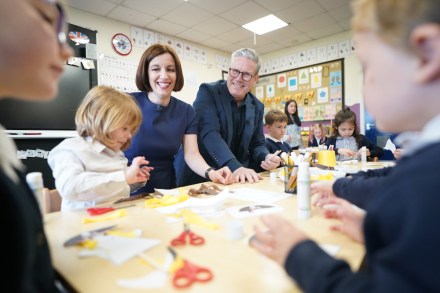
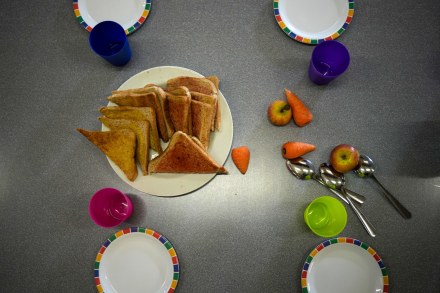
This week the government has started rolling out their free breakfast club scheme, which will be trialled in 750 primary schools until July. The initiative – which, as many are quick to point out, is not actually free but funded by the taxpayer – will cost around £30 million. However, many headteachers have warned of a funding shortfall as the basic rate is just 60p per meal per day (with an additional 78p per pupil per day added based on the proportion of free school meal pupils at the school). When I first heard about the proposal in Labour’s manifesto, I did my usual teacher eye-roll. I thought: here is yet another abdication of parental responsibility, yet another demand placed on overburdened schools, yet another example of state overreach.
The teachers’ union should be on the side of private schools

The National Education Union has accused private schools of exploiting staff to save money. ‘Staff working in the private education sector,’ said Daniel Kebede, general secretary of the NEU, ‘report that workload is being increased… in response to the cost-of-living crisis and increased cost of VAT and national insurance.’  It is of course true that private schools are under more financial pressure than ever, and are making cost-cutting decisions that may add to teachers’ workload: one in five private school teachers say they have had colleagues made redundant since VAT on school fees was introduced, while 26 per cent say that their school has frozen recruitment.

There’s an obvious reason pre-school children are falling behind

Something is rotten in the state of British schools. According to primary school teachers, one in four Reception students are not toilet trained, more than a third cannot dress themselves, and half cannot sit still. Children are missing a range of developmental milestones, increasingly demonstrating poor language skills, delays in basic motor functions, and a lack of core strength (there are stories of perfectly able-bodied children not knowing how to use stairs or hold a pencil). Now a government-backed website, Starting Reception, has been created by a collaboration of early-years and education organisations to help define ‘school-readiness’.

Fixing free childcare would be an easy win for Labour

Parents of young children should be happy: since September 2024, those with an income of less than £100,000 a year have been eligible for 15 hours of free childcare a week once their child is nine months old. From September this year, that will increase to 30 hours a week.  However, once again, it seems that the government has promised the moon but in realiy only paid for a small asteroid. Nurseries claim that the scheme is financially unsustainable because the funding was set before significant rises in their costs as a result of Rachel Reeves’ budget. Increases to national insurance payments and the minimum wage mean that the sector will now be paying 11 per cent more in wages and staffing costs from April, or about £2,000-2,500 per staff member.

In defence of single-sex schools

When I first became a teacher, I bought into the notion that single-sex schools were an anachronism – a result of historical happenstance that no longer had a place in the 21st century. I imagined all-boys schools as a macho world of Spartan dormitories and testosterone-charged classrooms. I assumed the boys graduated with repressed memories of traumatic hazing rituals and an unhealthy amount of anxiety around girls. Then, after two exhausting years teaching English at a mixed comprehensive, I moved to an all-boys independent school to see what it was like. I enjoyed it so much that when I moved from London to Oxford, I decided to teach at another (although my current one is co-ed at sixth form).

Strict schools are sapping the joy out of learning

When it comes to behaviour policies, schools have fallen into two extremes. Across the border in Scotland, schools practise ‘restorative justice’: a relationships-based, non-punitive approach that favours constructive conversations over traditional sanctions. On the flip side, academies across England are adopting an authoritarian, zero-tolerance approach, where detentions are given for minor infractions and routines are enforced with military precision. Yesterday, one school in Harlow hit the headlines for giving detentions to top set pupils who score less than 90 per cent in maths tests: another controversial academy policy flown under the banner of ‘high expectations’. Being educated is not about giving up joy but finding joy in new things Clearly, the latter works.

How The Traitors betrayed itself

January can only mean one thing: The Traitors is back. For those of you who haven’t been initiated into this cloaks-and-daggers drama, the premise is simple: the traitors attempt to remove players by ‘murdering’ them, while the faithfuls try to work out who the traitors are. Each night the group votes someone off after a round-table discussion. It’s real-life Cluedo, with extra high-camp theatrics – hooded robes, crossed-out portraits, handwritten messages, crocodile tears and croissants in the breakfast room – all under the watchful fringe of Claudia Winkleman. The show lives and dies on the likeability of its cast and their relationships The first two series were an unexpected success.

The problem with ‘diversifying’ the curriculum 

As an English teacher, one of my favourite poems to teach, to pupils of almost all ages, is Chinua Achebe’s ‘Vultures’. In the poem, the speaker describes various images that uncomfortably combine love and violence: a vulture picking apart a corpse before nestling up to its mate; a Commandant at Belsen buying chocolate for his children whilst the ‘fumes of human roast… cling rebelliously to his nostrils’. I choose to teach it not because Achebe is black, or because I am trying to decolonise my teaching, but because it asks fundamental questions about human nature and the universal duality of good and evil, something which transcends race, sex or class.

Labour’s axing of Latin lessons is an act of cultural vandalism

The Labour government seems determined to undermine excellence in schools. The Department for Education has announced that from February it will be terminating its Latin Excellence Programme, which taught Latin to over 5,000 pupils, as part of a cost-saving measure. The cutback comes a month after an external review suggested ‘middle-class bias’ should be removed from the curriculum and that ‘high-brow pursuits’, such as ‘visits to museums, theatres and art galleries’, might be replaced with more ‘relatable’ activities such as graffiti workshops.

The hypocrisy of Labour’s plan to solve youth unemployment

The government has today announced a £45 million work drive, with proposed changes to the welfare and out-of-work support systems, in a bid to get more people back in work and off benefits. In particular, the government has said that it wants to tackle the statistic that one in eight young people aged between 18 and 24 not currently in employment, education or training. It plans to do so by offering skills training to teenagers with institutions such as the Premier League, Royal Shakespeare Company and Channel 4. There is no doubt that we need to get young people earning or learning again. Over three quarters of a million young people are not studying, working, or looking for a job – an increase of 48 per cent in just two years.

Labour’s exam reforms make some sense

In an address to 1,500 school and academy trust leaders, Education Secretary Bridget Phillipson last week asked schools to stop focusing solely on exam results. She said the government would not have a ‘tunnel vision’ on academic success, but ‘widen our ambition’ to give students a ‘sense of wellbeing and belonging’. On the surface this seems like a worthy sentiment: it is true that too many schools now simply teach to the test at the cost of a more holistic experience, and the GCSE treadmill means that schools inevitably fixate on getting cohorts of 16-year-olds through the eye of a very narrow scholastic needle.

Royal Mail is a right royal mess

Benjamin Franklin famously said that there are only two certainties in life: death, and taxes. It turns out there is a third: Royal Mail not delivering post on time. I live in East Oxford, where Royal Mail has not met its target of delivering 91.5 per cent of all first-class mail by the next working day in over five years. The reality is much worse than that: my OX4 postcode seems to only receive letters somewhere between once every two weeks and once a month. This can be a minor inconvenience (it is a bit surreal receiving birthday cards in June when your birthday is in May), or it can be an administrative headache, like the time we received notification that our resident parking permit was about to expire weeks after it actually had.

Remaking Harry Potter is risky

Few franchises have the cult-like devotion of Harry Potter. One only has to watch the video of hordes of adults counting down the arrival of the Hogwarts Express at King’s Cross, and their fury when it didn’t arrive, to understand the religious fervour people feel for the wizarding world. Yet one announcement did come last which, one that will send shivers down the spine of every magic-loving millennial super-fan. HBO has launched a casting call for its new Harry Potter series. Even the teaser trailer makes it clear the creative chokehold the series is in I am sure this is exciting news for some: mainly pushy parents who are already prepping their little darlings on how to pronounce ‘wingardium leviosa’, ready for the ultimate vicarious thespian high.

Labour’s term-time holiday crackdown won’t work

In the bestselling book Freakonomics, the authors Stephen J. Dubner and Steven Levitt outline an experiment which involved fining parents who were late to pick up their children from daycare centres. Somewhat counter-intuitively, the financial penalty only made late pick-ups worse; the parents felt less guilty for the teachers they were delaying, and most parents were prepared to pay the price because they decided it was still worth being late. This experiment demonstrated the limit of economic incentives without other social motivations: something which seems very timely as we return to the debate around whether parents should be fined for taking their children on holiday during term-time. For Education Secretary Bridget Phillipson, the answer is a resounding ‘yes’.

The UK’s phone signal is infuriatingly poor

As I have been driving across England’s green and pleasant land visiting friends and family this summer, I discovered that the UK’s phone signal is really, really terrible. I expected poor connectivity on coastal paths in Cornwall, but everywhere I went I experienced problems: network dropouts as I tried to navigate the M1, recurrent outages as I tried to work remotely from Sussex, endless loading and buffering screens (even though my phone promised me 4G) regardless of whether I was in London or the Lake District. The signal in a friend’s home in south east London is so terrible you would think we were trying to beam through the Great Pyramid of Giza. I have had more reliable phone service on safari in Tanzania than I have on Great Western Rail.

The problem with compulsory GCSE resits

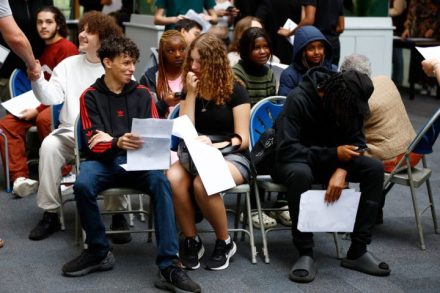
This morning, students up and down across the country will anxiously open up their GCSE results, with local papers publishing photos of glowing over-achievers and other heartwarming success stories. The national media will, in all likelihood, focus on the number of top grades, and how this fits into recent trends concerning grade inflation as exam boards try to re-stabilise results post-Covid.  Yet this hyper-fixation on the number of 7s, 8s and 9s (the equivalent to an old-style A or A*) means we tend to overlook something much more important: the long tail of underachievement in England.

Male violence does not take place in a vacuum

There have been lots of reasons to be optimistic this summer: the glorious spectacle of the Olympics; the (relatively) good weather; the Bank of England finally cutting interest rates amid falling inflation. Yet this summer has also seen a pernicious epidemic of violence, hate and prejudice. I’m not talking about the right-wing riots, but the numerous acts of violence against women and girls. Over the last month or so, we have witnessed too many chilling reminders that we have a problem with men who hate women, and that politicians have no idea what to do about this.  It started in July: Carol Hunt and her daughters Hannah and Louise were brutally murdered in their home, execution-style with a crossbow.

Can we really teach children to spot fake news?

As part of the ongoing review into the primary and secondary school curriculum, Education Secretary Bridget Phillipson has announced that children in England will be taught how to spot misinformation and extremist content online, so that students can arm themselves against ‘putrid conspiracy theories’. In the wake of weeks of rioting, with children as young as 12 and 13 now in court for their involvement, this announcement seems like a sensible idea, but it is not necessarily a straightforward one. You simply cannot embed critical thinking without establishing a firm foundation of factual understanding first Children and teenagers are excellent targets for fake news, but they are notoriously bad at spotting it.

Labour’s private school VAT raid will stunt social mobility

Following the announcement of Rachel Reeves' spending cuts on Monday, the Treasury confirmed that VAT will be applied to private school fees from January 2025. Although the debate on whether to charge this tax on private schools has raged for months, this is still earlier than most of the sector expected. ‘Anti-forestalling’ measures will be introduced so that any advance payments for the January term are, from this week, also taxed. This means parents can no longer avoid the extra 20 per cent by paying fees upfront. Perhaps most importantly, Treasury documents have also confirmed that ministers expect the new tax to drive some private school parents to the state sector: the first time Labour has acknowledged this in writing.

Don’t let Netflix ruin Lost

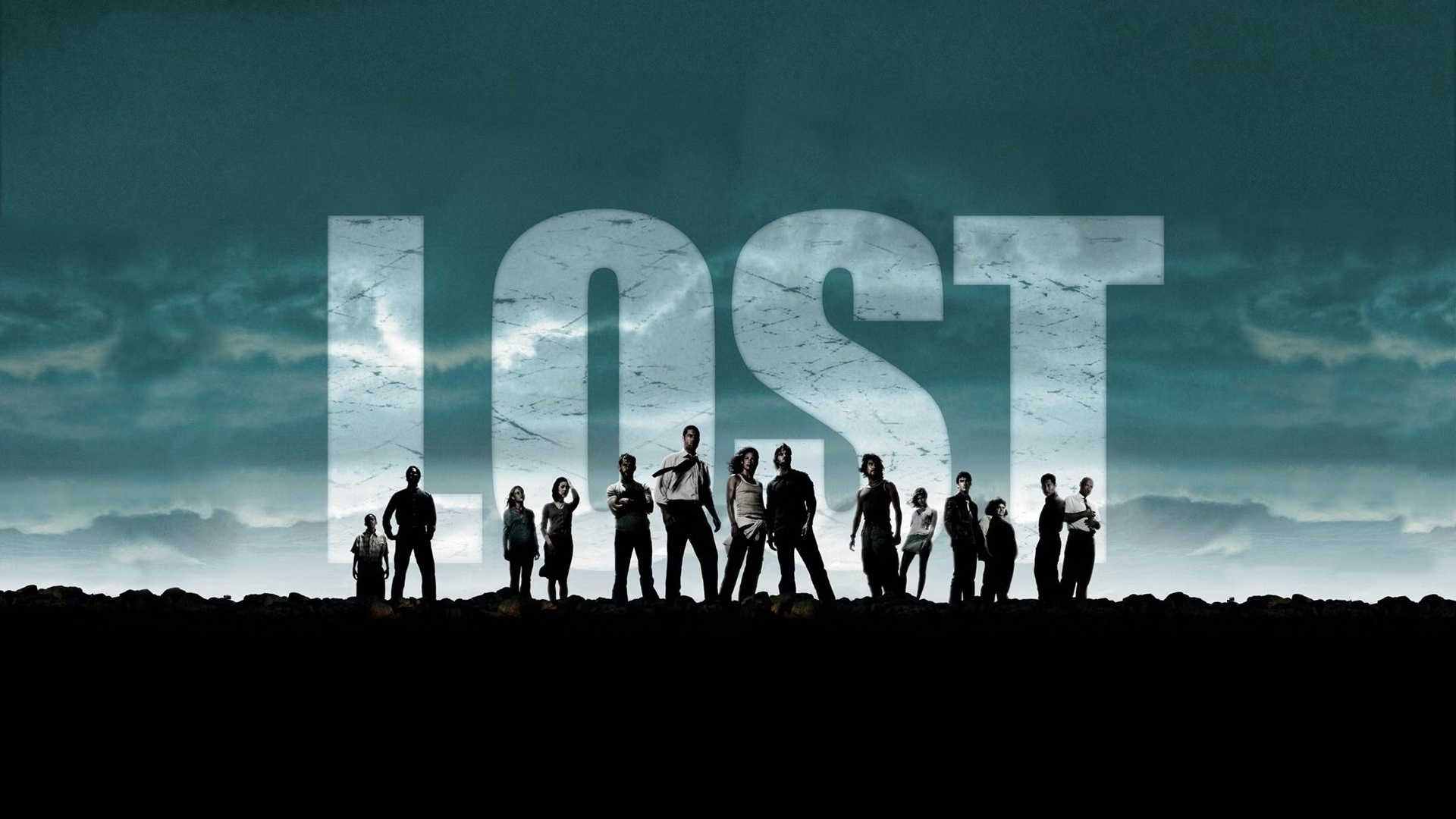
It’s July 2024, and Netflix has decided we have to go back. In honour of the 20th anniversary of the pilot, all six series of Lost have been uploaded to Netflix in the US, and now younger audiences get to experience one of the biggest pop culture obsessions of the noughties for the first time. This character-driven, mythologically-rich, Emmy-winning existential island adventure was once so popular (it averaged between 11 and 18 million viewers a series) that the White House pledged not to disrupt the final season’s premiere with President Barack Obama’s State of the Union address. I even loved the notoriously divisive finale, which didn’t necessarily resolve many of the metaphysical mysteries I am, and always have been, a Lost super-fan.