Katy Balls

Katy Balls

Katy Balls is The Spectator’s former political editor.

Will Boris vote on the NI protocol?

11 min listen

A look ahead to next week where MPs will vote on parts of the Northern Ireland Protocol. What would a win look like for the government? The vote has been conveniently placed on the same day Boris Johnson is already in parliament for the privileges committee hearing. The lone rebel of the protocol will have to put his money where his mouth is – which way will he vote? Natasha Feroze speaks to Fraser Nelson and Katy Balls.

The Ash Regan Edition

33 min listen

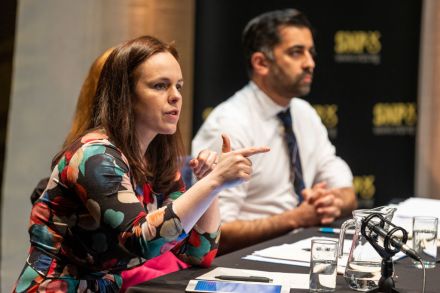
Ash Regan is the MSP for East Edinburgh who has served as minister for community safety. Since Nicola Sturgeon’s resignation, she has put herself forward to be the next First Minister for Scotland. Born in Biggar, Ash moved to England as a child and grew up in Devon. She surprised her family during the referendum for Scottish Independence, deciding she would vote to leave.  Ash began her foray into politics as a campaigner before running for elected office. She was little known outside of the Holyrood bubble until she quit as community safety minister over plans to allow people to self-identify their gender.

Are NHS strikes about to end?

11 min listen

The day after Jeremy Hunt's Spring Budget has been fairly muted compared to recent Budget hangovers. What has been the overall reaction? On the global markets, Kate Andrews looks at the international response after Credit Suisse shares fell by more than 30 per cent yesterday. And what's behind today's breakthrough in negotiations between NHS Unions and ministers? Natasha Feroze speaks to Katy Balls and Kate Andrews.

Budget special: what did we learn?

15 min listen

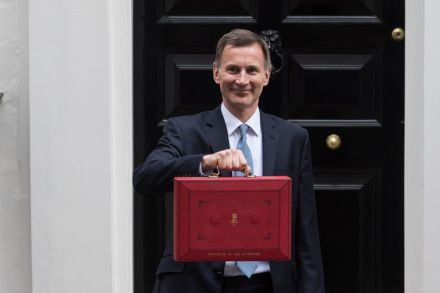
Jeremy Hunt, the Chancellor has unveiled his spring Budget, which was accompanied by forecasts predicting that the UK will avoid recession this year and that inflation will drop to below 3 per cent by the end of the year. But do the measures go far enough? Katy Balls speaks to Kate Andrews and Fraser Nelson.

Budget 2023: Restraint now, reward later?

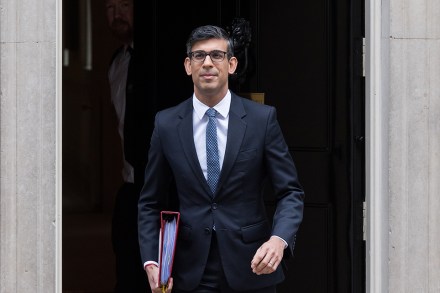
The paradox of Rishi Sunak’s premiership is that even though he became Prime Minister because of the economy, it’s the issue on which many of his party disagree with him the most. He resigned as chancellor not because of partygate but because his fiscal conservatism was ‘fundamentally too different’ to Boris Johnson’s stance on the economy – tax less, borrow more. He lost the leadership contest last summer after he played down the prospect of imminent tax cuts. MPs flocked to his rival Liz Truss and only when her experiment imploded was he asked to clean up the mess.

Is the SNP establishment worried by Forbes?

15 min listen

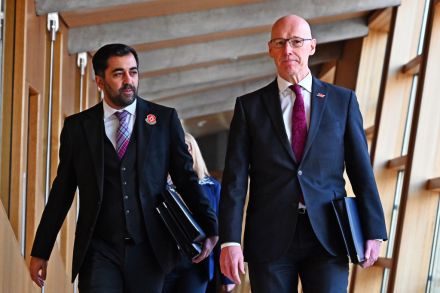
After a tumultuous two weeks, voting is now open for the SNP leadership elections until 27 March. But are members any closer to knowing who they’ll vote for? The deputy first minister of the SNP, John Swinney has backed Humza Yousaf to be SNP leader. What could be seen as an influential endorsement by some, can also be a sign that the Yousaf campaign is worried things are tighter than hoped.  Michael Simmons speaks to Katy Balls and Alex Massie.

Has small boats united the Tories?

10 min listen

MPs voted through the second reading of the Illegal Migration bill last night with a 62-vote majority. There was a handful of Tory MPs that abstained from voting but importantly, despite threats of a rebellion, no Conservative MPs voted against it. Seen as an election-winning issue, is this a rare sign of unity from the party? Also on the podcast, Katy Balls and James Heale take a look ahead at the Budget tomorrow.

Small boats bill sails through parliament

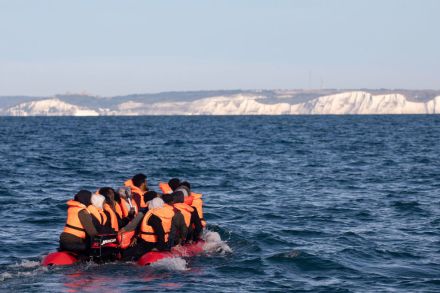
When No. 10 first planned the illegal migration bill – to stop those who enter the UK illegally from claiming asylum – the hope was that it would act as a unifying force within the Tory party. In a sign that the strategy is bearing fruit, the legislation passed its second reading late on Monday, with a majority of 62, with 312 ayes to 250 noes. Not one Tory MP voted against the bill - with critics opting to abstain instead. The Labour amendment to decline to approve the second reading failed at 249 ayes to 312 noes. Yet the debate before the vote wasn’t all plain-sailing for the government. Former prime minister Theresa May went on the offensive – arguing that ‘anybody who thinks that this bill deal with the issue of illegal migration once and for all is wrong’.

Is Rishi right about China?

16 min listen

Today Rishi Sunak's diplomacy is taking centre stage. He is currently in San Diego for talks with President Biden and the government has just released its refreshed Integrated Review, which includes strengthened language on China, the Russia-Ukraine war and science and tech. Cindy Yu speaks to Katy Balls and Sophia Gaston, head of foreign policy at the think tank Policy Exchange.  Produced by Cindy Yu and Oscar Edmondson.

Does the triumph of Gary Lineker spell disaster for the BBC?

10 min listen

Two stories dominated the news agenda over the weekend, one concerning a household name and the other involving a bank which – before Sunday – few had heard of. What is the political significance of Gary Lineker's row with the BBC? And after the fall of Silicon Valley Bank, are we heading for a regional banking crisis?  Cindy Yu speaks to Katy Balls and Kate Andrews. Produced by Cindy Yu and Oscar Edmondson.

Rishi Sunak tries to defuse the Gary Lineker row

Any hopes in No. 10 that Rishi Sunak’s French charm offensive with Emmanuel Macron would dominate the weekend papers were dashed when the BBC announced on Friday that Gary Lineker had been asked to ‘step back’ from presenting Match of the Day. This decision came after a tweet by Lineker where he compared the language used by the government with regards to its new Illegal Migration Bill – to stop those who arrive illegally claiming asylum – to the language ‘used by Germany in the 30s’. The BBC initially suggested there would be no disciplinary action but changed tack following further comments from the presenter on the issue.  Since that announcement, the BBC has faced a series of setbacks over its sports coverage.

Should Sunak block Boris Johnson’s honours list?

12 min listen

Boris Johnson is reportedly cutting the number of names on his honours list from 100 to 60 (still much higher than the average honours list for former prime ministers). This is a Tory sleaze scandal in the making, so should Rishi Sunak think about blocking it? Or could the reminder of Johnson's flaws actually help the Sunak premiership? James Heale discusses with Katy Balls and Fraser Nelson. Produced by Cindy Yu and Kevin Swartwood.

The problem with Boris’s honours list

There are plenty of Boris Johnson hangovers to give Rishi Sunak a headache these days. The privileges committee investigation into whether the former prime minister misled parliament will soon be in full swing. This doesn’t just mean that 'partygate' will be back in the news. If the committee finds Johnson guilty then Sunak could face the unappetising prospect of deciding whether to whip his party to vote either way in relation to any recommended punishment (such as a suspension) and what to do himself. For now though, it's another Johnson legacy issue in the news: his resignation honours list. As I first reported in January, those privy to the full honours list – including peerages, knighthoods, OBEs and MBEs – say it has more than 100 names.

Is Labour saying anything new on childcare?

17 min listen

The shadow education secretary Bridget Phillipson is giving a speech to centre-right think tank Onward today, all about childcare. But is the party actually saying anything new on the issue? Cindy Yu talks to Katy Balls and the FT's Stephen Bush. Produced by Cindy Yu.

What Sunak needs from Macron

Is a new bromance about to blossom? That's the hope in government when Rishi Sunak meets Emmanuel Macron in Paris tomorrow for the first Franco-British summit in five years. Items on the agenda for the talks include defence and security, energy and, of course, small boats. After Sunak came to an agreement with Brussels on the Northern Ireland protocol – known as the Windsor agreement – there is a sense that this is a 'barnacles off the boat' moment which will allow a wider reset of relations. Macron's words on the issue will be a significant indicator of any wider unhappiness in the EU Sunak is keen to try a softer approach to diplomacy than his predecessors (with Truss saying she wasn't sure if Macron was a friend or foe).

Is time running out for Simon Case?

12 min listen

It's been reported that more damaging messages sent by Cabinet Secretary Simon Case during the pandemic will surface in the Daily Telegraph's Lockdown Files, leading to speculation over whether he will still be in position by the time of the King's coronation. Cindy Yu talks to Katy Balls and James Heale about whether the Cabinet Secretary will soon have to step down. Produced by Cindy Yu.

Why small boats are a big election issue

Rishi Sunak started the year with a speech announcing his five priorities. That was quickly followed by Keir Starmer, who sought to outbid him with five missions of his own. The Labour aim was to show more ambition: whereas the Prime Minister just wanted to get the ‘economy growing’, Starmer promised the fastest growth in the G7. This tactic has not had much resonance outside Westminster: a poll for The Spectator found that voters struggled to identify whose pledge was whose. There was, however, one exception: Sunak’s promise to ‘stop small boats’. Both Sunak and his Home Secretary see the virtue of a migration fight with Labour It’s one of the few issues on which voters see a real distinction between the two parties and what they would do.

Will Sunak’s small boats plan make any difference?

11 min listen

Suella Braverman unveiled the Illegal Migration Bill today in the Commons. The Home Secretary said that Britain had been 'taken for a ride', as she revealed the government's plan to detain asylum seekers for up to 28 days 'without bail or judicial review until they can be removed'. Will this contravene the European Convention on Human Rights? And even if it does, will it make a difference to small boats crossings?  James Heale speaks to Katy Balls and Fraser Nelson.

The Illegal Migration Bill will define the next election

The government’s Illegal Migration Bill is finally here. Speaking in the House of Commons on Tuesday lunchtime, the Home Secretary unveiled plans to swiftly remove nearly everyone who arrives in the UK via small boats. Suella Braverman said the legislation was necessary as the current asylum laws are not ‘fit for purpose’ adding that public patience ‘has run out’ among the ‘law-abiding patriotic majority’. So, what powers does the new bill grant the government? First, it includes a legal duty on the home secretary to detain and remove those who arrive illegally. The government, too, will have the power to detain asylum seekers for up to 28 days ‘without bail or judicial review until they can be removed’ making it harder for legal challenges.