Katy Balls

Katy Balls

Katy Balls is The Spectator’s former political editor.

How the Conservatives plan to revive their youth wing

There are many things the Conservative party needs to do before it is election fit – whether local or national. There's securing a good Brexit deal, building more homes and repairing the damage done in the snap election – to name a few. As I write in today's i paper, one of the big things brains at CCHQ are currently working on is firing up the party's campaign machine. While the Tories don't have a problem attracting party donors, they do have a problem getting people out door-knocking. One of the many missteps Theresa May made last year was catching her own party’s campaign machine off guard with her decision to call a general election.
Michael Heseltine’s lone Brexit intervention highlights the Tories’ new-found unity

Was Theresa May's big Brexit speech simply a string of 'phrases, generalisations and platitudes'? That's the claim from Michael Heseltine over the weekend. The Conservative peer made the Observer front page with an attack that's said to break the Tories' short-lived Brexit unity. He says May's pitch on Friday fell flat as it only 'set out the cherries that Britain wants to pick' and complains that rightwing Tory MPs held 'a knife to her throat'. But if anything, Heseltine's lone criticism highlights the Tories' newfound unity over Brexit. If you'd told Theresa May this time last week that the most prominent Tory to criticise her plans after her speech would be Heseltine – a man she previously sacked over Brexit – I doubt she would have believed you.

Theresa May’s masterclass in mutual dissatisfaction

Theresa May's speech today won't have left any portion of her party ecstatic. As the Prime Minister promised 'ups and downs in the months ahead', she warned that 'no-one will get everything they want'. With compromises coming down the track, May made sure to dish today's disappointment out in an even-handed manner. For the Remain side of her party that meant their hopes for a customs union compromise – as Isabel reported earlier in the week – were dashed. She not only re-iterated her stated position that the UK would leave the customs union but said that the UK should be able to set its own tariffs. That suggests not even a partial customs union is possible. There was also strong wording that there would not be a 'soft' Brexit that accommodates the City.

No 10’s new tactics

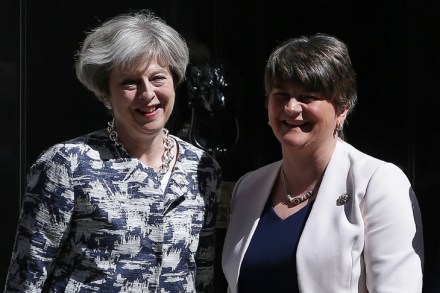
The DUP were shown an early draft of Brussel's proposed legal text by the UK government ahead of its publication on Wednesday. After the painful lesson of December when Arlene Foster almost pulled the plug on Theresa May's plan to achieve 'sufficient progress' after she was not consulted on the wording, the government is learning from its mistakes. So, when the DUP got up at PMQs and asked what the Prime Minister thought of it, they already knew the answer. 'They've learnt their lesson from the last time,' a DUP source explains. 'That wording from Brussels was like a letter to santa, it's a fiction. But we knew it was coming.' It's not just the DUP who the government is taking more care with nowadays.

Growing concern among Brexiteers over ‘exploitation’ of Irish border

Is the Irish border problem being used to frustrate Brexit? That's the claim made by the Foreign Secretary this morning. After Sky News published an excerpt of a letter Boris Johnson wrote to the Prime Minister in which he appeared to concede that physical infrastructure at the border post-Brexit was an option, Johnson gave a breakfast interview (straight from his run) to try and clarify his comments.

Tory Remainers dial down the rhetoric

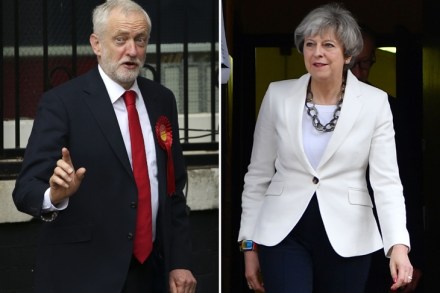
Can Jeremy Corbyn's big Brexit speech be classed as a success? It really depends on who you think it was aimed at. Unsurprisingly the softening of Labour's Brexit stance has been welcomed by the party's Remain-backing membership. On top of that, the Labour leader managed to please big business – for a change. Corbyn's announcement that Labour would back the UK staying in 'a' customs union with the EU post-Brexit has been praised by the Institute of Directiors while the CBI say the policy would 'put jobs and living standards first'. However, sceptics argue that the target audience for the speech was actually the Conservative party.

How many Conservative MPs would risk Prime Minister Corbyn over Brexit?

Although Theresa May's Cabinet has finally managed to reach a loose agreement on what they would like to achieve from the upcoming negotiations, the Prime Minister's troubles look set to continue for the foreseeable. With Jeremy Corbyn expected to confirm that his party backs the UK staying in 'a' customs union post-Brexit, there's growing concern in Whitehall that May's government could collapse this year. The most imminent threat comes from the Remain side of her party. The Sunday Times reports that Julian Smith, the chief whip, told May there is a 'very real threat' that Labour could unite with 15 to 20 Tory rebels to defeat the government on their decision to rule out membership of a customs union.

Labour’s Brexit position could be about to evolve into a big problem for the Tories

Theresa May goes into the weekend safe in the knowledge that she has managed to reach an agreement with her divided ministers on the type of relationship Britain will seek with the EU after Brexit. But given that this unity is over a position of their own creation that Brussels may well say no to (and it's not clear how the Irish border fits into it all), it's safe to say that the Prime Minister's troubles are far from over. With the government thought to be seeking a loose relationship that allows the UK to diverge from EU standard, Donald Tusk has been quick to criticise the reported position as 'pure illusion'. Coming up the track, however, is a problem that could see May's approach over before it even has a chance to succeed.

The ERG’s so-called ‘ransom note’ could be a lot worse for May

It's red letter day for Theresa May. Only rather than a happy momentous occasion, the Prime Minister's red letter day consists of receiving a letter listing all the Brexiteers' red lines on the EU. With the inner Cabinet due to meet on Thursday for their 'away day' to decide a Brexit negotiating position, the influential European Research Group have sent May a letter listing their 'Brexit demands'. Signed by 62 backbench MPs, the letter – in which the group pledge their 'continued, strong backing' for May and her Brexit plan as per the Lancaster House speech – kindly offers the Prime Minister a list of suggestions on how to achieve the best Brexit.

David Davis’s Mad Max comparison is an own goal

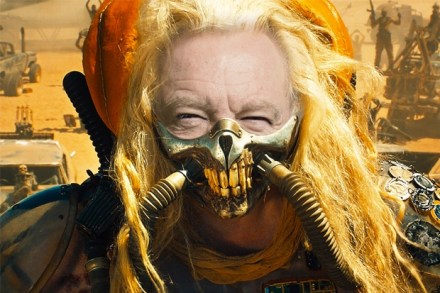
It's safe to say that David Davis's turn at navigating the roadmap to Brexit has not gone completely to plan today. The aim of the speech was to reassure businesses and Brussels that the UK will maintain high standards and regulations – with a pledge to keep a level playing field on state aid and competition policy. However, in pre-briefed quotes ahead of the speech, the Brexit Secretary promised that Brexit would not mean Britain is ‘plunged into a Mad Max style world borrowed from dystopian fiction’ but instead will lead a ‘race to the top in global standards’. The colourful prose has won much attention in the press – and has led to headlines along the lines of 'David Davis denies Brexit Britain will be like Mad Max'.

Theresa May risks conceding the argument to Labour on tuition fees

After last month's purge of the Department for Education and following months of speculation among Tory MPs, No 10 have finally showed their hand on university education. The Prime Minister is to launch a year-long review of university and adult technical education. The aim is to de-toxify the party among young voters who are worried about the current levels of student debt – be it by appealing to their parents and grandparents. On the menu of ideas being mooted are the return of university maintenance grants ( or 'maintenance support'), lower tuition fees for courses that are cheaper to run such as arts degrees and cuts to student loan interest rates.

The latest Labour bullying row highlights the moderates’ dilemma

Although it's the Conservatives nowadays who are best known for in-fighting, this weekend we were offered a reminder of the divisions in Labour. At a meeting of the National Policy Forum (NPF), a row broke out between the Momentum contingent and the moderates. The subject of the row was – once again – Ann Black, the veteran activist who was ousted as chair of the Disputes Panel last month (and replaced with Corbyn favourite Christine Shawcroft) after the Corbynistas won a majority on the National Executive Committee. Black was expected to defeat union representative Andi Fox to be elected as chair of the policy forum, which sets Labour policy for future general elections. However, it appears Jeremy Corbyn’s allies had other ideas.

Theresa May and Angela Merkel’s curious conference

There was a cold front in Berlin today as Theresa May took to the stage for a joint press conference with Angela Merkel. The Prime Minister is in Germany to discuss post-Brexit security – with a speech scheduled tomorrow in Munich – but all anyone wanted to talk about today was Merkel's Davos joke. The German chancellor is said to have regaled hacks at the meeting of the global elite with an anecdote about May having no idea what she wants from Brexit. Asked in the Q&A today whether she understood Merkel's frustration that she is still unable to say what Britain wants, May insisted the government had a clear position – but added that 'this isn't just a one-way street'. For her part, Merkel appeared none-the-wiser as to May's Brexit wish list.

How should the Tories attack Corbyn on foreign policy?

How should the Tories attack Jeremy Corbyn on foreign policy? Today's Sun splashes on a story about the Labour leader and a Czechoslovakian communist spy. The paper claims that Corbyn briefed a communist spy – masquerading as a Czechoslovakian diplomat – during the cold war. Gavin Williamson has been quick to denounce Corbyn's behaviour as a 'betrayal of this country'. As for Corbyn's response, his spokesman says he did meet with a diplomat but insists he 'neither had nor offered any privileged information'. The story has divided opinion online with Corbyn's critics quick to cite it as further proof that he hates the West and Corbyn's fans quick to slam it as another MSM smear.

Boris Johnson’s Valentine’s speech is a chance to prove his critics wrong

It's been a quiet day in Westminster with the main excitement involving a suspicious package containing white powder that was delivered to an office in Parliament. The powder was later found to be non-harmful but police are investigating the incident. Tomorrow the relative calm will end when Boris Johnson gives his big speech. Titled 'a United Kingdom', the Foreign Secretary is to give the first in a series of government speeches that together form Downing Street's 'roadmap to Brexit'. Boris's aim is to reach out to those who voted Remain and reassure them that Brexit Britain will be a country that reflects their liberal values. The last time Johnson wanted to give a big speech on Brexit No 10 slapped him down and a 4,000-word essay wound its way into the Daily Telegraph.

Why May might not be so bad for May

As Brexit tensions continue to simmer in the Conservative party, the May local elections look to be the next big danger point for Theresa May. MPs who are losing patience with the Prime Minister fear that any move now would be near impossible to justify to the public when the Tories remain neck-and-neck with Labour in the polls. The thinking goes that disappointing results in the local elections could provide the perfect cover to oust May from her position. It's true that disappointing results look likely. In London, the Tories expect a bloodbath, with elections analyst Lord Hayward predicting that the party could lose more than half of their London boroughs.

Michel Barnier’s spiky press conference – ‘the transition is not a given’

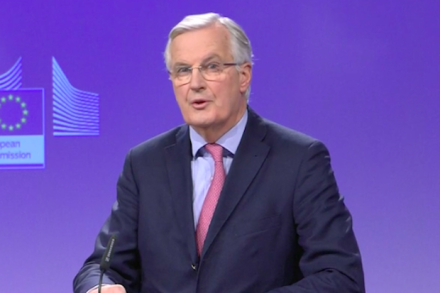
David Davis's decision to describe a leaked EU paper suggesting Brussels could impose sanctions on Britain in a transition period as 'discourteous' had repercussions in Brussels today. In a solo press conference on Britain's transition period, Michel Barnier cut a prickly figure as he warned that a transition period immediately after Brexit in 2019 is 'not a given'. Issuing Britain with a gentle ticking off, Barnier insisted that he was not being 'vindictive' as he raised concerns over May's position. He said he has planned an update on the future relationship but this could not take place due to timetable constraints 'on the UK side'.

‘Divide and rule’ is a dangerous game for a Prime Minister with no majority

It's crunch week for Theresa May. The Prime Minister is under pressure to finally decide what the government's negotiating position ought to be going into the second round of EU negotiations. In order to work out what the UK's trade relationship with the EU should be after Brexit, May will meet with her Brexit war Cabinet on Wednesday and Thursday to try and agree a position on post-Brexit trade. There's hope that this will bring an end to the drift which has led Brussels figures like Angela Merkel to joke about May's 'make me an offer' approach to the talks. The crux of the issue relates to whether the UK will be in a customs arrangement of some kind with the EU.

Conservatives dump their dirty laundry on the despatch box

Well, this is going well. The leak of the government's Brexit economic forecasts this week has led to an almighty row within the Conservative party. With Britain predicted to be worse off in all the off-the-shelf alternatives to EU membership, Remainers have claimed it as evidence that Brexit is a bad idea while Brexiteers are quick to brand it as the latest Project Fear effort. Steve Baker – a Brexit Minister – took the unusual step on Tuesday of rubbishing the government report – and, for that matter, the government's ability to forecast anything; 'I am not able to name an accurate forecast and I think they are always wrong and wrong for good reasons'. As Mr Steerpike points out on Coffee House, he has a point.

Len McCluskey calls on Labour MPs to vote down the Brexit deal

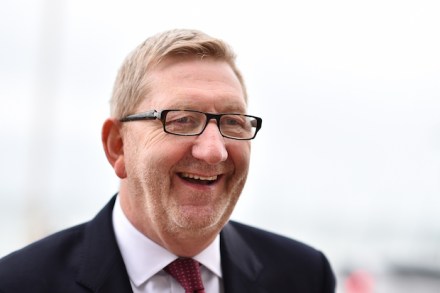
The Conservatives are currently in such disagreement over what the government approach to the second round of Brexit negotiations should be that the vote on the final deal seems a long way off indeed. However, it's clearly on the mind of the Opposition. At a Resolution Foundation panel event this morning, Len McCluskey – the leader of Unite and top Corbyn ally – said he hoped Labour MPs voted down any Brexit deal the Tories come back with: 'My personal hope and belief is that in late Autumn of this year the [Brexit] deal that comes back to parliament will be rejected, Theresa May will resign, and it will lead to an early general election in 2019.