Katy Balls

Katy Balls

Katy Balls is The Spectator’s former political editor.

Theresa May’s good news: poll finds Prime Minister is the least worst option

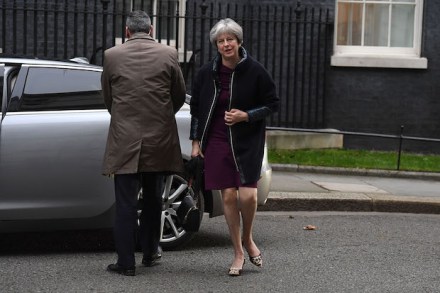
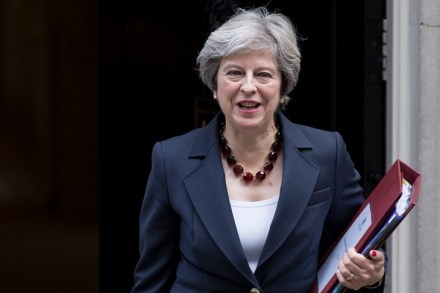
Finally some good news for Theresa May. After a tawdry few weeks in which Conservative MPs have taken to Twitter, newspapers and the airwaves to criticise the Prime Minister, May's premiership looks on shaky ground. Reports on the number of letters calling for a confidence vote in May are said to be getting perilously close to the magic number required. But any MPs considering firing off a letter to Sir Graham Brady – the chair of the 1922 committee – would be well-advised to look at the latest YouGov/WPI poll first. In a survey of Conservative voters (which took place 28-29 January), over two thirds back Theresa May to remain as Prime Minister.
Conservative MPs should be careful what they wish for

How much trouble is Theresa May in? Just three weeks ago, it looked as though the Prime Minister was at her strongest point since the disastrous snap election. Now, the BBC 10 o'clock news is leading on questions about her survival – with reports of irrepairable drift, Brexit rifts. The Sunday papers are filled with a deluge of negative headlines depicting a party out of control – including on-the-record criticism from Conservative MPs. Former minister Theresa Villiers has gone on the airwaves to warn that the Prime Minister could be about to sell a lie on Brexit. What's more, reports claim that the influx of letters to Graham Brady continues to rise. Although there is still no obvious successor to May, something has changed in the mood of her party in the past week.

David Davis attempts to ease Tory nerves over Brexit transition

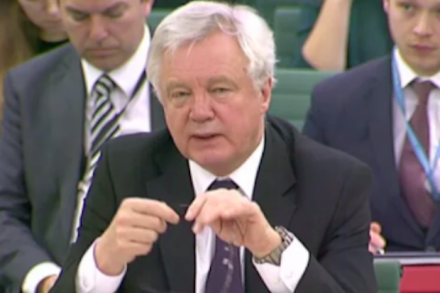
A row is underway in the Conservative party over the Brexit transition period. Jacob Rees-Mogg, the leader of the all-powerful European Research Group (the Brexit wing of the Tory party), has said he would rather extend Article 50 than have a transition period in which the UK is a rule-taker from the EU. Despite this, a transition period is what's on the menu for Britain come March 2019. So, David Davis attempted to use his speech today on the topic to try and calm Tory nerves. The Brexit Secretary tried to provide a voice of calm (and a voice of true Brexit) after Philip Hammond sparked anger on Thursday with comments suggesting the UK would stay very closely aligned to the EU.

Breaking: UK/US relationship upgraded from ‘special’ to ‘very special’

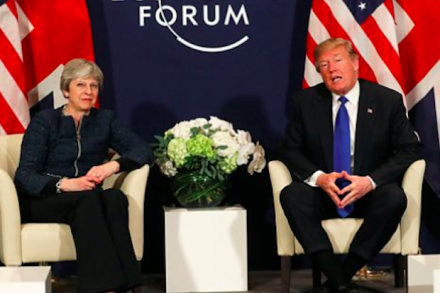
Brexit doom-mongers step aside. After weeks of speculation, the relationship that exists between Britain and the US has just been upgraded from 'special' to 'very special'. Speaking at a joint press conference, Theresa May and Donald Trump were at pains to prove they had not fallen out –as recent reports had suggested following Trump's decision to cancel his trip to open the new US embassy in Vauxhall. Heaping the treacle on thick, the US president dismissed such reports as 'false rumours' and praised the British Prime Minister: 'We have great respect for everything you're doing and we love your country, we think it's truly great.

How the Tories could stumble into a leadership contest

The weeks before a cabinet reshuffle are when a Prime Minister is at their most powerful. The threat of the backbench or the lure of promotion can be very useful when it comes to getting MPs to play ball. But as Theresa May is fast discovering, the weeks after a reshuffle – particularly an underwhelming one – can be the most dangerous. Today, the Sun reports that the recently knighted chair of the 1922 Committee Graham Brady has received almost enough letters (the required number is 48) from MPs to trigger a vote of confidence in May. The paper reports that Brady was 'ashen-faced' when he was handed one recently. If he gets only a handful more then a vote of confidence is in the offing and May's premiership could come to an abrupt end. So, how real is the threat?

Forget pink, David Davis just rubbed out the government’s negotiating red lines

During the government's crunch negotiations with Brussels to get 'sufficient progress' before Christmas, nervous Brexiteers began to worry that Theresa May was about to give too much away. Jacob Rees-Mogg used a question at PMQs to warn the Prime Minister that her Brexit red lines were ‘beginning to look a little bit pink’. He urged her to ‘apply a new coat of paint’ before she next goes to Brussels. So, it will come as some concern to the Conservative Brexiteers – and the members of the European Research Group, that Rees-Mogg now leads, that today Davis said anyone who goes into negotiations with 'red lines' is an 'idiot'.

What the government’s fake news unit tell us about the Brexit negotiations

The UK government has today announced plans to establish a new unit to counter 'fake news'. This will serve as a 'dedicated national security communications unit' which aims to combat 'disinformation by state actors and others'. Announcing the move, the Prime Minister's spokesman said: 'we are living in an era of fake news and competing narratives.' Its creation has led to inevitable jokes, with Tim Farron declaring that the three Brexiteers – Boris, Gove and David Davis – 'should be the first investigations'. Meanwhile, others online have taken the swift government action as an indicator that Russian activity could have played a role during the EU referendum. However, the big Brexit takeaway lies elsewhere.

Ukip leader loses ‘no confidence’ vote – and the party’s problems have only begun

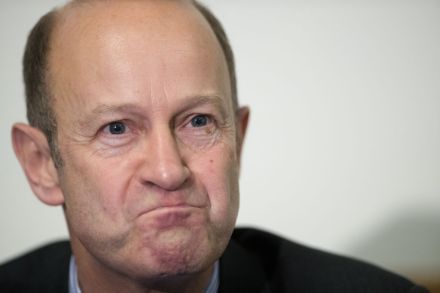
Another one bites the dust. Ukip's ruling national executive committee has unanimously backed a vote of no confidence in their leader, Henry Bolton. But Bolton - whose reputation has been battered by the revelations about his 25-year-old ex-girlfriend Jo Marney's text messages - has resolved to stay in post and under Ukip's rules there is no easy way to remove him. Only a vote of the party membership can oust the former Liberal Democrat from his post at the top of Ukip. Bolton has refused to step aside, which means the party will have to conduct a postal ballot of its entire membership, one the financially-straitened party can ill afford to bear.  Should he lose the vote of confidence among the membership, the resulting leadership election could well bankrupt the the party.

Nick Boles has said what a lot of Tory MPs are thinking

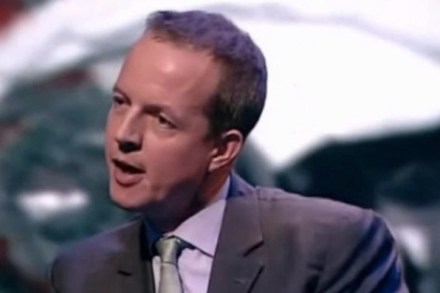
It's the end of the week and it's hard to say what the government has actually achieved. Whether it's deciding not to launch a judicial inquiry in the John Worboys case or not to tackle the growing pressures on the NHS, the government appears to be in a state of drift. Unfortunately for Theresa May this has caught the attention of one of her more amiable MPs. Step forward Nick Boles. The former minister has taken to social media on a Friday night to criticise his party leader. Boles says 'there is a timidity and lack of ambition about Mrs May's Government which means it constantly disappoints'. He concludes that she must 'raise her game'. https://twitter.com/NickBoles/status/954409789152514049 This unprecedented intervention will worry No 10 is that Boles is no typical rebel.

Tories weaponise EU withdrawal bill vote

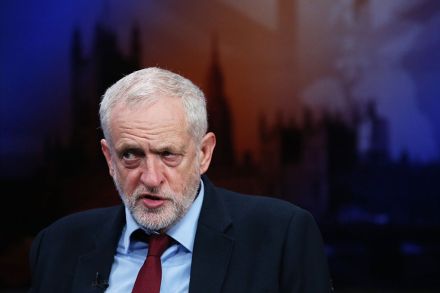
Last night the EU withdrawal bill cleared the House of Commons after MPs approved the bill, which transposes EU law into UK law, by 324 to 295.  With Labour's Brexit position as confusing as ever (just watch Jeremy Corbyn's Peston interview on the/a customs union), readers will be interested to know that the party opposed the bill's third reading. 243 Labour MPs voted to block the bill, with only a handful – Frank Field, Kate Hoey, John Mann and Graham Stringer – defying party orders. The Conservatives have been quick to go on the offensive and claim this shows Labour is trying to stop Brexit.

Jacob Rees-Mogg’s new Brexit role will worry No 10

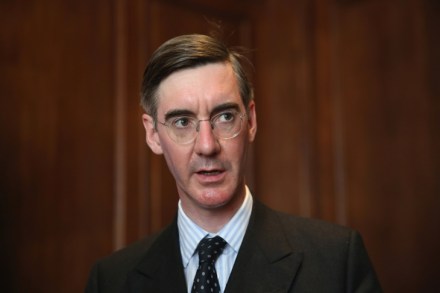
Although Jacob Rees-Mogg missed out on a promotion in last week's reshuffle, the Moggster has at least got a new string to add to his bow. The Conservative backbencher has been appointed chairman of the all-powerful 'European Research Group' – replacing Suella Fernandes. The group has been described by the Times as the 'most powerful opposition force in British politics' but in effect is a place for the Conservative party's most dedicated Brexiteers to congregate, liaise and come up with a counter to any position (government or not) that looks a bit too Remain for their liking. In that vein, they have a special Tory WhatsApp group – separate to the main Conservative MP one – to meet their aims.

Momentum’s purge of the NEC is a sign of things to come

The election of three Momentum candidates – including key Corbyn ally Jon Lansman – on Monday to Labour's national executive committee was reluctantly accepted by moderates for want of a better option. Several Labour MPs anonymously complained to the press that they would go independent should the party try to bring in trigger ballots – but the fact these quotes are anonymous shows that no-one is willing to take the fight public just yet. The events of today, however, will give Labour centrists food for thought. With the Corbyn-wing of the party now boasting a clear majority on the committee, members were given a glimpse of what that means in terms of Labour's future.

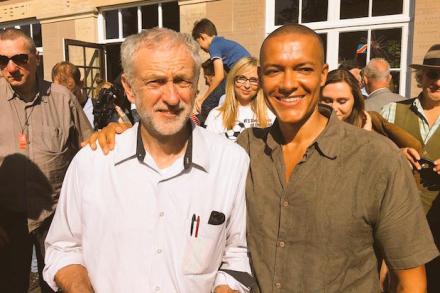
Corbyn reshuffle: Clive Lewis welcomed back into the fold

After Theresa May's underwhelming and chaotic Cabinet reshuffle on Monday and Tuesday, Jeremy Corbyn has followed suit and carried out a minor reshuffle of his front bench. With loyal Corbynista Chris Williamson resigning from the shadow cabinet on Thursday following his call to double council tax for large properties, there was speculation that the Leader's Office were keen to distance themselves from firebrand MPs as they get serious about winning power. However, the list of new appointments suggests that this is not the case. Laura Pidcock has been appointed as shadow minister for Labour.

Interview: New Tory vice-chair – Toff can help solve the Conservative youth problem

Ben Bradley had an inkling that his first week back at work wasn't going to be an ordinary one when he received a text at 7am on Monday. The MP for Mansfield was summoned to 10 Downing Street for 11.30am with no explanation as to why. Given that this was the day Theresa May was expected to reshuffle her Cabinet, it was an odd request for an MP who had been in Parliament for less than a year, after taking the seat from Labour in the snap election. 'I thought if it's health, I'm not sure if I want it,' Bradley jokes.

Tory nerves grow over No 10’s plans for tuition fees

Theresa May's Cabinet reshuffle proved puzzling for a number of reasons – from what the point was, to why Chris Grayling was falsely announced as party chairman. However, within the Conservative party it's the movement of figures from the Department for Education that has caused the most chatter. Justine Greening left government after she was ousted as Education Secretary while universities minister Jo Johnson was shuffled to transport. As Isabel has written on Coffee House, the Johnson demotion is particularly strange given that he was midway through setting up the new Office for Students, including the legislation to go through Parliament.

It’s now the Tories who don’t get the digital age

With Theresa May's reshuffle now complete, a consensus is forming that it's been a rather underwhelming rearranging of the deck chairs. All the big beasts remain in place and some junior ministers appear to have been moved from their briefs just for the sake of moving them. Matters weren't helped by a shambolic roll out which saw Chris Grayling falsely announced on Twitter as the new party chairman – and reports of disarray with ministers refusing to budge thanks to hacks tweeting the time each had spent in Downing Street. It's clear that no-one in No 10 has mastered the art of completing a reshuffle in the digital age.

Wanted: the meaning of Theresa May’s reshuffle

On Monday morning, Theresa May's reshuffle looked as though it was shaping up to be the day of the blunt knives. Some clumsy social media use saw CCHQ falsely crown Chris Grayling as the new Conservative Party Chairman – before it was announced as Brandon Lewis. Since then, things have slowed down considerably. As the day wore on, 'the Cabinet reshuffle that wasn't' appeared a more fitting description. Despite briefings about 'dead wood' in the Cabinet, only a few ministers have changed brief – David Gauke has been appointed the new Justice Secretary and Karen Bradley Northern Ireland Secretary. What's more, it's hard to find anyone who has been unceremoniously sacked or demoted against their will.

Can Theresa May’s reshuffle live up to the hype?

Theresa May is expected to reshuffle her Cabinet early next week. Unfortunately for Theresa May, she's been expected to do this since before Christmas – after she refrained from appointing a new First Secretary of State in light of Damian Green's forced resignation/sacking. This means the reshuffle has dominated the news agenda for several weeks now. Each day this month, there have been several – often conflicting – stories about what the Prime Minister plans to do in the upcoming reshuffle.

Is Labour’s clever* Brexit strategy running on borrowed time?

We're four days into 2018 and Tony Blair has kindly graced the nation with his first Brexit intervention of the new year. Proving old habits die hard, the former Prime Minister has written a blog criticising the government's handling of Brexit. Blair claims Theresa May is on course to negotiate a deal that is the 'worst of all worlds' – allowing the Government to claim Brexit victory but in reality meaning the UK has lost its seat 'at the table of rule-making'. However, the main target for his ire is Jeremy Corbyn's Labour. Blair claims the party's confusing 'cake and eat it' approach of leaving 'the' single market but being in 'a' single market means 'the handmaiden of Brexit will have been the timidity of Labour'.

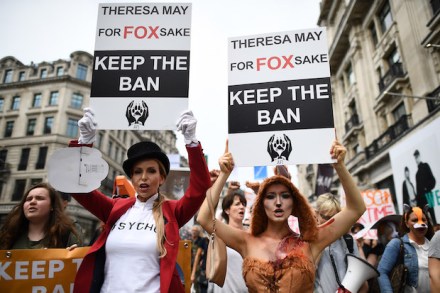
Theresa May caught between a fox and a hard place over hunting vote

Although the Boxing Day hunt is one of the biggest events of the year for the hunting community, it's safe to presume that the Christmas cheer at yesterday's hunt was dampened by reports the Prime Minister is expected to abandon all plans for a free vote to overturn the fox hunting ban. After having to bin the manifesto pledge to bring forward a free vote on the Hunting Act in this parliamentary session, Theresa May is reported to be preparing to go one step further in the new year and announce plans to drop the commitment permanently. As I write in the i paper today, it was only really a matter of time until the Tories turned their attention to fox-hunting.