Katy Balls

Katy Balls

Katy Balls is The Spectator’s former political editor.

The Sarah Baxter

28 min listen

Sarah Baxter is Deputy Editor of the Sunday Times. Katy talks to Sarah about what it was like to be a woman in the lobby before 'Blair's Babes', the best way to tackle sexism (she says, ignore it and go 'full speed ahead'), and whether Jeremy Corbyn is quite the Labour leader she hopes for. Presented by Katy Balls.


MPs get cold feet about the Cooper no deal amendment

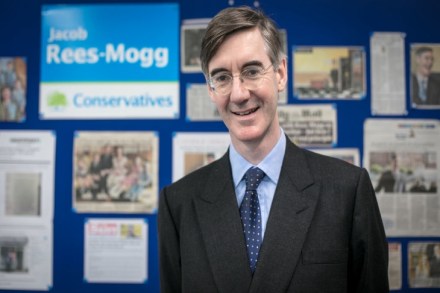
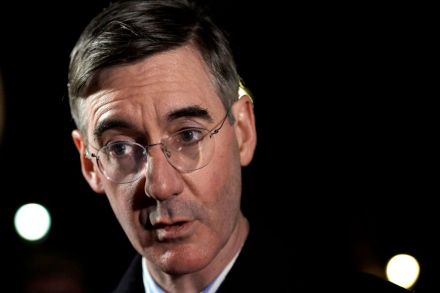
Is a no-deal Brexit about to be taken off the table? This is the expectation in Westminster after Yvette Cooper tabled an amendment to prevent the UK leaving the EU without a deal. The amendment paves the way for legislation that would mean ministers had to extend Article 50 if a no-deal Brexit looked likely. The Labour leadership are considering backing it – though there is some debate about whether Article 50 ought to be extended in three month batches rather than than the nine month period currently specified in Cooper’s bill. Brexiteers are so worried the amendment will pass that some – including Jacob Rees-Mogg – have gone so far as to claim that Theresa May ought to suspend Parliament in order to stop it.

The People’s Vote campaign isn’t dead yet

It's not been a great week for the People's Vote campaign with several reports of internal rows and splits within the group. Today their attempts to bring about a second referendum hit another stumbling block. A faction of 'People's Vote' backing MPs – including Conservative MP Sarah Wollaston and Labour's Chuka Umunna – announced they are pulling their amendment calling for a second vote. Had they pressed on, there is a chance it would have been selected by the Speaker to be voted on next week. Announcing the decision, Wollaston said: 'With great regret, we will not be laying [an amendment calling for a second referendum] because at this stage, and until we have the leader of the opposition’s backing, it would would not pass.

Michel Barnier confirms Brexiteer fears

When Eurosceptic MPs voted down Theresa May's Brexit deal last week, the hope was that this would send a strong signal both to the Prime Minister and Brussels that strong changes were needed if it were to have any hope of passing. The problem is that the scale of the defeat – by 230 votes – means that the changes Leave MPs want to see are not the changes that the EU has in mind. In an interview with the Luxembourg Times, chief negotiator Michel Barnier says that he does not believe the troubled backstop is 'the central issue'.

Did Corbyn really just move closer to backing a second referendum?

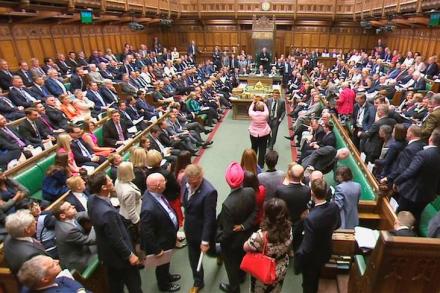
After Theresa May appeared before the Commons to reveal that her Brexit Plan B looks an awful lot like her Brexit Plan A, MPs now have a chance to try and force the Prime Minister to change path. Next week, MPs will vote on May's Brexit motion – along with a series of amendments submitted by MPs. A range of amendments have so far been submitted, with Labour's Yvette Cooper attempting to take No Deal off the table (meaning Article 50 would be extended until a deal had been agreed upon) and Hilary Benn calling for indicative votes on four Brexit options. However, the amendment that has caused the most excitement this evening has been tabled by Labour.

The message behind Labour’s latest party broadcast

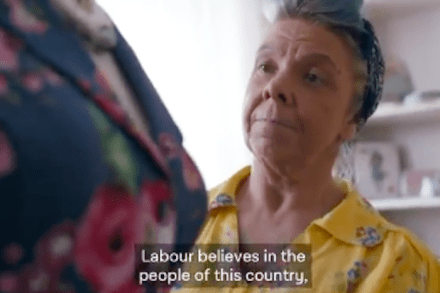
When Labour released the party political broadcast Our Town, it was enough to worry aides in No.10. The slick video saw the party zone in on voters in towns that had voted heavily to Leave. Filmed in areas including Mansfield, the video sent a clear message: Jeremy Corbyn is on a mission to appeal to the Brexit voters on whom the Tories now rely. Last week, the party released the next video in that series, Our Country. Although Corbyn's confidence vote against the government stole the limelight at the time of release, the video does shed some light on how Labour plans to fight the next election (ideally this year): https://twitter.

Are Tory Brexiteers slowly coming round to May’s Brexit deal?

After Theresa May's Brexit deal was defeated by 230 votes in the Commons last week, there was speculation that May would lean towards a softer Brexit in order to get a deal through. Despite holding a series of cross-party talks in this vein, that now looks unlikely. As James reports on Coffee House, May is expected to announce that she will continue to seek backstop concessions in a bid to win back Tory and DUP support. Given the level of Brexiteer opposition to May's deal, that may seem like a long shot. But it's worth noting that in recent days, leading Leave MPs appear to have softened their opposition to the government's plan. Jacob Rees-Mogg used an outing in the Mail on Sunday to suggest that he could back May's deal – if he couldn't get a preferable no deal outcome.

The Liz Truss Edition

27 min listen

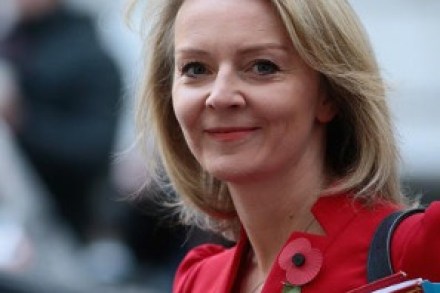
Katy Balls talks to Liz Truss, chief secretary to the Treasury, about her shameful Lib Dem past, why she loves cheese, and how The Thick Of It made her life harder.

Why Conservative MPs are talking about an early election

Theresa May managed to make history this week by breaking the record for largest government defeat. With no clear Plan B, speculation is rising that we could be heading towards an early election. This week Cabinet Secretary Sir Mark Sedwill asked Whitehall chiefs to draw up contingency plans for a snap poll in the event that May decides to go to the country. Meanwhile, Tory MPs – including ministers – have warned their local associations to prepare for the prospect of a vote as early as next month. As I write in the i paper, an election is a scenario that government figures now see as a potential way – if not a particularly desirable one – to break the deadlock. Visitors to CCHQ report that the prospect of an early election is being talked of.

Will the DUP pave the way for a softer Brexit?

On Monday, Theresa May must return to the House of Commons and lay out her Brexit Plan B following the government's historic defeat on her preferred deal. After losing that vote by 230 votes, even May's closest allies believe she must propose something different to her Plan A. In that vein, the Prime Minister has been meeting with MPs from across the House in a bid to work out what Brexit deal can command a majority in the Commons. So far the groups who have gone to see her have demanded rather different things.

Theresa May’s confidence vote problems will only get worse

Theresa May is in a peculiar position after suffering the largest government defeat in history. Her Brexit plans look dead in the water and even she appeared to admit that she would now have to reach out to members of other parties and consider her options. In a bid to capitalise on May's misfortune, Jeremy Corbyn has confirmed that Labour will table a motion of no confidence in the government. The vote will take place tomorrow afternoon following PMQs. Yet for all the calamity of the evening, the Prime Minister is on course to win it comfortably. Both the DUP and the Tory Brexiteers who voted against May's deal say they will back May in a vote come tomorrow.

Corbyn’s refusal to meet with May could backfire

Theresa May is riding on a temporary high after winning the confidence vote against her government by a majority of 19 – by this government's standards that's a comfortable win. However, as is ever the case May's problems are far from over as she now has to come up with an alternative Brexit plan to present to the Commons on Monday. On winning tonight's vote, May said that to do this she would invite opposition leaders for talks this evening. This is seen as a risky move in certain Conservative circles as if it looks as though May is working closely with Jeremy Corbyn it would test party loyalty. However, it may not even come to that as so far all the signs suggest Corbyn could refuse to meet with her.

Theresa May’s confidence vote problems will only get worse | 15 January 2019

Theresa May is in a peculiar position after suffering the largest government defeat in history. Her Brexit plans look dead in the water and even she appeared to admit that she would now have to reach out to members of other parties and consider her options. In a bid to capitalise on May's misfortune, Jeremy Corbyn has confirmed that Labour will table a motion of no confidence in the government. The vote will take place tomorrow afternoon following PMQs. Yet for all the calamity of the evening, the Prime Minister is on course to win it comfortably. Both the DUP and the Tory Brexiteers who voted against May's deal say they will back May in a vote come tomorrow.

Bercow vs Government, Part VIII: Speaker rejects Murrison amendment

Relations between the Speaker and the government have taken yet another turn for the worse this afternoon. Ahead of tonight's vote on Theresa May's doomed Brexit deal, ministers had hoped that an amendment tabled by Andrew Murrison – calling for an end date on the backstop – could win backbench support and save the Prime Minister from humiliation this evening. However, John Bercow had other ideas – and did not select the amendment for the vote. Instead, Bercow selected four amendments from Labour, SNP, Edward Leigh and John Barron. This means three seemingly government friendly amendments – from Murrison, Hugo Swire and a group of Labour MPs – have been left off.

Can the Murrison amendment prevent humiliation for May?

In Parliament a glimmer of hope has emerged ahead of the vote on Theresa May's seemingly doomed Brexit deal. It's not that it suddenly has a hope of passing as it is – instead it's that a backbencher amendment could carve a way out of the Brexit deadlock. Usually loyal backbencher Andrew Murrison has tabled an amendment for the withdrawal agreement which sets an expiry date for the backstop for December 31 2021. A time limited backstop is something the EU has rejected but Tory Brexiteers (and the DUP) demand one if they are to support May's deal. Such a change would most likely require the reopening of the withdrawal agreement – something both May and the EU have said they are reluctant to do.

How heavily will Theresa May’s Brexit deal be defeated?

Theresa May's Brexit deal will finally be voted on this week. However, the signs so far are not good. Despite the government decision to delay the vote until after Christmas in the hope MPs would calm down, few in the Commons believe it has any hope of passing when it's put to a vote on Tuesday night. Instead, the focus has moved to what will happen once it is defeated. The Sunday papers are filled with talk of such Brexit plots. Dominic Grieve stands accused of working with the Speaker to change the Commons rules so that backbenchers decide the Commons business and thereby can map out Brexit (see Nikki Da Costa's explanation here) while there's talk of bringing in procedures to punish ministers if they try and pursue no deal.

The Helena Morrissey Edition

36 min listen

Join Katy Balls as she interviews Dame Helena Morrissey - a financier, a campaigner for more women in the boardrooms, and the mother to nine children. How does she balance kids and a career? Why does she think men and women are fundamentally different? And what is the most effective way to get a raise?

The Emma Barnett Edition

29 min listen

With columnist and BBC Radio 5 Live broadcaster, Emma Barnett. Katy talks to Emma about stepping in for Andrew Marr, interviewing the Prime Minister, and how her granddad is her most loyal fan. Presented by Katy Balls.

Theresa May struggles to keep her DUP promise

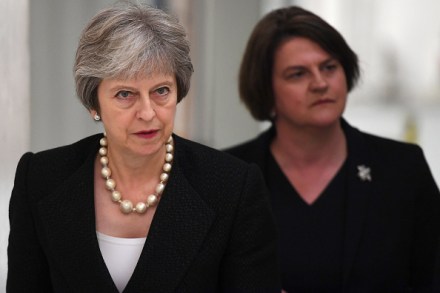
When Conservative MPs tabled a no confidence vote against Theresa May last month, the Prime Minister had to make a number of big promises in order to survive it. She pledged not to fight the next election, to find a legally binding solution to the Irish backstop – and to get the DUP back on side. This afternoon we were offered a reminder of how difficult it will be for May to keep that last promise. Following a lunchtime meeting with May, the DUP's Westminster leader Nigel Dodds issued a statement making clear that his party's 'principled objections' to the withdrawal agreement have not been resolved. He said that the proposed deal 'flies in the face of the government’s commitments on Northern Ireland as we leave the EU'.

Why Jeremy Corbyn won’t back a second referendum yet

Jeremy Corbyn has come under pressure this week to back a second referendum after a YouGov poll found that seven in ten Labour members wish for it to be party policy. So far, Corbyn has resisted such calls for a so-called People's Vote. In this week's Spectator, I explain why the Labour leader is reluctant to go near one – at least for the time being. With the Tories in turmoil over Brexit, it’s quite possible — some cabinet members believe probable — that the government may soon collapse with a new general election called. This is Labour's great hope – and Corbyn hopes to trigger a snap poll by defeating the government in a confidence motion after the meaningful vote.