Katy Balls

Katy Balls

Katy Balls is The Spectator’s former political editor.

Cummings offers a glimpse of the incoming Whitehall revolution

Over the parliamentary recess, there's been much speculation over what the government's mooted Whitehall revamp will mean in practice. Part of the plans include a shake-up of the current government departments – the Home Office is expected to be divided, with immigration taken out, while there are plans to beef up the business department. However, the more significant changes will likely take longer to bring into force. Plans are being drawn up to rewire government, change the way the civil service works and ultimately transform the public sector. Today Boris Johnson's senior advisor Dominic Cummings has offered a taste of things to come. In a blog post, Cummings has called on members of the public to apply to work in Downing Street.
Boris Johnson passes withdrawal agreement bill with huge majority

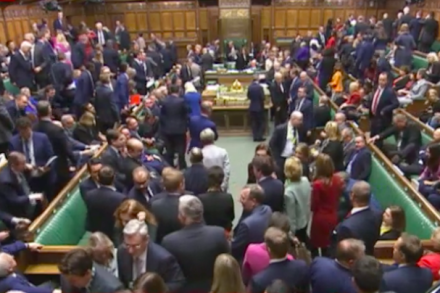
After four failed attempts and one ousted prime minister, the Withdrawal Agreement Bill has comfortably passed the Commons at second reading. In fairness, this is not the first time this has happened. In the last parliament, Boris Johnson narrowly managed to pass the WAB at second reading – however, the government then pulled it when the programme motion (which set out a speedy timetable to pass the next stages) was voted down. This time it's a different story. The WAB passed second reading with a large majority of 124  – at 358 votes for to 234 against – while the programme motion passed comfortably at 353 votes to 243 against. This means the UK is firmly on course to leave the EU by 31 January.

Why Boris Johnson is talking about ‘ten years’ time’

One of the most striking things about the government's Queen's Speech was Boris Johnson's focus on where the country could be in ten years’ time: 'Mr Speaker, this is not a programme for one year, or one Parliament it is a blueprint for the future of Britain. Just imagine where this country could be in ten years’ time. Trade deals across the world, creating jobs across the UK, 40 new hospitals, great schools in every community, and the biggest transformation of our infrastructure since the Victorian age.' Rather than simply focus on what his government would do in the five-year term he won last week, the Prime Minister talked about longer term change. This chimes with what Johnson allies privately hope for – a fifth term for the Tories.

Indyref2 could be the biggest headache of Boris’s premiership

Nicola Sturgeon is the only opposition leader who survived the general election. She has emerged far stronger. The Tories had hoped to halt the nationalists’ advance, but in the end, Scotland was the only part of the UK in which their party suffered serious setbacks. Sturgeon’s advancing army dethroned Liberal Democrat leader Jo Swinson, claimed seven of the 13 Scottish Tory seats and took 48 of Scotland’s 59 MPs. The First Minister’s message now is pretty clear: she is the only politician who can stand up to the Bullingdon boy, and the battle for the Union is back on. Within hours of the result, Sturgeon declared that the SNP surge ‘renews, reinforces and strengthens’ her case for another independence referendum.

Inside Labour’s post-election PLP meeting – ‘We lost the f—ing election’

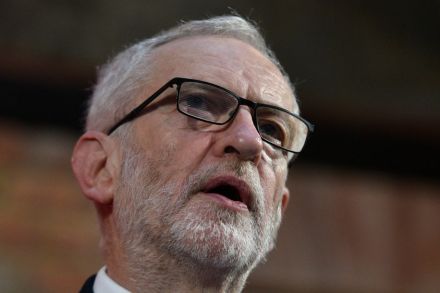
The first meeting of the parliamentary Labour party since the party's disastrous election defeat began with a round of applause. Only it wasn't for Jeremy Corbyn. Instead MPs clapped in tribute to those colleagues who had lost their seats in the party's worst election showing since 1935. The reaction the beleaguered Labour leader received was mixed at best – with the session, which ran on for over two hours, dominated by angry outbursts from surviving MPs. Addressing MPs, Corbyn apologised for his role in the result: 'I am very sorry for the result for which I take responsibility. I will continue to lead the party until a new leader is elected.

Ex-MP Nicky Morgan kept on as Culture Secretary in minor Cabinet reshuffle

With a majority of 80, Boris Johnson has his pick when it comes to forming his new look government. However, for now the Prime Minister is contenting himself with a mere minor reshuffle – with plans for a wide-ranging reshuffle in the new year. Today he has filled vacancies in his Cabinet made from MPs standing down, resigning or losing their seat. Simon Hart has been appointed Secretary of State for Wales replacing Alun Cairns who stood down from the role in November over allegations that a former aide sabotaged a rape trial. Hart – the MP for Carmarthen West and South Pembrokeshire – entered parliament in 2010 and is well-liked across the party.

Jo Swinson’s election nightmare

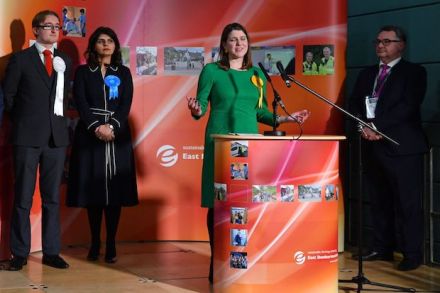
The Liberal Democrats have capped off a bad campaign with a disastrous results night. The party is on course for a mere 11 seats. To put that into perspective they won 12 seats in 2017. Jo Swinson started the campaign suggesting she could be prime minister. Instead, she has lost her seat. The Lib Dem leader lost her seat of East Dunbartonshire to the SNP. Meanwhile, high profile defectors from the two main parties failed to win their seats, with Chuka Umunna, Luciana Berger and Sam Gymiah all missing out. Long-standing Lib Dems have also suffered. Tom Brake lost his seat of Carshalton and Wallington to the Tories. He has held that seat since 1997. This comes after a tricky campaign which saw the Lib Dems squeezed by Labour.

Labour prepares for life after Corbyn

Jeremy Corbyn’s election night speech did little to address the fact he led Labour to its worst result since 1935. However, he did at least acknowledge that he probably wasn’t the best person to lead the party into the next election. Many Labour MPs were quick to take to the airwaves to play the blame game – and in some cases position themselves for a bid for the top job. Succession has been a main topic of conversation within the Labour party for some time now. In the days before the election, senior party figures were discussing how to replace Jeremy Corbyn should the party fail to win enough seats to form a government.

Tory lead more than halved in final YouGov MRP poll

When the first YouGov MRP poll of the election campaign was published last month, it was a cause of anxiety in Conservative Campaign Headquarters. The projection of a Tory majority of 68 was seen as overly optimistic – and there were concerns that it could lead to complacency in the polling booth. The second – and final – YouGov MRP poll of the election campaign does not carry the same baggage. With two days to go until polling day, it now suggests the Tories are on course for a small majority of 28. Were the election held tomorrow, YouGov forecasts that the Conservatives would win 339 seats with Labour on 231, the Lib Dems on 15 and the SNP on 41. The previous MRP poll had Labour losing 44 seats to the Conservatives – this has now been reduced to 29.

Labour double down on NHS attack lines in election broadcast

It's been a hectic election day for the two main parties. Labour managed to move the conversation to their preferred turf – the NHS – following the story of a four-year-old boy forced to sleep on the floor of an overcrowded A&E unit. As Isabel reports, Boris Johnson's refusal to look at a photo of the boy during an interview has escalated the story further. Health Secretary Matt Hancock was then sent in to calm things down. But that only ignited tensions further after a row ensued over unconfirmed claims a Tory aide was punched leaving a Leeds hospital with Hancock – which were later shown to be false. Labour has released a new party election broadcast this evening which attempts to keep this topic in focus.

How the Conservative strategy is faring across the country

It's the week of the election and Boris Johnson is to spend the final days of the campaign visiting every region in England and Wales – starting off with a tour of Leave-voting Labour marginals. The polls vary in the size of the Tory lead – starting from a 6pt lead and going up to a 14pt lead. Anything below seven points suggests that a majority is not guaranteed and the Tories could find themselves in hung parliament territory. The Conservative result rests on how successful their electoral strategy is in different parts of the country. As ConHome's Paul Goodman recently said on the Spectator's Edition podcast, it's like a fruit machine – if they hit all three lemons the majority will be sizeable, if they only have one then things start to look shaky.

Viral videos, not leaders’ debates, could decide this election

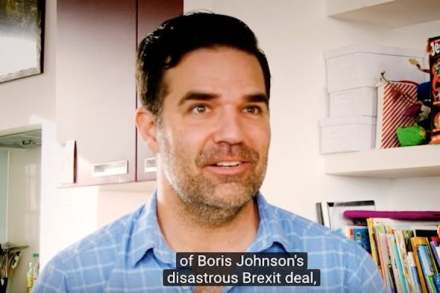
You might well expect the final election debate, Johnson vs Corbyn head-to-head on primetime BBC, to provide the most watched moment of the election campaign. In fact, the clip on course to win that accolade has never even been aired on television, and if it were, some of its claims might fall well short of Ofcom broadcasting rules. This video shows an actor called Rob Delaney, American star of the Channel 4 sitcom Catastrophe, promising to offer some home truths on the future of the NHS.

Boris Johnson plays it safe at Nato press conference

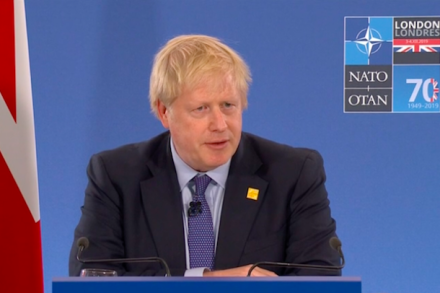
There will be relief in Conservative Campaign Headquarters as the Nato summit draws to a close with no election gaffe in sight. With the UK hosting the summit of world leaders, there had been concern that the arrival of the US president with less than a fortnight until polling day could have thrown a spanner in the works. Instead, Donald Trump has said little to cause alarm in Tory high command. When asked about the prospect of NHS privatisation as part of a UK/US trade deal, Trump said the NHS would not be on the table – as the US had little interest in it. In Boris Johnson's press conference this afternoon, the UK Prime Minister attempted to play it safe. He spoke about the importance of Nato along with what had been a practical and constructive event.

Election Special: who would want to be an MP?

34 min listen

Why would any woman want to be an MP in this general election? In recent years, parliament has been plagued by horror stories of abuse against MPs, especially female ones, with a number of them leaving the job before their time. So does parliament have a woman problem? Katy Balls speaks to a series of guests, especially a handful of the young women who are looking to join parliament this election.With Paul Goodman, Isabel Hardman, Inaya Folarin Iman, Rebecca Smith, Danielle Rowley and Claire Coutinho.Presented by Katy Balls.

Security moves to top of the election agenda

With ten days to go until polling day, the election campaign has turned to national security. Following the London Bridge knife attack on Friday by a convicted terrorist which left two members of the public dead, the Conservatives have made a concerted effort to get on the front foot on the issue. Over the weekend, Boris Johnson announced plans for tougher sentencing for terrorists – including a minimum sentence of 14 years. There's more to come – with Johnson to announce a five-point plan to prevent serious criminals and terrorists from entering the country after Brexit. Given that this is the week the NATO summit comes to town, the Tories were always planning a security focus. However, the events of Friday mean that this has been amplified.

Nicola Sturgeon’s threat of Indyref2 could save the Scottish Tories

In the village of Waterfoot on the outskirts of Glasgow, a lady in her thirties is explaining to her local Conservative MP, Paul Masterton, why he has her vote. It can’t exactly be described as complimentary. ‘We were talking about this the other night. Corbyn’s an absolute clown and Nicola’s just horrific so… I don’t want to say the best of a bad bunch…’ Masterton chips in before things get awkward: ‘Don’t worry. I’ve heard lots of phrases said on the door. “Best of a bad bunch” would be acceptable.’ His seat, East Renfrewshire, was a Scottish Tory stronghold before the party’s 1997 wipeout.

Why YouGov’s MRP poll will worry the Conservatives

When the 2017 snap election result came through, it proved a shock to many who had been covering the campaign in depth. The bulk of the polls had suggested Theresa May was on course for a comfortable majority. However, there was one poll that had predicted a hung parliament – YouGov's MRP model. This poll of 100,000 people uses a different method than normal – with predictions focussed on small geographic areas based on a mix of data and demographic. In 2017, it suggested the Tories were on course to lose 20 seats. Tonight's poll paints a different picture – it suggests the Tories are on course for a large majority in the region of 68. The YouGov/Times poll says in an election held today, the Conservatives would win 359 seats, Labour 211, the SNP 43 and the Lib Dems 13.

Five things we’ve learnt from the 2019 Tory manifesto

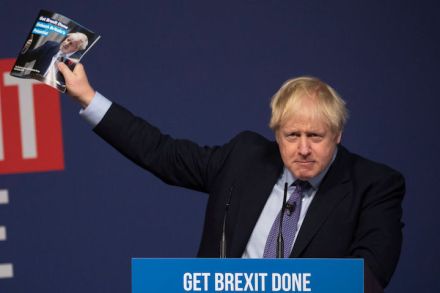
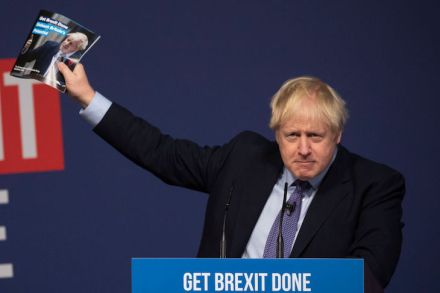
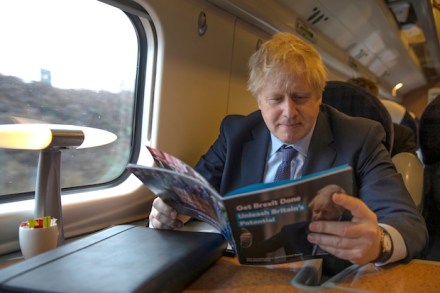
Boris Johnson has unveiled the Conservative manifesto in Telford this afternoon. The 59-page document – titled 'Get Brexit Done: Unleash Britain’s Potential' – is a far cry from the 2017 Conservative manifesto. That document still haunts Tory MPs to this day and is widely blamed for the Conservatives losing their majority in 2017. Today's offering is much more risk-averse when it comes to contentious issues and policy areas. A lot of the big spending announcements were made at the beginning of Johnson's premiership.

Coffee House Shots: Leaders’ Question Time verdict

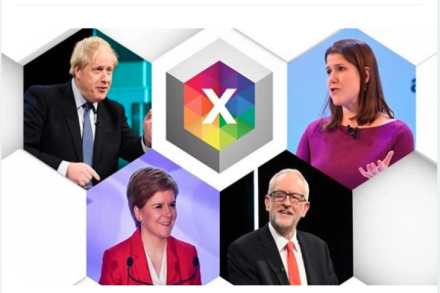
Who won Friday night's Leaders' Question Time? On the latest Coffee House Shots podcast, Fraser Nelson, James Forsyth and the New Statesman's Stephen Bush tell me it's Boris Johnson who will be the happiest – despite criticism, he got his key messages across. However, the format – which saw hostile audience member questions for Jeremy Corbyn, Nicola Sturgeon, Jo Swinson and Johnson – proved testing for all sides. The news line of the night came from Jeremy Corbyn. The Labour leader said that in a second referendum – held by a Labour government – he would remain neutral and campaign neither for Leave nor Remain.

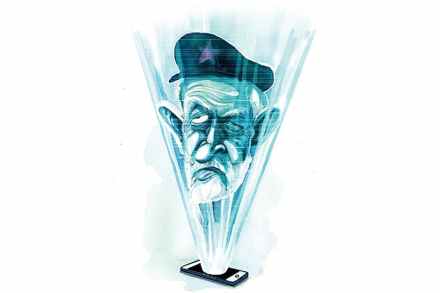
Jeremy Corbyn’s credibility problem

Jeremy Corbyn’s Labour party manifesto has made the front of all the papers today. The response is mixed. While the Daily Mail labels it a ‘Marxist manifesto’ and the Telegraph an ‘£83bn tax blitz on the middles classes’, the Mirror hails it as proof for readers that Corbyn is ‘on your side’. However, the issue for the Labour leader isn’t just that the ideas inside that document – which range from a £11bn windfall tax on the oil industry to a four day working week to a five per cent pay rise for public sector workers – divide opinion, it’s whether those who like what they’re hearing believe Corbyn can actually make these things happen.