Katy Balls

Katy Balls

Katy Balls is The Spectator’s former political editor.

Starmer sketches out a Brexit position

From our UK edition

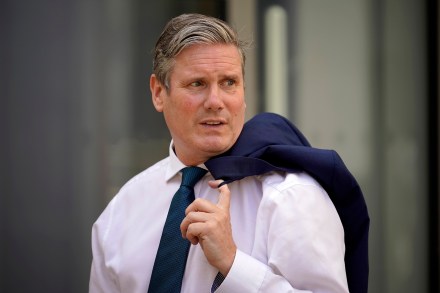
As Boris Johnson comes under fire from his own MPs over his potentially unlawful Brexit plans, Keir Starmer has made his first significant Brexit intervention. After keeping relatively quiet on the issue since winning the leadership, the Labour leader has laid out his party's position on Brexit during an evening broadcast round.  Despite previously backing a second referendum, Starmer has told ITV that 'we've left the EU, there's no question of a second referendum... the Leave-Remain argument is over'.
How will Tory MPs react to No. 10’s Brexit law breach?

From our UK edition

16 min listen

As Michel Barnier arrives in London for another round of trade talks, Brandon Lewis today said that government plans to reinterpret the Brexit withdrawal treaty could break international law. Cindy Yu speaks to James Forsyth and Katy Balls about what the No. 10 proposals could mean, and whether Tory backbenchers can stomach the move.

Top government lawyer quits ahead of internal market bill

From our UK edition

After reports emerged on Monday suggesting that Boris Johnson plans to use new legislation to override key parts of the Brexit withdrawal agreement relating to the Northern Ireland protocol, government ministers sought to play down the changes. Environment Secretary George Eustice suggested that any changes to be laid out in the internal market bill were aimed at simply tying up loose ends. The text of the bill is not due to be published until Wednesday. However, all the signs are that it will be controversial. The head of the UK’s government legal department, Jonathan Jones, has today stepped down. The Financial Times reports that those close to him say he was 'very unhappy' about the decision to overwrite parts of the Northern Ireland protocol.

Will the hardline Brexit approach work?

From our UK edition

10 min listen

Boris Johnson last night issued a warning to the European Union that Brexit negotiations must be concluded by October 15 or Britain will walk away. Will this focus minds, or might it spell the end for the talks? Katy Balls speaks to Fraser Nelson and James Forsyth about the government's hardline approach.

Boris Johnson’s Brexit deadline

From our UK edition

After months of coronavirus leading the news agenda, Brexit is back. The Prime Minister has overnight promised to quit the trade talks in five weeks if no agreement is in place. Meanwhile, figures in Brussels are voicing disbelief at reports the UK government is drawing up legislation that will override the withdrawal agreement's Northern Ireland protocol. Boris Johnson has said there needs to be an agreement by the European Council on 15 October – otherwise, it would not be possible to bring any such agreement into force before the end of the year and therefore little point in continuing discussions: If we can’t agree by then, then I do not see that there will be a free trade agreement between us, and we should both accept that and move on.

Will state aid sink a Brexit deal?

From our UK edition

10 min listen

The deadline for a Brexit deal is fast approaching, but the level of subsidies paid to companies and industries could prove a stumbling block. Will state aid - which makes up just 0.34 per cent of the UK's GDP - scupper an agreement with the EU? Katy Balls speaks to Fraser Nelson and James Forsyth.

The complaint from MPs that ought to worry Boris Johnson

From our UK edition

When Boris Johnson addressed MPs on Wednesday, the hope in government was that the Prime Minister's multiple appearances would rally the troops. First at PMQs, then before the 2019 intake, before addressing the 1922 committee of Tory backbenchers. With MPs returning from the summer holidays fed up after a string of policy U-turns and constituent complaints, many needed a jolt of optimism ahead of a tricky few months.  His appearance at Prime Minister's Questions did the opposite. 'He was all over the place,' sighs one veteran MP. Several Tory MPs privately complain that it was discourteous of Johnson to turn up at the despatch box having not done his homework.

Will the Tories accept tax rises?

From our UK edition

15 min listen

Rishi Sunak has faced a backlash this week over proposals to increase taxes to pay for the UK's coronavirus response. Can the chancellor push the changes through, and how will the party react? Katy Balls speaks to Fraser Nelson and James Forsyth.

The Covid trap: will society ever open up again?

From our UK edition

44 min listen

Governments around the world have adopted extraordinary powers to deal with coronavirus – but could they end up doing more damage than good? (01:00) Next, is the best way to deal with the threat of Scottish secession to negotiate a hypothetical Scottish exit deal? (16:04) And finally, are Britain's graveyards suffering a spate of indecent behaviour? (31:38) The Spectator's deputy political editor Katy Balls is joined by historian Johan Norberg and the Wall Street Journal's Gerard Baker; The Spectator's political editor James Forsyth and Scotland editor Alex Massie; and journalist Andrew Watts alongside the Revd Fergus Butler-Gallie. Produced by Gus Carter, Max Jeffery and Sam Russell.

Is mass testing the answer?

From our UK edition

14 min listen

Matt Hancock today announced Operation Moonshot, a £500 million scheme to ramp up the UK's testing capacity and offer a return to normality without social distancing. Does it really offer a way out? John Connolly speaks to James Forsyth and Katy Balls.

The latest No. 10 U-turn

From our UK edition

13 min listen

Bolton and Trafford were returned to Manchester's local lockdown this morning after yet another U-turn by the government. Meanwhile, Boris Johnson and Keir Starmer went head to head for their first PMQs of the new parliamentary term. Finally, Rishi Sunak and the PM met members of the 2019 Tory intake in an attempt to shore up the government's backbench support. John Connolly speaks to James Forsyth and Katy Balls.

Will Tory MPs really back tax rises?

From our UK edition

Another day, another story mooting a new tax rise. Today the Sun reports the Chancellor is considering a rise in National Insurance contributions for the self-employed. Like other tax rises floated in recent days – from fuel duty to corporation tax to capital gains tax – it has quickly met opposition from members of the Tory party whether it be No.10, rival ministers or the parliamentary party. With Rishi Sunak looking ahead to the Autumn Budget, no proposals are definite. However, the backlash over every measure that's been floated points to a problem coming up the track: no unifying Conservative economic principle. Long gone are the days of David Cameron and George Osborne's long term economic plan.

Boris’s U-turn defence

From our UK edition

Is Boris Johnson's government jumping from one crisis to the next or is No. 10's agenda progressing roughly as planned? It depends who you ask. After a difficult few weeks, there are plenty of Tory MPs who believe it's the former. Many of whom don't even feel the need to keep their grievances anonymous.  Charles Walker MP recently used an interview to complain that it was becoming 'increasingly difficult' for Tory MPs to defend government policy: 'too often it looks like this government licks its finger and sticks it in the air to see which way the wind is blowing'.

Can Simon Case reform the civil service?

From our UK edition

11 min listen

Simon Case has been appointed the new cabinet secretary, tasked with leading the UK through its coronavirus recovery and reforming the civil service. Is he up to the job? Gus Carter speaks to James Forsyth and Katy Balls about the country's most powerful official.

Why is Starmer’s support surging?

From our UK edition

11 min listen

Following the exam results fiasco, the Tories' lead in the polls has dropped to just two points in the latest YouGov survey. With Labour on the up, what is Keir Starmer doing right, and should we expect further gains? Cindy Yu speaks to the Spectator's deputy political editor Katy Balls and Stephen Bush, political editor at the New Statesman.

Britain’s £2 trillion debt problem

From our UK edition

12 min listen

UK debt has hit £2 trillion, the Office for National Statistics said today - an increase of over £200 billion on last year. What does this mean for the economy, how does the UK compare to the rest of Europe, and does Boris Johnson plan to keep on spending? Katy Balls speaks to Fraser Nelson and Kate Andrews.

Brexit blame game as latest talks stall

From our UK edition

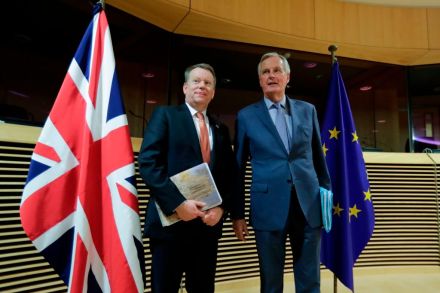
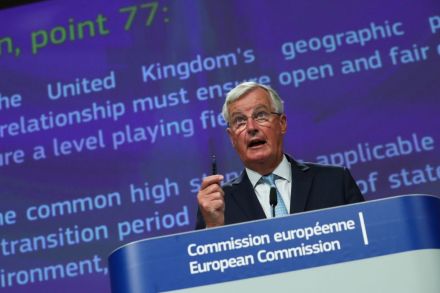
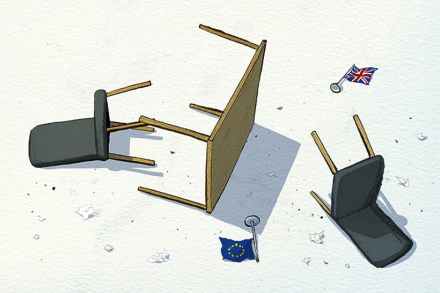
Despite Boris Johnson's call for Brexit negotiations to speed up, the seventh round of talks has today ended with little progress. Neither side is bothering to suggest the latest round was particularly productive. Instead, the comments today from Michel Barnier and the UK's lead negotiator David Frost were focussed on attributing blame for the current deadlock. Barnier said that, if anything, the talks had at times 'felt as if we were going backwards more than forwards'. His outlook for a potential deal is gloomy – suggesting it seems 'unlikely'.

Where will the next local lockdown be?

From our UK edition

10 min listen

Birmingham and Oldham are on the brink of reentering lockdown, with cases in both rising significantly in comparison to the rest of the country. But how severe is the outbreak, and can the government risk shutting down the UK's second largest city? Cindy Yu speaks to Kate Andrews and Katy Balls about the contenders for Britain's next local lockdown, and also asks whether there are alternatives to the 14-day quarantine for returning holidaymakers.

The importance of Gavin Williamson

From our UK edition

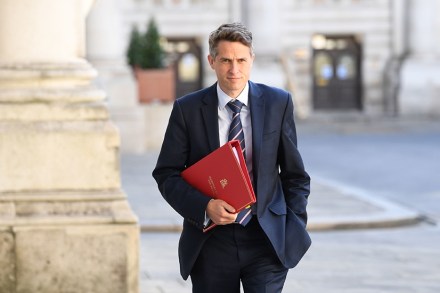
When Boris Johnson tried to call a general election in September last year, everyone around him assumed that Jeremy Corbyn would agree. When this didn’t happen, Johnson found himself out of ideas. Dominic Cummings’s plan was to keep calling for an election, keep holding votes and hope the resolve among opposition parties would break. The Prime Minister decided to get a second opinion. He wanted someone who knew parliament and its dark arts, and could advise him how to fight and win its battles. He summoned Gavin Williamson. On being presented with the plan, the former chief whip gave a long pause. ‘It’s a preposterous plan,’ he finally replied. ‘And that’s exactly why you should do it.’ It worked.

How Nicola Sturgeon outsmarts Westminster

From our UK edition

14 min listen

A new poll today shows that support for Scottish independence is at a record high of 55 per cent. On the podcast, Cindy Yu talks to Katy Balls and Fraser Nelson about why - in particular, how does Nicola Sturgeon continue to exceed Westminster's expectations?