Katy Balls

Katy Balls

Katy Balls is The Spectator’s former political editor.

Is there still hope for Unionism?

From our UK edition

21 min listen

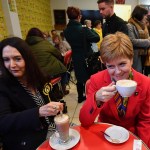
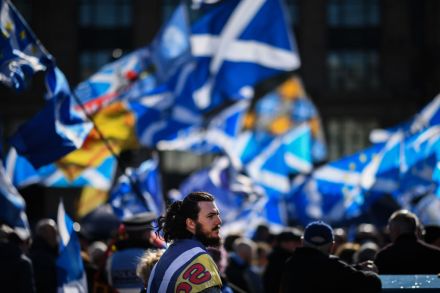
The SNP has had a torrid week as the inquiry into Alex Salmond's trial came to a head, topped off with MP Margaret Ferrier's Covid breach. But Nicola Sturgeon has not sustained damage - so is there still any hope for Unionism? Katy Balls talks to Fraser Nelson and Stephen Daisley, with a cameo appearance from James Forsyth.
Johnson turns up pressure on EU for a deal

From our UK edition

Hopes of agreeing a Brexit deal have increased among ministers in recent weeks, but today the UK's chief negotiator Sir David Frost offered a reality check. In a statement following the latest round of talks, Frost said that while 'progress has been possible' there remained 'familiar differences' on level playing field clauses, state aid and – notably – fishing. On the EU side, Michel Barnier said that to reach an agreement 'these divergences must necessarily be overcome over the next weeks'. The comments come as Boris Johnson attempted to dial up the pressure on the EU in a regional media round.

The Louise Haigh Edition

From our UK edition

32 min listen

Louise Haigh is the shadow secretary of state for Northern Ireland. On the podcast, she talks to Katy Balls about her family's political roots; quitting university after not fitting in; her reflections on nominating Jeremy Corbyn for Labour Party leader; and being offered a job with a spider on her shoulder.

Vallance says virus is not under control

From our UK edition

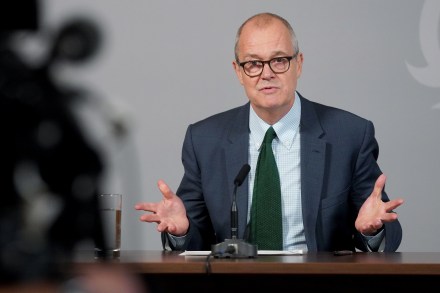
Boris Johnson announced no new restrictions in Wednesday's coronavirus restrictions — but there was still little reason for cheer. Those ministers hoping for a change to the 10 p.m. curfew were left disappointed. Johnson and his advisers — Chief Medical Officer Chris Whitty and Chief Scientific Officer Patrick Vallance — offered a series of graphs and maps to show the spread of the virus. Each made the point that infections are going in the wrong direction. It was clear from the address that they all believe new restrictions are more likely than not.  It was clear from the address that they all believe new restrictions are more likely than not While Whitty spoke of 'a long winter ahead of us', it was Vallance whose language was the most frank.

Is the whack-a-mole lockdown strategy working?

From our UK edition

12 min listen

Keir Starmer attacked Boris Johnson in PMQs today over the effectiveness of local lockdowns, saying in some areas 'things are getting worse not better'. After the PM himself got the rules mixed up yesterday, is the government's strategy working, or is a change of strategy needed? Katy Balls speaks to James Forsyth.

Live at Alternative Conference

From our UK edition

28 min listen

The Prime Minister was forced to apologise this afternoon after misstating new lockdown rules brought into force overnight in the North East. Is government incompetence costing it support? In a live episode of Coffee House Shots for The Spectator's Alternative Conference, Katy Balls speaks to Fraser Nelson, James Forsyth and James Johnson, co-founder of polling company JL Partners.

NHS chief warns against ‘age-based apartheid’ in coronavirus response

From our UK edition

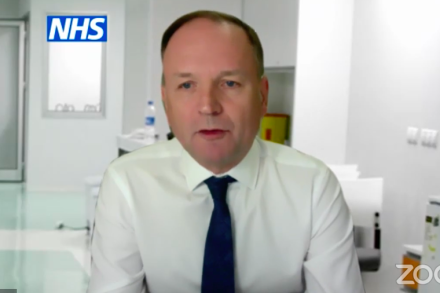
When Boris Johnson addressed the nation last week to give an update on his coronavirus strategy, the Prime Minister offered a rebuke of the idea put forward by some Tory MPs and scientists that vulnerable groups ought to be shielded and the rest of the population allowed to live close to normal lives. He argued that suggestions the vulnerable could simply shield were misguided, as it was likely the virus would still reach these groups. Now he has won backing from NHS chief Sir Simon Stevens. Speaking at The Spectator's alternative conference, the NHS's chief executive officer said 'we are not going to have aged-based apartheid across this country'.

Is No. 10 about to move on the Brady amendment?

From our UK edition

Is the government heading for a Commons defeat on its coronavirus powers? Judging from the speeches on the Tory benches in the chamber this afternoon, things are not looking particularly promising for Boris Johnson. Desmond Swayne used the debate to ask whether the Prime Minister has been abducted by Dr Strangelove and reprogrammed by Sage while Lucy Allan argued science is often just as much about opinion as politics.  Coffee House understands that those behind the amendment believe support is closer to 80 The critical conversations, however, have been going on out of sight.

Can the government avoid a showdown with Tory backbenchers?

From our UK edition

16 min listen

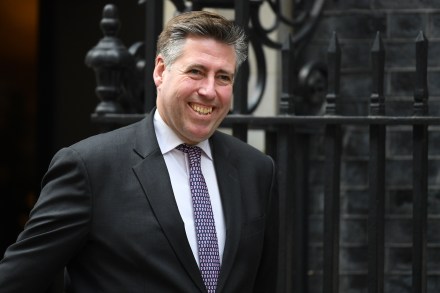
Graham Brady's amendment to give backbenchers a vote over new coronavirus restrictions looks set to pass through the Commons this week, provided it is selected by the Speaker. With the government determined not to give MPs a say, can they avoid a showdown with Tory backbenchers? Cindy Yu speaks to James Forsyth and Katy Balls.

Is Rishi Sunak on the path to No. 10?

From our UK edition

14 min listen

In her Telegraph column this week, Katy Balls writes about the Chancellor who everybody loves. But the road to No. 10 is not easy - what are the pitfalls Rishi Sunak could face in the months ahead? Cindy Yu talks to Katy and James Johnson, former pollster at No 10 and co-founder of J.L. Partners.

Why even moderate Tories are voting against No. 10

From our UK edition

15 min listen

Sir Graham Brady, chairman of the 1922 Committee, has tabled an amendment to the government's Coronavirus Act to force a vote in Parliament on any new restrictions. A cross-party group of 40 MPs have signed the amendment, including moderate Tories like Damian Green and Iain Duncan Smith. But why have they chosen to move against No. 10? Cindy Yu speaks to James Forsyth and Katy Balls.

The Emily Sheffield Edition

From our UK edition

39 min listen

Emily Sheffield is the editor of the Evening Standard. She was formerly deputy editor at Vogue, and has started her own journalistic venture at This Much I Know. She also happens to be sister of Samantha Cameron. On the podcast, she talks about the real story behind why she was kicked out of Marlborough as a teenager (spoiler: it was unrequited love gone wrong); battling sexism on her first day at the Guardian; and her two pennies on Sasha Swire's diary.

Rishi Sunak’s reality check

From our UK edition

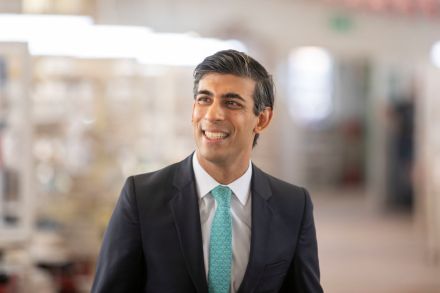
The Chancellor's statement unveiling his winter economy plan offered a reality check on living with coronavirus. Despite pressure from the opposition and a handful of Tory MPs to extend the furlough scheme, Rishi Sunak confirmed that it would come to an end in October. In its place, he announced a new jobs support scheme – whereby the government and firms will top up the wages of workers who are unable to return to full time work but are working at least a third of their hours. This is aimed at making sure businesses with reduced demand keep on their employees. But it's also an acceptance that jobs in some industries cannot be saved. Those businesses which are unable to operate at all will have little use for the scheme.

Rishi Sunak slowly turns the taps off

From our UK edition

13 min listen

After new restrictions were announced this week by the prime minister, Rishi Sunak today unveiled his Winter Economy Plan. Telling the Commons that he 'cannot save every business', the chancellor said that the government would pay up to 22 per cent of workers' wages. The package may be generous, but is it a sign that the government is winding down the scale of its economic interventions? Cindy Yu speaks to Katy Balls and Kate Andrews.

Should the government admit its mistakes?

From our UK edition

12 min listen

In a televised address to the nation last night, Boris Johnson hailed Britain as a 'freedom loving country', but said that a lack of adherence to existing coronavirus restrictions meant new measures are needed. Is the government right to blame the public for a rise in Covid cases, or should they adopt a more contrite tone and admit to mistakes in areas like testing? Cindy Yu speaks to James Forsyth and Katy Balls.

Sweden’s virus expert briefs No. 10

From our UK edition

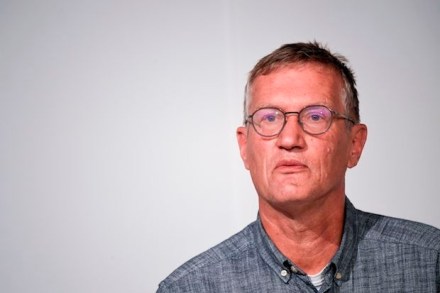
One of the questions regularly asked by Tory MPs on the libertarian wing of the party: why isn't the UK taking the Swedish approach on coronavirus? After the Prime Minister announced this week that the public ought to expect at least six more months of restrictions, Johnson has faced a backlash both within his own party and among certain sections of the scientific community over his strategy of nationwide measures to suppress the virus.  Tegnell was key to Sweden's decision to avoid a full lockdown The chair of the 1922 Committee Graham Brady is attempting to amend the government's emergency powers so MPs have more of a say over coronavirus measures.

Boris defends new Covid rules

From our UK edition

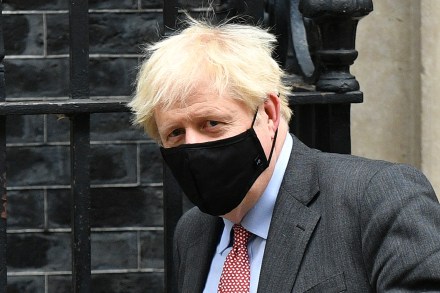
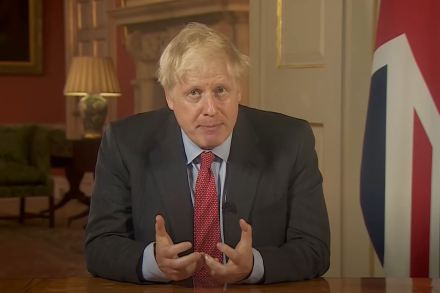
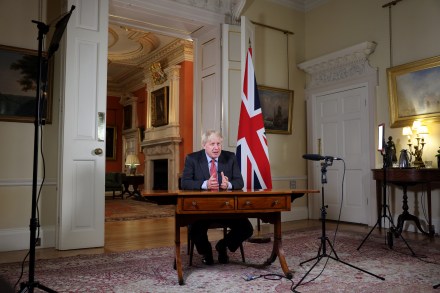
Boris Johnson addressed the nation this evening to update the public on his government's coronavirus strategy. After announcing the broad details of the new measures at the despatch box this lunchtime, tonight's statement was focussed on justifying the new restrictions. The Prime Minister said that while there were no easy choices ahead, he was confident the country would succeed as they had done so in March — insisting the government had followed the scientific advice to the letter and as a result protected the NHS and saved thousands of lives.  As for why there are now issues, rather than mention difficulties on testing, he suggested that the 'freedom loving' nature of Britons had meant that not everyone had followed the guidelines.

Can the lockdown hawks stave off further restrictions?

From our UK edition

20 min listen

Boris Johnson today warned that Britain has 'reached a perilous turning point' in its battle with coronavirus, as he ordered pubs to close at 10pm and pledged to crack down on rule-breakers. The package of new restrictions were not as sweeping as many Tory MPs had feared, but with the Prime Minister saying that his government could yet 'deploy greater firepower', is this just the beginning? Cindy Yu speaks to James Forsyth and Katy Balls.

The most revealing thing about Keir Starmer’s conference speech

From our UK edition

Keir Starmer's first conference speech as Labour leader did not go as he had first planned. Social distancing measures meant that he had to deliver it from Doncaster to an empty hall. Meanwhile, the time was changed at the last minute so as to avoid a clash with government announcements on new coronavirus restrictions.  But Starmer still managed to use the outing to start to flesh out what type of leader he intends to be. Even if crowds were in short supply, the choice of location for the set piece event was in itself telling. Starmer said it was the first Labour Leaders’ Speech in Yorkshire since Harold Wilson in 1967.