Katy Balls

Katy Balls

Katy Balls is The Spectator’s former political editor.

What to expect from Boris’s Covid clampdown

From our UK edition

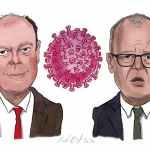
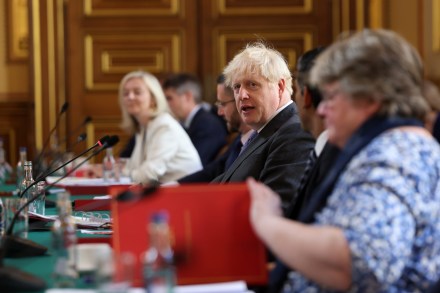
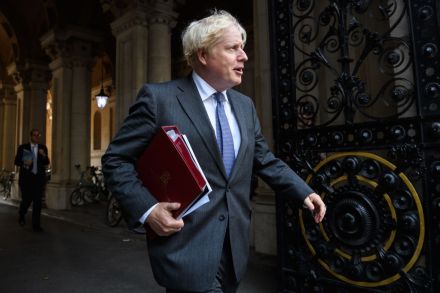
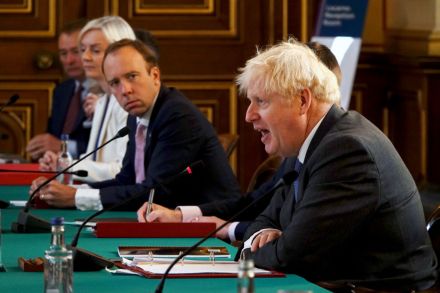
As the UK's coronavirus alert level is upgraded from three to four, all focus is now on what new restrictions Boris Johnson will announce on Tuesday when he makes a statement to the Commons. Before he gets there, the Prime Minister must first meet with his cabinet and chair Cobra.  Monday's briefing from Chief Scientific Officer Patrick Vallance and Chief Medical Officer Chris Whitty saw a hint of the difficult decisions that lie ahead. The pair painted a grim picture of the direction that infections are going in — claiming that it could lead to 50,000 new coronavirus cases a day by mid-October without further action.

Why won’t Vallance and Whitty answer any questions?

From our UK edition

11 min listen

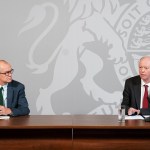
In a Downing Street statement this morning, Chris Whitty and Patrick Vallance presented their take on the latest coronavirus data. Speaking without a government representative, the pair said that Brits needed to 'break unnecessary links between households' and warned that the UK could see 50,000 new coronavirus infections a day by mid-October. But why didn't Vallance and Whitty answer questions from journalists? Cindy Yu speaks to James Forsyth and Katy Balls.

Vallance and Whitty lay the groundwork for new restrictions

From our UK edition

A taste of what to expect over the next six months came in today's press conference with Chief Medical Officer Chris Whitty and Chief Scientific Adviser Patrick Vallance. Following reports of plans in government for new national restrictions and a potential lockdown, the pair used their public address to provide an update of the latest coronavirus statistics. It did not make for pretty viewing. Vallance said that if the rate of infection continues on its current trajectory without further restrictions the UK could see 50,000 new coronavirus cases a day by mid-October. This he argued 'would be expected to lead to about 200 deaths per day' a month after that.  Whitty didn't have much in the way of more positive news.

What’s the point of a two-week lockdown?

From our UK edition

13 min listen

The government is reportedly considering the short-term reintroduction of nationwide social restrictions to halt the spread of coronavirus. Will a two-week 'circuit break' make a difference, or simply delay the inevitable? Katy Balls speaks to Fraser Nelson and James Forsyth.

The impossibility of Moonshot without fixing test and trace

From our UK edition

16 min listen

The government has promised to deliver a nationwide mass testing programme by the beginning of next year, claiming it could offer a route out of continued restrictions. But with mounting reports about the failing test and trace system, is Operation Moonshot impossible? Cindy Yu speaks to James Forsyth and Katy Balls.

Faith in the government is wearing thin

From our UK edition

As the government tightens coronavirus restrictions across swathes of the north east, Boris Johnson is facing his worst polling on the issue since the crisis began. According to a YouGov poll, approval of government handling of coronavirus is at its lowest: -33, compared to -18 last week. Coffee House understands this broadly tallies with internal government polling. Those privy to the findings of recent focus group polling say that a common complaint is the lack of a long-term plan for Covid.  Ministers expect the polling to get worse before it gets better. The fact the government's coronavirus testing system is already buckling is a sign of trouble ahead.

Has the government’s Brexit plot backfired?

From our UK edition

12 min listen

The government's Internal Market Bill won't reach the House of Lords until after the October EU Council, James Forsyth tells Katy Balls and Fraser Nelson on the podcast today. This means that the bill won't become law anytime soon, and provides the government leverage for a deal in that Council. So was this a ploy to get a better deal all along?

Five things we learnt from Boris’s liaison committee grilling

From our UK edition

As the government comes under fire over its Brexit tactics, testing capacity and coronavirus guidelines, Boris Johnson was this afternoon summoned before the liaison committee to answer questions on all of the above. Although dialogue remained civil between the PM and the panel – made up of select committee chairs – there were signs that Johnson might prefer to be somewhere else, at one point rolling his eyes. Here are the five main takeaways from the session: 1. The EU is not negotiating in good faith Earlier today, Northern Ireland Secretary Brandon Lewis suggested the EU is negotiating with the UK in good faith. However, it seems the Prime Minister takes a different view.

Boris softens his PMQs approach for Rayner

From our UK edition

Boris Johnson faced a new opponent at Prime Minister's Questions today – Angela Rayner. With Sir Keir Starmer stuck at home waiting for the results of a family member's coronavirus test (which has since come back as negative), Labour's deputy took to the despatch box. Her performance led to a notably different approach by Johnson, the PM was notably less combative than he has been against Starmer. Rayner began by putting Johnson on the spot by asking him the hourly rate of a care worker – a question he avoided answering. Her presence also meant more jokes on the Labour side.

Can the government fix the testing meltdown?

From our UK edition

14 min listen

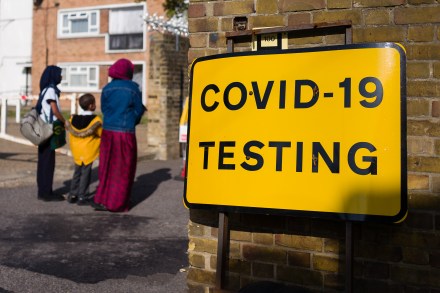
Amid reports of local testing shortages, Matt Hancock told MPs today that the system is facing an 'enormous challenge' after a 'sharp rise' in demand. While the government has pledged to deliver 500,000 tests a day by the end of October, just 220,000 are currently being processed. Can the government fix the problem? Katy Balls speaks to Fraser Nelson and James Forsyth.

Can Boris stave off a Tory Brexit rebellion?

From our UK edition

13 min listen

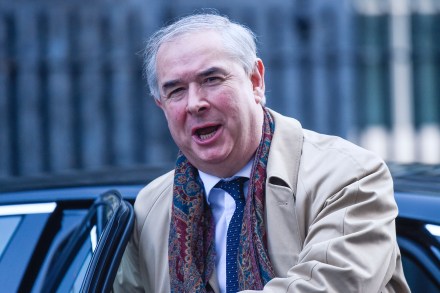
Former attorney general Geoffrey Cox has today warned that the Internal Markets Bill could cause 'unconscionable' damage to the UK's international standing. With a vote on the legislation due later today, could a rebellion overcome the government's majority? Katy Balls speaks to Fraser Nelson and James Forsyth.

Will Boris Johnson be able to quell the latest Brexit rebellion?

From our UK edition

Is the government facing a looming defeat on the internal market bill? After plans by Boris Johnson and his ministers to override parts of the withdrawal agreement through the legislation came to light last week, there has been a growing backlash among Tory MPs. The decision by Northern Ireland Secretary Brandon Lewis to stand up at the despatch box and say the plans did break international law 'in a specific and limited way' angered even some Brexiteer MPs as they felt it left them no cover to support the legislation. The sense in government has been that the proposals will still pass the Commons as the rebellion is limited.

Will Ireland stump a Brexit deal?

From our UK edition

19 min listen

The EU said it could walk away from trade talks after the government announced that it planned to break international law in its Internal Markets Bill. But how will Ireland, one of the countries most affected by the government's decision, react? Katy Balls speaks to Peter Foster, public policy editor of the Financial Times, Pat Leahy, political editor of the Irish Times and James Forsyth.

The growing Tory unease over lockdown

From our UK edition

10 min listen

As England heads into stricter lockdown measures shortly, James Forsyth talks to Katy Balls and Fraser Nelson about the growing unease amongst backbenchers over the government's strict Covid response. Is it time for the government to try harder to make a case for its approach?

Inside Boris Johnson’s Brexit call with Tory MPs

From our UK edition

This evening Boris Johnson used a video call to address Conservative MPs following unease over No. 10's Brexit tactics. With a Tory backlash growing over the plan to break international law and rewrite parts of the withdrawal agreement relating to the Northern Ireland protocol, the Prime Minister sought to convince MPs of the necessity of the measures. Rather than U-turn or suggest a new path, Johnson used the call to explain his government's thinking. However, it wasn't exactly a smooth outing. MPs experienced difficulty logging on after the cap for the call was initially put at 100 people – before it was eventually fixed. Once in, Johnson told MPs there would be no Q&A suggesting MPs should instead put their questions to chief Brexit negotiator David Frost.

UK agrees ‘historic’ trade deal with Japan

From our UK edition

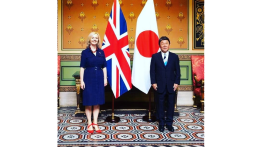
The UK and Japan have this morning agreed a new free trade deal between the two countries. With International Trade Secretary Liz Truss working to secure a number of FTAs for when the Brexit transition period ends, this is the first that goes beyond what the UK had under EU arrangements.  Announcing the news, Truss said this marked a 'historic moment' for the UK and Japan as the government's 'first major post-Brexit trade deal'.  According to government estimates, the agreement will boost trade with Japan by over £15 billion – though internal analysis suggests the overall net benefit will amount to 0.07% of GDP.

With Sarah Sands

From our UK edition

37 min listen

Sarah Sands is the former editor of the Today programme. On the podcast, she talks to Katy Balls about her departure from the Sunday Telegraph after just nine months as Editor; giving John Humphreys a pay cut; and what it was like to find out on election night that the Boris Johnson government intended to boycott Today.

Are the Brexit talks about to break down?

From our UK edition

11 min listen

The EU gave an ultimatum today that, unless the UK shelved its Internal Market Bill within three weeks, it would be taking legal action against the government. With negotiations in a more acrimonious stage than they have been for a long time, are the talks about to break down? Cindy Yu talks to James Forsyth and Katy Balls.

Boris’s latest coronavirus crackdown is a sign of things to come

From our UK edition

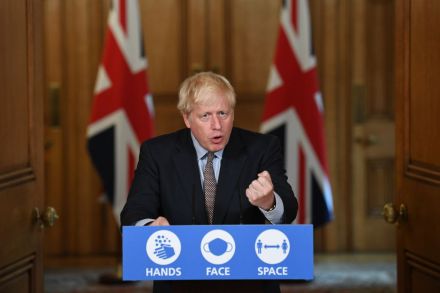
Boris Johnson confirmed in his coronavirus press conference yesterday that gatherings will be restricted to a maximum of six people from Monday onwards. This is the legal number allowed to meet (with a few exceptions), and those who fail to comply will face fines or even arrest. In one way, this isn't that much of a change to what's allowed at present – the guidelines already stated gatherings ought not to go above six. But the move to make gatherings above six against the law, is a substantial toughening up. It marks a shift in the government's coronavirus handling.  This approach is much more stick than carrot. Looking ahead to the winter, Johnson and his team are not relying on good will among the public to comply with the rules.

Is Britain facing a second Covid crackdown?

From our UK edition

12 min listen

Boris Johnson held a press conference this afternoon to announce that only groups of six or smaller would be able to meet from Monday. The new restrictions come after a spike in coronavirus cases, and were brought in alongside threats to fine those who break the rules. But is there more to come? John Connolly speaks to Katy Balls and James Forsyth.