Kate Maltby

Kate Maltby

Kate Maltby writes about the intersection of culture, politics and history. She is a theatre critic for The Times and is conducting academic research on the intellectual life of Elizabeth I.

Getting the Arts into Shape

From 18th Century Shakespearian pretenders to the new establishment, if you find yourself looking for an artistic respite from sports overload at the Olympic Games, there will be few more exciting places to be in 2012 than Shakespeare’s Globe. In the spirit of Olympic internationalism, the Globe will be inviting 38 different companies from around the world to perform the complete plays of Shakespeare in their own languages (it seems they don’t count Double Falsehood either). For all that I’ve complained about the odd misstep, the Globe, with its inspirational research department, remains one of the greatest sources of theatrical energy in Europe. This latest project will only affirm that position.
Fake Shakes(peare)

    Plaster the name ‘William Shakespeare’ on your theatre posters, and you’re sure to get bums on seats – even if Shakespeare didn’t quite write the play in question. That’s the rationale behind the slew of productions of the mysterious Cardenio, or Double Falsehood, the latest of which has opened at the Union Theatre.  This latest production is fresh and pacy – and buoyed by energetic performances by Emily Plumtree, Emily Plumtree and Adam Redmore – but it’s hard to watch without a gnawing sense of astonishment at the chutzpah of the company’s claim to place this flimsy curio alongside masterpieces like Macbeth or Measure for Measure.

THEATRE: Say it With Flowers, ‘The Man With the Flowers in His Mouth’

  For a writer who died in 1936, Pirandello still feels remarkably contemporary. In the short plays, like the newly revived The Man With the Flower in His Mouth, he hones in on emerging details of the twentieth century experience which still pattern our lives today. A woman narrowly misses the sliding doors of a train, while shopping for her family, so she decides to stay up all night in a 24 hour café until the first morning train.

THEATRE: The Two-Character Play 

For ten years, Tennessee Williams poured his soul into The Two-Character Play.  It was the longest he ever spent working on one play and it would prove to be his most overtly personal expression. The Two-Character Play is the story of a hopeless brother and sister -  she riddled with substance abuse and delusions, he with despair – a dark fantasy of Williams’ relationship with his sister Rose, who was probably schizophrenic and was lobotomized against his wishes. For ten years, Tennessee Williams poured his soul into The Two-Character Play.  It was the longest he ever spent working on one play and it would prove to be his most overtly personal expression.

THEATRE: Over Gardens Out

Riverside Studios stills owes much of its reputation as one of London’s most daring powerhouses of fringe theatre to Peter Gill.  As its founding Artistic Director, Gill inaugurated the Riverside tradition of high-risk commissions from young, experimental troupes alongside the latest international innovators. So now that Gill has entered his eighth decade still a major force in British theatre, it’s refreshing to see his old haunt reviving two of his earliest plays, showcasing his writing at its most rebellious and raw. Riverside Studios stills owes much of its reputation as one of London’s most daring powerhouses of fringe theatre to Peter Gill.

THEATRE: Review – Broken Glass

It’s November 1938 and Sylvia, a paranoid Jewish woman in Brooklyn, is struck by hysterical paralysis.  But what’s really constricting her: fear of Germany’s Nazis or fear of her husband at home?   There’s something crude and jagged about Arthur Miller’s late play, Broken Glass, but in the Tricycle Theatre’s new production, it’s given a bright sparkle, thanks to a near flawless ensemble cast.  For Miller, as he told his collaborator David Thacker  the title Broken Glass signified not only Kristallnacht, which obsesses Sylvia, but also the moment in the Jewish marriage ceremony when the bridegroom shatters a glass goblet under his foot.

THEATRE: Boiling Frogs – The Factory 

Boiling Frogs is an angry, important play. Set entirely in the mirrored cell of a police station, it hints at an Orwellian Britain in which civil liberties have been all but wiped away, by a State desperate to exert control over escalating terrorism, natural disasters and the rising heat. Unsurprisingly, this is a vision of our near future. With Parliament Square now closed to spontaneous protests and the 28 day limit on detention without charge recently renewed, playwright Steven Bloomer clearly believes Britain today could be only a few more wrong turns  away from the nightmare on stage. For a couple of years now, The Factory has been a cult company among young thespians.

THEATRE: Design For Living – Old Vic

  The trouble with the Old Vic’s revival of Noel Coward’s play about Bright Young Things is that while the three principals are certainly Young, and may be rather ambiguous Things, there is very little that’s Bright about them whatsoever. Gilda, a wealthy but bohemian interior decorator, cannot decide whether she is more in love with Otto, a promising painter, or Leo, an increasingly successful playwright. While she boomerangs from bed to bed, Otto and Leo struggle to resolve their own passionate relationship. And though Design For Living proves a delightful romp through the trials and tribulations of this 1930s ménage a trois, there’s precious little psychological substance to this masquerade.

The tensions undermining a pact

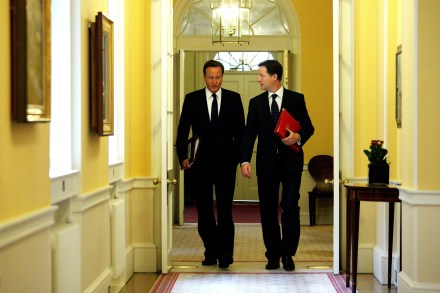
The announcement, yesterday, of Nick Boles' proposal for a Lib-Con electoral pact conveniently coincided with the opening of an election court hearing into a particularly unpleasant battle between former Labour minister Phil Woolas and his Lib Dem opponent, Councillor Elwyn Watkins. The most serious allegations against Mr Woolas, who won the seat with a 103 vote majority at the last general election, are that he deliberately lied in accusing Mr Watkins of being “in league with extremist Muslims ... and prepared to condone death threats against Mr Woolas,” and that in election pamphlets he falsely accused Mr Watkins of receiving funding from abroad.

THEATRE: Review – Bedlam Shakespeare’s Globe

  The Southbank has always been an anarchic place. Shakespeare’s Globe proudly reminds visitors that Elizabethan theatres were considered far too lawless – and, implicitly, too much fun – to be licensed within the city limits. After years of rubbing shoulders with gamblers, pimps, and bear-baiters, by 1815 most theatres had advanced to the semi-respectability of the West End, only to be replaced in Southwark by their natural heirs, the lunatics of Bedlam.

THEATRE: Review – Deathtrap Noel Coward Theatre

When was the last time you shuddered in the stalls as a deathly thriller played out on stage?  It’s a long time since the heyday of the West End whodunnit, when audiences piled tight into theatres only to better leap from their seats and squeal each time Death struck again. The world expert on modern storytelling structures, Princeton professor Peter Brooks, claims that rise of the thriller was directly related to middle class anxiety about social and familial disorder – perhaps, in Broken Britain, there are few suffocating nuclear families from which to escape, and the chaos of the outside world is less of a shocking intrusion than a constant presence.

THEATRE: How To Be Another Woman

There’s a moment in the Gate Theatre’s new devised play, How To Be Another Woman, when an actress slowly mimes reaching for a book and ostentatiously flipping it open on a crowded bus. She tells her companion that she’s reading Madame Bovary. There’s a moment in the Gate Theatre’s new devised play, How To Be Another Woman, when an actress slowly mimes reaching for a book and ostentatiously flipping it open on a crowded bus. She tells her companion that she’s reading Madame Bovary. The audience isn’t fooled. We can see that she’s posing with a stiff sequined evening bag, the flap held open like the cover of a book.

Made of Glass

Philip Glass doesn't approve of intervals. Last week, at Yale University's Sprague Memorial Hall, the prolific composer gave a preview of what audiences in Dublin, Edinburgh and Cork could expect from his piano performances a few days later. He starts by declaring that pauses in performance "damage the concentration" - and he ended it in front of an audience both entranced and exhausted by the musical equivalent of an optical illusion. For ninety minutes, Glass barely allowed a moment of silence to indicate where one piece ended and another began. His performance stands in a long East Coast tradition of using smaller towns - in his case New Haven, Connecticut - as a testing ground before performance on grander venues.

The equality dilemma

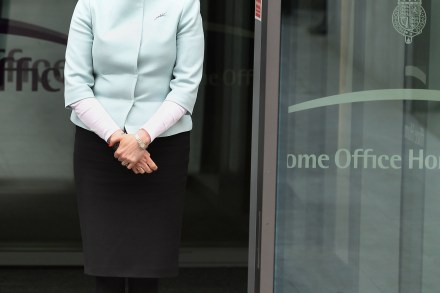
Spare a thought for poor Theresa May. Judging by the reaction so far, she now faces the unenviable task of shouldering almost everyone’s preconceptions about Tory women in government – with Caroline Spelman, Baroness Warsi and the lower-profile Cheryl Gillan for back-up. She will no doubt continue to disappoint feminists and irritate reactionaries, and she will do so while responsible for the notoriously unwieldy Home Office, which has rapidly taken over from the Department of Health as the ministry where political careers go to die. Representation in politics does matter. It is not unreasonable to claim, as Katharine Viner did in Thursday’s Guardian, that “democracies simply don't work unless they represent those they govern”.