Kate Maltby

Kate Maltby

Kate Maltby writes about the intersection of culture, politics and history. She is a theatre critic for The Times and is conducting academic research on the intellectual life of Elizabeth I.

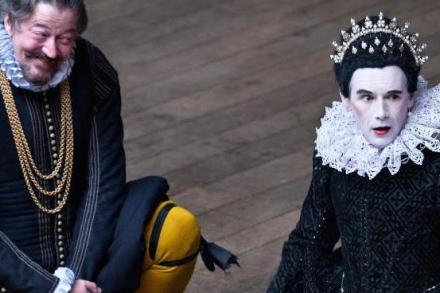
Wolf Hall and Bring Up The Bodies: ‘a major theatrical event – don’t settle for one, see both’

In Hilary Mantel’s Tudor England, it never stops raining. As she writes in her evocative programme note for the RSC stage adaptation of  Wolf Hall, she first envisaged the life of Henry VIII’s political fixer, Thomas Cromwell, as 'a room: the smell of wood smoke, ink, wet dogs and wet wool, and the steady patter of rain'. I’d heard, correctly, that Jeremy Herrin’s production was every bit as close and claustrophobic as Mantel’s novel. So as I set off, it seemed a disadvantageous prospect to spend a day of blazing summer sunshine cooped up with six hours of theatre, reviewing the double bill of Wolf Hall, and its sequel, Bring Up The Bodies.

Cutting all state funding to the arts would be monstrous

One of the best things about The Spectator is that it has no party line. As its dauntless refusal to compromise on Leveson Inquiry has shown, it is incomparably committed to the free speech of its writers. So only here could a humble arts blogger announce that this magazine’s editor, Fraser Nelson, was riproaringly, doltheatedly, cloven-foot-in-mouth wrong in his post on arts funding last week. On pretty much everything. Fraser’s right about one thing: Sajid Javid will make a great culture secretary, because unlike most culture bureaucrats, he gives a toss about staying solvent. Running culture by committee has always been a problem: the Department of Culture, Media and Sport (DCMS) remains a bloated department.

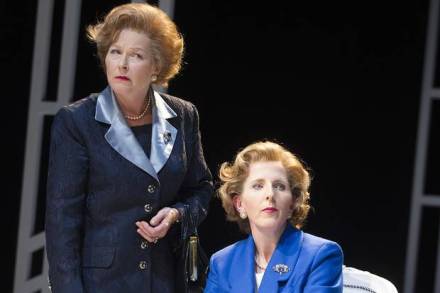
Handbagged: if this is what luvvies think being ‘fair’ to Thatcher is, I’d like to see their idea of ‘unfair’

Why do the Left love the Queen? Sure, most of us agree she’s done an excellent job in a difficult role, only screwing up a few major life decisions: tricksy choice of husband, wintry education of her children, fastidious attitude to peanuts. But as one of the country’s richest women, a symbol of economic equality she ain’t.  So it’s a mark of just how willfully hostile theatreland is to Margaret Thatcher that in Moira Buffini’s new play about the two, Handbagged, it’s the Queen, not the grocer’s daughter, who emerges as the courageous voice of social justice. It’s a frustrating blindspot in an otherwise witty, watchable production, anchored by consummate performances from Marion Bailey and Fenella Woolgar.

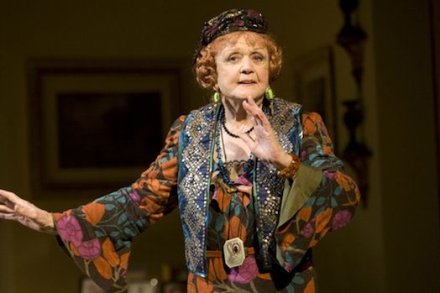
‘Nijinsky disguised as Nigel Farage’: Angela Lansbury stars in Blithe Spirit. Review.

Blithe Spirit Gielgud Theatre If you’d asked me before this week, I’m afraid I’d have guessed Angela Lansbury had already reached the spirit world. I’ve always imagined her eternally inhabiting the mid-twentieth century, as the prim but decidedly experimental home front heroine in Bednobs and Broomsticks (1971) or the icy Cold War matriarch in The Manchurian Candidate (1962).  Yet at the age of 88 she’s alive and kicking – nigh twerking – at the Gielgud Theatre in Blithe Spirit, Noel Coward’s tale of a newly re-married widower, who inconveniently rouses the ghost of his first wife and finds himself committing “astral bigamy”.

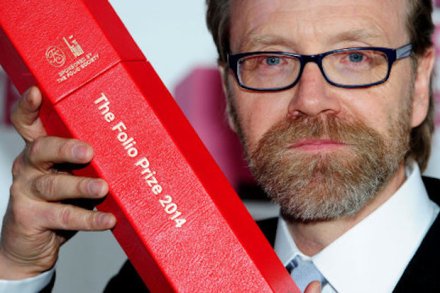
New literary award launches. But is the Folio Prize just a pretentious version of the Booker?

The British Library isn’t the first place I associate with contemporary fiction. For me, it’s about the Tudor manuscripts: the support and expertise of the manuscript room staff is second to none, and to the academic mind, few thrills compare to finding Elizabeth I’s distinctive handwriting on an unexpected document, or deciphering treacherous correspondence in a prayer book. But DBC Pierre it sure ain’t. Yet under the alert leadership of Roly Keating, the man who put BBC Four on the map, the British Library is now carefully fostering a commitment to living writers, not merely the dusty and dead.

Review: The Knight of the Burning Pestle, Sam Wanamaker Playhouse

If Monty Python were working in 1607, they might have come up with something like Francis Beaumont’s raucous The Knight of the Burning Pestle. A parody of popular chivalric romances of the day, the play follows the adventures of Rafe, an oafish grocer’s apprentice who decides to dub himself “The Knight of the Burning Pestle”, or in modern English, “The Knight of the Diseased Penis”. Yes, this play is a three-hour syphilis joke. So it’s a curious choice for the first season of the Sam Wanamaker Playhouse at Shakespeare’s Globe, an indoor alternative to the longer-standing open air Globe.

Syria’s humanitarian crisis must be addressed by Turkey

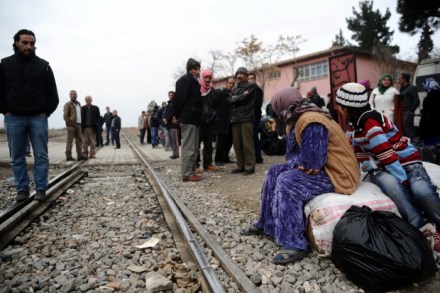
On Tuesday morning, Turkish police in the border cities of Kilis and Gaziantep arrested 25 people on suspicion of aiding Jihadi fighters in neighbouring Syria, including two said to be high ranking Al Qaeda operatives. Seven Conservative MPs had flown out of Gaziantep less than twenty-four hours previously. I was with them, meeting with Syrian opposition leaders and observing Turkish efforts to house the refugees flowing across the border. Most of those arrested have links to the IHH, a religious organization repeatedly accused of terrorism offenses by US politicians, and behind the ‘flotilla’ attempt to break Israel’s blockade on Gaza in 2010.

Western Christians are not helping their persecuted brothers and sisters

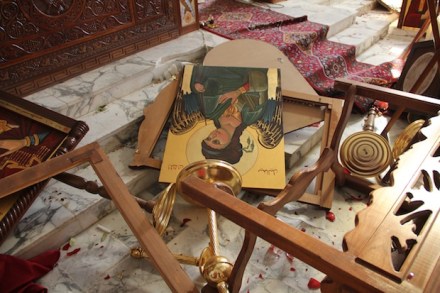
As Christmas Day breaks over Maaloula, one of the last few villages which still speaks the language of Christ, Islamist fighters will patrol the streets. Whether the nuns of its ancient convent are safe depends on who you believe, President Assad or Al Qaeda. The local shrine of St Thecla was built in the cleft of a miraculous rock: there’s a grim irony in the knowledge that the nuns of St Thecla will spend Christmas Day caught between a rock and a very hard place. That’s why Saturday’s intervention by the shadow foreign secretary, Douglas Alexander, is important. Alexander, like the Prince of Wales, wants the UK to do more to defend the rights of Christians abroad.

Gender segregation: radical speakers cannot demand an audience that fits their prejudices

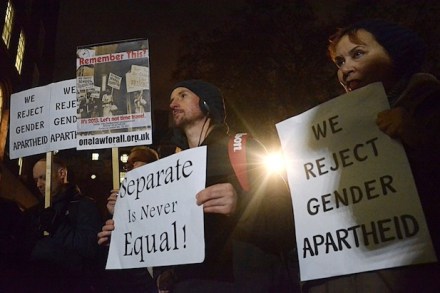
I spent much of Tuesday afternoon shivering outside the offices of Universities UK. I was there to protest their publication of guidelines which suggest segregated seating of men and women may be legally required where guest speakers demand it. It’s reassuring to learn that protest sometimes works: by Friday, the beleaguered body had shifted their position twice within 24 hours, thanks in part to criticism by Michael Gove and David Cameron. But for all their fair words, I’m told the Cabinet have no plans for legislation to clarify the law.

A compelling but unheroic Richard

Thanks to some mistake of history, Shakespeare’s Richard II has never quite been recognised as one of those roles against which the great actors are measured. But it takes a virtuoso to bring Richard to life: like all the toughest roles, he’s a heap of contradictions out of which only the most talented actors can construct a consistent man. We despise him in the first half and then weep with him in the second. He’s a decadent and incompetent king but, once deposed, he becomes an introspective tragic hero, a cousin of Hamlet. Against this challenge, newly minted film star Eddie Redmayne never quite finds the dignity needed to make Richard truly heroic.

Michael Gove and Boris Johnson: partners in power?

Boris Johnson's speech at the Centre for Policy Studies, much misrepresented, is still grabbing headlines. Boris gave the Margaret Thatcher memorial lecture, so it’s no surprise it has been interpreted as a bid to succeed her. But another relationship is just as intriguing: was Boris also stealing Michael Gove’s clothes? The Mayor said much about the significance of the Conservatives' past, but the Govian aspects of his speech offer a glimpse of what the party's immediate future might look like, particularly when it comes to a future leadership contest. Boris' 'cornflake packet' argument about meritocracy is a classic piece of Govian thinking. Posing the question 'what would Maggie do?

‘A Radical Imagination’ – Doris Lessing in the Spectator

Doris Lessing’s obituaries, as much as her writings, bear witness  to the great turbulences of the twentieth century. How many of us spent our childhood in two countries which have both since changed their names? But ‘exotic’ was the last word Lessing would have used to describe herself: 'I am 85, an Englishwoman (with Scottish and Irish tinctures) living in London', she insisted in one tart correspondence in our letters page. Though happy to pose as a mere correspondent several times over the course of forty years (oh, to crack her username at CoffeeHouse comments!), the Nobel winner was also a regular Spectator contributor.

The National Theatre – 50 years (and more) in The Spectator

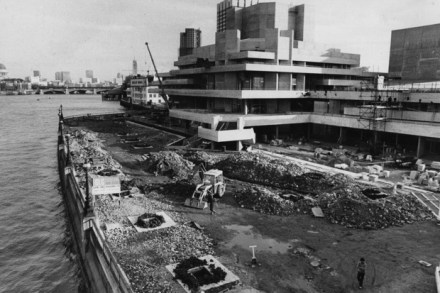
Today the National Theatre hosts a gala performance, screened on BBC2 at 9pm, to celebrate fifty years since its launch as a company in 1963. You can view the full programme here – I’d wanted to be cynical about a Greatest Hits parade, but reading the cast list, it simply looks astounding. But it’s not the fiftieth birthday of Denys Lasdun’s building on the South Bank – that robotic monstrosity, suggestive of an early design for Michael Bay’s Transformers movies, if Bay’s anthropomorphic tanks could ever rear onto hind legs while made of concrete.

Frankenstein’s family

Danny Boyle’s staged version of Frankenstein packed in the crowds to the National Theatre last year with its Olympian scale and throbbing orange sunsets. But if you were hoping for a more intimate invitation to the world of Mary Shelley’s monster, you might be better off popping down to the small but central Jermyn Street Theatre, for fringe company Primavera’s new production of Bloody Poetry. Howard Brenton’s 1984 play is unflinching in its depiction of the feckless ménage of poets that produced not only Frankenstein, but also Byron’s ‘Don Juan’ and Percy Shelley’s ‘Masque of Anarchy’, along with a traveling assortment of illegitimate children.

A treat for Cornish audiences

A wholesome gem from the London Fringe transfers to Cornwall this week, in the form of father and son double act Frankland and Sons. Both Tom Frankland and father John are born performers, and the show is a colourful dance through their family history that feels like a jovial children’s birthday party, with hints of balloon magic, vaudeville and fancy dress.   But what’s refreshing about Frankland and Sons is just how essentially English this snapshot of 20th Century history is. This is Middle England through three generations of wartime stoicism, domestic silences and staunch stiff upper lips.

The top ten plays of 2011

66 Books - The Bush Theatre The Bush opened its new theatre with an extraordinarily energetic celebration of the 400th anniversary of the King James Bible. The 66 playlets, one inspired by each of the books of the Bible, included the occasional dud - but the overwhelming majority were sparklers. Stand-outs included Ony Uhiara as Esther, no longer an unwilling biblical wife but instead a courageous innocent fighting to survive the horror of human trafficking; Obi Abili in Tom Well's tragicomic reworking of the Samson story; and the gentle mystery of the Archbishop of Canterbury's own offering, a newly penned version of the resurrection of Lazarus.

24-Hour Play People

This month, Mike Bartlett’s new play, 13, opens at the National. It follows the success of his play Earthquakes in London. At Paines Plough, George Perrin and James Grieve unveil the prototype for a revolutionary new theatre space, a portable in-the-round auditorium. And, at the Arcola, Tom Atkins brings us How The World Began, which comes to London after a hit run in California. The link between these may not be obvious, but it’s crucial. Like many of theatre’s fastest rising stars, each these gained vital career traction at the Old Vic’s now-legendary 24 Hour Plays, the boot camp that launches newcomers into the industry by giving them experience, contacts and confidence they wouldn’t get anywhere else.

Thandie Newton dies as the Maiden

When I was a teenager, Death and The Maiden was one of the plays I read when I was discovering that theatre could be angry, obscene and unafraid of speaking truth to power. Ariel Dorfman’s tale introduces us to Paulina, a torture survivor who becomes convinced, but can’t prove, that the urbane neighbour her husband, a civil rights lawyer, has befriended was one of the secret servicemen who imprisoned her during a now-fallen military dictatorship. When the play premiered in 1991, it delivered a shock blow to the culture of compromise and denial emerging as Dorfman’s homeland, Chile, made the transition to democracy, a year after the end of Pinochet’s dictatorship.

The Sea, the Sea

Sea-storms seem to be buffeting London theatre at the moment, and I’m not just talking about Trevor Nunn’s sugar-saturated Tempest. Down at the Southwark Playhouse, Edinburgh Fringe hit Bound blows into London after a worldwide tour, while at St Giles Cripplegate, in the Barbican complex, you’ll find a darker, sacral The Tempest just back from its premiere in a West Bank refugee camp. The winner of multiple awards at Edinburgh 2010, including a Fringe First and National Student Drama Awards, Bound reaches into the heart of what men will do in times of economic desperation. It’s also a peek into the life of a traditional fishing community, a frequently overlooked bulwark of our island history.

Ground zero, part 2

This is the second half of Kate Maltby’s essay on the representation of September 11th in art. You can read the first here. Decade succeeds in humanizing moral failings: fear, shame, doubt. In the simplest and most intimate scene, we hear a blokish, British New Yorker talk through the guilt of swapping his day off for 9/11, his creeping frustrations with the official investigation, his confusion at finding his public criticisms picked up by conspiracy theorists. It’s a devastating performance by Tobias Menzies, pared down, humble. And Menzies isn’t the only talented performer here: Kevin Harvey is fierce and firm as the Marine ordered to shoot Bin Laden, as well as pulling off a neat Barack Obama impression.