Kate Chisholm

A world apart | 4 October 2018

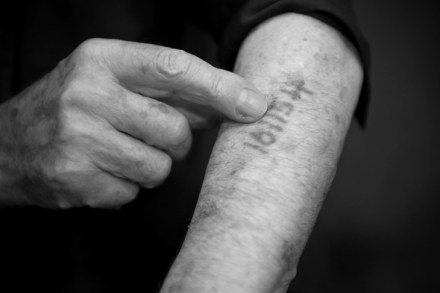
The most inspiring voice on radio this week belongs to Hetty Werkendam, or rather to her 15-year-old self as she talked to the BBC correspondent Patrick Gordon Walker in April 1945. He was with the British soldiers who entered the Bergen-Belsen concentration camp and witnessed the horrors of that scene: dead bodies in piles with no one to bury them, living people lying beneath them too weak to move, or using them as pillows. Hetty was one of several children interviewed by Gordon Walker, her voice so strong and resolute and light in spirit, in spite of all that she had seen and experienced. Talking now, aged 88, to Mike Lanchin for Children of Belsen on the World Service, she insists, ‘It is not a sad story I am telling you.

Get Carter | 27 September 2018

The writer Angela Carter (born in 1940) grew up listening to the wireless, her love of stories, magic and the supernatural fed by Children’s Hour, and especially a strange, frightening and yet captivating dramatisation of John Masefield’s novel Box of Delights. In the introduction to Sunday’s Drama on Three, which gave us two of her plays written for radio, Carter (voiced by Fiona Shaw) says that what she particularly likes about the medium is the way the listener has to (or is allowed to) contribute to the narrative, adding their imagination, their mind-pictures, their own way of seeing.

Lives less ordinary | 6 September 2018

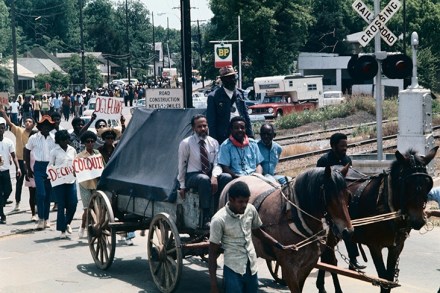
To have been a black lawyer in the deep south of America in the early 1960s would have taken a level of courage well beyond the ordinary. Chevene Bowers King was just such a man. He could have worked in the desegregated north, but instead chose to risk his life in Georgia, defending black people imprisoned on trumped-up charges and organising non-violent demonstrations to end segregation. David Morley’s two-part play on Radio 4, The Trials of CB King, took us through the blatant racism, the everyday brutality and dangerous reality for the black citizens of Albany, Georgia, where the sheriff encouraged the police to beat up the innocent purely because of the colour of their skin. Those who dared to befriend black people or fight their cause could also end up literally under fire.

Listening habits

Here’s a thought. Matthew Bannister, former Radio 1 controller turned presenter of programmes such as Outlook on the World Service and Radio 4’s The Last Word, has just announced that he’s leaving Outlook, which goes out several times a week, to ‘join the world of podcasting’. In fact, he’s already launched his own podcast, Folk on Foot. It’s as if he now believes that podcasting is where the exciting new challenges in audio (note, not broadcasting) can be found. We wireless-lovers should pay attention. Bannister is a radio man through and through. Does he really believe that podcasting is the future? We’re still waiting for the podcast that truly challenges the best of conventional radio.

Mind over matter | 23 August 2018

The return of Sue MacGregor’s long-running Radio 4 series The Reunion (produced by Eve Streeter) is a welcome reminder of just how good radio can be at taking us inside an experience while at the same time opening our minds to things we should know about. First there is MacGregor herself, such a vibrant, resonant voice, never too fast or too slow. Then there is her understanding of how to communicate. Each week she gives a short resumé of how and why the people she has gathered in the studio were first brought together, summarising complicated events in such a concise but clear way, giving all we need to know without burdening us with too much detail. When the conversation with her chosen guests begins, we know exactly why we should be listening to them.

Street life | 16 August 2018

‘What can you tell me just now,’ asks Audrey Gillan. She’s talking to Tara, who’s been sleeping rough on Fournier Street in Spitalfields, close to Gillan’s home. Tara, aged 47, sounds like a man, so deep and growly is her voice, ruined by drink, cigarettes and the hardness of her life. Gillan wants to know how and why she ended up living on the street. But beyond explaining that she was slung out by her mum when she was 14 there’s little that Tara can or is prepared to tell Gillan.

Poles apart | 9 August 2018

Much ado is being made of the latest listening figures, which have suggested that the percentage of those aged between 15 and 44 who turn on the radio at least once a week has fallen still further, down now to 13.8 million, or just 21 per cent of the population. Are we losing the listening habit? How worried should BBC Radio be, asked Roger Bolton on Radio 4’s Feedback (produced by Will Yates). He pointed out that while BBC Radio 5 Live is suffering a loss of audience, as is Radio 4’s flagship Today programme, other non-BBC talk-radio stations such as LBC are booming.

Beyond the grave

If proof were needed that radio will survive the onslaught of the new (or rather now not-so-new) digital technologies, albeit somewhat battered and slimmed down, then series like Radio 4’s Unforgettable (produced by Adam Fowler) should clinch it. Each episode is self-contained, and only 15 minutes long (the perfect length for podcasting). It’s cheap to make, requiring just a single guest, and inspired by a really simple idea — to create a conversation between a guest in the studio and someone they once knew who has died. You could make it at home, except that you probably couldn’t because an advanced editing machine is required, and an incredibly skilled operator.

Primal screams

Raw, earthy, ear-piercing. It’s hard to decide which was more terrifying and unsettling: the roar of the elephants in Living with Nature on the World Service, or the screaming women and men who we heard letting rip in Garrett Carr’s Radio 4 documentary, The Silence and the Scream. The elephants were recorded by sound engineer Chris Watson, and his producer Sarah Blunt in northern Kenya in the first of their new series in which they use sound as their tour guide and listening as their way of experiencing the landscape. We couldn’t see the golden orb of the sun rising over the miles of flat grasslands peppered with acacia groves and rocky outcrops, but the soundscape created by Watson and Blunt took us there in spirit.

Profit and loss | 19 July 2018

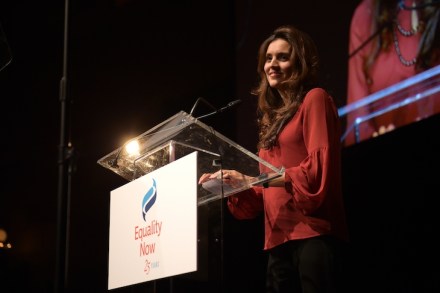
There’s been a lot of fuss and many column inches written about levels of pay at the BBC, as revealed in its latest Annual Report. Who gets too much? Why are women presenters still paid less than their male counterparts? What can be done to create more equality at the BBC? But all this controversy about money and gender is a red herring, diverting attention away from what we should be far more concerned about. Quietly, without fanfare, the BBC has been changing the way it makes and delivers its programmes.

On the buses | 12 July 2018

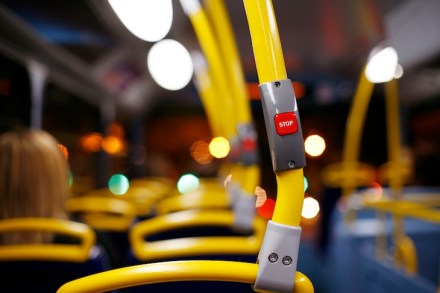
When did you last take the bus? If you don’t live in London, probably not for ages. In her two-part series for Radio 4, Mind the Gap, Lynsey Hanley set out to demonstrate just how difficult it is to access public transport outside the capital. In Skelmersdale, billed in the 1960s as a place of opportunity, a new town where everything would work better to make life easy for everyone, rich, middling and poor, no rail connection was built into the plan and now there are very few buses to get around. So bad is it that the council has had to set up a subsidised taxi scheme (euphemistically known as ‘the demand responsive transport system’) so that workers without cars can get to those offices, shops and factories no longer on a bus route.

Rules of engagement | 5 July 2018

‘Can one person really grasp the significance of what another person has been through?’ asks Dr Rita Charon in this week’s essay on Radio 3. She’s a physician in New York (isn’t it somehow telling that in Britain we’ve long since forgotten what GP actually stands for?) and as a result of her experiences as a doctor has set up a pioneering training programme at Columbia University. In Narrative Medicine (produced by Elizabeth Funning) Charon explained how she came to believe in the power of literature, of listening to stories, as a way of bringing physicians ‘near enough to the patient to recognise their suffering and help them through their ordeal without disabling clinical judgment or rendering them helpless with passive sympathy’.

Imperial measures

It’s been a heavyweight week on Radio 4 with the start of the annual series of Reith Lectures and a talk on empire by Jan Morris, and thank heavens for that. We need serious, we need facts, we need to think in these trying times, beset as they are by Love Island and persistent presidential tweeting. As it happens, both talks were given by women, and I can’t help wondering whether their gender has something to do with the way neither of them plugged a definite line but instead suggested there are more ways than one of looking at things. On Wednesday morning Morris looked back at Britain’s imperial past in her own inimitable fashion, calling her programme The British Empire: An Equivocation (produced by Gareth Jones).

When the boat comes in

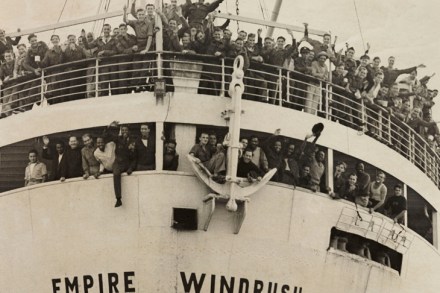
There was one of those moments late on Sunday night when a voice is so arresting (either through tone, timbre, or from what’s being said) that you just have to stop what you’re doing and listen, really concentrate, anxious not to miss a word. Floella Benjamin was on the Westminster Hour on Radio 4 talking about the 70th anniversary of the arrival of the Empire Windrush at Tilbury Docks with 500 passengers from the Caribbean. Nothing unusual about that; it’s an anniversary that’s been given a lot of coverage. But then she started talking about her own experience of coming to the UK by boat, in 1960, with her three siblings, travelling by themselves across the Atlantic to join their parents, who had gone on ahead with two of their children to find work.

Women’s work

I don’t know which day Rod Liddle travelled down from the northeast and found nothing but women’s voices cluttering up Radio 4, as he wrote about in last week’s magazine. But his description is not one I recognise. If anything we still hear too much from male commentators, male presenters, male writers, male comedians. In recent years, for instance, the gender-balance of contributors to the Today programme has improved from the 18 per cent of female guests just a decade ago, but there’s still a long way to go before we need to apologise for wanting to hear more from women. Very often they speak truth to power (because not in power themselves) as did Vera Brittain in her searing account of the impact of the first world war, Testament of Youth.

First thoughts | 7 June 2018

Headlines announcing that Radio 4’s flagship Today programme is losing its audience while Radio 3’s Breakfast has put on numbers got me up and listening extra early to find out which of all the presenters is most likely to keep me tuned in. Why have the efforts to brighten up Today, with longer interviews, more arts coverage, puzzles and news items from the web, not gone down well? What’s been happening on 3 to encourage more people to tune in first thing? And, further afield, how’s Classic FM doing, or those other breakfast stalwarts, Nick Grimshaw and Chris Evans? Evans was off-duty when I tuned in to Radio 2 one morning last week, but Sara Cox sounded as if she was loving every minute of being in his chair. Evans had better watch out.

What drama

One sphere that podcasts have so far not much penetrated is drama. Audible.co.uk is itching to develop its own brand but so far has limited itself to producing audiobooks read by a galaxy of stars. Recording plays is expensive, requires an understanding of studio techniques and a cast of actors who have learnt how to play to the microphone, not an auditorium. Only the BBC has as yet the necessary experience and resources, with its own repertory company and team of spot-effects experts and sound designers.

Faulty connection | 24 May 2018

‘Do you ever imagine your audience?’ was a question thrown at James Ward, creator and presenter of The Boring Talks podcast, at a recent seminar on podcasting organised by the BBC. ‘I try not to,’ Ward replied.‘I wouldn’t want to meet them.’ Such antipathy is all part of Ward’s alternative persona. The Boring Talks’s USP is to explore those topics usually considered too dull to explore, let alone talk about for half an hour. It’s become very popular, emerging from the Boring Talks conferences that have been held annually now for eight years. But his comment was very revealing. You can really tell when listening to his show that he doesn’t care about us.

The sense of an ending | 17 May 2018

The timing of the Today programme’s series about hospices could not have been more apt, coming as it did so soon after Tessa Jowell’s death was announced with its array of tributes and the poignant interview with her husband and one of her daughters. In themselves such personal testimonies are not always that helpful — everyone’s situation is individual and the actual outcomes necessarily different. But what Jowell’s family said about her last hours and their evident acknowledgment and acceptance of their situation gave a real sense of purpose on Monday to Zoe Conway’s report from the North London Hospice. This was part of the Dying Matters campaign, urging us to think more about death and end-of-life care.

Classified information

Now here’s a series that would make a brilliant podcast but is also classic Radio 4 — they don’t have to be mutually exclusive. In fact, why can’t podcasts be more like Radio 4? Programmes where the presenter’s role is to draw out the knowledge of experts, and the pace is measured, allowing the fascination of what’s being revealed to make an impact before leaping on, and where there’s no background music except when it adds to the timbre, the meaning, the purpose. Each episode of Classified Britain (produced by John Forsyth) is only 15 minutes long, so not too demanding of one’s time, and yet a lot of information is packed into that slot without it seeming too hectic or over-enthusiastic.