Kate Chisholm

Making sense of Seurat

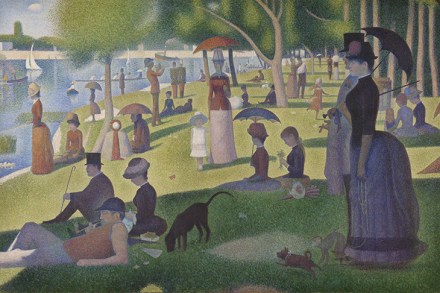
‘It’s too familiar, too obvious,’ says Cathy FitzGerald at the beginning of her new interactive series for Radio 4, Moving Pictures. But then she took another look at Georges Seurat’s ‘A Sunday on La Grande Jatte’, that huge, weird and unsettling pointilliste painting of a crowd of Parisians enjoying a sunny afternoon on the banks of the Seine some time in the 1880s. Instead of the 30-second glance we might give it in the art gallery, or five minutes at the very most, FitzGerald encourages us to linger, to look a little more slowly, take in the detail and fully appreciate what’s there on the canvas. After all, Seurat took two years to finish it.

Points of view | 28 February 2019

Is it me or are we now faced (or perhaps I should say fazed?) much more often by stories in the news that test our moral and ethical principles to the limit, forcing us to question ourselves and what we think to such an extent that it becomes impossible to be sure of what is right? I can never understand the high-minded righteousness and full-blown convictions of the panellists on Radio 4’s Moral Maze, who each week are given a topical issue and who then spend 45 minutes tossing it about, testing the pros and cons and questioning a group of often baffled witnesses who are invited on to the programme to provide evidence for differing points of view.

Friendly fire | 21 February 2019

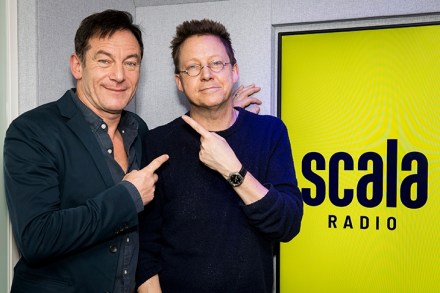
With the upsurge of listeners to Classic FM (now boasted to be 5.6 million listeners each week) and the imminent launch of a new commercial station, Scala Radio, dedicated to classical music and fronted by the former Radio 2 DJ Simon Mayo (who has said about his new home: ‘Some of it will be familiar, some new and exciting but all timeless, beautiful and all absolutely relevant to today’), Radio 3 badly needs to regain our attention. Last weekend’s focus on Berlioz, ‘The Ultimate Romantic’, could have been such an opportunity, but either because of funding cuts or a confusion about its purpose (to find new audiences, to teach or just to entertain) there was little buzz about the weekend.

A river runs through it

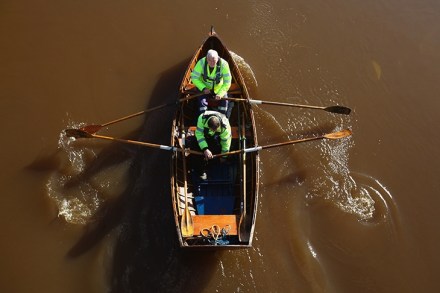
It sounds like something out of Dickens or a novel by Thackeray, a classic case of high-minded Victorian philanthropy, but the Glasgow Humane Society was actually set up much earlier, in 1790 (just after the revolutionary fervour in France demanded liberty, fraternity, equality), to protect human life in the city and especially on the river Clyde. It still exists and Glasgow claims to be the only city in the world to have a full-time officer dedicated to rescuing people from drowning. Back when it began the river and its banks were hectic with shipbuilding, trade and manufacturing. Now the city is almost ashamed of its river; no big ships, hardly any industry, little trade, and no longer a source of wealth and jobs. It has ‘turned its back on the Clyde’.

Tables turned

It was odd listening to Jim Al-Khalili being interviewed on Radio 4 on Tuesday morning rather than the other way round. In his series The Life Scientific, Al-Khalili has developed his own brand of interviewing, encouraging his guests to talk about their work in science by leading them from personal biography —how they came to study science, what they were like at school, who influenced them — to the intricacies of their research and why we should know about it. He makes this sound so easy and natural, setting his interviewees at ease, and his listeners, too, with stories from school and university before delving into the complex ideas behind their work.

When things fall apart | 31 January 2019

It’s becoming clear that the travails afflicting all the major players in The Archers, Radio 4’s flagship drama, are intended by the soap’s writers (and new editor Jeremy Howe) to reflect what’s going on in the country at large, Ambridge as a microcosm of our imploding nation. As Home Farm is sold to absentee landlords with no interest in farming the land, reducing Brian and Jennifer to a terraced cottage on the green, and Ambridge’s stately home Lower Loxley Hall veers into chaos with the son and heir in jail and the business on the brink of disaster, even Brookfield, the Archers’ homestead, is standing on the edge of a financial precipice.

An eye on the prize

We don’t know whether ‘Aziz H’ listened to radio plays as he grew up in Yemen. In fact we don’t even know his real name, nor what he looks like. He was unable to get the visa that would have allowed him to come to London to receive his prize as one of the winners in this year’s BBC World Service/British Council International Playwriting Competition. His drama, A Broken Heart in a Warzone, is the first he’s written for radio but he seems to know instinctively how to create character through voice alone, atmosphere through simple cues, drama out of juxtaposing situations. ‘As someone who isn’t a writer,’ he told the competition organisers, ‘I doubted making it to the shortlist.

Let’s hear it for the girls

Whether by accident or design, Zoë Ball took over the coveted early-morning slot on Radio 2 this week just as Radio 4 launched another of its Riot Girls series, celebrating ‘extraordinary’ women writers, those who have overturned convention, risen up against the status quo, proved themselves to be just as capable as their male oppressors (if not more so). Ball launched herself on to the airwaves on Monday morning at a pace it was hard to keep up with when it was still dark outside and the house had not yet warmed up. Her first track, that key statement of how she intends to reshape the breakfast show, give it a woman’s own makeover, was of course from Aretha Franklin. It just had to be. And the track — ‘Respect’.

Points of view

I suspect that whether or not you admire Neil MacGregor’s latest series for Radio 4, As Others See Us (produced by Paul Kobrak and Tom Alban), will depend on how you feel about Brexit. To my ears, it was shamelessly in favour of a Britain that stays in Europe and remains committed to its global role as the voice of moderation, a disseminator of liberal values, unusual in its ability to draw in other influences while retaining a strong sense of its own identity — and therefore to be cheered and recommended as essential listening. MacGregor is doing everything within his power to show us what we need to hear, before it’s too late, in these five intense and impassioned programmes.

Out of control | 3 January 2019

You may have noticed the flood of podcasts that’s been pouring out of the BBC since the launch of its BBC Sounds app. This is supposed to give us easier access to the programme archive but actually has been an excuse to show off the podcasts now made by the corporation, from the specially made How to be a Muslim Woman to Turbulence, a clever series of linked short stories by David Szalay, which was commissioned by Radio 4 and released as a podcast at the same time as being broadcast on the network. Podcasts are not bound by time and the demands of a schedule. They can last for ten, 20, 50, 100 minutes, taking as long as the story, the conversation, the facts require.

Out of this world | 13 December 2018

Take yourself back to (or try to imagine) Christmas 1968; a year full of disturbances, dashed hopes and extreme violence at home and abroad. On 21 December, a huge explosion occurred; not, for once, a herald of catastrophe but at Cape Kennedy, where the engines of the Saturn V rocket, ‘the most powerful machine ever made’, were ignited, launching the Apollo 8 mission. Three astronauts in a tiny metal box were thrown up into space. Three days later, on Christmas Eve, they would broadcast back to the world images that would change for ever the way we see our planet.

Death becomes her | 6 December 2018

‘Without death,’ says Salena Godden, ‘life would be a never-ending conveyor belt of sensation.’ For her death is what gives meaning to life and to be able to imagine your own death should make you try harder to be a better person. Mrs Death Misses Death on Radio 4 (produced by Cecile Wright) is not a programme for the faint-hearted. Godden, a poet, novelist and musician, faces with robust clarity what many of us would prefer to distract ourselves from thinking about. She argues that Death is much more likely to be a woman; not the usual caricature of a hooded male figure carrying a sickle.

Last suppers

You don’t need headphones to appreciate, and catch on to, the unique selling point of radio: its immediacy, its directness, that sense that someone is talking to you, and you alone. In fact, if anything, headphones take away from radio’s ability to reach out to the isolated and the lonely, to create that connection between you, the listener, and that someone else, the person behind the mic. With headphones the voice gets inside your head, but it’s not like having a conversation. That USP also explains why listening in the car works so well, creating a companionship while driving alone along a road empty of human contact, surrounded by fast-moving machines. You need that voice to reassure and remind, keep you focused and aware.

Leading ladies

I wonder what Michelle Obama, the former First Lady who remade that role in her own image, would make of Hannah’s attempts on The Archers to embody the 2018 version of an empowered, liberated woman? Does Obama secretly listen in to Ambridge each night? Has she been impressed by the soap’s attempt, via Hannah, to address the #MeToo movement? Does that explain why she blessed Radio 4 (rather than an online audio provider) with the great coup of reading herself from her new autobiography, Becoming? But first (for those unfamiliar with Hannah’s antics) let’s go back to Ambridge. She arrived on the scene as the new pig woman; Jazzer’s antithesis (Jazzer being a stereotypical Glaswegian, addicted to booze and having a good time).

Sounds of war

Amid all the remembrance, Radio 3 came up with a simple yet effective way of reflecting on war’s impact. Threaded throughout the day on Sunday were ‘sonic’ memorials, three minutes of silence, or rather opportunities to stop and reflect. Not the music of a requiem mass, or a lonesome bugle, but the sounds of those places where the worst battles in recent history — from Antietam in America (during the Civil War) to Huaihai (between the Kuomintang and communists in China) via the Somme, Stalingrad and Afghanistan — were played out.

It’s good to talk

‘It was so unreal,’ said one of the first world war veterans about the long-awaited Armistice. It was the most striking thought I heard all week, and the most shocking. The sense that when the guns finally fell silent at 11 o’clock on 11 November 1918 (and both sides had continued to barrage each other until the very last minute), signalling the end of war, the arrival of peace, the opportunity to return home, to go back to ‘normal’ life — that all this was somehow ‘unreal’. But for the young men who had spent four years in the trenches, that life of fear and dirt and rats and mud had become their normal; it was the only way to survive. When it was over, many of them were left with ‘a terribly empty feeling’.

Sounds investment

You may have noticed that BBC iPlayer (for radio programmes) has been replaced this week with the new BBC Sounds platform. Instead of simply finding your favourite programmes on playback, BBC Sounds will offer you the chance to personalise your listening, discover programmes recommended ‘just for you’, catch up with the latest podcasts. On Monday, James Purnell, director of radio and education at the BBC, talked up the new venture with Martha Kearney on the Today programme. ‘All of BBC audio will be at your fingertips,’ he promised. ‘We will do the hard work of getting the right programmes to you at the right time.’ ‘Won’t this involve taking money away from existing budgets?

Words and sentences

‘I’m not here to rehabilitate,’ says Pamela, who teaches creative writing to prisoners in Northern Ireland. She doesn’t think of her work as being about bars, bare walls and what happens when they leave jail. It’s all about meeting the prisoner as a person. She soon realised ‘how different prison writing is’. It’s much more direct, heartfelt. Jamie wrote a poem after just half an hour in Pamela’s class. He gave it the title ‘My journey in the care system’. More than a quarter of all prisoners were brought up in care, a figure that rises to almost half for those aged under 25. To Jamie it was a relief, ‘getting that finally out in the open’.

Shining circles and silver spools

Flies buzzing, strange rustling, crunching sounds, and then the most chilling screech you’ll have heard all week. Vultures were feeding off the carcass of a zebra in Kenya, recorded by Chris Watson. He had been up before dawn, on the look-out for a suitable carcass to attract the scavenging vultures. He was lucky to find one and clipped two microphones to the ribcage, running the cable to his recording vehicle 50 yards away. By break of day the vultures had appeared and were taking their breakfast. Watson believes that recording sound at such close quarters ‘really fires our imaginations in a unique way’. He was not the only contributor to The Changing Sound of Radio on Radio 4 Extra (produced by Jessica Treen) to talk about radio as if it is a visual medium.

On the double

How very odd of Radio 4 not only to release The Ratline as a podcast before broadcasting it on the schedule in the conventional manner, but also to give its network listeners an edited-down version. It’s as if the podcast of Philippe Sands’s programme, which investigates war crimes by the Nazis, fuelled by his own family history and what he discovered while writing his book East West Street, has been given priority, and anyone who listens in the old-fashioned, switch-of-a-button way is somehow second-best and doesn’t deserve the full monty. The first episode of the ten-part series was six minutes longer online than on-air. What’s in those missing minutes, I wondered? Not much. A bit of filling. Some extraneous detail.