Kate Andrews

Kate Andrews

Kate Andrews is deputy editor of The Spectator’s World edition.

Yet another NHS Budget boost – but where’s the reform?

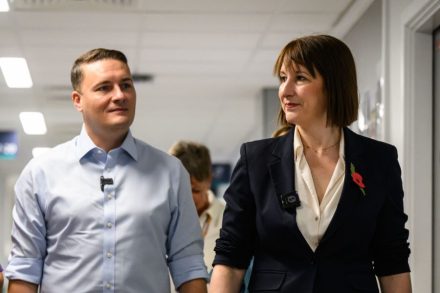
We won’t have to speculate about the details of the Labour’s first Budget much longer. But one tradition as old as time has been confirmed by the Treasury: the National Health Service is getting more cash. ‘Our NHS is the lifeblood of Britain,’ the Chancellor Rachel Reeves has said ahead of unveiling her full Budget tomorrow. ‘That’s why I am putting an end to the neglect and underinvestment it has seen for over a decade now.’ This is set to include £1.57 billion of capital spending to expand surgical hubs and provide more equipment. An additional £1.8 billion worth of funding will also be announced to help Labour make good on its promise to expand appointment access by 40,000 per week – and to get the 7.
Will the OBR’s £22bn ‘black hole’ review vindicate the Tories?

Are the details of the alleged £22 billion fiscal black hole about to be revealed? In addition to providing assessments and forecasts for the UK economy alongside the Chancellor’s Budget on Wednesday, the Office for Budget Responsibility is also set to publish its ‘review’ into Rachel Reeves' claim that the Tories covered up a multi-billion pound black hole in the public finances – one that she was only able to unearth after she entered the Treasury. Since Reeves first made the accusation in July, there has been lots of speculation about how the figure was compiled – and exactly where the money went. The Treasury has not released a breakdown of the figure and has declined freedom of information requests to publish the details.

Budget week: Labour braced for backlash

13 min listen

It's Budget week (finally)! How this week goes will set the tone for Labour’s first year in office. It’s fair to say that expectations are relatively low – with the Prime Minister himself warning of ‘painful decisions’ ahead. We know a lot of what will likely be included and Treasury sources are keen to play down talk of any Budget rabbits – suggesting a mix of the measures currently being discussed in the media. So what should we expect? And can Labour ride out the week unscathed? Also on the podcast, Labour have suspended the whip for Mike Amesbury, MP for Runcorn and Helsby, after he appeared to threaten a man who has been knocked onto the road in Frodsham, Cheshire. Labour look like they will be facing their first by-election.

Not even ‘working people’ will be protected from tax hikes

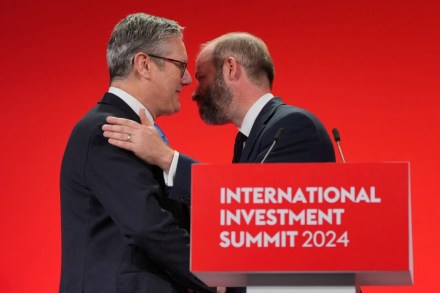
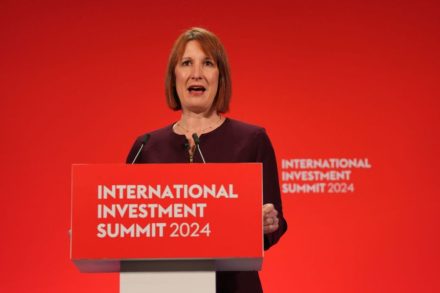
Does Labour regret its decision to redefine the meaning of a ‘working person’? The original understanding of the term seemed to be working just fine, until ministers decided to make it the metric for who would and would not be subject to tax rises. Now the party finds itself in the strangest of situations: having to talk down British entrepreneurs and employers, all for the sake of muddling through a painful Budget next week. It was just a few weeks ago that Labour was hosting its highly anticipated investment summit, trying to attract new business, and funding, to the UK.

Labour’s ‘working people’ muddle

11 min listen

Who exactly are 'working people'? The Labour party's use of this phrase during the election raised questions over who they will really be levying taxes upon. With less than a week to go until the Budget, Labour in government is now again struggling to give a clear definition of what they mean. James Heale talks to Katy Balls and Kate Andrews. Produced by Cindy Yu.

Reeves’s Budget needs to win over the market

Rachel Reeves confirmed on her trip to Washington DC that she will be changing the government’s self-imposed fiscal rules, allowing the Chancellor to borrow up to £50 billion more for infrastructure investment in Britain. The change – which will take into account the government’s assets – will further loosen what are already quite loose rules created by Rishi Sunak and Jeremy Hunt, which aimed to get debt falling as a percentage of GDP by the end of a five-year rolling period. It’s no surprise then that international markets are a little nervous. While plans to change the fiscal rule have been floated for over a month now – giving investors time to prepare and adjust – the 10-year gilt yield still rose today to 4.26 per cent as the Chancellor confirmed her plans.

Cambridge in crisis, Trump’s wicked humour & the beauty of AI ceramics

53 min listen

This week: Decline and Fall – how our greatest universities are betraying students.Our greatest universities are betraying students, writes David Butterfield, who has just resigned from teaching Classics at Cambridge after 21 years. What went wrong? First, class lists of exam results became private, under alleged grounds of ‘data protection’, which snuffed out much of the competitive spirit of the university. Now even the fate of examinations hangs in the balance. Grade inflation is rampant, and it is now unheard of for students to be sent down for insufficient academic performance. For students, the risks have never been lower.

Trump makes America laugh again

‘Tradition holds that I’m supposed to tell a few self-deprecating jokes this evening,’ said Donald Trump in his speech at the Al Smith Dinner in New York on Friday night. ‘So here it goes.’ He paused. ‘Nope. I’ve got nothing… There’s nothing to say. I guess I just don’t see the point at taking shots at myself when other people have been shooting at me.’ The crowd roared. Many of the jokes were close to the bone: ‘We have someone in the White House who can barely talk, barely put together two coherent sentences, who seems to have mental faculties of a child. It’s a person that has nothing going, no intelligence whatsoever. But enough about Kamala Harris.’ We can’t know whether Harris herself would have laughed.

Battle of Ideas – Who will win the 2024 American election?

80 min listen

Two weeks to go until the American election and politics is ever more divisive. Freddy Gray is joined by The Spectator's Kate Andrews and lecturer at Queen Mary's University Dr Richard Johnson about the latino vote, class politics, abortion and both guests make predictions for the 2024 election. Join Freddy Gray a special live recording of Americano on Thursday 24 October. You can buy tickets at spectator.com/electionspecial.

Labour budget: are we heading for austerity?

23 min listen

Labour’s first Budget in 14 years will be delivered at the end of the month. The Prime Minister and Chancellor have already been warning that the public isn’t going to like what’s in it. But how will the Budget affect people? Will Labour break its manifesto commitment not to tax working people? And is it really true that things have to get worse before they get better? Kate Andrews is joined by Paul Mason, journalist at The New European. Join Freddy Gray a special live recording of Americano on Thursday 24 October. You can buy tickets at spectator.com/electionspecial.

Here come the stealth taxes!

When Rachel Reeves’s ambition was to find £22 billion, it was already clear that she would need to find more revenue than what was expected to come from the relatively small take hikes the party announced it would pull pre-election. When that number was upgraded to £40 billion, there was no denying that a big tax hike was coming, the kind that tends to come from the major revenue raisers: income tax, National Insurance, or VAT. Despite being a stealth tax, will it go unnoticed? Of course Labour ruled out hikes to these three taxes with its tax ‘triple lock’ in the election manifesto. So the party has had to get crafty.

Did Labour make its own Budget trap?

15 min listen

A scoop from Bloomberg has revealed that a number of Cabinet ministers have written formally to the Prime Minister to complain about the budgetary decisions they are being asked to make in their respective departments. Rachel Reeves seems to have an impossible task ahead of the Budget – but was this a trap of Labour's own making? Oscar Edmondson talks to Katy Balls and Kate Andrews. Produced by Oscar Edmondson and Cindy Yu.

Will falling inflation save Rachel Reeves’s Budget?

Inflation slowed to 1.7 per cent in the twelve months to September, taking the inflation rate to its lowest levels since spring 2021. While markets and forecasters had expected the inflation rate to drop below the Bank of England’s 2 per cent target at some point this year (market consensus for September was 1.9 per cent), the bigger-than-expected fall has come as a surprise, as core inflation also slowed to 3.2 per cent in the 12 months to September – down from 3.6 per cent in August. The largest contributions to the slowdown came from falling transport costs, while overall services fell to 4.9 per cent on the year, down from 5.6 per cent in August.

Could Ozempic actually boost Britain’s labour market?

Is Ozempic the miracle fix for Britain’s labour market woes? This morning Health Secretary Wes Streeting has announced a £280 million investment into the UK from US pharmaceutical giant Lilly, which will include the first ‘real-world trial’ to give weight-loss jabs to people out of work. The news coincides with the publication of the latest labour market overview by the Office for National Statistics, showing the number of people out of work due to long-term sickness is still at a near-record high: 2.75 million in the three months to August. As Streeting highlights in the Daily Telegraph today, obesity is creating both a strain on the health service and on the economy.

Will Labour keep its promise not to hike National Insurance?

Despite getting off to a rocky start – including nearly losing £1 billion worth of investment – Labour’s much-anticipated Investment Summit seems to be delivering exactly what ministers had hoped for. The good news, including a combined investment of £6.3 billion from four US technology firms to expand data-centre infrastructure in Britain – is rolling in. The biggest question for plenty of businesses at today’s Summit will be about tax Business is struck, perhaps awestruck, by Labour’s commitment to slash red tape. During a panel event with the Prime Minister and ex-Google CEO Eric Schmidt, the tech guru expressed how ‘shocked’ he was to learn that Labour was now ‘strongly in favour of growth’.

Is Labour’s investment summit back on track?

13 min listen

This morning is the government's big investment summit. They pledged to have the summit within their first 100 days in an attempt to hit the ground running and show the UK as a sensible place to do business. The timing – two weeks before the budget – is interesting, and so is the U-turn from P&O, who will attend the summit despite comments last week by Transport Secretary Louise Haigh (she described the ferry company as a ‘rogue operator’). P&O's reported £1 billion worth of investment is back up for grabs. Is it time to invest in Britain? What is Labour's big pitch to business? Also on the podcast, over the weekend we had the sad news that former First Minister of Scotland Alex Salmond passed away. What will be his legacy?

Labour must tread carefully to avoid killing off Britain’s growth

Happy Friday: the economy is growing. After two consecutive months of no growth, GDP picked up in August, rising by 0.2 per cent. Production and construction output finally turned around, growing 0.5 per cent and 0.4 per cent respectively, after contracting in July by 0.7 per cent and 0.4 per cent. Services output grew by 0.1 per cent, with the biggest contributions in the three months to August coming from professional, scientific and technical activities and from information and communication sectors.  Despite growth forecasts being revised upwards throughout the year, the news today is welcome relief for those who started to fear that growth in the UK had flatlined. Still, markets are predicting a slower growth rate in the second half of 2024.

The ‘Green Budget’ could leave Rachel Reeves red-faced

16 min listen

The Institute for Fiscal Studies has published its yearly Green Budget, weeks ahead of Chancellor Rachel Reeves’s first fiscal event. It’s grim reading, for both the government and the public. For Labour to make good on its promise to avoid ‘austerity’, taxes are going to need to go up significantly: by £25 billion, the IFS’s reports, and that’s just to ‘keep spending rising with national income.’ Can Reeves square the circle?  James Heale speaks to Katy Balls and Kate Andrews.  Produced by Oscar Edmondson.

The ‘Green Budget’ could leave Rachel Reeves red-faced

The Institute for Fiscal Studies has published its yearly Green Budget, weeks ahead of Chancellor Rachel Reeves’s first fiscal event. It’s grim reading, for both the government and the public. For Labour to make good on its promise to avoid ‘austerity’, taxes are going to need to go up significantly: by £25 billion, the IFS reports, and that’s just to ‘keep spending rising with national income.’ That’s before the government tackles its pledges to invest. And that doesn’t rule out that ‘further tax rises or spending cuts could be required before the end of the parliament’. Despite speculation that Reeves is changing the fiscal rules to enable her Treasury to borrow billions more, that will only release cash for capital investment.

Is Labour about to go on a borrowing spree?

At Prime Minister’s Questions this afternoon, Rishi Sunak took a technical turn. Why is Rachel Reeves considering changing the fiscal rules, he asked the Prime Minister, when just last year she said doing so would be ‘tantamount to fiddling the figures.’ No clear answer followed.  The wisdom during the general election was that borrowing more money – to finance Labour or Tory spending promises – was simply not an option. No one dared to propose anything resembling Liz Truss’s mini-budget saga, which saw her attempt to borrow £100 billion to limit energy price rises for consumers.