Kate Andrews

Kate Andrews

Kate Andrews is deputy editor of The Spectator’s World edition.

In praise of Halloween food

From our US edition

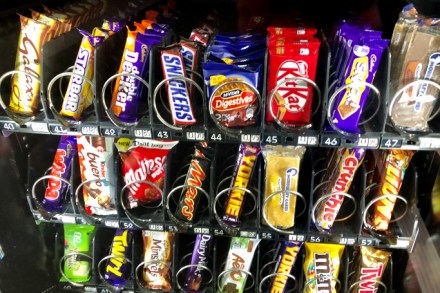
If you’re hesitant to ask someone if they are American or Canadian — the latter are often offended to be mistaken for the former — ask them instead about their favorite holiday. It isn’t a foolproof method, but if they say Halloween then you know you’re talking to an American. No other nationality would choose it — because no one else gets it so right. The origins of All Hallows’ Eve belong to Ireland and Scotland. The Celtic festival Samhain was not only a huge feast to mark the start of winter: it was a day full of superstitious activity, which included bonfires to clear the air of ghosts and sacrifices to appease anything all-powerful that might curse food supplies during the dark months.

Halloween

Britain’s GDP has stagnated – again

There was no economic growth in July, according to the Office for National Statistics. The latest GDP figures show that a boost in services output – 0.1 per cent – was offset by a tumble in production and construction output – 0.8 per cent and 0.4 per cent, respectively – leading to no overall growth in the month of the election.  It’s surprisingly bad news, as markets had expected a modest 0.2 per cent increase in July. Instead, Britain had two consecutive months of no growth.  There is also growing concern that the improvement in services output in July won’t necessarily carry into the latter half of the summer. The rebound in retail sales and the reduction in strike days could take a turn for the worse.

Trump vs Harris debate: who won?

14 min listen

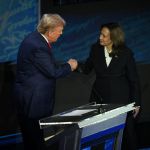
Last night saw the first Trump vs Harris debate and the consensus seems to be that Harris came out on top. She managed to avoid sticky issues about her political past and goaded Trump into some rambling and – at times – outrageous remarks. What did we learn?  Also today, we have had new figures on the economy with GDP flatlining for the second month in a row. Does this vindicate Rachel Reeves' tough decision on the winter fuel allowance?  Katy Balls speaks to Kate Andrews and John McTernan.  Produced by Oscar Edmondson.

Donald Trump was his own worst enemy in this debate

‘So I think you’ve heard tonight two very different visions for our country,’ Vice President Kamala Harris insisted in her closing remarks at last night’s presidential debate. Viewers, I suspect, may disagree. This was not a debate where we learned anything new. There was no great ‘vision’ put forward by Harris or Donald Trump. Public policy was barely touched upon. If what the candidates discussed in terms of specific plans is really their great vision for the United States – distorting the housing market, jacking up prices on consumers – then Americans should be very worried indeed. For a country facing a myriad of economic and existential problems, nothing mentioned by the former President or the Vice President could be described as a comprehensive solution.

Can Labour get young people back to work?

The UK still looks set to get another interest rate cut (or two) by the end of the year, but is that now the main indicator of a healthy labour market? This morning’s update from the Office for National Statistics shows average wage growth slowed to 4 per cent in the three months leading up to July. Wage growth is still outpacing inflation, but it is moving in the right direction – for the Bank of England anyway, which is watching closely to see if its first rate cut is going to have any major impact on wages, risking a secondary round of inflation spikes. Adjusting for inflation, overall wages are up 1.1 per cent on the year, which should give the BoE room for another rate cut this autumn and even possibly at its last meeting in December.

Coffee House Shots live: the Starmer supremacy

47 min listen

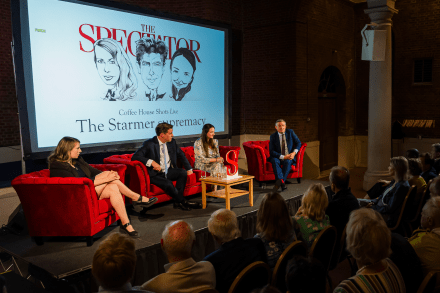
Join Fraser Nelson, Katy Balls and Kate Andrews, along with special guest Jonathan Ashworth, for a live edition of Coffee House Shots recorded earlier this week. They dissect the first few weeks of the new Labour government and look ahead to the policies autumn, and the budget, might bring. Having surprisingly lost his seat at the election, how blunt will Ashworth be? The team also answer a range of audience questions, including: how big of a welfare crisis is the government facing? Would – and should – they reform the NHS? And could the challenge Reform UK poses to traditional parties continue to grow?  Produced by Patrick Gibbons and Megan McElroy.

Expanding the sugar tax won’t save any lives

Labour may not have been forthcoming about most of their tax and spend plans during the election. But on one topic the party was crystal clear: a Labour government would beef up the nanny state. Politicians weren’t shy about this. It was Wes Streeting’s idea to adopt New Zealand’s (now abandoned) plans for a generational smoking ban, picked up months later by Rishi Sunak. Keir Starmer kicked off the year embracing the nanny state, saying he was ‘up for that fight’.  It’s no surprise then that health campaigners and groups are flocking towards new government aides to discuss what can be taxed or banned next.

How far will Starmer’s smoking ban go?

19 min listen

Keir Starmer has confirmed that the government is looking at plans to revive Sunak's smoking ban legislation. They may go even further - reports suggest they will seek to extend the current indoor ban for hospitality venues, to outdoor places such as pub gardens. What's the rationale behind this, and where could it lead? How popular is the measure with the public? And, following Starmer's speech on Tuesday about the economic problems the nation faces, is this another thing for business to worry about? Patrick Gibbons speaks to Katy Balls and Kate Andrews.

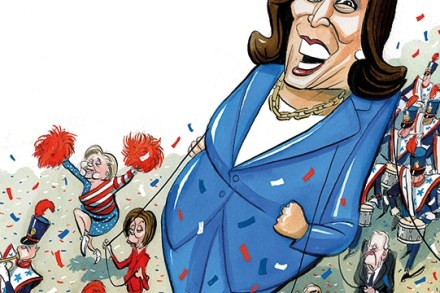
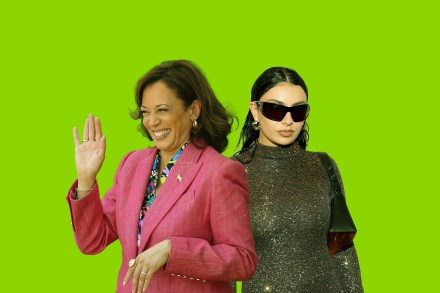
All hail Harris! Can Kamala bluff her way to the top?

36 min listen

This week: All hail Harris! As the Democratic National Convention approaches its climax, The Spectator’s deputy editor Freddy Gray explores vice president Kamala Harris’s remarkable rise to the top of the democratic ticket in his cover article this week. Freddy joins the podcast from Chicago (1:30).Next: live from the DNC. Freddy and Natasha Feroze, The Spectator’s deputy broadcast editor, have been out and about at the convention talking to delegates – and detractors – of the Democratic Party. What do these Americans think? And does Kamala Harris have ‘good vibes’? (7:56). Then: should misogyny really be classified under anti-terrorism laws?

Can you spot an ‘extreme misogynist’?

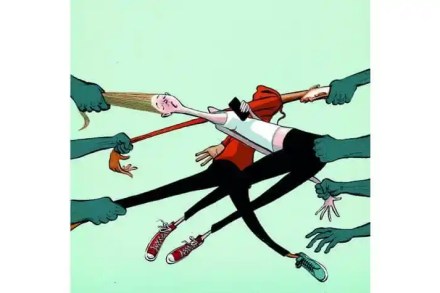
Can you tell the difference between an extreme misogynist and a moderate misogynist? Hating women has always seemed, to me anyway, a rather extreme position on its own. The label ‘extreme misogynist’ is surely repetitive. A moderate misogynist is an oxymoron. But then the Home Office announced this week that ‘extreme misogyny’ could be added to the list of ideologies the government monitors to tackle terrorism. I’ve been racking my brain, trying to figure out how the police would tell the extremists from the moderates. Does the extreme misogynist hold women in contempt all week long, while the moderate reserves his disdain for weekends? Does a mild misogynist simply begrudge us having the right to vote, rather than campaign to take it away?

Has GDP growth come at the wrong time for Labour? 

11 min listen

The broader story this morning paints a positive picture for the UK economy. While growth in June took a pause, growth in Q2 for this year is estimated to be 0.6 per cent, roughly in line with what markets were predicting, as forecasts for UK growth have been repeatedly revised upwards since the start of the year. Growth was 0.8 per cent in the three months to May, indicating the positive upward trend only paused at the start of the summer. This sounds like great news, but has it come at the right time for Labour?  Today we have also had A Level results and top marks have risen despite a return to pre-pandemic levels. What do the numbers say?  James Heale speaks to Farser Nelson and Kate Andrews.  Produced by Oscar Edmondson.

Britain’s growing GDP is good and bad news for Labour

The UK economy flatlined in June, as uncertainty over the general election and industrial action took their toll on economic growth. It wasn’t expected to be a strong month for the economy, with markets forecasting very little GDP growth, if any. But the small dip in services output – a fall of 0.1 per cent, driven primarily by a fall in retail trade – was disappointing after five months of consecutive growth. Still, June’s figures are the perfect example of why one month of data rarely tells the full story. Businesses reported to the ONS that ‘customers were delaying placing orders until the outcome of the election was known’ which applied across manufacturing, construction, and services.

Why has the inflation rate gone up again?

11 min listen

We've got some news today on the inflation rate, which rose to 2.2 per cent in July, slightly up from the Bank of England’s target of 2 per cent, where the rate sat in May and June. It’s the first rate uptick this year – and though widely expected, it will be used to explain why the Bank’s continued hawkish stance, despite starting its rate-cutting process earlier this month. Is this a sign of economic conditions improving? Could it lead the way to interest rate cuts later this year?  Also today, the Treasury its under scrutiny after a Labour donor received a top civil service job. Do we need more transparency when it comes to political appointments?  Oscar Edmondson speaks to Kate Andrews and James Heale.  Produced by Oscar Edmondson.

Why has the inflation rate gone up again?

The inflation rate rose to 2.2 per cent in July, slightly up from the Bank of England’s target of 2 per cent, where the rate sat in May and June. It’s the first rate uptick this year – and though widely expected, it will be used to explain why the Bank’s continued hawkish stance, despite starting its rate-cutting process earlier this month. The slight speed up in the inflation rate is largely attributed to the overall cost of household services, where the ‘prices of gas and electricity fell by less than they did last year’. This was somewhat offset by the ‘largest downward contribution’ which was attributed to falling costs for restaurants and hotels.

The problem with Labour’s mini-Budget blame game

Liz Truss continues to do a lot of heavy lifting for the Labour party. The former prime minister’s mini-Budget featured more in the election – as a Labour talking point – than any piece of policy implemented by Rishi Sunak. Chancellor Rachel Reeves is determined to present the next round of spending cuts and tax hikes as an extension of Tory policy, rather than the start of Labour policy. The narrative that, under Truss, the Tories ‘crashed the economy’ is part of what’s being used to justify all the ‘tough decisions’ Labour has coming up in its first Budget at the end of October. The perceived wisdom of what the mini-Budget did to the economy is crucial for pointing the blame.

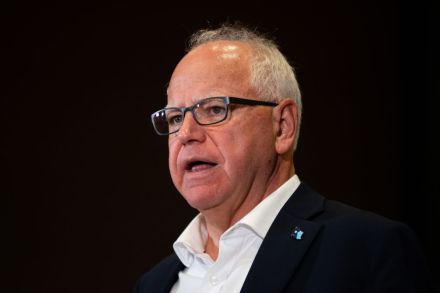
Does Tim Walz really moderate the Kamala Harris ticket?

Since Kamala Harris moved to the top of the Democratic ticket, it’s been assumed she would use her boss Joe Biden's tactic for selecting a running mate ahead of the US presidential election: picking someone with completely different credentials and characteristics, to fill in the gaps in the voting base. When Biden was running for the nomination in 2020, he pledged to select a black, female politician for his vice president nominee. When he selected Harris, he was also choosing a politician with a different (and far more progressive) political background to himself. She was ranked as one of the most left-wing senators in Washington – having held a long list of socialist policy positions, until she didn’t.

Wall Street must brace itself for more shocks

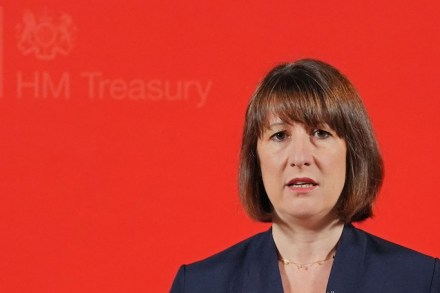
The Chancellor has kicked off her investment tour under rather difficult circumstances. While Rachel Reeves spends the next three days in the United States and Canada trying to drum up investment for Britain, the world of finance remains with eyes glued to the turbulence of the stock market, having to admit to itself that it’s not sure what comes next. After experiencing its worst crash yesterday since Black Monday in 1987, Japan’s stock market has all but recovered, rising by 10 per cent today – its biggest single-day gains in history. Nearly all markets in Asia are on the up. But while the FTSE 100 looked set for a rebound, stocks continue to slump today as worries about the US economy are intensifying.  We’re still in the thick of the turbulence.

Keir Starmer slaps down Elon Musk over ‘civil war’ comment

13 min listen

The Prime Minister has clashed with billionaire owner of ‘X’ Elon Musk over comments that Musk made claiming that – in light of the violent disorder across the country – the UK is heading for civil war. How long will this spat go on? And is this the start of Starmer being tough on the tech giants? Elsewhere, Rachel Reeves has been in North America this week attempting to bang the drum for Britain as 'a stable place to do business' … stable all expect for some significant market turmoil. What's the update?  Oscar Edmondson speaks to Katy Balls and Kate Andrews.  Produced by Oscar Edmondson.

How long will Kamalamania last?

26 min listen

In the short time since Joe Biden has stepped aside for Kamala Harris's candidacy, the Democratic party has totally switched on the gears for 'Kamalamania'. On this episode, Freddy Gray talks to Kate Andrews about the disingenuousness of the hype, how social media drives it (and in particular, TikTok), and whether the enthusiasm for Kamala really has or will cut through to voters. Produced by Natasha Feroze and Cindy Yu.

Sunak’s gift to Labour

12 min listen

Today the Bank of England has cut rates for the first time in four years, bringing more good economic news to the Labour government. On the episode, Cindy Yu talks to Katy Balls and Kate Andrews about how this raises the question – again – of why Rishi Sunak called an election before he could reap a summer's worth of economic good news. Produced by Cindy Yu.