Kate Andrews

Kate Andrews

Kate Andrews is deputy editor of The Spectator’s World edition.

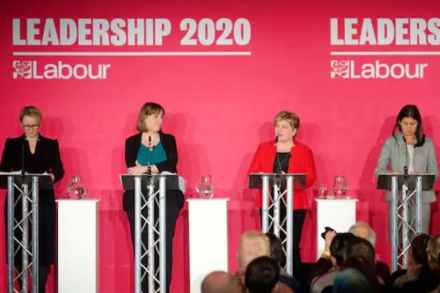
Labour’s real women issue

The Labour Party claims to be learning lessons from its crushing defeat in December’s general election. But are they the right ones? While some have been moving through the stages of grief more slowly than others, the party has generally woken up to the reality that something’s gotta give. But it’s not yet obvious that the right lessons have been learned in the upper echelons of Labour - not even by some of the MPs putting themselves forward to be the next leader. Yes, the party faithful are shifting their focus back to northern and rural communities, whose decision to vote blue this time around turned decades’ worth of electoral voting patterns on their head. The first Labour hustings revealed some agreement that the election manifesto was flawed.

Bailing out Flybe is a big mistake

During the election, the Tories shifted to the centre ground, competing with Labour on NHS spending, infrastructure investment and politicised increases to the minimum wage. They also pledged to create a new state aid regime to support struggling businesses with public money. It seemed too interventionist – and out of character – to believe. Countering basic economic sense, the self-proclaimed ‘party of business’ proposed measures in favour of cronyism, offering up a far more protectionist vision for Brexit-Britain than had previously been touted. But as they say, seeing is believing.

The sugar tax is only a ‘success’ if you ignore the evidence

They say no news is good news, but what to make of old news? Today’s papers (including this front page) feature rather boastful headlines about the success of the sugar tax (a levy on soft drinks companies concocted by former chancellor George Osborne, with the stated aim of tackling obesity). The i reports that the levy has “revolutionised the industry, with the average beverage now 28 per cent less sugary than before the tax was introduced,” according to a new study from researchers at Oxford University. But is the sugar tax really something to celebrate? While the study may be ‘new’, the figures are not. They were published by Public Health England last September, which noted that the 28.

Why trouble in the Middle East no longer means an oil price hike

Not so long ago, you could judge the stability of the Middle East by looking at the oil price. Now: not so much. In the last week, we’ve seen American drones kill an Iranian general and Tehran fire missiles at two American bases in Iraq, yet the price of oil remained relatively stable. It climbed four per cent on Tuesday evening, when there was talk of all-out war, but it settled back down throughout the week. Given how much oil used to dominate foreign affairs – and how its price served as one of the first major indicators of global conflict – it’s worth looking a little more at this dog that didn’t bark. The 2003 Iraq War was seen by critics (and some supporters) as an attempt made by America to secure stable oil production.

Scotland must reckon with the euro

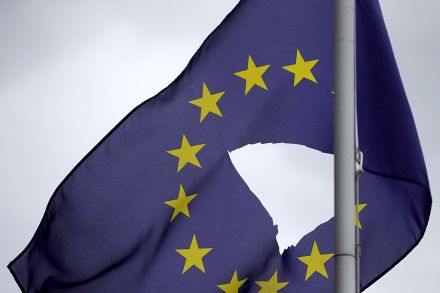
While many celebrate the new decade today, or sleep off their celebrations from last night, others will look back at what is now the 21st anniversary of the launch of Europe’s common currency, which not only ushered in the official currency of the European Union, but also established shared monetary policy for the bloc through the European Central Bank. The euro was not a particularly prominent feature of the Brexit debate, as the UK was one of two member states legally exempted from its adoption (though it may not have been exempted in future from financial responsibility for EU bailouts, had the UK voted to remain in 2016).

The Uber ban is just more pointless protectionism

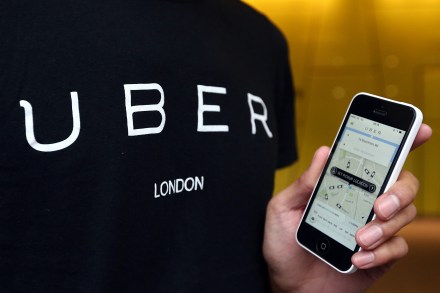
Transport for London doesn’t like Uber. It doesn’t like the innovations the app has created in transport; it doesn’t like how competitive platforms like Uber have become with black cabs; and it doesn’t like that customers have completely embraced the service. That’s why they’ve effectively banned the app – again. This morning TfL ruled that it will not be expanding Uber’s licence, because it claims the platform does not meet the 'fit and proper' requirements to be a private hire operator, nor has it done enough to address rider safety over the past few years (TfL refused to renew Uber’s licence back in September 2017 as well, but a court challenge managed to get it extended for an additional fifteen months).

Prorogation and the politics of the English language

Funny how language changes over time. Or rather, how we change language to advance our agenda. Sometimes it's a natural process, a long process – what works survives and what's easy thrives. The word 'smart' originated as something to describe pain or a stinging sensation. The ‘sting’ associated with the word moved to an understanding of ‘quickness’ or ‘intensity’, and is now used today to describe intelligence and wit. ‘She’s the smart one on those benches’ we might utter, to spark fierce debate and disagreement in these politically tumultuous times.

Why ITV’s decision to ban all-male comedy writing rooms is a mistake

Laugher is a universally understood language. If something is funny, we all react the same way. What we find funny can be subjective – dark humour, slapstick, take your pick. But at the end of the day, comedy may be one of the truest forms of meritocracy we have. Regardless of your gender, race, beliefs or background, the question is clear cut: either you make people laugh, or you don’t. Which brings into question ITV’s decision to ban all-male writing rooms, as part of its strategy to be more inclusive to female writers and comedians. ITV is a private media company and is free to do what it pleases with its writing rooms – but that doesn’t make it a good decision, nor does it make it compatible with other initiatives within ITV.

Why I’m pleased that Dominic Raab isn’t a feminist

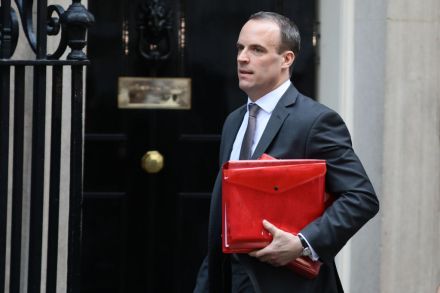
Dominic Raab is not a feminist. That is the confession the Tory leadership hopeful makes in an interview in this week’s Spectator. Screams, gasps and 240 character rants have swept the internet since. Who in their right mind would reject the notion of treating men and women equally? Of course, Raab didn’t do that. He describes himself as “someone who is passionate about equality and wants a fairer society.” What Raab rejects is the term itself: feminism. And Raab is not alone. In fact, his position represents the vast majority of women in the UK. Most women don’t identify as feminists. Young women, older women, and especially women in lower income brackets actively reject the term.

Changing the gender pay gap system won’t help – let’s scrap it instead

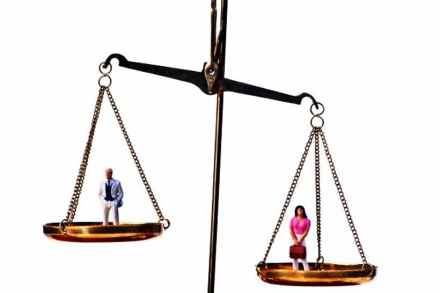
My heart skipped a beat when I discovered the Royal Statistical Society was publishing a report, out today, which calls for the rules around gender pay gap reporting (companies with 250+ employees are mandated to calculate and publish this data by law) to be refined. As I wrote on Coffee House last week, the calculations are so crude and void of context, they render the results almost meaningless. They don’t take any like-for-like comparison on job, age, or education into account and don’t even control for full and part-time workers. As a result, the final figures are comparing the CEO of the FTSE 100 company to the junior researcher who just graduated from university.

EU officials and Brexiteers share a similar concern over Brexit

Rumours continue to circulate that if a long extension were to be granted by the European Union, it could be flexible. This would mean that Britain could officially depart from the bloc earlier than the agreed-upon exit date if a deal were secured between the UK and the EU27. I’m unsure what about the past two-and-a-half years could make someone think that MPs will pull together and unite around a deal before crunch time. I remain deeply sceptical that a long extension could ever encourage a shorter exit process – evidenced by not one, but two requests for an Article 50 extension in the past six weeks.

The problem with the gender pay gap obsession

Would we condone teaching a child that 1+1 = 3, for the sake of increasing her interest in maths? No. Would we praise flat earth theorists for getting people talking about the health of the planet? No. So why are we giving credence to meaningless and often deceptive gender pay gap statistics, which have us focusing on women’s issues in a way that is damaging to women? With Brexit-mania dominating our national debate, you may have missed that today is the deadline for large organisations to report their gender pay gap data. Now into the second year of reporting, it has become increasingly clear that the influx of data from the gender pay gap reporting measures fails to provide any meaningful insight into fair pay for men and women in the workplace.

It’s time for Democrats to face up to the truth about Donald Trump

If you follow the US president on Twitter, you might think that every day is Donald Day. But Sunday was a particularly good day for Trump After two years of special counsel Robert Mueller investigating possible collusion between Trump, his officials and the Russian government, the verdict was finally delivered: not guilty. The letter from attorney general William Barr to Congress explains “the special counsel did not find that any US person or Trump campaign official conspired or knowingly co-ordinated with Russia.” On the issue of obstructing justice, the evidence “was not sufficient”, and so the “special counsel therefore did not draw a conclusion.” In short, Donald Trump is a free man.  Of course, this is only the end of the beginning.

Does Lancet want to hand control of our diets to the state?

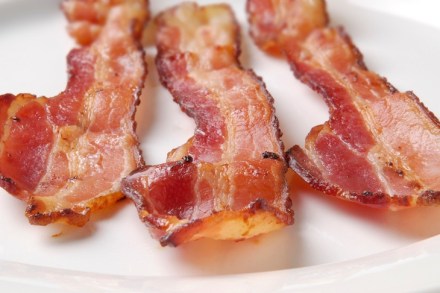
Interested in a case study of all rational and proportional thought going out the window? No, I’m not talking about Brexit – I’m talking about the ‘EAT-Lancet Commission on Food, Planet, Health’ which - in an ironic attempt to lay out prescriptions for a better world - published a report yesterday calling for intervention, force, rationing, and the abolition of consumer choice to achieve its ends. This latest dietary decree only allows seven grams of pork per day (equivalent to a half-rasher of bacon, or one-tenth of a sausage), twenty-nine grams of chicken each day (roughly one and a half nuggets), one quarter of a baked potato, and only one and half eggs - not per day, but per week.

In praise of Greggs’ vegan sausage roll

If you want proof that the world is getting better all the time, look no further than the Greggs vegan sausage roll. I did not queue up early this morning to get one. I can’t comment on the taste, the texture, or the quality. I haven’t tried it, and I’m not sure I plan to. I’m also not a vegan, so even if I did a taste-test, I couldn’t give you an assessment of how it compares to other vegan products, especially in the ‘ready-made’ category. No, my robust defence of Greggs' latest invention is not about the quality of the pasty roll itself, but rather what new products like this show about the times we live in.  A century ago, certain meats like chicken were thought to be a luxury.

Justin Welby’s plan for solving inequality wouldn’t work

Ronald Reagan famously proclaimed that the nine most terrifying words in the English language are “I’m from the government, and I’m here to help.” With the ‘most terrifying’ words already attributed, the pledge of a commission to transform the economy through increased intervention and higher taxes will simply have to be chalked up to misguidance and bad policy. The IPPR’s Commission on Economic Justice, released this week, puts forward 73 recommendations for ‘better and more sustainable growth’.

Is 70 years of the NHS really something to celebrate?

Seventy years ago, when the National Health Service was founded, the UK established the principle of universal access to healthcare. Rich or poor, young or old, you have the right to obtain treatment for your condition. It set a standard amongst the rest of the world, that healthcare is a vital part of a safety net that all wealthy countries should strive to provide. In 1948, this was a new and progressive ideology, far ahead of its time. It’s important to be proud of one’s history – but 1948 is long gone. What exactly is the UK celebrating today? Universal access is no longer a unique feature of British healthcare. Almost every developed country has adopted this as a policy, providing full coverage for their citizens around the world.

In defence of Love Island’s Dr Alex George

Love it or hate it, you’re likely well aware that season four of Love Island launched on Monday night. The media frenzy is impossible to escape. Traditional and social media are a-buzz about the contestants, the couplings, and the budding drama that is bound to escalate in coming weeks. But the first episode had its critics – and I’m not just referring those who think the sexual escapades of Brits on holiday shouldn’t be at the top of the news agenda. One of the contestants received particularly intense backlash from the public – presumably not for the same reasons the ladies didn’t step forward to choose him, but because of his job. Or rather, a job he’s put on hold.

In defence of Love Island’s Dr Alex George | 6 June 2018

Love it or hate it, you’re likely well aware that season four of Love Island launched on Monday night. The media frenzy is impossible to escape. Traditional and social media are a-buzz about the contestants, the couplings, and the budding drama that is bound to escalate in coming weeks. But the first episode had its critics – and I’m not just referring those who think the sexual escapades of Brits on holiday shouldn’t be at the top of the news agenda. One of the contestants received particularly intense backlash from the public – presumably not for the same reasons the ladies didn’t step forward to choose him, but because of his job. Or rather, a job he’s put on hold.

The NHS is broken and more money isn’t the answer

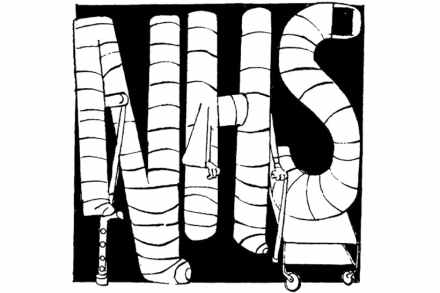
A week doesn’t go by without at least one horror story about the National Health Service hitting the headlines. But today you can take your pick. From the Institute for Fiscal Studies, which says the NHS will need £2,000 a year from each household to stay afloat, to the Care Quality Commission's warning about patient safety in A&E, there’s a plethora of evidence that the NHS is on its last legs, and in desperate need of restructuring.  Many of the reports of the crisis in the NHS call for increased funding to compensate for the system’s underperformance.