Kate Andrews

Kate Andrews

Kate Andrews is deputy editor of The Spectator’s World edition.

Seven extraordinary graphs which show the economic impact of Covid-19

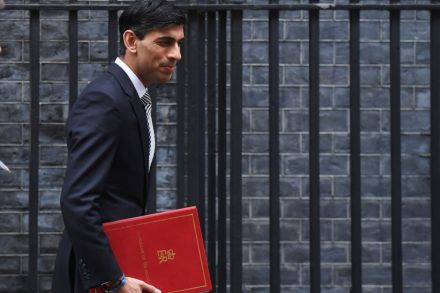
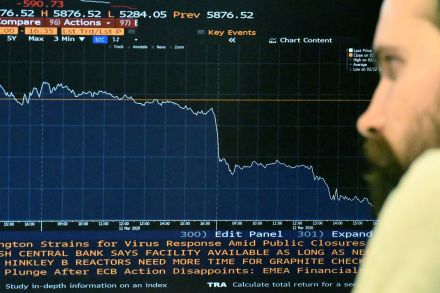
We’ve just seen one of the worst weeks in stock market history, with the FTSE100 ending on Friday 17 per cent down and billions of pounds wiped off British share values. This has been spurred on not by the fear of Covid-19 itself, but by the reaction to the virus: when sentiment switches from confidence to caution, panic can be self-reinforcing. In response to the panic, the Bank of England slashed interest rates to 0.25 per cent; hours later, Chancellor Rishi Sunak used his first Budget to respond with a £30 billion stimulus package - the biggest giveaway of any Budget since 1992. In reality just £12bn of the £30bn is for the virus disruption: the rest is a debt-fuelled stimulus. But Covid eclipses all.
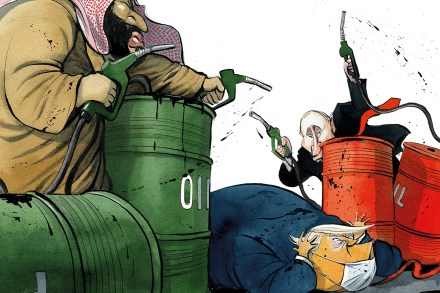
The US is caught in the crossfire of the oil wars

When America used a drone to take out an Iranian general a few weeks ago, it triggered a standoff between the two countries that barely moved oil prices. America was seen to have passed the first test of what Donald Trump hailed as ‘energy independence’. The US oil industry has surged over the past five years, making it the world’s biggest oil producer, and now a net exporter. The hope in DC has long been that this would turn the tide — not just on energy costs, but on the power dynamics in historically sticky relationships between democracies and dictatorships. By becoming energy independent, America decoupled itself from the Middle East; by exporting its energy, it was starting to liberate the world economy too. But all along, America had a vulnerability.

Oil wars: is this the real threat to the world economy?

36 min listen

This week kicked off with an incredible fall in oil prices globally, so what on earth happened (00:50)? We also talk about the Budget, where Rishi Sunak set out in more detail how the government's 'levelling up' agenda will look (10:20). Finally, should we be doing more science research for curiosity's sake (23:05)?

Rishi Sunak’s Budget splurge is more than just a political gamble

The Treasury thinks it has a new friend: the Office for Budget Responsibility (OBR). During the delivery of his first Budget this afternoon, Chancellor Rishi Sunak referenced the economic forecaster multiple times, relying on its assessment of the Budget as proof that the ‘largest giveaway since 1992’ is still fiscally responsible. The OBR has ‘made an estimate they’ve never made before,’ boasted Sunak. ‘If future Governments have the same determination to continue our approach’ – by this he means more public spending – ‘the UK’s long-term productivity will increase by 2.5 per cent.’ But that’s a big ‘if’, even according to the Chancellor’s new friend.

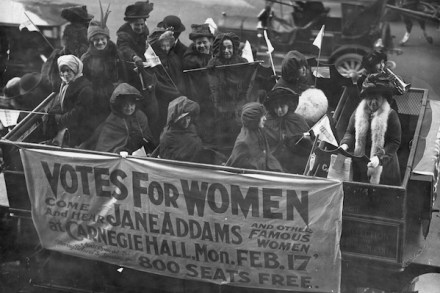
International Women’s Day is not an invitation to play politics with women’s issues

International Women’s Day (IWD) is a great idea — in theory. Why not set aside a moment each year to highlight both the historical and present-day circumstances that impact women's lives? If used properly, it could do some good. But the problem with international-anything-day is that the plights and progress of historically disenfranchised people vary dramatically throughout the world. Yes, global citizens have plenty of shared values and many of the same end-goals, but the advancements happening (or not happening) in one community will often be different in the neighbouring town, city or country — and certainly different from what’s happening continents over. A woman’s life here in Britain will not reflect her counterpart in Mexico, Saudi Arabia or China.

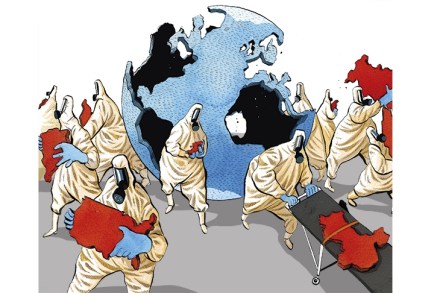
Will coronavirus push globalisation into reverse?

Ten years ago, the World Health Organisation issued a new definition of ‘pandemic’: a disease that infects a large number of people and spreads quickly across the world. These days, once the first of these criteria has been fulfilled, the second is generally just behind. Everything travels faster now: goods, services, diseases and — crucially — fear. As the number of Covid-19 cases rises, so too does the cost of our reaction to it: already as much as $1.5 trillion from cancelled flights, postponed orders and businesses shutting down — an inevitable outcome in our globalised, interconnected world. A virus that germinated in Wuhan has led to the cancellation of this weekend’s rugby match between Italy and Ireland in Dublin.

Planet Corona: is this the tipping point for globalisation?

38 min listen

As the coronavirus sweeps across the globe, it's causing businesses, consumers, and governments to rethink their globalised lives. Is this a tipping point for hyper-globalisation (1:00)? Plus, is the government slimming down its Budget plans (13:40)? And last, is it harder to be eco-friendly if you are a woman (26:35)?

What the UK wants from a trade deal with the USA

On Monday, the Department for International Trade released its negotiating objectives for a UK-USA free trade agreement. The 184-page document explains in detail what the UK wants to get out of a trade deal with America. The British government will try to angle the talks, which begin this month, towards securing a comprehensive arrangement - that is, a deal that covers a broad range of areas including digital, finance, tech, manufacturing and agriculture. If secured, it estimates this could translate into a £3.4 billion boost to the UK economy. The government has put its 'leveling up' agenda at front and centre of these trade talks, laying out how each region potentially stands to gain from securing a deal with the USA.

Left-wing feminism is no ally of women

It’s increasingly popular to say feminism can never be capitalist; no exceptions. Capitalism, by its nature, supposedly exploits women. But if feminism cannot be capitalist, how does one explain Katharine McCormick, the woman who single-handedly financed the development of the pill? McCormick was a committed feminist, a campaigner for women’s voting rights, and a signed-up member of the National American Woman Suffrage Association. In the 1950s, when the U.S. government would not invest in contraception research, McCormick used her own capital to advance the studies eventually leading to the pill. Is this the kind of story that today’s feminists would sweep under the rug, in order to advocate for socialism above all else?

The post-Brexit bounce seems to have stuck, for now

The post-election economic bounce appears to be more than a fluke. Positive news came in waves this week, as data for employment figures, weekly wages and economic activity painted a good picture for newly-Brexited Britain. People are in work and wages are finally back on track. Employment has hit a new record high (76.5 per cent) while unemployment has dropped to a new 44-year low, at 3.8 per cent. Most notably, weekly wages are (finally) back to their pre-financial crash levels ie, the highest since March 2008. And yes, it has taken a very long time get here – it has been the slowest wages recovery in economic history – but the pre-crisis target has been surpassed years before forecasters like the Institute for Fiscal Studies predicted.

A fuel duty hike shows the Tories are struggling for Budget ideas

Could motorists be hit with the first fuel duty rise in ten years in this month’s Budget? According to the Sun, the PM’s chief advisor Dominic Cummings wants to use petrol and diesel as a revenue-raiser to fund big infrastructure projects outside the capital. But ending the fuel duty freeze after a decade might not be a good idea, particularly when many new Tory voters in the North are likely to be the worst affected. Fuel duty is an easy way to raise revenue in theory, as the demand for fuel is always high. It is also a tax that is difficult for motorists to avoid (though this doesn’t stop some from trying).

In defence of Sadiq Khan’s EU citizenship plan

Sadiq Khan has ventured to Brussels today to meet with European Union negotiators. London’s mayor has a plan to convince EU officials to offer Brits ‘associate citizenship’ after the Brexit implementation period ends this year. The citizenship would grant Brits continued access to freedom of movement and residency within the EU, along with a possible host of other rights linked to healthcare, welfare and voting in European Parliamentary elections. The bid, Khan says, is for ‘heartbroken’ Londoners and others. Of course, Khan is extremely unlikely to be successful.

What will Rishi Sunak’s Budget look like?

Plenty of questions were already circulating about next month's Budget, even before Sajid Javid's dramatic resignation as Chancellor – and Rishi Sunak's appointment as his replacement – this morning. With this shock change in Number 11, we know even less than we did: what are Sunak's policy plans? How involved will Number 10 be in the process? And will financial plans already in the works be radically altered in the weeks to come? But the most pressing question of all is: what is Boris Johnson's Government's economic vision for the years to come? The process of building an economic legacy can take many twists and turns. When Margaret Thatcher first came to power, she raised taxes.

Iowa Democrats couldn’t have picked a worse time to mess up

From our US edition

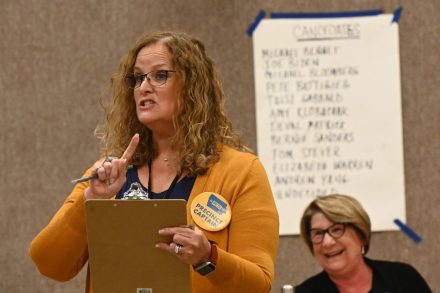
What happened — or didn’t happen — in Iowa last night is unbelievably bad. It is an international embarrassment, one that will raise legitimate (as well as silly) questions about the state of American democracy and accountability. The failure of this new app to collate and transmit voter data from the Caucus will have especially painful consequences for the Democrats — not just for their candidates, but for the party as a whole.The delegates up for grabs in Iowa matter very little in the overall race to the Democratic National Convention this July (just 41 pledged delegates could be claimed last night), but the attention paid to the Iowa Caucus is practically priceless as far as candidate’s campaigns are concerned.

iowa democrats

Sir Roger Scruton’s last report could revolutionise UK housing

Earlier this month the philosopher and author Sir Roger Scruton passed away. In a series of tributes to his work and his character, many reflected on the contributions he made to his fields of expertise and society at large. Today in central London, one of his final contributions was revealed. The Building Better, Building Beautiful Commission published its findings on housing in the UK this afternoon. The work, led by Sir Roger and Nicholas Boys Smith, is a product of a year-long review of the UK’s planning system, which has come up with 45 policy proposals organised around eight key themes for all levels of government. Scruton’s last piece of work was, for him, a very meaningful one.

Don’t abandon privatisation because of Northern Rail

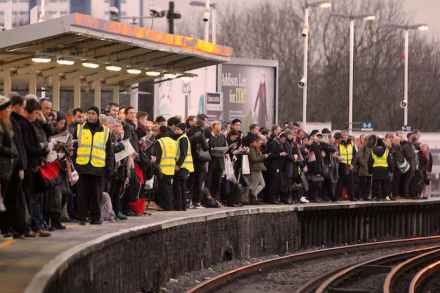
Jeremy Corbyn likes to say that he 'won the argument' at the last general election, where he argued – amongst other things – for the re-nationalisation of the railways. It was a popular policy. Today, as if on cue, the government announced that Northern Rail is being taken into public ownership, stripping Arriva Rail North of the franchise. So what's going on? Should we now regard rail privatisation as a failure? For a start, we don't have privatised rail. We have a hybrid system created under John Major, with private firms running (but not owning) the trains, and a notorious state-run Network Rail owning the track – its failures are responsible for most delays on the entire UK rail network.

There’s a lot to like about today’s immigration recommendations

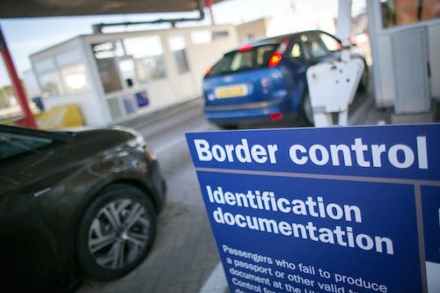
This morning, the Migration Advisory Committee (MAC) released its much-anticipated assessment of an Australian-style points-based system, which has been touted by this government as their immigration system of preference after Brexit. The report has endorsed a combined system, including employer-led job offers (and salary thresholds) and a points-based system for those without a job offer. It recommends maintaining the current Tier 2 visa system for the majority of highly skilled migrants (currently the main non-EEA pathway to work in the UK, the Tier 2 already has some elements of a points-based system but requires the applicant to have job offer and predominantly relies on meeting salary requirements, with the threshold set at £30,000).

HS2 is becoming increasingly difficult to justify

More criticism of the infamous HS2 high-speed rail project emerged today, as the National Audit Office published their findings of serious mismanagement and rocketing costs, implicating both HS2 limited and the Department for Transport. From the NAO watchdog: 'The Department, HS2 Ltd and government more widely underestimated the task, leading to optimistic estimates being used to set budgets and delivery dates. In not fully and openly recognising the programme’s risks from the outset, the Department and HS2 Ltd have not adequately managed the risks to value for money. If these risks had been recognised and managed earlier, then the significant activity in a pressured environment over the past year trying to understand and contain cost increases may not have been necessary.