Kate Andrews

Kate Andrews

Kate Andrews is deputy editor of The Spectator’s World edition.

Sunak’s coronavirus rescue package looks increasingly unsustainable

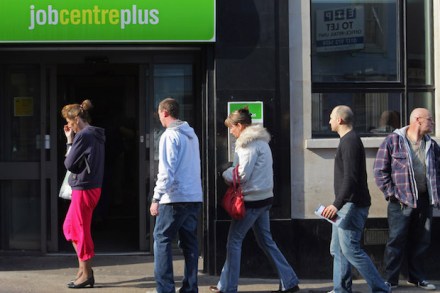
The number of people claiming unemployment benefits in Britain rose by over 856,000 to 2.1 million in April, the first full month of the lockdown. Figures from the Office for National Statistics reveal that the number claiming benefits due to unemployment has increased by nearly 70 per cent. This marks an unbelievable u-turn from the start of the year, when UK employment figures were hovering at record highs. These figures do not include ‘the furlough effect’: those who are still counted as employed, paid by the Government to stay home and wait for the green light to return to work.
Do the experts believe in the R number?

The R-number has been declared the most important metric in monitoring Covid in Britain. For young children to return to school in June, or for pubs to open in July, it is always linked to the rate of Covid transmissions - the R-number - staying below one. Above one is the danger zone: it means each infected person is infecting, on average, more than one other. So plans to liberalise are put on hold and we possibly enter a more severe lockdown once again. When explaining his strategy last weekend, the Prime Minister even showed a picture of an R-Number speedometer. But it gave no reading. We're instead told a range: is that it hovers somewhere between 0.7 and 1. But we have never been told exactly what the R-number is.

stimulus

Stimulus squabble marks a return to politics as usual

From our US edition

Who is the proposed new $3 trillion stimulus package designed to help? If enacted, the bill — which narrowly passed through the House yesterday, with a break in both party lines — would follow from the $2 trillion package passed in March. But it’s not getting past the Senate, at least not in its current form. Despite broad consensus that the first stimulus wave for businesses and families was a necessary emergency measure to help get America’s economy through the COVID crisis, this next round has become increasingly political, looking more like election postering than a thorough plan for the next phase of the pandemic.

The coronavirus crash could be even worse than we feared

Just how bad will the Covid economic hit be? Today’s figures for the first quarter of 2020 show Britain's economy shrunk by two per cent, but that takes into account just a few days of lockdown (and suggests that the recession started some time before). The March figure is more like it: despite only formally being in lockdown for eight days in March, the UK economy contracted 5.8 per cent that month alone. As Capital Economics puts it ‘in just one month the economy has tumbled by as much as it did in the year and a half after the global financial crisis.’ Yet some responses to today's figures reveal a worrying degree of optimism about the future.

Extending the furlough scheme comes at colossal cost

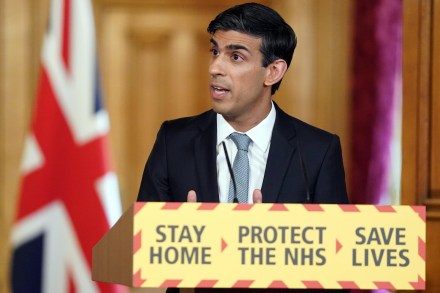
One of the most generous Covid-19 emergency measures in Europe has been extended until the end of October – with some caveats. Chancellor Rishi Sunak has just told the House of Commons that the furlough scheme – which covers up to 80 per cent of an employees’ wages, with a cap of £2,500 per month – will continue to operate unchanged between now and the end of July. From August, furloughing will become more flexible, allowing for part-time work. The scheme remains extended to all sectors, avoiding the optics of industry favouritism, which could easily extend to regional favouritism, given the dependence on certain sectors in different parts of the UK. At first, the scheme was intended for lockdown.

Can we rely on a V-shaped recovery?

Can the UK expect a V-shape recovery? The Bank of England has this morning published data revealing very deep V, suggesting a complete economic recovery in a matter of months: a 25 per cent plunge in growth in Q2, followed by a 14 per cent and 11 per cent boom in Q3 and Q4. That would be the sharpest collapse in 200 years followed by the sharpest recovery in 300 years: more of a bungee jump than a V. That’s the good news. The bad news is that it’s an ‘illustrative scenario’ rather than a forecast. Source: Bank of England Monetary Policy Report May 2020 It’s not just lockdown: living with the virus takes a big economic toll The Bank’s decision to hold interest rates at (an ultra-historic low) 0.

How will Rishi Sunak roll back the furlough scheme?

Just weeks ago, Chancellor Rishi Sunak claimed that widespread use of the furloughing scheme was proof of its success. But it appears the government has over-achieved. The Treasury’s original prediction was that 10 per cent of businesses would use the salary safety net; the figure has turned out to be closer to 70 per cent. The cost for just one month of the scheme is estimated to be £8 billion, only £3 billion less than the NHS’s monthly budget. ‘We’re not talking about a cliff-edge but we have to get people back to work.’ says Matt Hancock, the health secretary. ‘We’ve got to wean off it.’ After telling ITV early this week that the scheme was ‘unsustainable’ for the long-haul, Sunak is changing tack.

Is a second wave unavoidable?

51 min listen

In this week's episode, the Coronomics panel discuss the confusions of Italy's lockdown easing; Hong Kong's large-scale repatriation of residents from South Asia; the potential watershed moment of American news outlets accepting federal funds; and whether China is looking down the barrel of a second wave.

Carbon offsetting: medieval indulgence or the way to Net Zero?

34 min listen

Carbon offsetting refers to the suite of schemes that compensate for the emissions we put out, by making up for them elsewhere. Included in those schemes are so-called 'nature-based solutions' - initiatives designed to protect and transform land, like tree planting. But with offsetting in the news for all the wrong reasons - like Harry and Meghan's private jet-setting lifestyle - is it a medieval indulgence, allowing the rich to absolve their environmental sins; or the way to Net Zero, which the government has committed to achieve by 2050? Do nature-based solutions work, and how should their performance be measured?

The problem with immunity passports

Could we see 'immunity passports' in Britain? Ministers are reportedly discussing them as a route out of lockdown. According to today’s Guardian, the UK tech firm Onfido is in discussion with ministers about creating a ‘digital certificate’ that would be issued to those who have already been infected with coronavirus – who are presumably more immune – so they could return to some resemblance of normal life, including heading back into work.

Is lockdown fatigue taking over?

40 min listen

This six-part series is the latest addition to Spectator Radio. Each week, our panellists from around the world each select a story that gives you an inside look at what's happening outside their windows.In this episode, we take a look at Italy's route to freedom, Boris's return to work, intergenerational tensions in New York, and Hong Kong's non-Covid patients.

If austerity is off the table, how do we pay for Covid-19 costs?

What is the true cost of Covid-19? No one knows – yet. But it’s not going to be cheap. The Treasury has revised its borrowing plans for May to July up to £180 billion, four times what it planned to raise and over £20 billion more than it planned to borrow all year. So how are we going to pay for all this spending? Policies at the heart of the government’s Covid-19 response, like the furlough scheme, are surpassing all estimations for uptake, and have been granted a limitless price tag by the Chancellor through to the end of June at least.

How the pandemic is becoming political

39 min listen

This six-part series is the latest addition to Spectator Radio. Each week, our panellists from around the world select a story that gives you an inside look at what's happening outside their windows. In the latest episode, we take a look at Italy's cautious reopening, the political blame game stateside, and Hong Kong's second wave worries.

Covid-19 business loans aren’t yet working

Last week’s report from the Office for Budget Responsibility made waves with its latest economic scenario, estimating a 35 per cent collapse in GDP in the second quarter of the year. But could even that dire prediction have been too optimistic? While the downturn was estimated by the OBR to be sharp, so too was the economy bounce-back, creating a V-shaped recovery and quick economic improvement. But internal Treasury assessments revealed by the Times today predict a U-shape recovery: a longer, more painful return to the status quo. In both scenarios, the millions made unemployed by the Covid-19 lockdown take longer to return to work than the economy does to technically recover.

Stories from countries turned upside down

36 min listen

This six-part series is the latest addition to Spectator Radio. Each week, our panellists from around the world select a story that gives you an inside look at what's happening outside their windows, presented by Kate Andrews. In this episode, Reason magazine's Nick Gillespie asks how much Trump knew about coronavirus before deciding to act; Silvia Sciorilli Borrelli reports from Rome on the strings attached to the EU's coronavirus rescue deal to Italy; and the Hong Kong Free Press's Jennifer Creery highlights concerns that local police are using the crisis to clamp down further on pro-democracy protestors.