Kate Andrews

Kate Andrews

Kate Andrews is deputy editor of The Spectator’s World edition.

In the race to recovery, Britain is losing

At the start of lockdown, the government was obsessed with how other countries were dealing with the Covid crisis. In No. 10 press conferences, Britain’s daily death toll was shown next to numbers from the rest of the world, putting our handling of the virus into perspective. But when our death toll jumped, the government claimed the calculations were too different to compare and dropped the graph. A few weeks ago, the Office for National Statistics picked up where the government had left off, revealing that England had the highest number of excess deaths in Europe, while Scotland, Wales and Northern Ireland were in the top eight. The UK had lost the first leg of the Covid race. Now it looks set to lose the second: the race to recovery.
Why is Labour struggling to attack Boris Johnson?

16 min listen

Gavin Williamson last night announced that A-level students getting their results tomorrow could appeal using mock exam grades. Meanwhile, today, new figures showed that the UK economy contracted by over 20 per cent between April and June. Among all this, why has Labour failed to show how they could govern the country better? Fraser Nelson speaks to Kate Andrews, the Spectator's economics correspondent, and Stephen Bush, political editor at the New Statesman.

Is Britain heading for the worst economic hit in Europe?

It’s odd to read headlines today saying that the UK has officially entered recession. We’ve known this for months: shops were closed, restaurants shuttered. You couldn’t get a cup of coffee or a haircut, offices were closed and millions furloughed. These were not normal times – but we knew that then, as we know it now. What we didn’t know was how far the economy had contracted, and how much this could be remedied by ending lockdown. The big news today, revealed by official figures released by the Office for National Statistics this morning, starts to answer this. It turns out that our economic hit was one of the hardest in Europe. UK GDP fell 20.

Will England have to follow Scotland’s exams U-turn?

16 min listen

After a week of feet dragging, the Scottish government has today dramatically U-turned on downgrading exam results for 76,000 students. Those who received lower marks will now revert to the original predicted grades given by their teachers. Meanwhile, we are two days away from the English A-Level results being out, so will Gavin Williamson also reconsider the way results are moderated in England? Cindy Yu talks to Alex Massie and Kate Andrews. Also on the podcast: the latest ONS jobs figures.

Why unemployment figures haven’t budged

Look past the headline statistics and you’ll see economic reality starting to infiltrate the labour market. Today’s employment figures from the Office for National Statistics mark very little movement from the previous quarter, with employment at 76.4 per cent (down 0.2 per cent on the previous quarter) and unemployment at 3.9 per cent (unchanged from the previous quarter, still hovering at a record-low level). Yet today also marks the biggest decrease in UK employment for a decade, since May 2009 in the wake of the financial crash. For many workers, being temporarily away from paid work is likely to become permanent How can this be?

Is the Preston lockdown justified?

13 min listen

Over the weekend, the city of Preston in the north of England was partially locked down. But on what basis? Cindy Yu talks to Kate Andrews and Fraser Nelson about whether the government is implementing local lockdowns based on the right metrics.

Are the Bank of England’s forecasts too optimistic?

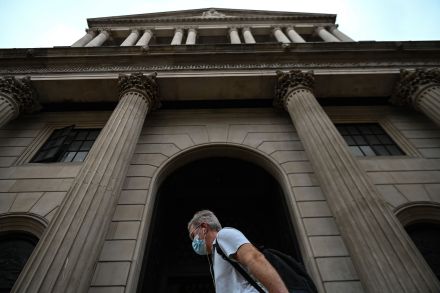
The Bank of England offers a mixed bag of forecasts today. It now expects Britain’s economic downturn to be less extreme than feared, while also predicting a recovery will take longer than originally thought. The Bank now expects the economy to contract 9.5 per cent in 2020, substantially less than the 14 per cent drop it predicted at the height of the national lockdown. But it joined the Office for National Statistics in revising its optimism for a sharp V-shaped recovery downward, expecting nine per cent growth in 2021, with GDP not returning to pre-Covid-19 levels for another eighteen months. The Bank’s forecast remains one of the most optimistic, still showing the resemblance of a V-shaped recovery. But are these scenarios accurate reflection of what’s to come?

Will Boris’s planning reforms backfire?

10 min listen

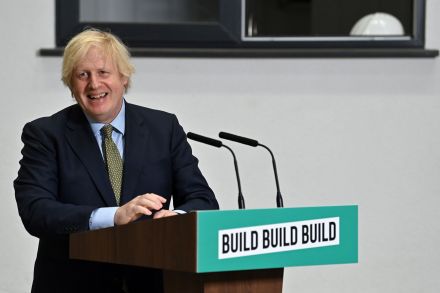
The government has announced the most ambitious planning reforms of a generation – but could they backfire? Meanwhile, as the contacting tracing regime continues to lag, health officials launch a new coronavirus app that will tell people if they may be at risk from the virus. Katy Balls talks to James Forsyth and Kate Andrews.

Has Sweden been vindicated?

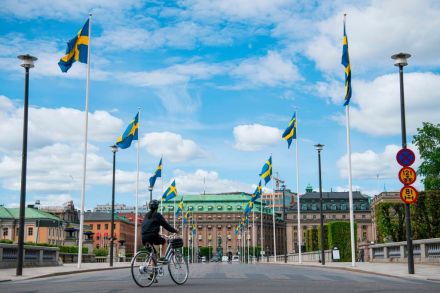
Sweden has released growth figures for the second quarter – a contraction of 8.6 per cent – and two narratives are circulating. The first is that the Swedish experiment has failed spectacularly, resulting in both a higher death toll than its Scandinavian counterparts as well as a collapsed economy. The second is that Sweden has been vindicated, taking a much less severe economic hit than the EU’s average and in a better position to recover as well. Which is the fairer assessment? Sweden has indeed taken an economic beating despite never instigating a full lockdown.

Are we heading for mass unemployment?

10 min listen

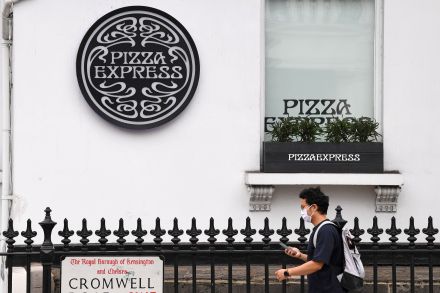
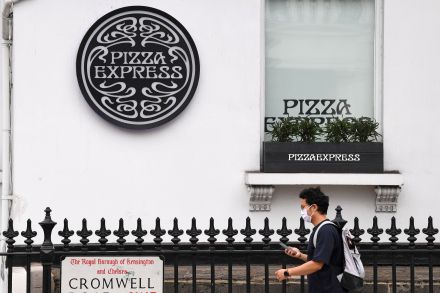
Pizza Express today announced that 1,100 jobs are at risk as they close 67 outlets. With the Chancellor's furlough scheme winding up in November, should we expect more mass redundancies when the government support is cut? Gus Carter speaks to Kate Andrews and Katy Balls about the UK's economic outlook, and also asks whether the UK's track and trace system is ready for children returning to school next month.

Is the jobs cliff-edge fast approaching?

As ‘Eat Out to Help Out’ kickstarts this month – giving customers 50 per cent off their meals (up to £10) at restaurants and pubs that have signed up to the scheme – the centrepiece of the Treasury’s Covid-19 policy package starts to wind down. From this month, employers will be asked to pay a small part of their employees’ wages: 5 per cent now, 10 per cent next month, and 20 per cent in October, before furlough officially comes to an end. A policy that was initially expected to have take-up from 10 per cent of businesses has become the crutch of more than one million businesses across the UK, as nearly ten million employees have been furloughed for some length of time over the past four months.

How local are these ‘local lockdowns’?

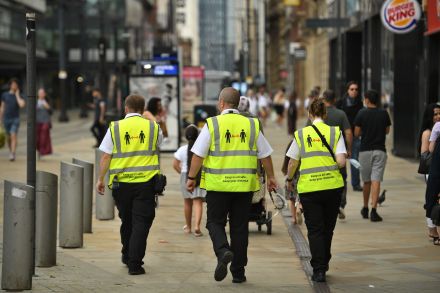
In an effort to avoid another national lockdown at all costs, the government is relying on two tools: a comprehensive track-and-trace scheme and localised lockdowns. The first isn’t expected to be up and running until autumn at the earliest, after a series of setbacks and U-turns (the pains of which are already being felt, as infection rates have started to creep up). The second is arguably in full swing, as East Lancashire, Greater Manchester and parts of West Yorkshire join Leicester in having specific rules and restrictions imposed, due to fears of a rising R-number. But are these really local lockdowns, or regional ones?

What’s behind the excess deaths statistics?

23 min listen

Statistics released this week showed that England had the worst excess death rate in Europe during the first half of 2020. Katy Balls speaks to Kate Andrews and Carl Heneghan, professor of evidence-based medicine at Oxford University about what's behind the numbers.

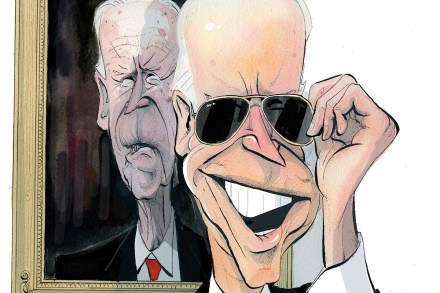
Who is the real Joe Biden?

34 min listen

Joe Biden is leading Donald Trump in the polls, so what is at the root of his appeal? (00:50) The government is anxious about a second wave - can it avoid repeating its mistakes? (11:15) And Rachel Johnson on her generation of high flyers and early retirees (23:30).With editor of the Spectator's US edition, Freddy Gray; our economics correspondent Kate Andrews; deputy political editor Katy Balls; former Health Secretary Jeremy Hunt; journalist Rachel Johnson; and comedian Dominic Frisby.Presented by Cindy Yu.Produced by Cindy Yu, Max Jeffery, and Sam Russell.

Why does England have the worst excess deaths in Europe?

On 12 May, the government stopped publishing international comparisons of its Covid-19 death toll in the daily press briefings. The argument was that the data wasn’t helpful, and perhaps even misleading: the way calculations were carried out varied country-by-country, with each nation on a different timescale when experiencing the peak of infections and death. There would be a time for international comparisons, but that time wasn’t now. Today, the ONS picks up where the press briefings left off, comparing excess mortality rates throughout Europe. The data is not specifically calculating Covid-19 deaths, but rather all causes of mortality on a five-year average.

No, Trump can’t delay the election

While cries of 'authoritarian dictator' have been lobbied at the President by America's progressives over the past three and a half years (he usually has an accusation or two to throw back), US institutions have largely ticked on as normal. But as we come to the end of Donald Trump's first (and possibly only) term as President, are we about to witness a real power grab – one that would throw the country's democracy into disarray? Today on Twitter, Trump began to hint at the one thing his critics fear most deeply: a refusal to leave office. https://twitter.com/realDonaldTrump/status/1288818160389558273?

Is a second wave imminent?

10 min listen

Boris Johnson said there are signs that a second wave of coronavirus will soon sweep through Europe. Should Brits still go on their holiday abroad, and could the UK cope with another lockdown? Katy Balls talks to James Forsyth and Kate Andrews.

Boris warns of a second wave

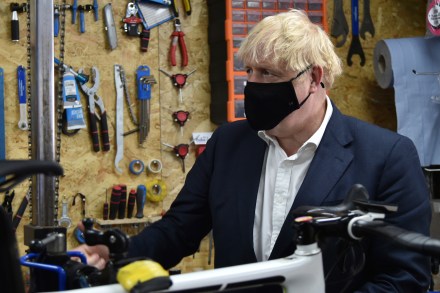
On a visit to Nottingham this morning, Boris Johnson warned that a second wave of Covid-19 could be on the verge of 'starting to bubble up' in Europe. Meanwhile, he defended his government’s lightning-speed reintroduction of a 14-day quarantine for travellers entering the UK from Spain. But concerns of a second wave are not solely related to Spain or select European countries. Yesterday the Financial Times revealed the Prime Minister’s warning to over a dozen businesses that the threat of another Covid wave in autumn is very real. It's not just what’s happening abroad, but the possibility of infection rates spiking within the UK that has captured the government’s attention.

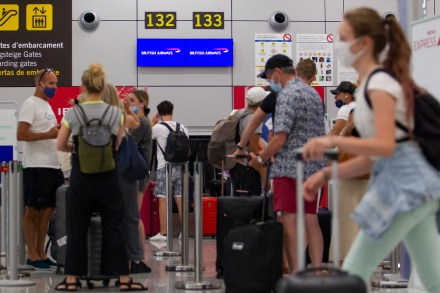
The ‘last flight out’ of Spain

I’ve always thought the ‘last flight out’ was reserved for truly grave situations abroad – or an apocalypse film starring Will Smith or Brad Pitt. Yet somehow I unknowingly found myself on one – or one of the last – yesterday, flying from Malaga back to Heathrow Airport. I can’t say the re-instated quarantine rules for Spain came as a total shock. As the number of Covid cases started to surge in Catalonia predominately, but along the coast as well, I’d been keeping tabs on the local press. I didn’t follow along too closely – partially because it was out of my hands but also because The Vanishing Half by Brit Bennett is very hard to put down.