Kate Andrews: Why I switched to Biden
17 min listen
The Spectator's economics correspondent Kate Andrews talks to Freddy Gray about why she's voting for the Democrats with a heavy heart.


Kate Andrews is deputy editor of The Spectator’s World edition.
17 min listen
The Spectator's economics correspondent Kate Andrews talks to Freddy Gray about why she's voting for the Democrats with a heavy heart.
20 min listen
Kate Andrews explains why she's voting for Biden despite being a lifelong Republican (00:35); Matthew Parris urges you to go to Sweden while you still can (7:30); and Rory Sutherland wonders whether he's cracked the Covid problem (14:45).
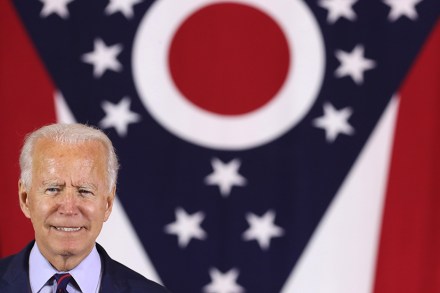
For as long as I was old enough to think about politics, I have been a Republican. When my dad told me, aged six, that Bill Clinton had beaten Bob Dole, I’m told I cried. I don’t remember this, but do have vivid memories of running around St Andrews in my first year at university in a handmade McCain-Palin T-shirt with ‘NO-bama’ sketched in sharpie on the back. I graduated into an internship on Mitt Romney’s campaign and when I moved to London I became a spokesman for Republicans Overseas. Never in my wildest dreams would I have imagined the first time I voted Democrat would be to put Barack Obama’s vice president in the Oval Office. Yet I’m voting for Joe Biden and Kamala Harris.
The theory behind a V-shaped recovery relied on the assumption that the economy would open up almost as quickly as it shut down. This did not happen. The UK moved at a much slower pace than its European counterparts exiting stringent lockdown measures. And already restrictions are being implemented again. August's GDP figures were surprisingly dismal, and now all future monthly updates for economic growth will be affected by a longer list of restrictions that are bound to impact recovery. As a result, scenarios for the UK’s economic recovery are being revised to reflect this. In the last day, we’ve had two updates: one from the IFS’s Green Budget (in association with Citi), the other from Capital Economics.
Unemployment is creeping up. For months it remained stagnant, as the combination of the furlough scheme and people keeping out of the jobs market kept the rate deceptively low. But over the past few months, it has started to increase, with today’s labour market overview from the Office for National Statistics revealing a 4.5 per cent unemployment rate — the highest level in three years. There’s a sliver of hope in today’s data, which shows job vacancies are up Still, at first glance you’d expect the unemployment rate to be much worse. After the largest economic contraction in three hundred years, an increase from 3.9 per cent at the start of the year to 4.5 per cent now would give the impression we’ve avoided catastrophe.
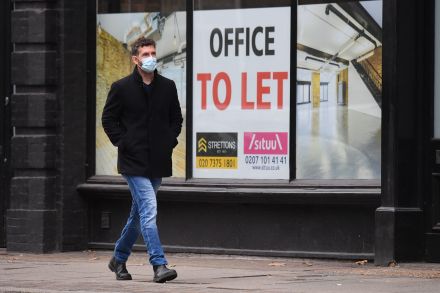
August should have been a relative boom for the British economy: restrictions were the most relaxed since the Covid crisis began. Businesses in the hospitality and leisure industries were largely allowed to reopen by this point, and public transport guidance changed to allow non-essential workers to return to the office. On top of these liberalisations, schemes like Eat Out to Help Out were brought in to encourage – even subsidise – more economic activity. Yet growth figures fell flat, increasing by 2.1 per cent – roughly half of what was expected by economists. It appears economic recovery started to stagnate (down from June’s 9.1 per cent and July’s 6.4 per cent) in a month that was primed for growth.


9 min listen
Today the Chancellor will announce new economic packages targeted at the areas under lockdown. But will the measures go far enough to save businesses, already under strain? Katy Balls talks to Kate Andrews and James Forsyth.

31 min listen
The UK has the most severe economic contraction of any country, coupled with a looming unemployment crisis, as a result of the pandemic. Innovative ideas are needed more than ever to get the economy back on track. With the coming defence review - thought to be the biggest since WWII - now is the time to look at how defence, engineering and manufacturing can lead a recovery.Kate Andrews speaks to a panel of special guests: Tony Danker, CEO of Be the Business and the incoming Director General of the CBI; Tobias Ellwood MP, Chair of the Defence Select Committee; and Charles Woodburn, CEO of BAE Systems.Sponsored by BAE Systems.
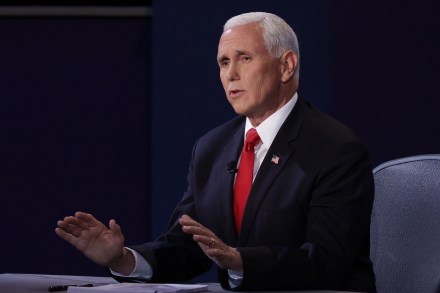
Perhaps Senator Kamala Harris would have performed better last night if she had remembered who she was debating. It was not — as she hoped it would be when she was a candidate in the Democratic primaries — President Donald Trump. Instead, it was a candidate with a radically different demeanour. Vice President Mike Pence has his fair share of political enemies, as well as staunchly conservative viewpoints that put him at odds with plenty in Congress — and the country. But, privately, people like him. He’s thought to be pleasant, respectful and decent — even his Democrat counterparts say so. In this sense, Pence and Joe Biden are cut from the same cloth: not politically, not philosophically, but simply liked by colleagues on the left and the right.

15 min listen
Democratic Senator Kamala Harris and vice-president Mike Pence yesterday battled it out in the VP debate. Ms Harris accused the Trump administration of 'ineptitude' and 'incompetence' in its response to coronavirus, while Mr Pence said Biden's plans to tackle climate change would 'crush American jobs'. But who came out on top? Freddy Gray speaks to Kate Andrews.
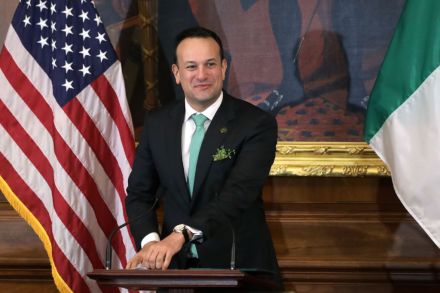
How popular are circuit breakers? The latest Covid-19 news from Ireland would suggest support varies dramatically between the scientists and politicians. Speaking on RTE, Leo Varadkar revealed the National Public Health Emergency Team had recommended moving to ‘level 5’, which would have amounted to a ‘circuit break’ and another shutdown of the Irish economy. Pushing back, Varadkar told the national broadcaster that outstanding questions about the effectiveness of a temporary shutdown could not be answered to his satisfaction: ‘We didn’t feel it had been thought through properly. For example, we asked for some comfort that four weeks might be enough… They weren’t able to give us that comfort.
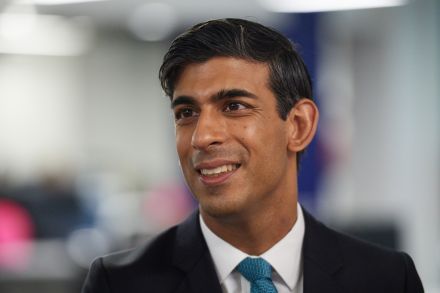
When Rishi Sunak was appointed Chancellor in February, he must never have imagined that his first address to the Conservative party conference would be made to an empty room. Nor would he have expected to have his entire speech dominated by a pandemic. Yet in his short, direct address, Sunak barely strayed from Covid-19. He reminded the public of the government's vast interventions to curb the impact of the virus — and hinted at what steps might be taken in future as the Treasury deals with the aftermath of our six month spending spree.
10 min listen
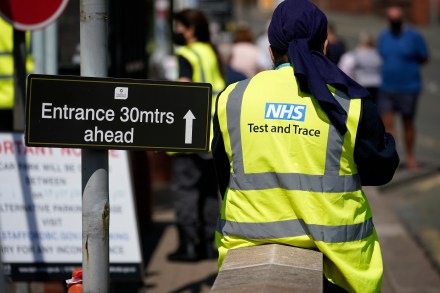
More than 15,000 positive tests were missed in a test and trace blunder, it was revealed today. With the government announcing a new 'traffic light' local lockdown system later this week, will the new measure be overshadowed? Katy Balls speaks to James Forsyth and Kate Andrews.
Cineworld is to close its 128 cinemas - saying that the Covid restrictions have made its business "unviable". It's terrible to see that word applied to the cinema industry - and even worse to think of the 5,500 jobs this will impact. But the truth is that many businesses can’t survive what will be a year’s worth of restrictions - based on PM’s timeline where he's talking about some kind of scientific breakthrough by Easter. The final straw for Cineworld was the delay of the new 007 film No Time to Die, now due out next April on the logic that this would maximise takings. https://twitter.com/007/status/1312122931879632897?
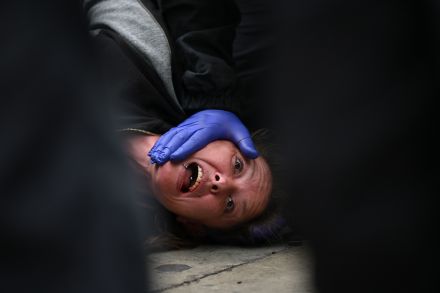
We are frequently reminded of polls that show the majority of Brits supporting lockdown measures. In fact, often the public wants the government to go further than it has done. Local officials tend to reflect this sentiment. Mayors of two of the UK’s largest cities — London's Sadiq Khan and Manchester's Andy Burnham — have repeatedly accused the government of not going far enough with its Covid restrictions. But are attitudes starting to shift? While there’s little data available about the public’s adherence to Covid rules, some evidence is starting to build. A comprehensive study from UCL and Kings College London found that only a fraction of people who said they would self-isolate if required have actually done so.
From our US edition
It’s rather difficult to dissect or analyze policy areas from last night’s horrendous debate. But Freddy Gray and I attempt to do so on the latest episode of his Americano podcast — and considering today’s economic updates, I’ll give it another go.Even in a debate that spent most of its time in the gutter, both President Trump and former vice president Joe Biden had moments of cut-through. For Biden, his call for unity in America felt like a rare throwback to a form of traditional campaigning that tends to play well with watchers at home. For Trump, his most persuasive moments came early in the debate, when he was speaking about the economy.
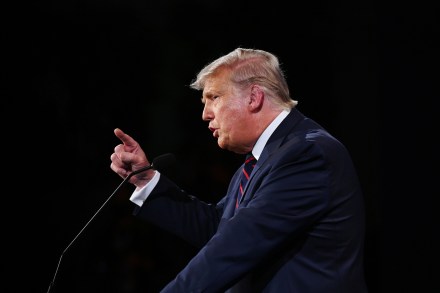
19 min listen
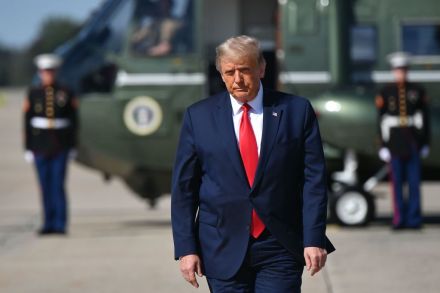
Donald Trump and Joe Biden met in the first head-to-head debate of the campaign yesterday evening. The result was a frenzied 90 minutes of outbursts and interruptions from which neither candidate emerged well. Biden lambasted the President as a 'clown', while Trump ruthlessly attacked the Democratic challenger's family, ignoring the tragic death of his son, Beau. Freddy Gray speaks to Kate Andrews about whether the debate could possibly have been any worse.
13 min listen
After new restrictions were announced this week by the prime minister, Rishi Sunak today unveiled his Winter Economy Plan. Telling the Commons that he 'cannot save every business', the chancellor said that the government would pay up to 22 per cent of workers' wages. The package may be generous, but is it a sign that the government is winding down the scale of its economic interventions? Cindy Yu speaks to Katy Balls and Kate Andrews.
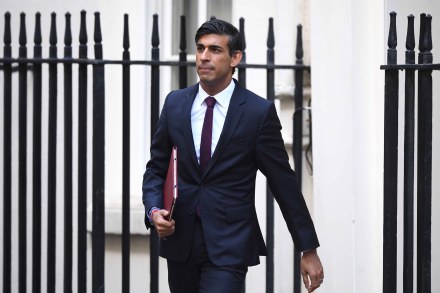

The UK economy is no longer hibernating; it is 'adjusting'. Today's measures announced by Chancellor Rishi Sunak are designed to help an economy expected to limp through the coming months, quite painfully in certain areas, hopefully on its way to recovery. But are they enough? The role of the government and the employer has switched: the six month jobs support scheme will see the state contribute to workers' wages if needed, but now the employer will be paying over 50 per cent of the costs, with the government paying 22 per cent.
When Chancellor Rishi Sunak extended the furlough scheme back in May, he committed more support than anyone expected. In June and July, the government continued to pay 80 per cent of employee wages (with a cap of £2,500 per month) and has also picked up the majority of the tab in August and September. But as the scheme comes to an end after 31 October, calls have grown louder for it to be extended again. So far Sunak has been adamant that it won’t be, telling the House of Commons in July that it could not continue forever. But, as with many Covid-19 policies over the past six months, it appears this may be about to change.The Treasury is working on proposals to extend subsidies for workers’ wages, according to reports in the Financial Times.